Hinge Back Earrings: 2026 Trend Analysis & Styling Guide
Discover the top 2026 trends for hinge back earrings. We analyze mechanism durability, material grades, and how to style huggies and hoops for any piercing.

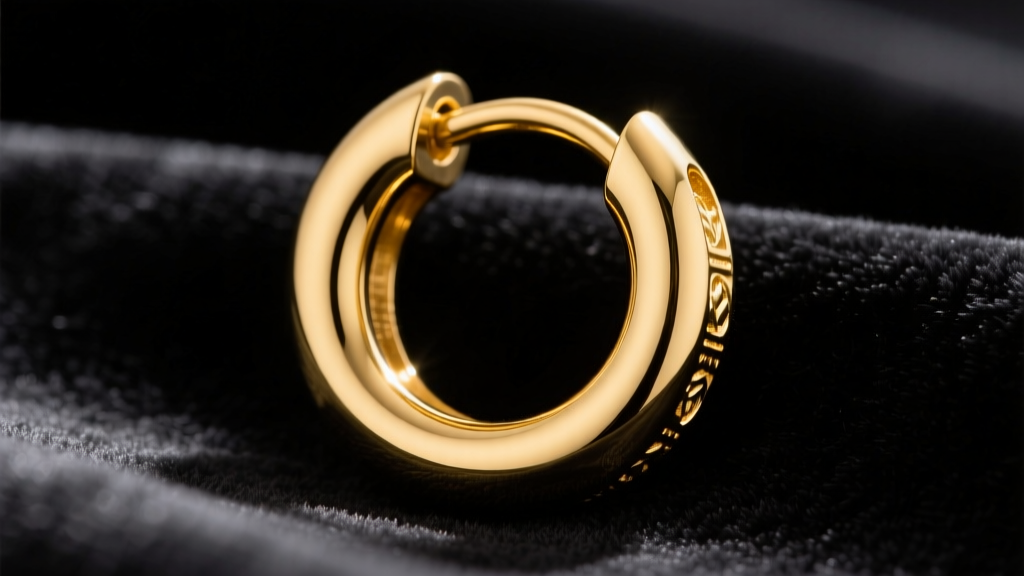
In the evolving landscape of fine body jewelry, the butterfly back and the captive bead ring are rapidly losing their dominance. As we move through 2026, the 'architectural ear curation' movement has firmly established hinge back earrings as the gold standard for both high-fashion editorials and everyday wearable piercings. By eliminating the visual clutter of protruding posts and bulky clasps, hinge mechanisms offer a seamless, continuous silhouette that perfectly aligns with modern minimalist and structured aesthetic trends.
However, a hinge back earring is only as good as its mechanical engineering. A poorly machined hinge will warp, fail to click, and ultimately result in lost jewelry. This comprehensive guide breaks down the anatomy, 2026 style trends, material sciences, and precise sizing frameworks you need to master the hinge back earring trend.
The Anatomy of a Hinge Back: Why Mechanism Quality Matters
Unlike friction posts that rely on tension, or threaded ends that rely on rotational torque, a hinge back earring utilizes a precision barrel hinge and a snap-catch closure. Understanding the micro-mechanics of this design is crucial for both jewelers and collectors.
The Hinge Joint and Post Gauge
The hinge itself is typically a micro-barrel joint laser-welded to the main body of the hoop or huggie. The post that swings through the piercing is usually machined to specific gauge thicknesses:
- 18-Gauge (1.02mm): The most common size for delicate huggies and standard lobe hoops. It provides a refined look but requires careful handling to prevent bending.
- 16-Gauge (1.29mm): The preferred standard for cartilage placements (helix, tragus) and chunkier 2026 tubular huggies. It offers superior structural integrity.
- 14-Gauge (1.63mm): Reserved for heavy statement hoops and conch piercings, requiring a robust, oversized hinge barrel.
The Catch Mechanism and Failure Modes
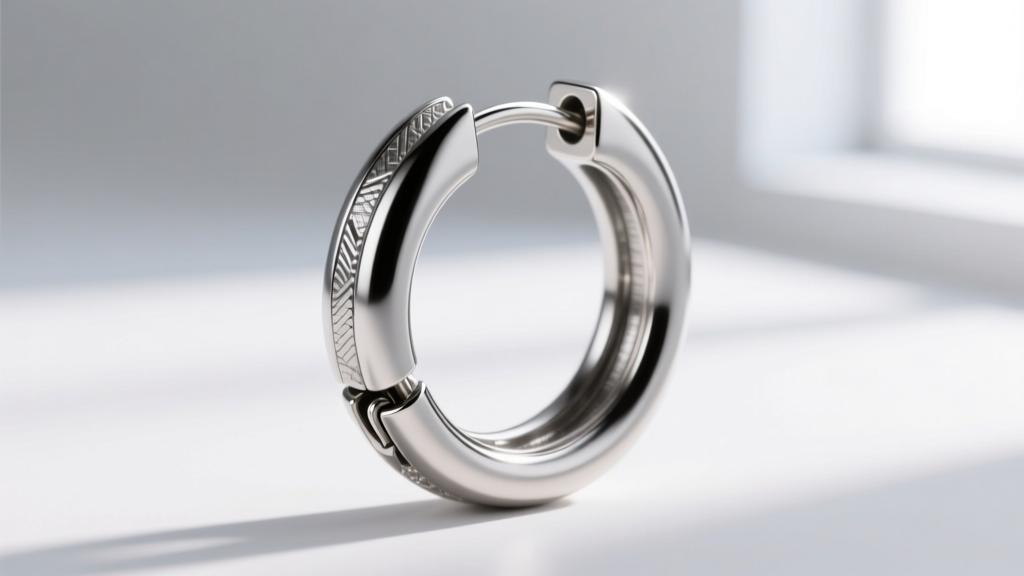
The 'click' of a hinge back earring is achieved via a tiny dimple on the end of the post that snaps into a corresponding groove inside the receiving tube. The most common failure mode in low-quality jewelry is the flattening of this dimple due to repetitive metal-on-metal friction. Once the dimple wears flat, the earring loses its tension and will swing open, leading to inevitable loss. High-end manufacturers CNC-machine the groove to ensure a lifelong, audible snap.
2026 Trend Forecast: How Hinge Backs Are Evolving
The 2026 jewelry market is moving away from the ultra-dainty, barely-there hoops of the early 2020s. Today's trends favor architectural weight, mixed textures, and intentional asymmetry.
1. The Chunky Tubular Huggie
Instead of thin wire, designers are utilizing hollow-core tubular gold and titanium to create thick, lightweight huggies that hug the earlobe or helix tightly. These require heavy-duty hinge mechanisms to support the wider surface area of the clasp. The visual effect is bold and sculptural, bridging the gap between fine jewelry and streetwear aesthetics.
2. Diamond-Cut and Milgrain Textures
Because hinge back hoops lack dangling charms or large gemstone clusters, the metal itself must do the talking. Diamond-cut facets that catch the light from multiple angles, as well as vintage-inspired milgrain edging, are dominating the luxury piercing space this year.
3. Asymmetrical Hinge Segments
Curated ears in 2026 heavily feature asymmetrical setups. A popular styling choice involves wearing a heavily textured, wide-band hinge huggie in the primary lobe piercing, paired with a sleek, polished, micro-hinge hoop in the upper helix. The shared hinge mechanism creates a cohesive visual link without looking overly matchy.
Material Grades & Pricing: What You Should Actually Pay
When dealing with moving parts like hinges, material choice dictates the lifespan of the earring. Soft metals will warp, and reactive alloys will corrode inside the microscopic gaps of the hinge barrel. According to the Association of Professional Piercers (APP), only specific implant-grade materials should be trusted for long-term wear, especially in fresh or sensitive piercings.
| Material | Grade / Standard | Hinge Durability | Estimated Price Range (Per Pair) |
|---|---|---|---|
| Implant Grade Titanium | ASTM F-136 | Excellent (corrosion-proof, lightweight) | $60 - $150 |
| 14k Solid Gold | 58.5% Au (Nickel-Free) | Superior (ideal balance of malleability and strength) | $250 - $600 |
| 18k Solid Gold | 75% Au | Good (softer, hinge dimples may wear faster over decades) | $400 - $900+ |
| Surgical Steel | 316L / 316LVM | Fair (can trap moisture, heavier weight stresses hinge) | $25 - $50 |
| Gold-Plated Brass | N/A | Poor (plating flakes inside the catch, mechanism jams) | $15 - $30 |
Expert Insight: Never purchase gold-plated or vermeil hinge back earrings. The plating process inevitably coats the inside of the receiving tube. Within weeks, the friction of the post will strip the gold from the catch groove, exposing the reactive brass core to your piercing and causing the clasp to jam.
Styling Framework: Matching Hinge Backs to Piercing Placements
A hinge back earring must be sized perfectly to the anatomy of the piercing. The Internal Diameter (ID) and the hinge placement dictate whether the earring will sit flush or cause migration and irritation.
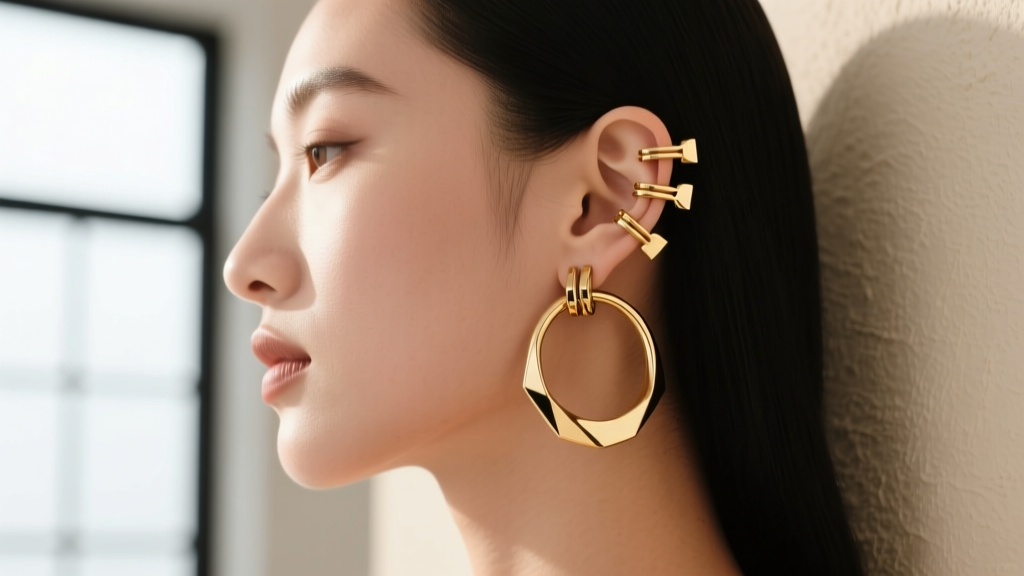
- Standard Earlobe: Opt for an ID of 10mm to 12mm. This allows the hoop to wrap comfortably around the lobe without putting downward pressure on the fistula (the piercing channel). Huggies with an 8mm ID are also popular for a tight 'squeeze' look on smaller lobes.
- Helix (Upper Cartilage): The cartilage fold is thicker and sits closer to the head. An ID of 8mm to 9mm is usually required. Ensure the hinge is positioned at the front or bottom of the hoop so the clasp doesn't press into the side of your head while sleeping.
- Tragus: This dense piece of cartilage requires micro-huggies with an ID of 5mm to 6mm. Because the space is tight, 18G or even 20G hinge posts are often necessary to navigate the angle of the tragus piercing without bending the post during insertion.
- Conch: For the inner cup of the ear, larger hinge hoops with an ID of 12mm to 16mm create a stunning orbital effect. A 14G or 16G post is highly recommended here to support the weight of the larger diameter.
Maintenance & Troubleshooting Your Hinge Clasps
The barrel hinge is a trap for sebum, dead skin cells, and soap residue. When debris packs into the micro-gaps of the hinge joint, the earring becomes stiff, and the snap mechanism can fail to engage fully.
The Ultrasonic Cleaning Method
To maintain the crisp 'click' of your jewelry, the Gemological Institute of America (GIA) and fine jewelry experts recommend periodic ultrasonic cleaning for solid gold and titanium pieces. A quick 3-minute cycle in an ultrasonic cleaner with a few drops of mild dish soap will dislodge microscopic debris from the hinge barrel that a brush cannot reach. Note: Never use ultrasonic cleaners on hinge earrings featuring tension-set gemstones or porous stones like opals or pearls, as the vibrations can shake the stones loose.
Troubleshooting a Loose Snap
If your 14k gold hinge back earring stops clicking securely, the dimple on the post may have slightly compressed. Because high-karat gold is malleable, a master jeweler can sometimes use a specialized micro-burnisher to gently re-round the dimple, restoring the tension. However, if the receiving tube itself has warped, the piece must be retired. Attempting to bend the post back into alignment with pliers will almost certainly snap the delicate laser-welded hinge joint.
Final Thoughts on the Hinge Back Renaissance
The dominance of hinge back earrings in 2026 is a testament to the modern consumer's demand for jewelry that marries flawless engineering with high-end aesthetics. By understanding the critical importance of gauge thickness, internal diameter, and implant-grade materials, you can build a curated ear setup that is not only visually striking but mechanically bulletproof. Invest in precision-machined hinges, respect the anatomy of your piercings, and let the seamless silhouette of the hinge back elevate your personal style.


