Troubleshooting Marble Earrings: Weight, Stains, and Chips
Struggling with heavy, stained, or chipped marble earrings? Learn expert troubleshooting tips to fix lobe stretching, remove stains, and repair stone damage.

The Unique Geological Challenges of Genuine Marble Jewelry
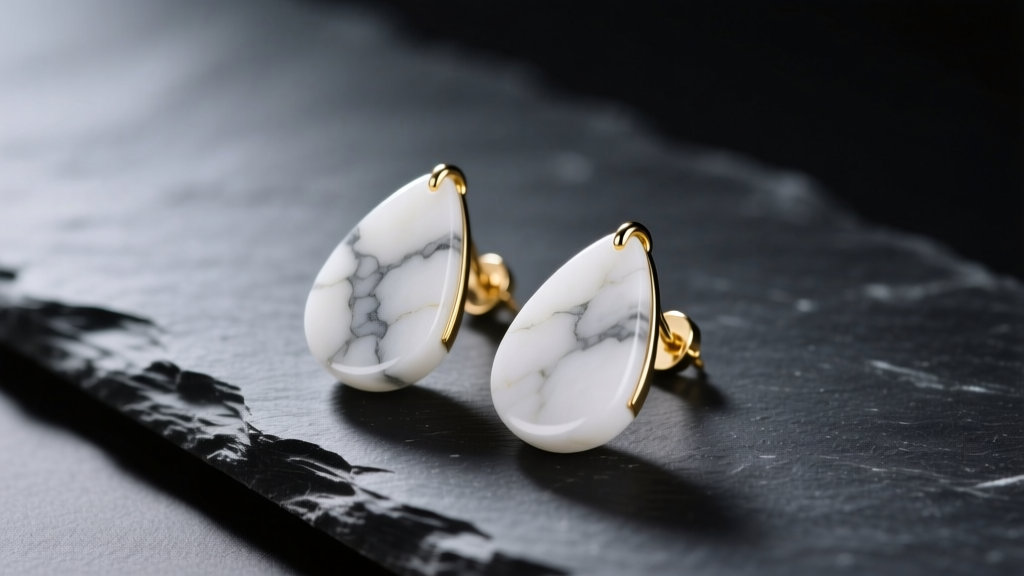
Genuine marble earrings offer an unparalleled aesthetic, blending organic veining with high-end lapidary polish. However, from a materials science perspective, marble is a demanding medium for jewelry design. As a metamorphic rock composed primarily of recrystallized carbonate minerals (calcite or dolomite), marble presents three distinct structural vulnerabilities when worn on the ear: excessive density, high porosity, and low surface hardness. According to the GIA Gem Encyclopedia, calcite-based stones rank at a mere 3 on the Mohs hardness scale, making them infinitely more fragile than quartz or beryl. If you are experiencing ear fatigue, mysterious discoloration, or edge chipping on your favorite marble drops, you are not alone. This comprehensive troubleshooting guide addresses the specific failure modes of marble earrings and provides actionable, expert-level repair protocols to restore and protect your jewelry.
Problem 1: Lobe Stretching and Ear Fatigue
The most common complaint regarding marble earrings is their sheer weight. Marble has an average specific gravity of 2.7 g/cm³, meaning it is nearly three times heavier than water and significantly denser than acrylic, wood, or resin alternatives. A standard 15mm spherical marble stud can easily weigh between 12 and 15 grams per earring. For context, the average human earlobe fistula is optimized to support 2 to 5 grams comfortably. Prolonged wear of 12-gram earrings leads to micro-tears in the collagen matrix of the lobe, resulting in permanent stretching, downward migration of the piercing, and tension headaches.
Mechanical Fixes: Earring Supports and Backings
You do not need to abandon heavy marble earrings; you simply need to redistribute the mechanical load across a wider surface area of the earlobe.
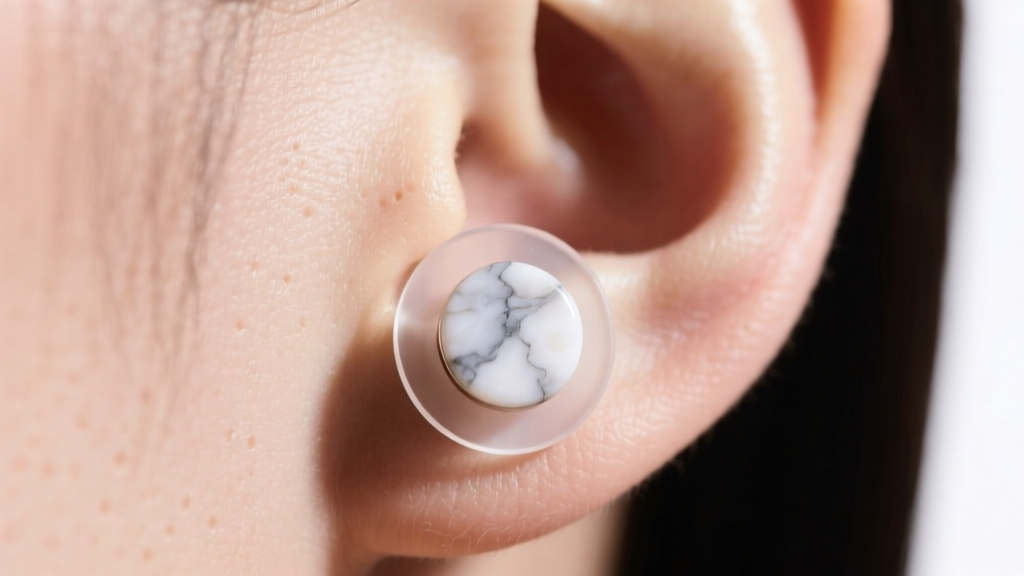
- Silicone Support Discs: Products like BlingDots or Lobe Wonder patches are medical-grade silicone adhesives that stick directly to the back of the earlobe. The earring post passes through the disc, which acts as a structural splint, preventing the marble from pulling the tissue downward.
- Titanium Jacket Backers: Replace standard butterfly clutch backs with wide-base titanium jacket backers. These feature a 10mm to 12mm flat plate that disperses the 15-gram load across the posterior lobe rather than concentrating it on a single 1mm point.
- Hollow Post Conversion: If your marble earrings are set in heavy brass or steel posts, take them to a bench jeweler to have the posts swapped for hollow titanium tubing. This can shave 1.5 to 2 grams off the total weight without altering the stone.
Problem 2: Porosity and Chemical Staining
Marble is highly porous and chemically reactive. Because it is primarily calcium carbonate, it undergoes a rapid chemical reaction when exposed to weak acids. Everyday items like perfume (which contains alcohol and acidic essential oils), sweat (lactic acid), and citrus-based cosmetics will literally dissolve the microscopic top layer of the polish. This results in two distinct issues: etching (dull, matte spots where the polish has been chemically burned off) and staining (where pigments from makeup or hair dye seep into the porous stone).
The Acetone vs. Poultice Debate
Never use vinegar, lemon juice, or commercial glass cleaners on stained marble earrings. The Natural Stone Institute strictly advises against acidic cleaners for carbonate stones. Instead, use a localized poultice method to draw stains out of the stone matrix without damaging the finish.
| Stain Type | Primary Cause | Chemical Reaction | Safe Removal Protocol |
|---|---|---|---|
| Yellow/Brown | Hair dye, iodine, rust | Oxidation within pores | Baking soda and distilled water poultice, left for 12 hours. |
| Dull/Matte Spots | Perfume, sweat, citrus | Acid etching of calcite | Polish with 0.5-micron cerium oxide powder and a damp microfiber cloth. |
| Dark/Greasy | Sebum, heavy lotions | Lipid absorption | Wipe with pure acetone on a cotton swab (acetone evaporates quickly and is pH neutral). |
Poultice Application Steps: Mix baking soda and distilled water into a thick paste. Apply a 3mm layer over the stain on the marble earring. Cover tightly with plastic wrap and tape the edges. Leave for 12 to 24 hours. As the water evaporates, it pulls the trapped pigment out of the stone pores and into the baking soda.
Problem 3: Micro-Fractures and Chipping
With a Mohs hardness of 3, marble is easily scratched by common dust (which contains quartz, hardness 7) and will chip if dropped on porcelain or ceramic tile. Edge chipping on teardrop or geometric marble earrings is incredibly common, often occurring when the earrings are tossed into a jewelry box and strike one another.
Cyanoacrylate and Epoxy Repair Protocols
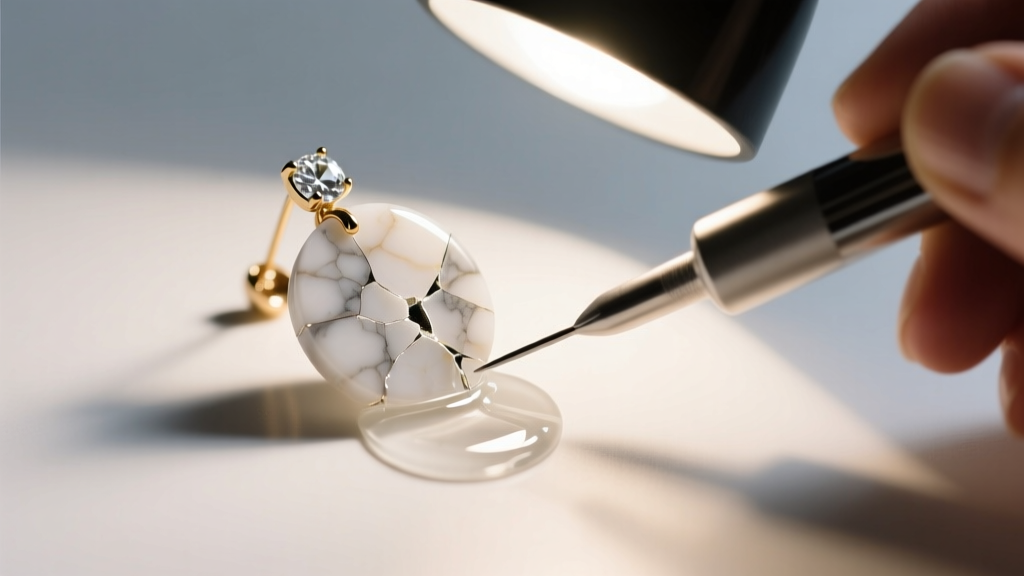
If your marble earring has suffered a clean fracture or a minor edge chip, you can achieve a near-invisible repair using optical-grade adhesives. Standard super glue is too brittle and will yellow under UV light exposure. Instead, utilize the following lapidary repair framework:
- Clean the Fracture: Use a cotton swab dipped in 99% isopropyl alcohol to remove all skin oils and debris from the broken surfaces. Allow to dry completely.
- Select the Adhesive: For hairline fractures, use a UV-curing optical adhesive like Norland Optical Adhesive 61 (NOA61). For missing chips or larger gaps, use a two-part clear jeweler's epoxy (such as System Three MirrorCoat or G-S Hypo Cement for micro-dabs).
- Application: Apply a microscopic amount of adhesive using a toothpick. Press the fragments together and hold under a UV lamp for 3 minutes (if using NOA61) or clamp gently for 24 hours (if using epoxy).
- Finishing: Once cured, gently buff the seam with a 3000-grit sanding pad to restore the flush surface, followed by a final polish with cerium oxide.
Preventative Maintenance Framework
Troubleshooting is only necessary when preventative care fails. To bulletproof your marble earrings against future damage, implement the following maintenance protocol:
- Impregnating Sealers: Treat your marble earrings twice a year with a fluoropolymer-based penetrating sealer (such as Miracle Sealants 511 Impregnator). This fills the microscopic pores below the surface, preventing sweat and cosmetics from entering the stone, without altering the visual refraction of the polish.
- Isolated Storage: Never store marble earrings loose in a communal jewelry box. Store them individually in soft microfiber pouches to prevent quartz-bearing dust and harder gemstones from scratching the calcite surface.
- The 'Last On, First Off' Rule: Marble earrings should be the very last thing you put on when getting dressed (after perfume and hairspray have dried) and the first thing you take off when returning home.
Expert Insight: If you notice a white, powdery residue forming on the metal post where it meets the marble setting, this is galvanic corrosion caused by the alkaline nature of the stone reacting with base metals like brass or copper. Always ensure your marble earrings are set in inert metals like 14k gold, platinum, or implant-grade titanium to prevent this chemical degradation.
When to Pivot: High-Fidelity Marble Alternatives
If the weight and fragility of genuine marble earrings remain a persistent issue despite these troubleshooting methods, it may be time to pivot to high-fidelity alternatives that mimic the aesthetic without the geological drawbacks. Polymer clay (specifically translucent and white Premo Sculpey blended with alcohol inks) can replicate the deep veining of Carrara or Calacatta marble while weighing less than 2 grams per earring. Similarly, cast epoxy resin mixed with opaque white and gray mica powders can be poured into silicone molds to create identical geometric shapes. These alternatives are entirely non-porous, impervious to acidic perfumes, and can be dropped on tile without chipping, offering the visual luxury of marble with the practical durability required for daily wear.


