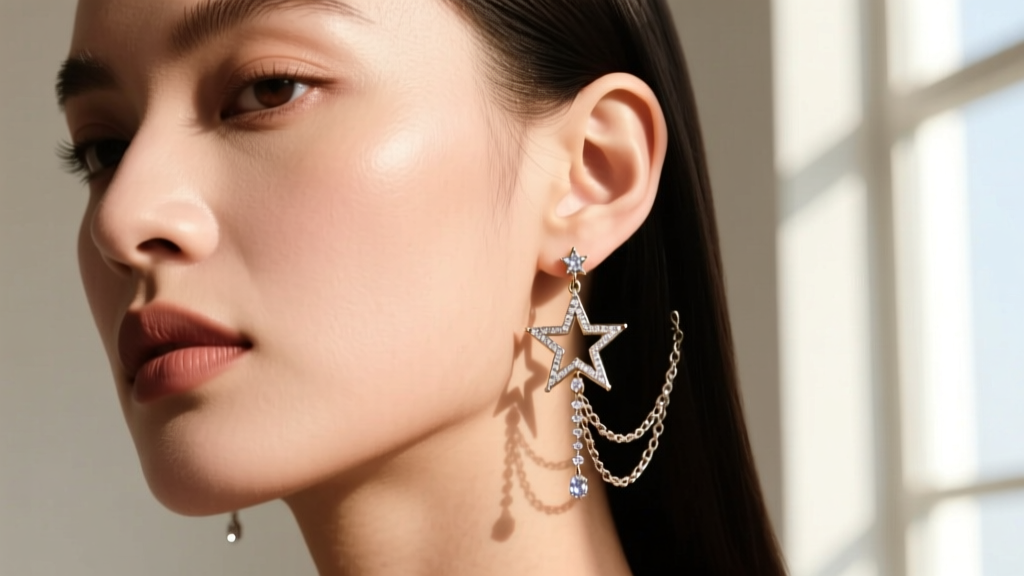
Matching Necklace and Earrings: A Proportion & Metal Guide
Master the art of pairing a necklace and earrings. Our buying guide covers visual weight, metal alloys, gemstone durability, and hardware mechanics.

The Architecture of Coordination
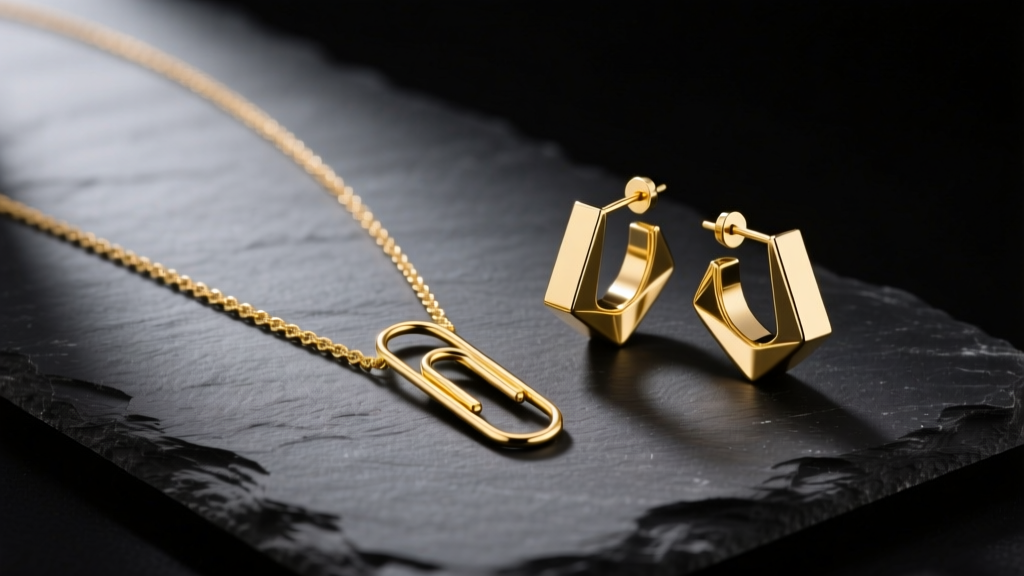
In 2026, the jewelry industry has decisively moved away from the rigid, identical "bridal set" mentality. Today, curating a cohesive necklace and earrings combination is an exercise in architectural balance rather than mere matching. When shopping for a coordinated set, buyers must evaluate visual weight, metallurgical durability, and hardware mechanics. A heavy 45-gram statement collar demands an entirely different earring profile than a delicate 1.2mm cable chain. This guide dissects the precise metrics you need to evaluate before purchasing a paired set, ensuring your investment is both aesthetically striking and structurally sound.
The Proportion Matrix: Balancing Visual Weight
The most common failure in pairing a necklace and earrings is visual competition. If both pieces demand the eye's attention simultaneously, the overall look becomes cluttered and overwhelming. The goal is to establish a primary focal point while allowing the secondary piece to provide structural support. Below is a functional matrix for balancing carat weights, millimeter widths, and drop lengths based on the necklace silhouette.
| Necklace Silhouette | Visual Weight | Ideal Earring Pairing | Styles to Avoid |
|---|---|---|---|
| Statement Collar (20-50g) | High | 4mm-6mm Studs, Micro-Huggies (10mm) | Chandeliers, Large Hoops (>30mm) |
| Princess Pendant (1.5mm chain) | Medium | Drop Earrings (25-40mm), Medium Hoops | Heavy Cluster Studs, Wide Cuffs |
| Layered Chains (3+ strands) | High (Cumulative) | Sleek Ear Cuffs, Threaders, Small Huggies | Long Dangles (tangling risk) |
| Choker (14-16 inches, solid) | Medium-High | Geometric Drops, Climber Earrings | Round Pearl Studs (visual clash) |
Metallurgy & Skin: Alloy Compositions
When purchasing a matching set, consumers often assume the metal composition is uniform across both pieces. However, expert jewelers frequently mix karat weights based on the mechanical stress each piece endures. Understanding these alloy differences is critical for longevity and skin health.
Yield Strength and Post Integrity
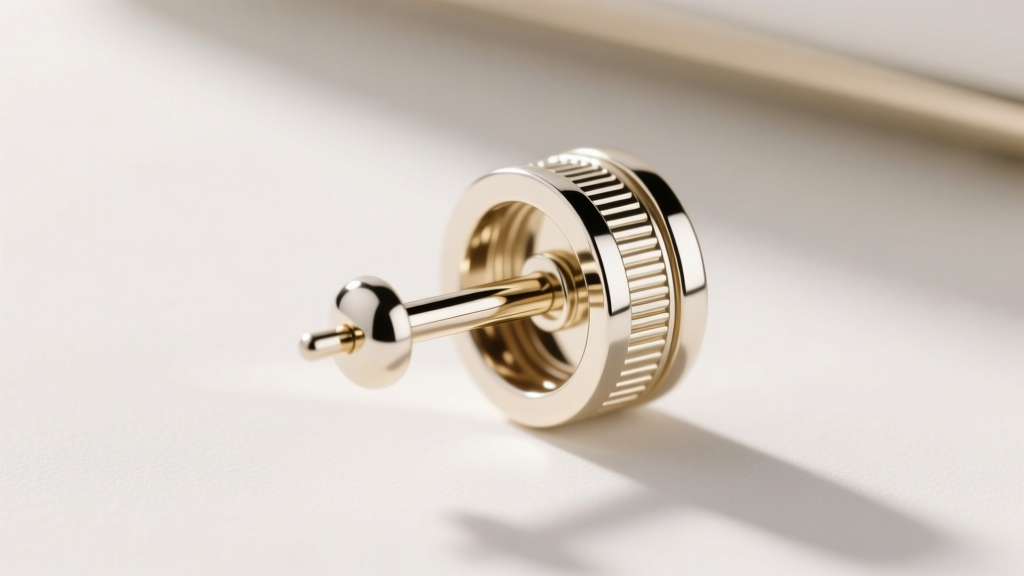
Earring posts are subjected to significant shear stress during insertion and removal. While 18k gold (75% pure gold) offers a richer, warmer hue ideal for necklace pendants and chains, it is relatively soft. A 20-gauge 18k gold earring post can easily bend if snagged on clothing. For the earring component of your set, look for 14k gold (58.5% pure gold). The higher alloy content (typically copper, silver, or zinc) increases the yield strength, ensuring the post remains rigid over years of daily wear.
Nickel Allergies and Hypoallergenic Standards
White gold sets are notoriously problematic for sensitive skin. To achieve a white color, gold is often alloyed with nickel. According to the American Academy of Dermatology, nickel contact dermatitis affects a significant portion of the population, causing severe lobe irritation. When buying a white gold necklace and earrings set, explicitly verify that the alloy is nickel-free (often alloyed with palladium instead) or opt for 950 Platinum, which is inherently hypoallergenic and maintains its structural integrity without rhodium plating.
Gemstone Durability in Coordinated Sets
If your set features gemstones, the environmental hazards faced by earrings differ vastly from those faced by necklaces. Pendants rest against the sternum and are relatively shielded, while earrings are exposed to hair products, accidental impacts, and frequent handling.
"When evaluating gemstone durability for jewelry sets, always consult the Mohs Hardness Scale. Stones below a 7 are highly susceptible to scratching and chipping in high-impact zones like the ears." — Gemological Institute of America (GIA)
For a coordinated set intended for daily wear, prioritize diamonds (Mohs 10), sapphires (Mohs 9), or rubies (Mohs 9). If the set features softer stones like opals (Mohs 5.5-6.5) or emeralds (Mohs 7.5-8, but highly included and brittle), ensure the earring settings utilize protective bezels rather than fragile prong settings. Furthermore, verify the GIA grading reports to ensure the gemstones in both the necklace and earrings share similar color grades and refractive indices, preventing a mismatched appearance under different lighting conditions.
Hardware Mechanics: The Unsung Heroes
The hardware securing your earrings dictates whether your coordinated set remains intact. Standard friction backs (butterfly clutches) rely on spring tension that degrades over time, making them unsuitable for heavy drop earrings designed to complement a minimalist necklace.
Friction vs. Screw vs. La Pousette
- Friction Backs: Acceptable only for lightweight studs (under 3 grams) paired with heavy statement necklaces.
- Screw Backs: Provide excellent security but are prone to cross-threading and can strip the post grooves if forced. They also add bulk behind the earlobe.
- La Pousette (Locking) Backs: The gold standard for 2026. These utilize a mechanical spring-loaded clip that locks into a precise groove on the post. If your necklace is a delicate chain and your earrings are heavy 10-gram chandeliers, La Pousette backs are mandatory to prevent lobe tearing and loss.
Face Shape & Neckline Synergy
The final step in selecting a necklace and earrings set is evaluating how the geometric lines of the jewelry interact with the wearer's bone structure and the garment's neckline. The jewelry should act as a framing device, not a distraction.
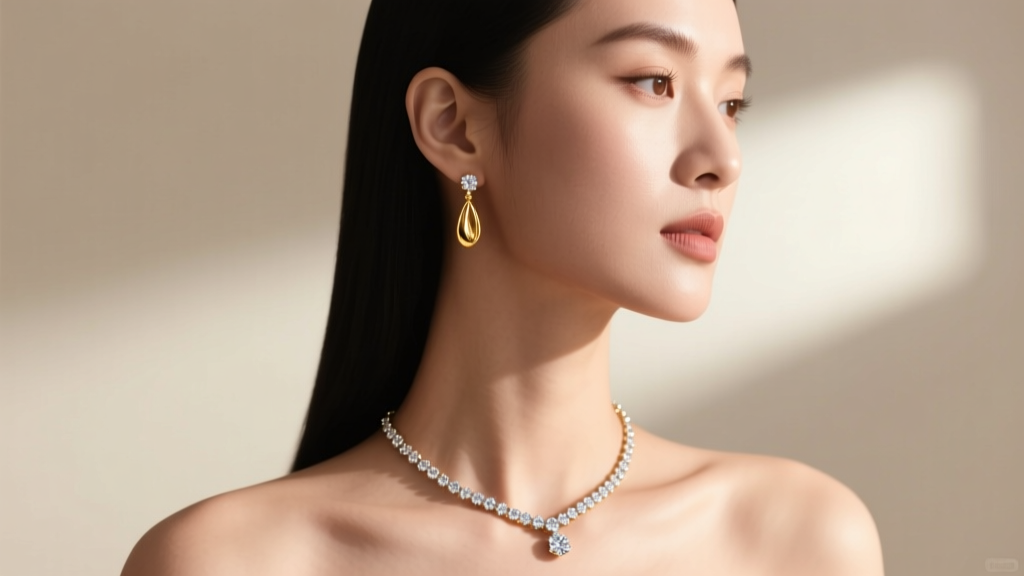
For round face shapes, avoid short chokers and large circular hoops, which amplify facial width. Instead, pair a V-shaped pendant necklace (20-24 inches) with angular, linear drop earrings to create an elongating vertical illusion. For square face shapes with prominent jawlines, a curved scoop-neck necklace paired with medium-sized rounded hoops (20mm-25mm) softens the natural angles. If you are wearing a high-neck garment or turtleneck, abandon the necklace entirely and allow a bold, ear-climbing cuff or oversized chandelier earring to serve as the sole focal point, maintaining the modern 2026 ethos of intentional, curated minimalism.