1.5 Carat Diamond Stud Earrings: Metal Settings Compared
Discover the best metal settings for 1.5 carat diamond stud earrings. Compare platinum, 18k gold, and 14k gold for durability and prong security.

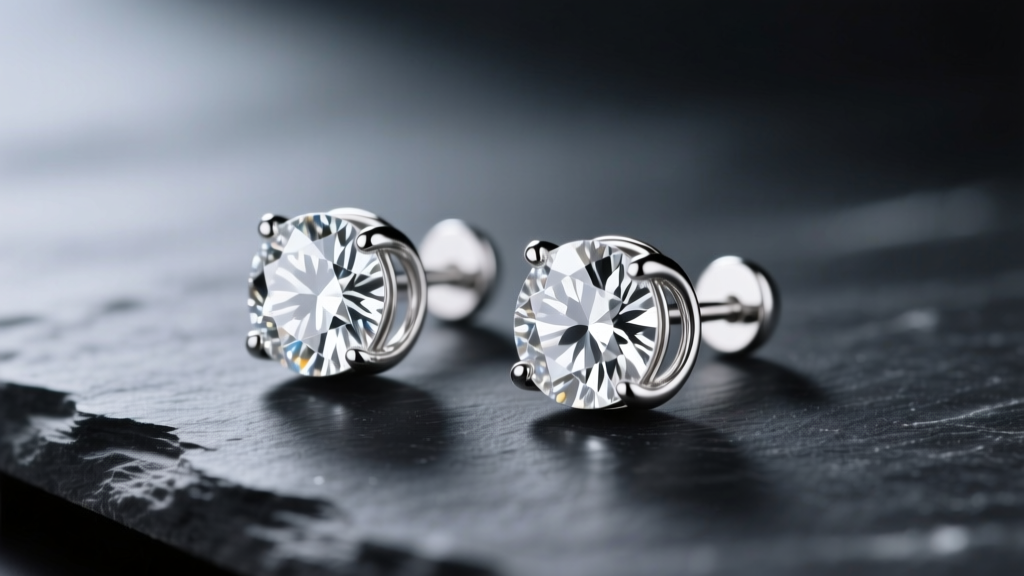
The Architecture of 1.5 Carat Diamond Stud Earrings
When investing in 1.5 carat diamond stud earrings, buyers often hyper-focus on the 4Cs of the diamonds themselves, neglecting the metallurgical foundation that actually secures the stones. In the jewelry industry, "1.5 carat" typically refers to the Total Carat Weight (CTW), meaning each ear holds a 0.75-carat diamond. However, some high-end collectors use the term to describe 3.00 CTW (1.5 carats per ear). Regardless of the distribution, a 0.75-carat round brilliant diamond measures approximately 5.8mm in diameter and weighs about 0.15 grams. While this seems negligible, the physics of the earlobe demand a precise metal-to-stone ratio to prevent the dreaded "earlobe droop."
If the metal setting is too lightweight, the center of gravity shifts forward, causing the diamond to tilt downward. If the metal is excessively heavy, it can stretch the ear piercing over time. The optimal metal weight for a 1.5 CTW pair of studs ranges between 1.2 and 1.8 grams per earring. Achieving this balance requires a deep understanding of precious metal alloys, their Vickers hardness (HV), and how they respond to decades of friction and environmental exposure. According to the GIA Gem Encyclopedia, the choice of alloy directly impacts not only the color and luster of the setting but also the structural integrity of the prongs holding your investment.
Platinum (950 Pt): The Benchmark for Security
Platinum is universally regarded by master jewelers as the premier metal for securing high-value diamonds. In the United States, platinum jewelry is typically stamped "950 Pt," indicating a purity of 95% platinum and 5% alloying metals, usually ruthenium or iridium. This specific alloy composition yields a Vickers hardness of approximately 135 HV, making it incredibly durable.
The most critical property of platinum is its displacement behavior. When gold is scratched or abraded, it loses microscopic particles of mass. Over 10 to 15 years, a gold prong can wear thin enough to snap. Platinum, conversely, displaces. When scratched, the metal simply moves to the side, forming a patina rather than vanishing. This means a platinum prong will retain its structural mass indefinitely, requiring only occasional re-tipping or polishing. For 1.5 carat diamond studs, where replacing a lost stone would be financially devastating, the density and displacement characteristics of 950 Pt/Ru offer unparalleled peace of mind. Furthermore, platinum is naturally hypoallergenic, eliminating the risk of contact dermatitis that plagues wearers of lower-karat nickel-alloyed golds.
18k White Gold: The Rhodium Reality
18k white gold is composed of 75% pure gold and 25% alloying metals. To achieve a bright, silvery-white appearance, it is alloyed with palladium or nickel and then electroplated with rhodium. Modern jewelers heavily favor palladium-based 18k white gold alloys to comply with strict international nickel-release regulations, though palladium alloys are slightly softer (around 120 HV cast) than their nickel counterparts.
The primary advantage of 18k white gold is its initial brilliant, mirror-like finish, which perfectly complements the colorless sparkle of D-to-G grade diamonds. However, the rhodium plating is microscopically thin—typically between 0.10 and 0.20 microns. With daily wear, the friction from hair, clothing, and washing will wear through this plating in 12 to 24 months, revealing the naturally warm, straw-colored 18k gold underneath. For earring settings, which experience less direct friction than rings, the rhodium may last up to three years. Nevertheless, maintaining the pristine white look of 18k white gold studs requires a commitment to periodic re-plating.
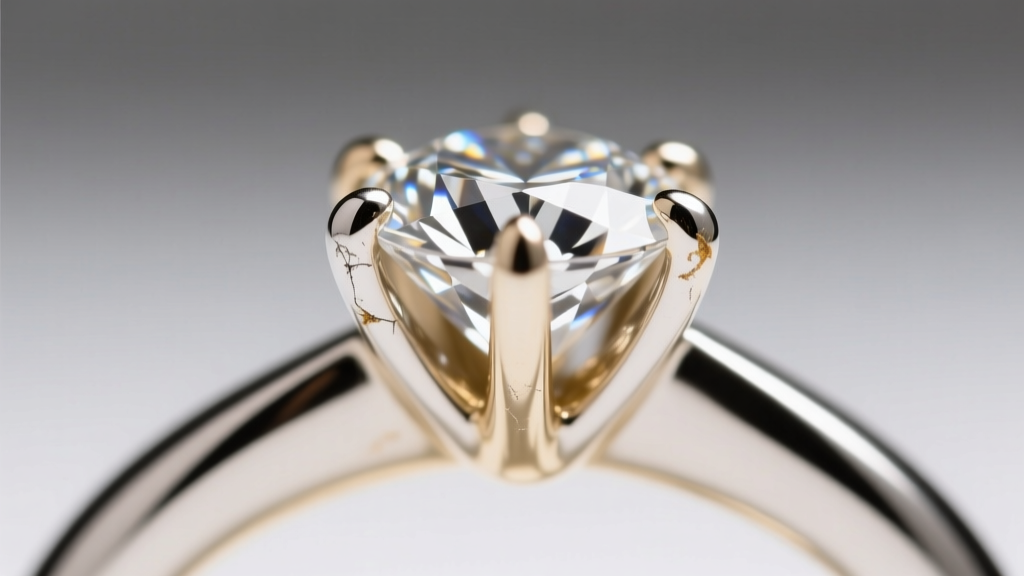
14k Gold Alloys: Durability and Value
Comprising 58.3% pure gold and 41.7% alloying metals, 14k gold is the workhorse of the American jewelry market. The higher proportion of alloying metals (such as copper, zinc, silver, and nickel) significantly increases the tensile strength and hardness of the metal. Work-hardened 14k white gold can reach a Vickers hardness of 160 HV, making it highly resistant to bending and deformation.
For 1.5 carat diamond stud earrings, 14k white gold offers a highly secure, cost-effective setting that allows buyers to allocate more of their budget toward the diamonds' cut and clarity. The trade-off is a slightly less prestigious resale value and a warmer underlying hue once the rhodium plating eventually wears away. 14k yellow gold and 14k rose gold are also exceptional choices, as they do not require rhodium plating and will maintain their color permanently, though they offer a different aesthetic contrast against colorless diamonds.
Prong Design and Gallery Construction
The metal alloy is only half the equation; the architectural design of the setting dictates how the earring sits on the ear. For 0.75-carat stones, jewelers typically utilize either a 3-prong "Martini" setting or a 4-prong "Basket" setting.
- Martini Settings: Characterized by a wide, flat back that tapers into three prongs. This design minimizes metal visibility and allows the diamond to sit very close to the earlobe, reducing droop. However, three prongs offer less redundant security than four.
- Basket Settings: Feature a horizontal gallery wire that connects four prongs. For 1.5 CTW studs, a basket setting with a reinforced base is highly recommended. The gallery wire prevents the prongs from catching on hair or clothing and pulling outward, a common failure mode for martini settings.
Regardless of the style, the prong thickness for a 0.75-carat diamond should be between 0.9mm and 1.1mm. Anything thinner risks catching and snapping; anything thicker will obstruct the diamond's light return.
Comprehensive Metal Comparison Matrix
To make an informed decision, review the technical specifications of the most common precious metals used for diamond stud earrings below. The Federal Trade Commission Jewelry Guides strictly regulate the stamping and purity claims of these metals, ensuring you receive exactly what you pay for.
| Metal Alloy | Purity | Hardness (HV) | Maintenance | Hypoallergenic | Relative Cost |
|---|---|---|---|---|---|
| 950 Platinum (Ru) | 95% Pt | ~135 | Low (Polishing) | Yes | Highest |
| 18k White Gold (Pd) | 75% Au | ~120 | High (Rhodium) | Yes | High |
| 18k White Gold (Ni) | 75% Au | ~140 | High (Rhodium) | No | High |
| 14k White Gold | 58.3% Au | ~160 | Medium (Rhodium) | Varies | Medium |
| 14k Yellow Gold | 58.3% Au | ~145 | Low | Varies | Medium |
Securing the Investment: Earring Backings
A 1.5 carat diamond stud earring pair is a significant financial asset, yet many buyers accept standard friction backs (butterfly backs). Friction backs rely on a microscopic groove on the earring post to hold the backing in place. Over time, the metal tension in the friction back weakens, and a snag on a sweater can easily pull the earring off the ear.
For stones of this caliber, upgrading the backing mechanism is non-negotiable. Consider the following secure alternatives:
- La Pousette (Locking) Backs: These feature a mechanical locking mechanism that clicks securely into a groove on the post. They require two hands to squeeze and release, making accidental loss virtually impossible.
- Screw Backs: The post is threaded, and the backing screws on. While highly secure, they can be tedious to put on and take off, and cross-threading can damage the post.
- Heavy Jumbo Friction Backs: If you must use friction backs, ensure they are oversized, solid metal jumbo backs with deep, dual-groove posts to maximize surface area and grip.
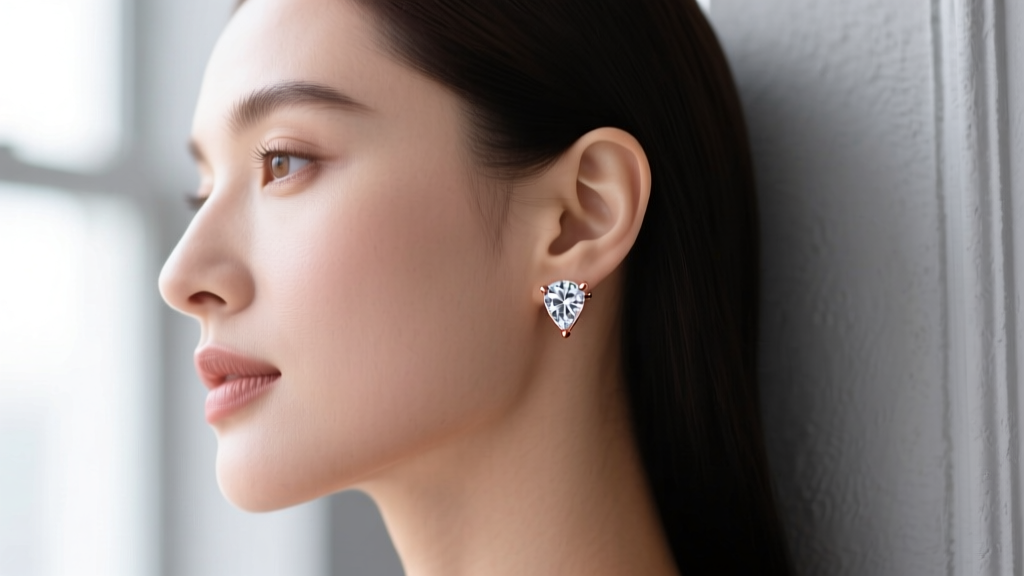
Final Recommendations
Choosing the right metal for your 1.5 carat diamond stud earrings ultimately depends on your lifestyle, budget, and maintenance preferences. If you prioritize absolute security, hypoallergenic properties, and a "buy it for life" mentality, 950 Platinum is the undisputed champion. The premium you pay for platinum is easily justified by the elimination of re-plating costs and the superior longevity of the prongs.
If you prefer a brighter initial white luster and want to maximize your budget for a higher diamond color grade, 18k Palladium White Gold is an elegant choice, provided you are willing to re-plate the settings every few years. For those seeking maximum tensile strength and everyday resilience without the platinum premium, 14k White or Yellow Gold offers a robust, practical foundation. Whichever metal you select, ensure the setting features a structurally sound gallery and pair it with La Pousette locking backs to guarantee your diamonds remain exactly where they belong.


