Earrings Eagle Motifs: A Buyer's Guide to Raptor Jewelry
Discover our expert buying guide to eagle motif earrings. Learn about metal grades, gauge sizes, stone accents, and how to choose raptor jewelry.

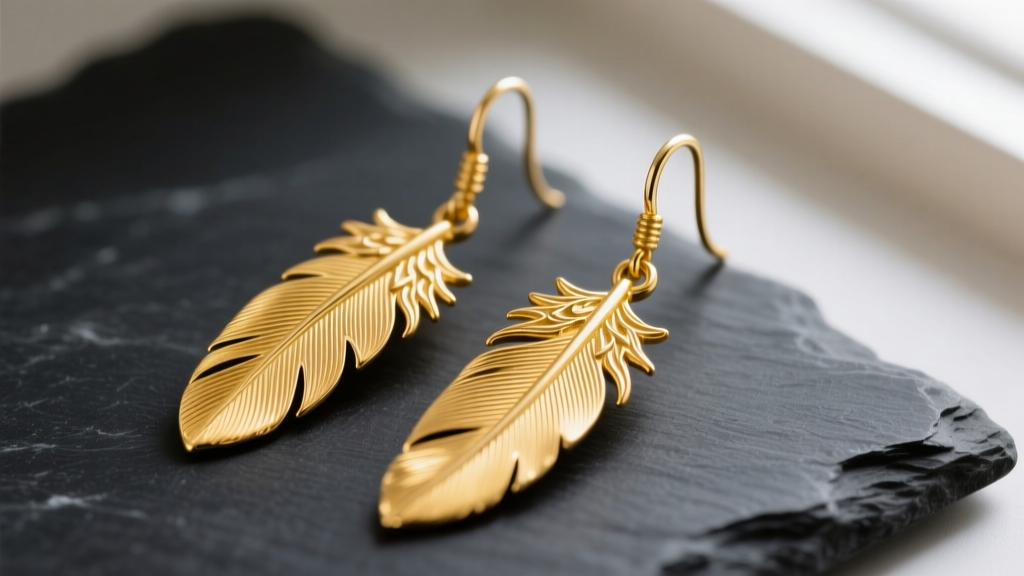
Whether you are a raptor enthusiast, a lover of Southwestern turquoise jewelry, or someone seeking a symbol of personal empowerment, finding the perfect earrings eagle designs requires a keen eye for craftsmanship. The eagle has long reigned supreme in jewelry iconography, representing freedom, visionary focus, and unyielding strength. As we navigate the 2026 jewelry market, the demand for ethically sourced materials and hyper-textured, artisanal wildlife motifs has reached an all-time high. However, not all animal-inspired jewelry is created equal. From intricate lost-wax castings to minimalist geometric silhouettes, this comprehensive buying guide will help you evaluate metal grades, gauge sizes, and stone settings to ensure your raptor jewelry is as enduring as the bird itself.
The Symbolism and Appeal of Raptor Jewelry
Before diving into metallurgy and mechanics, it is essential to understand the cultural weight these pieces carry. In Native American traditions, eagle feathers are sacred, symbolizing a connection between the earthly and the divine. In Roman antiquity, the eagle (Aquila) was the standard of the legions, denoting power and precision. Today, wearing eagle imagery is often a personal talisman—a reminder to maintain a broader perspective and act with decisive clarity. Because of this deep symbolism, buyers are increasingly moving away from mass-produced, flat-stamped charms and seeking out three-dimensional, sculptural pieces that honor the majesty of the bird.
Material Matrix: Choosing the Right Metal
The metal you choose dictates not only the price but also the longevity, weight, and skin compatibility of the earrings. Intricate eagle designs—especially those mimicking the delicate barbs of a feather or the scaled texture of a talon—require metals that hold detail well during the casting process.
| Metal | Purity/Grade | Average Price Range | Best For | Durability & Care |
|---|---|---|---|---|
| Sterling Silver | 925 (92.5% Ag) | $45 - $150 | Intricate feather details, oxidized finishes | Tarnishes over time; requires a polishing cloth. Look for rhodium plating for a bright, tarnish-resistant white finish. |
| Yellow Gold | 14k (58.5% Au) | $250 - $800+ | Daily wear, heirloom pieces, warm skin tones | Highly durable; the warm tone beautifully enhances turquoise and amber accents. |
| Titanium | ASTM F136 Implant | $60 - $200 | Sensitive ears, fresh cartilage piercings | Hypoallergenic, incredibly lightweight (ideal for large drops), and highly scratch-resistant. |
| Bronze/Brass | Copper Alloys | $20 - $60 | Earthy, tribal aesthetics, budget buyers | Develops a natural patina; may cause green skin discoloration due to copper content. Requires sealing. |
Design Profiles: From Minimalist to Ornate
Eagle motifs generally fall into three distinct design categories, each requiring different manufacturing techniques and suiting different personal styles.
1. The Articulated Feather Drop
These are the showstoppers. High-end artisans use the lost-wax casting method to create feathers with movable joints, allowing the earring to sway naturally with your movements. What to look for: Check the hinge points. They should move freely without pinching. The "barbs" (the individual strands of the feather) should be sharply defined, not muddy or blurred. Many designers use intentional oxidization (darkening the recessed areas) to make the textured details pop against the polished high points.
2. The Talon Ear Cuff
For those who want the predatory edge of an eagle without committing to a new piercing, talon ear cuffs are immensely popular. These wrap around the helix or tragus, mimicking a bird of prey gripping its branch. What to look for: Tension is everything. The cuff must be crafted from a malleable yet memory-retaining metal like 14k gold or thick sterling silver. If the metal is too soft, it will bend out of shape and fall off; if it is too rigid, it will cause cartilage pain.
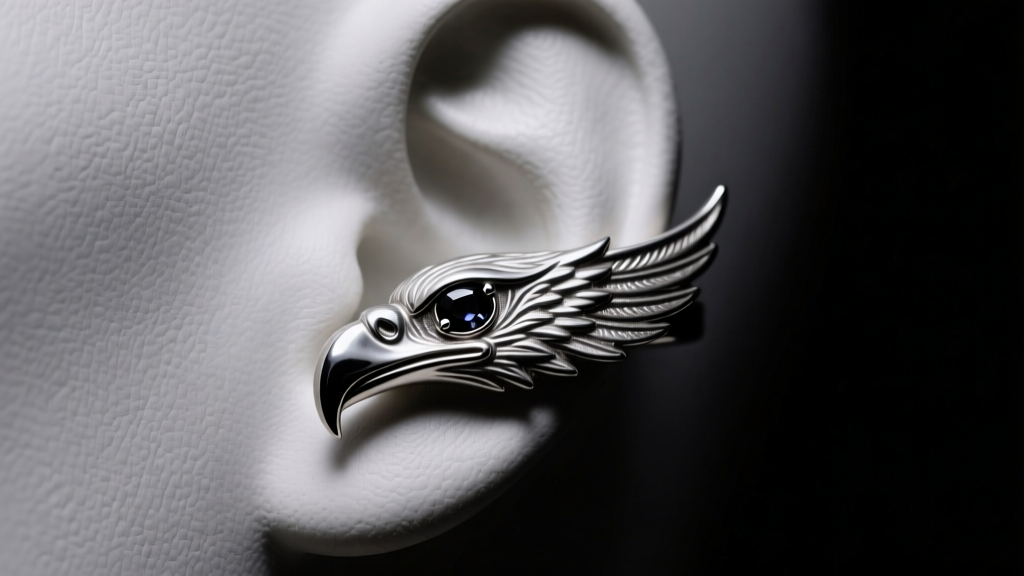
3. The Geometric Silhouette
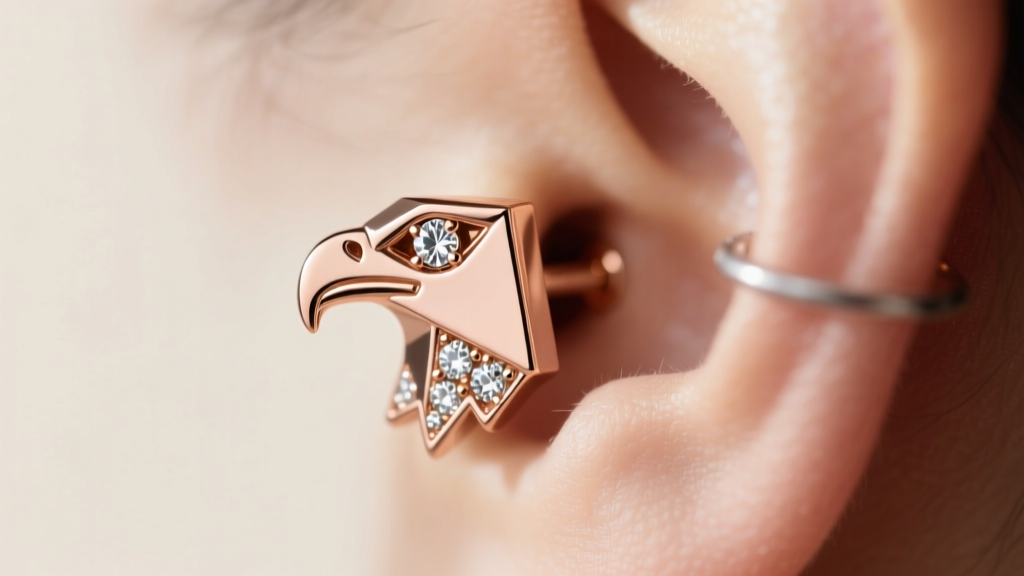
For a modern, understated look, Art Deco and minimalist geometric eagle heads or wing spans offer a subtle nod to the raptor. These are typically flat, polished studs or small hoops. They rely on sharp angles and negative space rather than hyper-realistic textures, making them perfect for professional environments.
Piercing Gauges and Placement Guidelines
Understanding gauge sizes is critical when buying eagle-themed earrings, especially if you are shopping for cartilage placements like the helix, tragus, or conch. According to the Association of Professional Piercers (APP), wearing the correct gauge prevents migration, tearing, and the dreaded "cheese-cutter effect" where heavy jewelry slowly slices through the tissue.
- Standard Lobe (20G or 18G): Most eagle stud earrings and lightweight feather drops are crafted with 20-gauge (0.81mm) or 18-gauge (1.02mm) posts. This is standard for healed earlobes.
- Cartilage / Helix (16G or 18G): If you are placing a geometric eagle stud or a small huggie hoop in a cartilage piercing, ensure the post or wire is at least 16-gauge (1.29mm) to provide adequate structural support for the denser tissue.
- Heavy Drops Warning: If you purchase large, solid-metal articulated eagle wings, ensure your lobes are fully healed and stretched to at least 18G or 16G. Heavy jewelry in a thin 20G piercing will cause severe stretching and discomfort over time.
Stone Accents: Turquoise, Onyx, and Pavé
Raptor jewelry frequently incorporates gemstones to represent the eagle's environment or its piercing gaze. The Gemological Institute of America (GIA) notes that stone selection should be dictated by the jewelry's intended wear frequency and exposure to elements.
Turquoise: The Southwestern Classic
Sleeping Beauty or Kingman turquoise is the quintessential pairing for sterling silver eagle feathers. However, turquoise is a porous, relatively soft stone (Mohs hardness 5-6). Buying Tip: Look for "stabilized" turquoise in earrings, as the resin treatment prevents the stone from absorbing oils, lotions, and sweat, which can cause it to crack or turn an unappealing muddy green over time.
Black Onyx: The Predator's Talon
Black onyx (Mohs hardness 7) is frequently used in eagle talon designs or as the "eye" of an eagle profile. Its deep, glassy luster contrasts beautifully with both yellow gold and oxidized silver. It is highly durable and resistant to everyday wear and tear.
Pavé Diamonds: The Modern Gaze
In luxury 14k or 18k gold pieces, designers often use micro-pavé diamonds to outline the wings or create a glittering eagle eye. Ensure the prongs holding these micro-stones are flush and smooth; protruding prongs on a textured feather design will easily catch on hair and sweaters.
Sizing and Proportions for Face Shapes
The wingspan and drop length of an eagle earring can dramatically alter your facial proportions. Use this framework to select the right scale:
- Round Faces: Opt for long, angular eagle feather drops or sharp geometric wing silhouettes. The vertical lines and sharp angles will elongate the face and provide a striking contrast to soft curves.
- Square Faces: Choose eagle designs with curved elements, such as a swooping eagle wing hoop or a talon cuff that wraps the ear. Avoid rigid, boxy geometric studs, which can exaggerate a strong jawline.
- Oval Faces: You have the versatility to pull off almost any raptor design, from oversized statement wings to delicate, tiny eagle head studs.
- Heart-Shaped Faces: Look for teardrop-shaped eagle feathers or chandelier designs that are wider at the bottom. This adds visual weight to the lower half of the face, balancing a narrower chin.
Quality Markers and Red Flags to Avoid
When inspecting eagle earrings, whether in a boutique or online, look for these hallmarks of quality:
- Hallmarks: Always look for the "925" stamp for sterling silver or "14k"/"585" for gold. Unstamped metals are often cheap alloys that will cause contact dermatitis.
- Clasp Security: Heavy eagle drops should never rely on standard friction "butterfly" backs, which easily slip off. Insist on secure leverback closures, locking ear wires, or screw-backs.
- Weight Distribution: Hold the earring by the post. If the design is severely front-heavy, it will droop forward on the earlobe, looking awkward and causing fatigue. High-quality artisans engineer a counterweight or a wider base at the post to keep the earring sitting upright.
- Red Flags: Avoid pieces with sharp, unfinished edges on the "feathers" or "talons." Run your finger over the design; if it snags on your skin or a piece of silk, it will snag on your clothing and eventually break.
Care and Maintenance for Intricate Motifs
Eagle designs are notorious for trapping dirt, hairspray, and skin oils in their deep crevices. To clean textured silver or gold feathers, avoid harsh chemical dips that can strip intentional oxidization or damage porous turquoise accents. Instead, use a soft-bristled baby toothbrush dipped in a mild solution of warm water and phosphate-free dish soap. Gently brush along the grain of the feather barbs, rinse with distilled water, and pat dry with a microfiber cloth. Store your raptor jewelry in a dark, airtight anti-tarnish pouch to preserve the metallic luster for decades to come.
By prioritizing premium metals, secure clasps, and ethically sourced stones, you can acquire a piece of eagle jewelry that is not only a stunning aesthetic statement but a lifelong symbol of vision and resilience.


