2026 Trend Analysis: Styling Earrings in Upper Ear Cartilage
Discover 2026 trends for earrings in upper ear placements. Expert analysis on helix, flat, and rook styling, gauge sizes, and threadless jewelry.

The Shift from Lobe to Cartilage: 2026 Overview
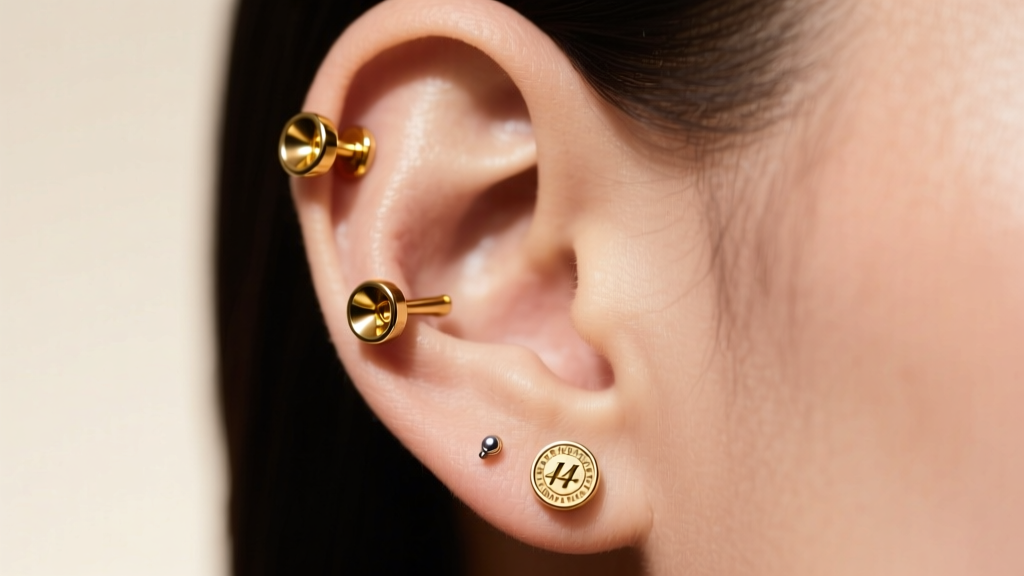
The landscape of ear styling has fundamentally shifted over the last decade, but 2026 marks a definitive turning point: the mainstream elevation of the "curated ear." No longer confined to standard lobe piercings, collectors and style enthusiasts are now heavily prioritizing earrings in upper ear placements. This isn't just about getting more holes; it is about architectural intentionality, anatomical customization, and high-end jewelry engineering. As a senior style analyst for Jewel Style Radar, I have tracked the migration from mass-market fashion jewelry to bespoke, implant-grade body art. Today, styling the upper ear requires a deep understanding of fistula angles, tissue thickness, and the mechanical nuances of modern jewelry design.
In this comprehensive trend analysis, we will dissect the dominant upper ear placements, the material science required for long-term cartilage health, and the specific jewelry styles defining the 2026 aesthetic. Whether you are planning your first helix piercing or looking to upgrade an existing constellation with premium gold ends, this guide provides the actionable, expert-level framework you need.
Anatomical Breakdown: Where to Place Upper Ear Jewelry
Styling the upper ear requires respecting the unique topography of the auricle. Unlike the soft, pliable tissue of the earlobe, cartilage is rigid, varies wildly in thickness, and heals much slower (often taking 9 to 12 months for full stabilization). Here is how the premier placements are being utilized in 2026.
The Helix and Forward Helix Stack
The outer rim of the ear remains the most popular canvas for upper ear styling. The standard helix can accommodate flat-back labrets, seamless hoops, and micro-huggies. However, the 2026 trend heavily favors the forward helix stack—a series of two to three piercings placed vertically along the cartilage ridge closest to the face. The current styling protocol dictates a "graduated" look, where the jewelry decreases in size as it moves down the ridge (e.g., a 3mm gemstone at the top, followed by a 2.5mm, and finishing with a 2mm). This creates a deliberate, tapered visual flow that draws the eye inward.
The Flat: The Canvas for Ornate Shields
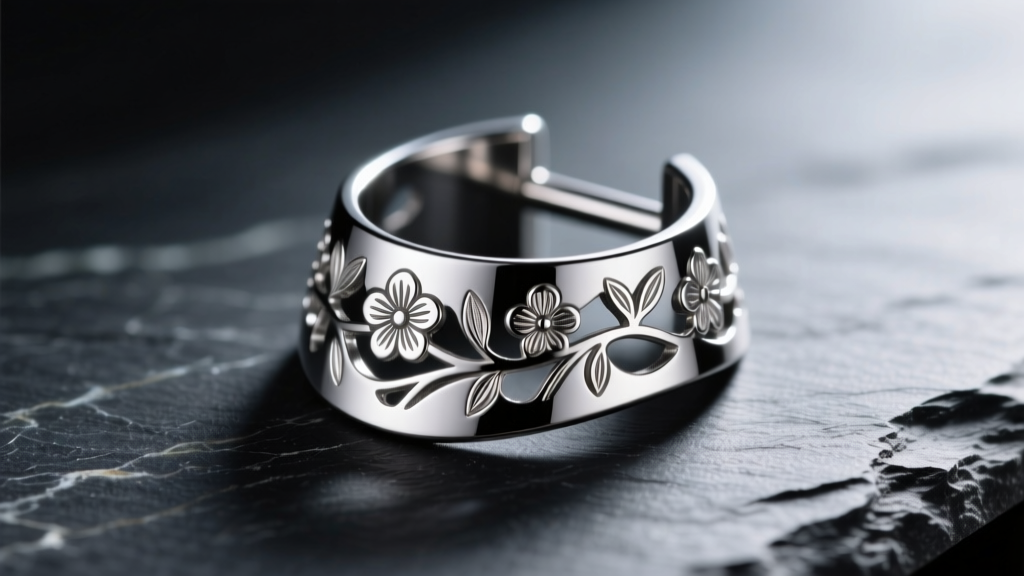
Located in the broad, relatively flat plane of cartilage between the helix and the rook, the "flat" piercing has surged in popularity. Because this area offers a wider surface plane, it is the exclusive home for "shield" or "cage" style ends. These are wide, ornate pieces of jewelry that sit flush against the ear, mimicking the look of an ear cuff but secured via a post through the cartilage. In 2026, we are seeing a massive demand for floral, celestial, and geometric shield designs crafted in 14k gold.
The Rook and Daith: Structural Anchors
For those seeking depth and dimension, the rook (the fold of cartilage just above the tragus) and the daith (the innermost cartilage fold) serve as structural anchors. These placements almost exclusively utilize curved barbells or specialized clicker rings. The daith, in particular, has become a focal point for intricate, hinged segment rings featuring pavé-set diamonds or vibrant anodized titanium accents.
Material Science and Gauge Specifications
When purchasing earrings in upper ear placements, material integrity is non-negotiable. Cartilage is highly susceptible to irritation bumps (hypertrophic scarring) and contact dermatitis. The Association of Professional Piercers (APP) strictly advises against "surgical steel" or "stainless steel" for initial piercings or long-term wear, as these alloys contain nickel, a common allergen that causes chronic inflammation in cartilage tissue.
The gold standard for 2026 is ASTM F-136 Implant-Grade Titanium for the posts (the part that passes through the body), paired with 14k or 18k solid, nickel-free gold for the decorative ends. Titanium is biocompatible, non-magnetic, and can be anodized to create vibrant colors without using toxic paints or platings. Furthermore, the gauge (thickness) of the jewelry must match the piercing to prevent the "cheese-cutter effect," where a thin wire slowly migrates through the cartilage.
| Placement | Standard Gauge | Primary Jewelry Type | 2026 Avg. Price (Gold Ends) |
|---|---|---|---|
| Helix / Forward Helix | 16g (1.2mm) | Flat-back Threadless Labret | $120 - $350 |
| Flat | 16g (1.2mm) or 14g (1.6mm) | Ornate Shield / Cluster End | $250 - $600+ |
| Rook | 16g (1.2mm) | Curved Barbell / Banana | $150 - $400 |
| Daith | 16g (1.2mm) | Hinged Clicker Ring | $180 - $550 |
| Conch | 14g (1.6mm) | Large Flat-back or Hoop | $200 - $500 |
Dominant Jewelry Styles for the Upper Ear in 2026
The mechanics of how jewelry stays in the ear have evolved dramatically. The era of externally threaded jewelry (where the screw is on the post, tearing tissue upon insertion) is entirely obsolete in high-end studios. Here are the three engineering styles dominating the market this year.
- Threadless Push-Pin Systems: Pioneered by brands like Neometal and perfected by luxury houses like BVLA, threadless jewelry is the undisputed king of the upper ear. The decorative end features a tiny, bendable metal pin that inserts into a hollow titanium post. By bending the pin at a 5 to 10-degree angle before insertion, the natural tension of the metal holds the jewelry securely in place. This allows for infinite customization, as you can swap out gold ends without removing the healing post.
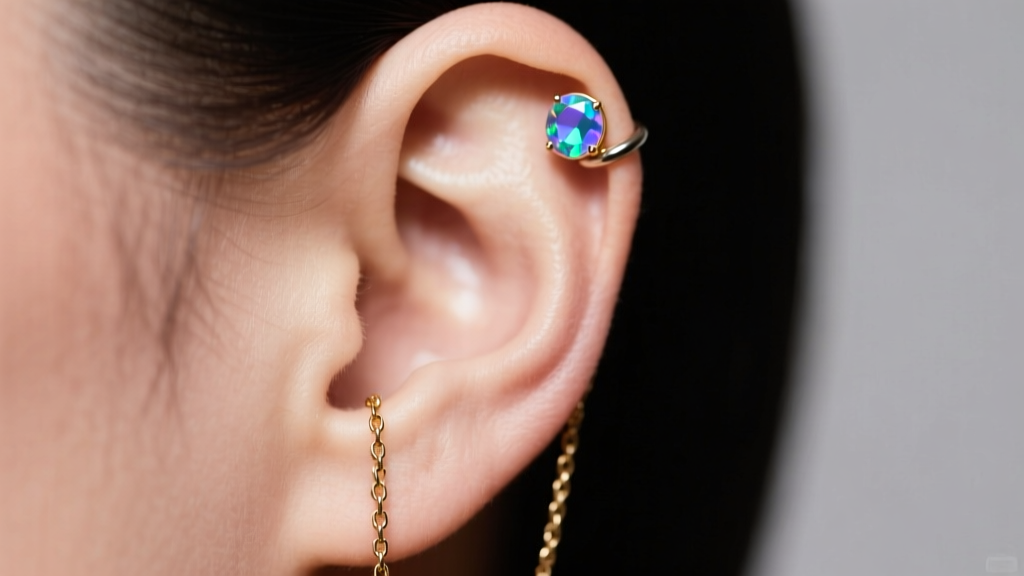
- Ear Scaffolds and Chain Connectors: A major 2026 trend involves linking multiple piercings together using delicate, permanent or semi-permanent gold chains. A common configuration connects a forward helix piercing to a standard upper lobe piercing, creating a "scaffold" effect. This requires precise anatomical mapping by a professional piercer to ensure the chain lays flat against the ear without pulling on the fistulas.
- Micro-Huggies for the Forward Helix: While traditional hoops are too bulky for the tight space of the forward helix, ultra-fine micro-huggies with a flat-back closure have been engineered specifically for this ridge. These provide the illusion of a seamless hoop while utilizing the comfort and security of a flat-back labret post.
Curating the Constellation: A Practical Framework
Planning a constellation of earrings in upper ear placements requires a strategic approach to visual weight. A common mistake is overcrowding one specific area (like clustering four piercings on the upper helix) while leaving the mid-ear completely bare. Expert piercers utilize the "Rule of Thirds" when mapping an ear project. The ear is divided horizontally into the upper rim (helix/flat), the mid-ear (conch/rook/tragus), and the lower lobe.
To achieve a balanced, high-fashion aesthetic in 2026, aim to distribute your visual anchors across these zones. If you have a heavy, ornate shield in the flat piercing, balance it with a delicate, minimalist threadless stud in the forward helix, and anchor the bottom with a medium-sized gold huggie in the lobe. Furthermore, consider the angle of your piercings. A skilled piercer will angle the needle to follow the natural growth plane of the cartilage, ensuring that the decorative ends lay perfectly flush and the posts do not put pressure on the healing tissue.
Expert Sourcing: Where to Buy High-End Upper Ear Pieces
When investing in fine jewelry for cartilage, provenance matters. Avoid mall kiosks and fast-fashion retailers that rely on piercing guns and plated brass. Instead, seek out APP-certified piercing studios that stock luxury body jewelry brands. For the decorative ends, look for manufacturers that machine their pieces from solid 14k or 18k gold, ensuring that prongs are securely set and that the mirror polish is achieved through mechanical tumbling rather than chemical baths that can degrade the metal over time. Brands like Maria Tash, BVLA, and Anatometal remain the pinnacle of upper ear engineering, offering lifetime warranties on their threading and tension mechanisms.
Ultimately, styling the upper ear is an intersection of anatomy, metallurgy, and personal expression. By prioritizing implant-grade materials, respecting the healing process, and embracing the threadless engineering trends of 2026, you can build a curated ear that is not only visually stunning but built to last a lifetime.


