Earrings Magnetic Properties: Material Safety & Strength Guide
Discover the truth about earrings magnetic backs. We compare neodymium strength, casing materials, and nickel allergy risks for non-pierced ears.

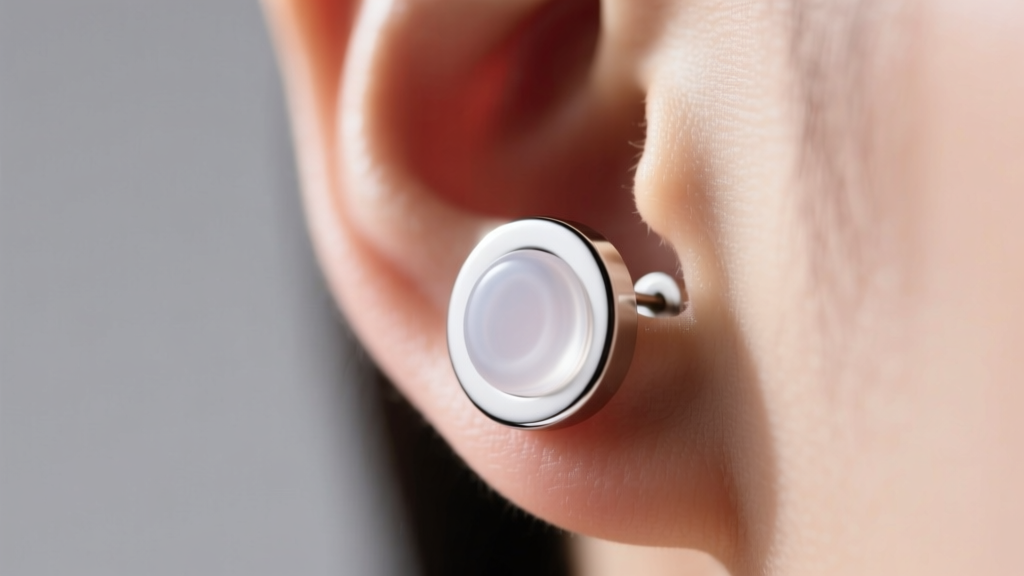
For individuals without pierced lobes, or those experiencing irritation from traditional friction backs and butterfly clasps, non-pierced alternatives have become a vital accessory category. However, the structural integrity and dermatological safety of these pieces rely entirely on the hidden mechanics of their clasps. When evaluating earrings magnetic mechanisms, consumers are often misled by marketing jargon. The reality of non-pierced jewelry comes down to applied physics, metallurgical casing grades, and the biological response of the earlobe to sustained clamping pressure.
In this comprehensive material comparison guide, we deconstruct the anatomy of magnetic earring backs, analyze the specific grades of neodymium used in modern jewelry, and provide a data-driven framework for avoiding contact dermatitis and pressure necrosis.
The Physics of Non-Pierced Wear: Neodymium Grades and Gauss Ratings
The vast majority of high-quality magnetic earrings utilize Neodymium-Iron-Boron (NdFeB) rare-earth magnets. Unlike standard ferrite magnets, NdFeB compounds generate a disproportionately high magnetic flux density relative to their microscopic size, making them the only viable option for jewelry that must remain discreet yet secure.
Magnet strength in jewelry is categorized by "N-grades," ranging from N35 to N52. The number represents the Maximum Energy Product (MGOe) of the magnet material. While it might seem logical to opt for the strongest magnet available (N52), doing so in earring design is a critical engineering flaw.
- N35 to N38 Grades: The industry sweet spot for earring backs. These provide a surface gauss rating of approximately 2,000 to 2,500, which is sufficient to hold a 10-gram stud securely through a standard 2mm earlobe without restricting capillary blood flow.
- N42 to N45 Grades: Reserved for heavier statement pieces or hoop earrings. Requires a thicker silicone buffer to distribute the increased clamping force.
- N50 to N52 Grades: Generally unsuitable for earlobes. The extreme localized pressure can cause ischemia (restricted blood flow) and eventual tissue necrosis if worn for more than a few hours.
Understanding the balance between magnetic pull and lobe thickness is the first step in selecting safe non-pierced jewelry. A magnet that is too weak will cause the earring to droop or fall off, while a magnet that is too strong will cause acute pain and tissue damage.
Material Breakdown: Core, Casing, and Buffer Interfaces
A raw neodymium magnet should never directly touch human skin. NdFeB is highly brittle and contains trace metals that can cause severe reactions. Therefore, the material science of the casing and the friction buffer is what truly dictates the safety and longevity of the earring.
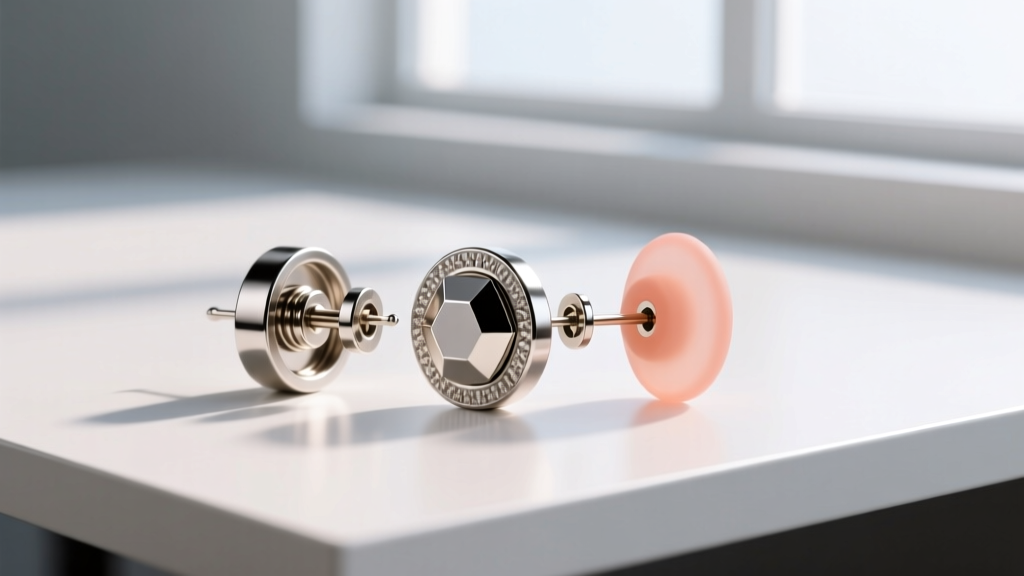
The Casing: 316L Steel vs. ASTM F136 Titanium
The magnet core must be hermetically sealed. Premium manufacturers encase the NdFeB core in ASTM F136 compliant titanium or 316L surgical stainless steel. Titanium is entirely biocompatible and non-magnetic itself, meaning it does not interfere with the magnetic flux while providing a hypoallergenic barrier. 316L steel is highly durable and more cost-effective, but it contains trace amounts of nickel. According to the National Center for Biotechnology Information (NCBI), prolonged exposure to the nickel in 316L steel can trigger allergic contact dermatitis in highly sensitized individuals, making titanium the superior choice for sensitive skin.
The Buffer: Medical-Grade Silicone and Shore Hardness
To prevent the metal casing from pinching the skin and to increase the coefficient of friction (preventing the earring from sliding down the lobe), a buffer pad is required. High-end magnetic backs use medical-grade silicone with a Shore A hardness of 30 to 40. This specific durometer is soft enough to conform to the unique topography of the wearer's earlobe, distributing the clamping pressure evenly, yet firm enough to resist tearing under repeated magnetic snapping forces.
Magnetic Earrings vs. Traditional Pierced: A Property Comparison
How do magnetic mechanisms actually compare to traditional pierced jewelry in terms of material stress and wearability? The table below outlines the functional differences between standard pierced setups and varying grades of magnetic backs.
| Property | Traditional Pierced (Titanium) | High-Grade Magnetic Backs | Low-Grade Magnetic Backs |
|---|---|---|---|
| Material Core | ASTM F136 Ti (Solid) | NdFeB N38 (Sealed) | NdFeB N35 (Poorly Sealed) |
| Casing / Post | N/A (Solid Post) | 316L Steel or Titanium | Nickel-Plated Brass |
| Tension / Pressure | 0g (Passive Wear) | 400-800 Gauss (Distributed) | 1200+ Gauss (Localized) |
| Allergy Risk | Near Zero | Low (with silicone buffer) | High (Nickel exposure) |
| Weight Capacity | High (Lobe dependent) | Moderate (10-15g max) | Low (Slips easily) |
The Nickel Threat and Corrosion: Failure Modes in Cheap Jewelry
The most common failure mode in budget-friendly magnetic earrings is not the loss of magnetism, but the catastrophic failure of the protective casing. Raw neodymium is incredibly susceptible to oxidation. To cut costs, mass-market jewelry brands often use a thin layer of epoxy resin or nickel-plating over the magnet core instead of a machined steel or titanium casing.
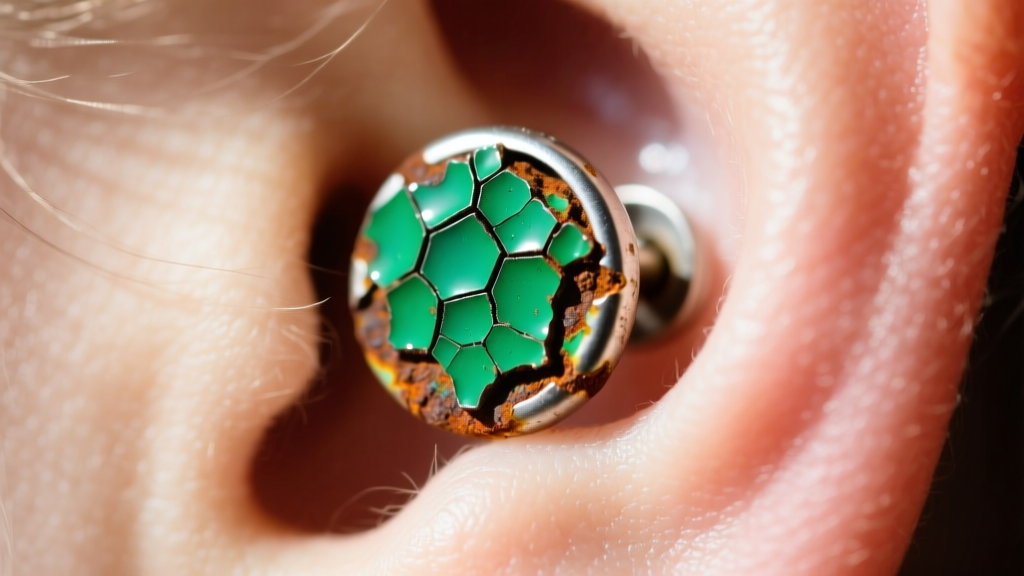
Human sweat is mildly acidic, with a pH ranging from 4.5 to 7.0. When this acidic moisture breaches a micro-fracture in cheap epoxy coatings, the underlying NdFeB core begins to corrode rapidly. As noted by materials experts at K&J Magnetics, neodymium corrosion produces a flaky, green/black oxide powder. Not only does this permanently destroy the magnet's structural integrity and reduce its gauss rating, but the resulting metal salts leach into the skin, causing severe contact dermatitis and staining the earlobe green.
Furthermore, cheap nickel-plated casings will eventually wear away at the contact points due to the friction of snapping the magnets together, exposing the wearer to raw nickel—the most common metal allergen in the world.
Expert Buying Framework: How to Choose Safe Magnetic Studs
To ensure you are purchasing non-pierced earrings that are both secure and dermatologically safe, apply this strict material checklist before checking out:
- Verify the Casing Material: Look for explicit mentions of 316L Surgical Steel, ASTM F136 Titanium, or solid ABS plastic encapsulation. Avoid any product that simply lists "metal alloy" or "silver plated" without specifying the base metal.
- Check for Silicone Buffers: Never buy magnetic earrings where the hard metal or plastic casing touches the skin directly. A removable, high-friction silicone pad is mandatory for lobe health and earring stability.
- Assess the Weight Ratio: Magnetic backs are ideal for lightweight studs (under 12 grams). If you are buying heavy gemstone clusters or large hoops, magnetic backs will cause lobe fatigue. Opt for traditional clip-ons or get the lobes pierced by a professional using a 16-gauge or 14-gauge titanium needle.
- Test the Snap Force: When you receive the earrings, test the snap. It should be firm enough to hold the pieces together when shaken gently, but you should be able to pull them apart with your thumb and forefinger without straining the nail beds.
Care and Maintenance to Preserve Magnetic Flux
Neodymium magnets can lose their flux density if exposed to high heat or physical shock. To maintain the structural integrity of your earrings magnetic mechanisms, never clean them with boiling water or ultrasonic jewelry cleaners, as the heat and high-frequency vibrations can degrade the magnetic alignment and shatter the brittle NdFeB core. Instead, wipe the titanium or steel casings with a lint-free cloth dampened with 70% isopropyl alcohol after each wear to remove acidic sebum and sweat. Store the earrings clasped together in a soft pouch, away from strong electromagnetic fields and sensitive electronics, to ensure the magnetic field remains stable and contained.


