Earrings Mini Guide 2026: Budget vs. Value Assessment
Discover our 2026 budget and value assessment for earrings mini styles. Learn which materials, gauges, and price tiers offer the best long-term investment.

The "Mini" Earring Market in 2026: Hype vs. Reality
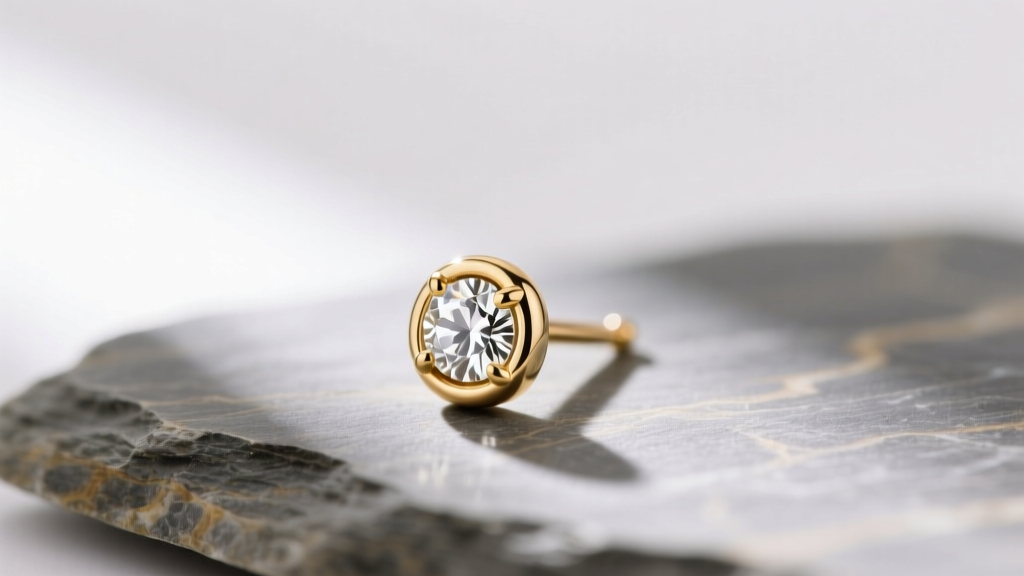
The minimalist jewelry movement has cemented "earrings mini" styles—ranging from 3mm micro-studs and 8mm huggies to tiny cartilage charms—as a permanent staple in modern styling. However, the sheer volume of options available in 2026 has created a confusing marketplace. When a 14k gold mini stud can cost anywhere from $28 at a fast-fashion retailer to $185 at a boutique fine jeweler, how do you determine the actual value?
As a domain expert in jewelry materials and piercing physiology, I approach mini earrings not just as accessories, but as micro-engineered wearables. Because these pieces sit in direct, continuous contact with the skin and are subjected to the friction of hair, clothing, and sleep, their structural integrity is paramount. This comprehensive budget and value assessment breaks down the exact material grades, gauge specifications, and pricing tiers you need to know to build a high-value, hypoallergenic mini earring collection without overpaying for brand markup.
The Material Matrix: Where Your Money Actually Goes
When evaluating the budget for mini earrings, the metal composition is the single largest driver of both price and longevity. Many consumers mistakenly believe that "gold-plated" and "gold vermeil" are interchangeable, a misconception that leads to premature tarnishing and skin irritation. According to the Federal Trade Commission (FTC), true gold vermeil must feature a sterling silver base with a minimum gold thickness of 2.5 microns. Anything less is simply plated brass or copper, which will inevitably oxidize.
| Material Grade | Avg. Price (Mini Stud) | Longevity | Allergy Risk | Best Application |
|---|---|---|---|---|
| Brass/Alloy (Flash Plated) | $8 - $18 | 1-3 Months | High (Nickel/Lead) | Occasional, short-term lobe wear |
| 316L Surgical Steel | $15 - $30 | 1-2 Years | Moderate (Nickel trace) | Healed lobes, secondary piercings |
| 14k Gold Vermeil (2.5μm) | $35 - $65 | 1-3 Years | Low (If nickel-free) | Daily lobe wear, special occasions |
| ASTM F136 Titanium | $25 - $50 | Lifetime | Zero (Biocompatible) | Fresh piercings, sensitive cartilage |
| Solid 14k / 18k Gold | $90 - $200+ | Lifetime | Very Low | 24/7 wear, sleeping, showering |
The Hidden Costs of Ultra-Cheap Mini Earrings
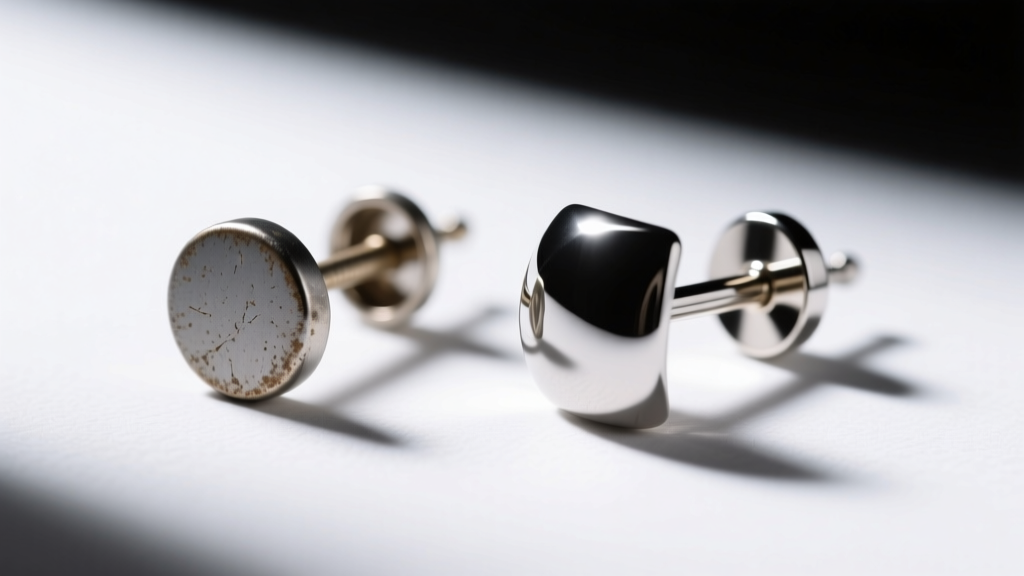
While a $12 pair of mini hoops seems like a budget-friendly win, the hidden costs of ultra-cheap jewelry often manifest in structural failures and medical inconveniences. The most common failure mode in budget mini earrings is post degradation and bending.
To maximize profit margins on low-cost items, manufacturers frequently use 22-gauge (0.6mm) or even 24-gauge (0.5mm) wire for earring posts. While this saves fractions of a gram in metal weight, it creates a post so thin that it bends under the slight pressure of pushing a friction back (butterfly clutch) into place. Once a 22g post bends, it creates micro-abrasions in the fistula (the piercing hole), leading to irritation bumps and delayed healing.
Furthermore, budget mini earrings often rely on poorly cast "butterfly" clutches that lose their tension within weeks. Losing a $12 earring is a minor annoyance; losing a $150 diamond mini stud because you paired it with a cheap, worn-out backing is a preventable financial loss. When assessing value, always factor in the cost of upgrading to secure silicone O-rings or locking screw-backs, which typically cost $5 to $15 but guarantee the safety of your investment.
Price Tier Analysis: Finding the Value Sweet Spot
To navigate the 2026 market, it is essential to categorize mini earrings into distinct pricing tiers. The "value sweet spot" depends entirely on your intended wear schedule.
- Tier 1: Fast Fashion & Trend ($8 - $25)
Best for: Highly stylized, trend-driven shapes you will only wear for a season. Avoid these for any piercing that is less than a year old, as the porous plating harbors bacteria and frequently contains nickel. - Tier 2: Demi-Fine & Vermeil ($35 - $75)
Best for: Office wear and weekend styling. Look for brands that explicitly state a sterling silver (925) base and a minimum of 2.5 microns of 14k gold. This tier offers the look of fine jewelry at a fraction of the cost, provided you remove them before showering or swimming. - Tier 3: Solid Fine Jewelry ($90 - $200+)
Best for: "Sleeper" earrings, cartilage studs, and pieces you never want to take off. Solid 14k gold is highly durable, resistant to tarnish, and maintains intrinsic scrap value. This is the ultimate value tier for cost-per-wear calculations.
Cartilage vs. Lobe: Why Placement Dictates Your Budget
One of the most critical, yet overlooked, aspects of buying mini earrings is understanding how ear placement dictates your required budget. The anatomy of the earlobe allows for high elasticity and rapid healing, meaning it can tolerate a wider variety of metals and thinner gauges (typically 20g or 18g). Cartilage, however, is a completely different environment.
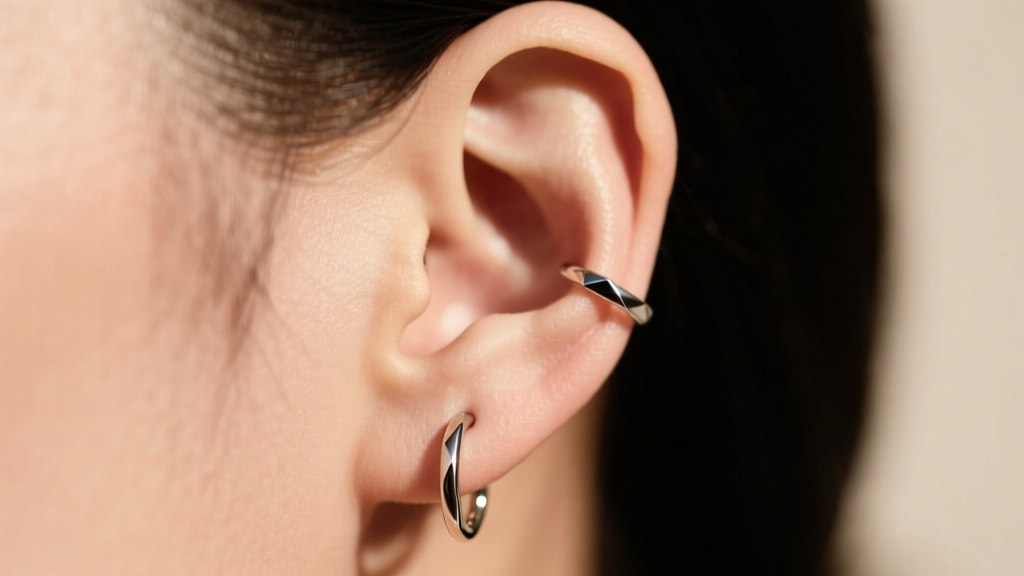
Cartilage lacks the blood supply of the earlobe, making it highly susceptible to prolonged inflammation and infection if irritated by subpar metals. The Association of Professional Piercers (APP) strictly recommends implant-grade titanium (ASTM F136) or solid 14k/18k gold for any cartilage jewelry. Furthermore, cartilage piercings are typically done at 16-gauge (1.2mm) or 14-gauge (1.6mm) to prevent the "cheese-cutter effect," where a thin wire slowly migrates through the dense tissue.
The Budget Impact: Because 16g and 14g jewelry requires significantly more raw material than standard 20g lobe studs, the baseline price for high-quality cartilage mini huggies or studs will naturally be higher. If you are shopping for a helix or tragus mini earring, expect to pay a minimum of $45 for high-grade titanium and upwards of $110 for solid gold. Attempting to force a cheap, thin 20g gold-plated mini hoop into a 16g cartilage piercing is a guaranteed recipe for an expensive medical visit and permanent scarring.
Expert Insight: Never compromise on the internal threading of your mini cartilage studs. Externally threaded posts (where the screw pattern is on the post itself) act like tiny files, tearing the delicate cartilage tissue every time you insert them. Always insist on internally threaded or threadless (push-pin) designs, which are standard in reputable 2026 fine jewelry collections.
Final Verdict: How to Build a High-Value Mini Collection
Assessing the budget and value of mini earrings requires looking past the initial price tag and evaluating the cost-per-wear, material safety, and structural engineering of the piece. For a curated, long-lasting collection in 2026, allocate your budget strategically:
- Invest heavily in your "never take out" pieces: Spend $100+ on solid 14k gold or ASTM F136 titanium for your primary lobe and cartilage studs. These will last a lifetime and withstand daily abuse.
- Save on seasonal trends: Utilize the $35-$65 vermeil tier for larger mini-hoops or decorative ear cuffs that you only wear for evenings out.
- Audit your hardware: Throw away any butterfly clutches that feel loose. Replace them with high-quality silicone O-rings or invest in locking backs to protect your financial investment.
By prioritizing biocompatible materials and correct gauge sizing over fast-fashion discounts, you ensure that your mini earrings remain a source of joy rather than a recurring expense of replacements and dermatologist visits.


