Rules for Wearing Earrings on Passport Photos Explained
Learn the official rules for wearing earrings on passport photos. Avoid rejections with our guide on biometric scanning, sizes, and safe jewelry choices.

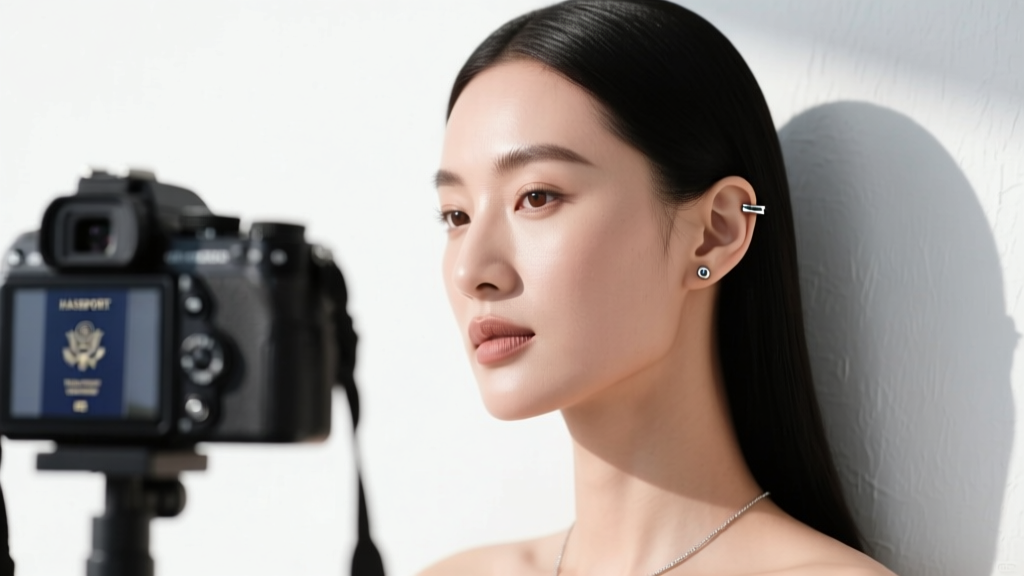
The Short Answer: Can You Wear Earrings on Passport Photos?
If you are preparing for a passport renewal or a first-time application, you might be wondering about the strict rules regarding accessories. The short answer is yes, you can wear earrings on passport photos, but with severe limitations. As of 2026, government agencies worldwide have upgraded to AI-driven 3D biometric scanners that map facial geometry with sub-millimeter precision. Jewelry that casts shadows, creates glare, or alters the natural silhouette of your face and ears will result in an automatic rejection.
According to the U.S. Department of State, you may wear jewelry and keep on your daily accessories as long as they do not obscure your face or create shadows. However, the UK HM Passport Office enforces much stricter guidelines, frequently rejecting photos where large earrings alter the perceived edge of the jawline or neck. Understanding the intersection of jewelry design and biometric technology is crucial to avoiding costly application delays.
Why Biometric Scanners Reject Certain Earrings
Modern passport validation relies on facial recognition algorithms governed by ICAO Doc 9303 standards. These systems do not just 'look' at your photo; they mathematically map over 80 distinct nodal points on your face, including the distance between your pupils, the width of your nose bridge, and the exact contour of your jaw and ears.
Glare and Flash Retroreflection
Passport photo booths and professional studios use high-intensity, direct-axis flash photography. High-polish metals and faceted gemstones act as retroreflectors, bouncing the flash directly back into the camera lens. This creates a 'hotspot' or lens flare that can blind the optical sensor, obscuring the side of your face or the lower lobe of your ear. If the AI cannot detect the precise boundary where your earlobe meets your neck due to a glare bloom, the photo fails the automated validation check.
Facial Landmark Obscuration and False Edges
Dangling earrings, chandeliers, and large hoops introduce 'false edges' into the image. Edge-detection algorithms (like Active Appearance Models) use contrast lines to determine the boundaries of the face. A long drop earring resting against the neck creates a high-contrast shadow line that the software may misinterpret as your actual jawline or hair boundary. This skews the facial bounding box, resulting in an immediate algorithmic rejection.
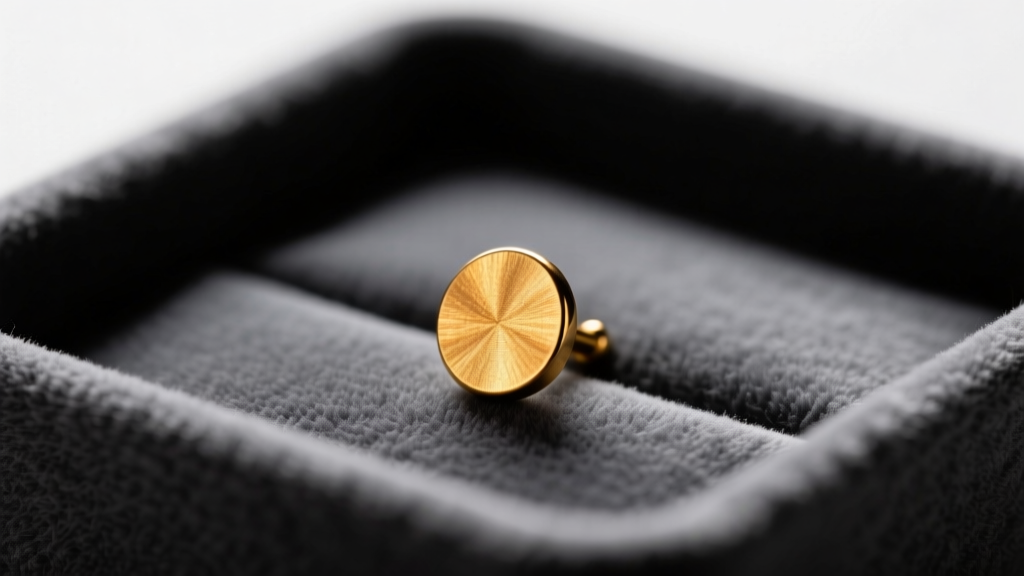
Earring Styles: What is Allowed vs. What Gets Rejected
Not all earrings are created equal when it comes to government photography. Below is a definitive breakdown of how specific earring categories interact with 2026 biometric scanning technology.
| Earring Style | Size / Specification | Biometric Risk Level | Verdict |
|---|---|---|---|
| Micro Studs | 1.5mm - 3mm | None | Safe for all global applications. |
| Standard Studs | 4mm - 6mm | Low (if matte) | Generally accepted, avoid high-polish diamonds/CZ. |
| Huggies / Small Hoops | 8mm - 12mm diameter | Moderate | Accepted only if they hug the lobe tightly and cast no neck shadows. |
| Standard Hoops | 15mm+ diameter | High | Frequent rejection; extends beyond the natural ear silhouette. |
| Dangles / Drops | Any length | Severe | Automatic rejection due to jawline shadow casting. |
| Ear Cuffs / Climbers | Any size | High | Rejection; alters the natural cartilage contour mapped by AI. |
Material Matters: Avoiding the Glare Trap
The material and finish of your earrings are just as important as their size. If you insist on wearing earrings on passport photos, you must select materials that absorb light rather than reflect it.
- Avoid: Sterling silver, white gold, platinum, and faceted gemstones (diamonds, moissanite, cubic zirconia). These materials have high refractive indices and will bounce the camera flash back into the lens, creating a white-out effect on your earlobe.
- Opt For: Brushed or matte finishes. A 3mm brushed titanium ball stud or a matte black PVD-coated (Physical Vapor Deposition) stainless steel stud will absorb the flash. Anodized niobium in dark shades (like deep gunmetal or navy) also works exceptionally well because the anodized layer is non-reflective.
- Organic Materials: Small studs made of matte wood, dark horn, or unpolished stone (like matte onyx or lapis lazuli) are practically invisible to biometric glare sensors.
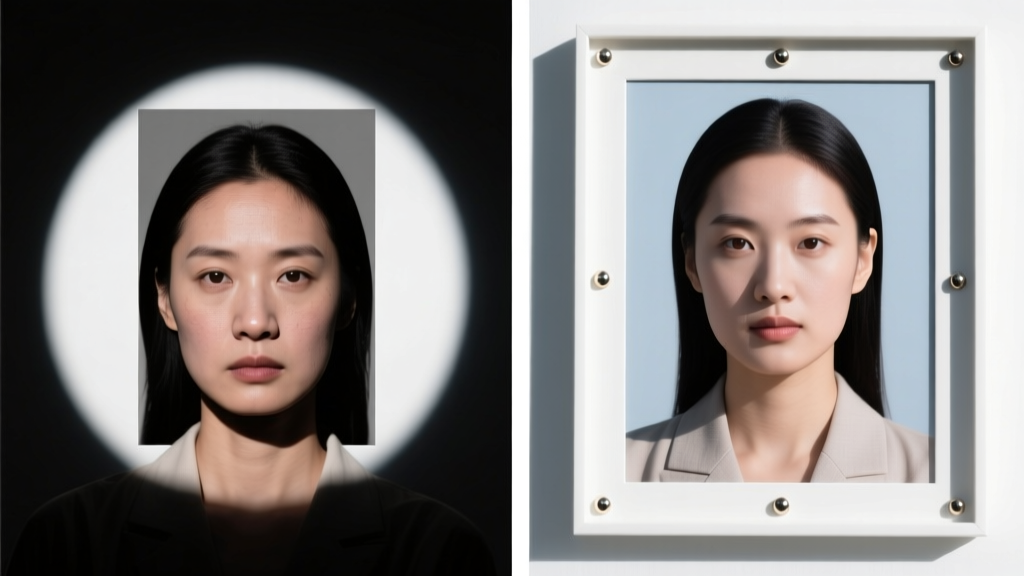
Global Variations in Passport Photo Rules
While the International Civil Aviation Organization (ICAO) sets the baseline for machine-readable travel documents, individual nations enforce their own specific quirks regarding jewelry.
United States
The U.S. State Department is relatively lenient regarding small jewelry, provided it does not obscure the face or eyes. However, their automated photo tool at post offices is highly sensitive to flash glare. If your diamond studs cause a lens flare, the kiosk will reject the image.
United Kingdom & European Union
The UK HM Passport Office is notoriously strict. Their guidelines explicitly state that the face and neck must be entirely free of shadows. Because hoop earrings frequently cast a micro-shadow on the side of the neck under studio lighting, UK applicants are strongly advised to remove all earrings prior to the photo.
Canada & Australia
Both nations utilize advanced 3D mapping for their e-passport chips. They require the full contour of the ears to be visible if hair is tucked behind them. Ear cuffs or cartilage chains that alter the natural ridge of the helix or tragus will trigger a manual review, delaying your passport issuance by weeks.
Expert Troubleshooting: Fresh Piercings and Retainers
What happens if you have a fresh piercing that will close if you remove the jewelry for the 15 minutes it takes to get your photo taken? You cannot risk losing the piercing, but you also cannot risk a passport rejection.
The Solution: Swap your standard jewelry for a biocompatible, non-reflective retainer just for the photo appointment.
- PTFE / Bioplast Retainers: These are flexible, matte-white or clear bio-compatible plastics. A 16-gauge or 18-gauge Bioplast flat-back labret will keep the fistula open while remaining entirely invisible to camera flashes and biometric edge-detection.
- Matte Black Acrylic: For darker skin tones where a white retainer might create a contrast 'dot' that confuses the scanner, a matte black acrylic flat-back stud blends seamlessly into shadows and skin contours.
- Use a Flat-Back: Ensure the retainer is a flat-back labret style, not a butterfly back. Butterfly backs protrude from the rear of the lobe and can create a bizarre, unidentifiable shadow on the neck if your hair is swept up.
Step-by-Step Checklist for Your Photo Appointment
Before you sit in front of the camera, run through this quick checklist to ensure your earrings on passport photos won't cause a rejection:
- Size Check: Are your earrings smaller than 4mm in diameter?
- Finish Check: Is the metal brushed, matte, or dark? (No high-polish silver or gold).
- Shadow Test: Hold a flashlight directly above your head pointing down at your face. Do your earrings cast a shadow on your neck or jaw?
- Silhouette Check: Do the earrings extend past the lowest point of your earlobe?
- Cartilage Check: Are you wearing any ear cuffs, helix chains, or tragus hoops that alter the natural outline of your ear?
When in doubt, the golden rule of government photography applies: take them out. Slip your everyday studs into a secure pocket or jewelry case for the duration of the shoot, and put them right back on the moment the photographer confirms the image has been accepted. It is a minor inconvenience that guarantees your application will proceed without a hitch.


