How to Choose the Best Earrings Organiser Box for Your Collection
Learn how to choose the right earrings organiser box to prevent tarnish and tangles. Expert storage tips for studs, hoops, and dangles.

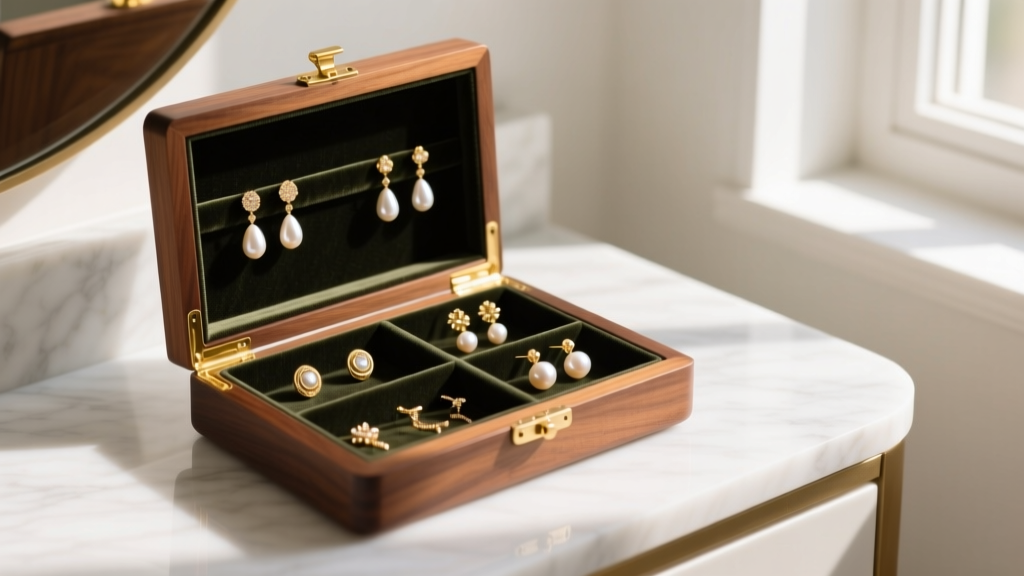
The Hidden Cost of Poor Earring Storage
If you are still tossing your daily wear studs into a ceramic dish or letting your favorite gold hoops tangle in a velvet pouch, you are actively degrading your jewelry. As jewelry collections expand in 2026, investing in a dedicated earrings organiser box is no longer just an aesthetic choice; it is a critical preservation tool. Standard earring posts typically range from 20-gauge (0.81mm) to 18-gauge (1.02mm) in thickness. When left loose in a drawer, the pressure from heavier items can easily bend these delicate metal shafts, ruining the structural integrity of the earring and making them painful to insert into your ear lobe.
Furthermore, the friction of mixed metals rubbing together causes micro-scratches. Pure 24k gold sits at a mere 2.5 to 3 on the Mohs hardness scale, meaning it can be scratched by a simple copper coin or even harder alloyed metals. A properly compartmentalized earrings organiser box isolates each piece, preserving both the structural alignment of the posts and the pristine finish of the metal and gemstones.
Material Science: Matching Your Organiser to Your Metals
Not all storage boxes are created equal. The interior lining of your earrings organiser box dictates the chemical environment your jewelry rests in. According to the Gemological Institute of America (GIA), improper storage is a leading cause of accelerated tarnishing and gemstone degradation.
Anti-Tarnish Linings Explained
Sterling silver (925 silver) tarnishes when it reacts with hydrogen sulfide in the air, forming a black layer of silver sulfide. To combat this, premium organisers use Pacific Silvercloth or similar anti-tarnish flannel. This specialized fabric is embedded with microscopic silver particles that act as a sacrificial barrier, capturing and neutralizing sulfide gases before they reach your actual earrings. If you own a significant amount of silver, an organiser box featuring this specific lining is non-negotiable.
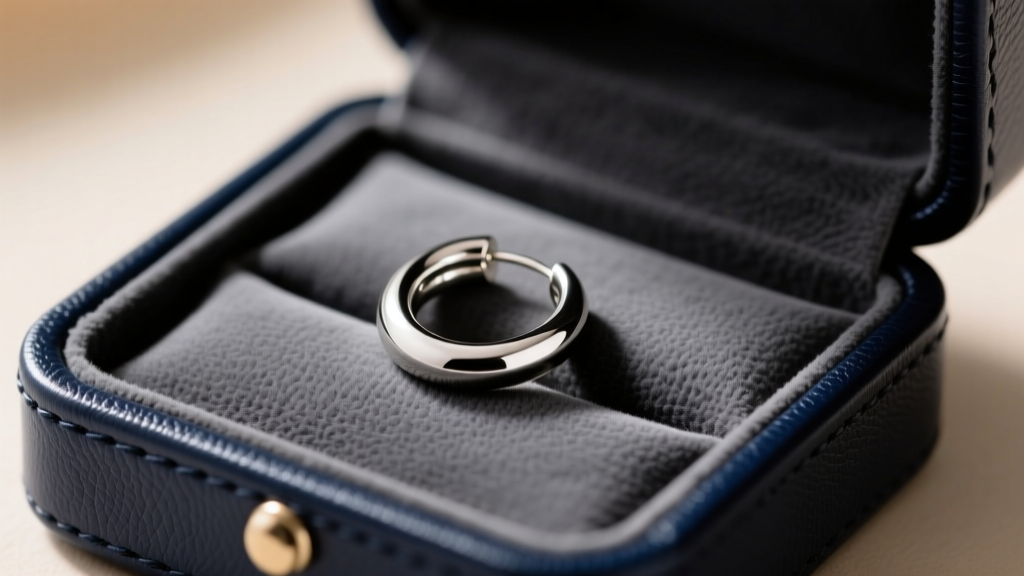
The Danger of Acidic Woods and Plastics
Beginners often purchase beautiful, handcrafted wooden jewellery boxes made from cedar or oak. However, unsealed woods naturally emit tannins and acidic vapors that can corrode soft metals and degrade the nacre on pearls. Always ensure wooden boxes are sealed with a polyurethane finish or lined with an acid-free barrier. Similarly, avoid organisers made with cheap PVC plastics, which can off-gas harmful chemicals that permanently cloud porous gemstones like opals and turquoise.
Compartment Configurations by Earring Type
A universal, one-size-fits-all grid is a recipe for frustration. Your earrings organiser box must feature modular or specialized compartments tailored to the specific silhouettes of your collection. Below is a structural guide to matching your earring types with the correct storage dimensions.
| Earring Type | Ideal Storage Configuration | Required Dimensions (Approx.) | Common Failure Mode if Stored Incorrectly |
|---|---|---|---|
| Standard Studs | Pierced card or tight silicone grid | 1.5mm - 2mm hole diameter | Posts bend; butterfly backs get lost in deep pile. |
| Huggies & Small Hoops | Shallow, divided velvet slots | 25mm width x 15mm depth | Hinge mechanisms crush under overlapping weight. |
| Large Statement Hoops | Hanging bars or deep open trays | Minimum 60mm vertical clearance | Warping of the circular wire; severe surface scratching. |
| Dangles & Drop Earrings | Hanging hooks or deep partitioned boxes | 75mm+ vertical drop space | Delicate chains knot permanently; gemstone settings chip. |
For those with a mixed collection, look for an earrings organiser box that offers a hybrid layout: a pierced top tray for studs, and deeper, un-pierced lower drawers for drops and hoops. The Jewelers of America strongly recommends keeping pieces with sharp prong settings completely separated from softer metals to prevent the prongs from acting like tiny saws against adjacent jewelry.
Hard Shell Acrylic vs. Soft Leather: Vanity vs. Travel
The exterior construction of your earrings organiser box should be dictated by its primary use case: stationary vanity display or frequent travel.
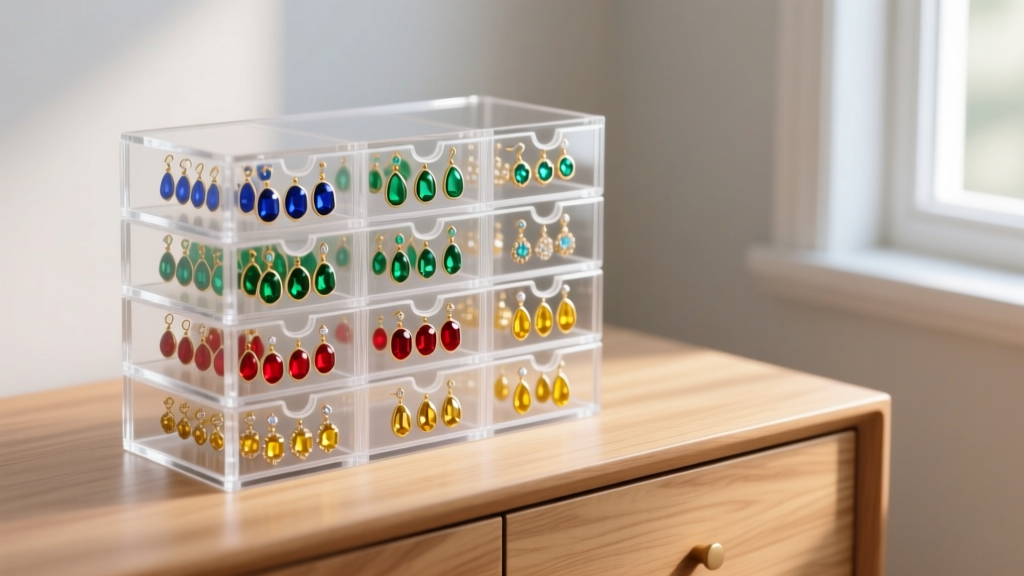
Acrylic and Glass (The Vanity Standard)
Clear PMMA (acrylic) stackable drawers are the gold standard for at-home vanities. They allow for instant visual inventory, meaning you spend less time rummaging and more time styling. Acrylic is chemically stable and will not off-gas, making it perfectly safe for sensitive organic gems like pearls and amber. The primary drawback is weight and fragility; dropping an acrylic organiser will likely shatter the casing and send your collection scattering.
PU Leather and Velvet Rolls (The Travel Essential)
For travel, a zippered PU leather earrings organiser box with an internal velvet strap system is ideal. The compression of the closed lid holds the earrings firmly in place, preventing them from bouncing around inside their slots during transit. Look for travel boxes with a rigid internal spine; soft, unstructured pouches offer zero protection against the crushing forces of a packed suitcase.
Five Fatal Storage Mistakes Beginners Make
Even with the most expensive earrings organiser box on the market, poor habits will ruin your collection. Avoid these common pitfalls:
- Storing Earrings Wet: Never place earrings in a closed box immediately after cleaning them or wearing them in the shower. Trapped moisture creates a micro-climate that accelerates oxidation and can cause the metal posts to develop a greenish patina.
- Leaving Silicone Backs on Silver: While silicone O-ring backs are secure, they trap sweat and moisture directly against the silver post. Remove them before long-term storage, or switch to metal friction backs for silver pieces.
- Overcrowding Compartments: Forcing three pairs of studs into a slot meant for one guarantees friction scratches. If your box is full, it is time to buy a second box or curate your collection.
- Ignoring the Clasp Mechanisms: Always fasten the butterfly backs or screw-backs loosely on the posts before storing. This keeps the pair together and prevents the sharp post tips from snagging on the fabric lining.
- Using Rubber Bands: Never use rubber bands to secure earring pairs or keep hoops closed. Rubber degrades over time, melting into a sticky, acidic residue that is nearly impossible to remove from intricate metal filigree.
Building Your Ultimate Storage System
Choosing the right earrings organiser box is an exercise in material awareness and spatial planning. Start by auditing your current collection: count your studs, measure your largest hoops, and identify your most tarnish-prone silver pieces. Select a box with an anti-tarnish lining if silver dominates your wardrobe, or opt for clear, stackable acrylic if you prefer a visual display of colorful enamel and gemstone drops.
Remember that an organiser is not just a container; it is a preservation environment. By respecting the gauge of your posts, the Mohs hardness of your metals, and the chemical sensitivities of your gemstones, your storage system will ensure your favorite earrings remain as brilliant and structurally sound as the day you bought them.


