Best Earrings Passport Photo Rules 2026: Budget & Value Guide
Discover the best budget earrings for passport photos in 2026. Learn biometric rules, avoid flash glare, and prevent costly application rejections.

The Hidden Costs of a Rejected Biometric Photo
When preparing for international travel, the humble passport photo is often the most underestimated bottleneck. In 2026, biometric scanning technology at border controls and automated application portals has become ruthlessly precise. A surprising number of applicants face delays not because of their facial expressions, but due to their jewelry choices. Searching for the perfect earrings passport photo combination is rarely about finding the most glamorous accessory; it is an exercise in risk mitigation and budget value assessment.
The financial ripple effect of a rejected passport photo is steep. If your application is flagged by the automated facial recognition software, processing halts. You will receive a letter requesting a new photo, which can add three to six weeks to standard processing times. For travelers on a deadline, this means paying expedited service fees (often $60 or more), overnight return shipping, and potentially rescheduling non-refundable flights. In this context, evaluating the 'value' of your earrings isn't about carat weight or brand prestige—it is about optical compliance and utility.
Decoding the Official Guidelines: What is Actually Allowed?
To make an informed budget decision, we must first understand the strict parameters set by global authorities. The rules governing biometric photography are designed to ensure that nothing interferes with the algorithmic mapping of your facial landmarks.
U.S. Department of State Parameters
According to the U.S. Department of State, jewelry is permitted in passport photos provided it does not obscure your face or cast shadows. While the State Department explicitly banned eyeglasses in 2016 to eliminate lens glare, earrings remain in a gray area for many applicants. The critical failure points for earrings are:
- Obscuring the Jawline: Large hoops or wide huggies can intersect the algorithmic boundary of the jaw and chin.
- Casting Shadows: Dangle and drop earrings can cast long, dark shadows across the neck and collarbone when hit by the harsh, direct flash of pharmacy photo kiosks.
- Specular Glare: Highly reflective gemstones can bounce the camera flash directly into the lens, creating a 'white-out' artifact that the software reads as a facial obstruction.
International ICAO Biometric Standards
Globally, the International Civil Aviation Organization (ICAO) sets the baseline for machine-readable travel documents. ICAO Doc 9303 specifies that the face must be clearly visible from the bottom of the chin to the top of the forehead, with both edges of the face exposed. Earrings that pull the earlobe downward, altering the natural resting position of the ear, or wide ear cuffs that extend beyond the natural silhouette of the head, can trigger a manual review by consular officers.
The Physics of Flash Glare: Why Budget Beats Premium
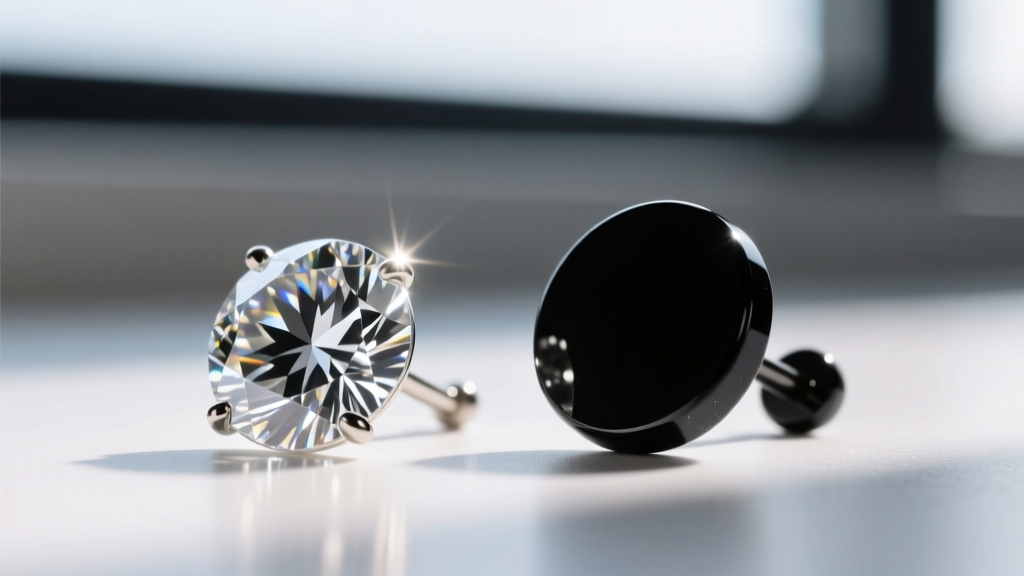
From a purely budgetary and value-driven perspective, expensive fine jewelry is often the worst choice for a passport photo. The culprit is the refractive index (RI) of the materials involved. Pharmacy photo booths and shipping center kiosks utilize direct, on-axis dual-flash setups.
When this intense burst of light hits a faceted diamond (RI of 2.42) or even a budget cubic zirconia (RI of 2.15), the stone acts as a retroreflector. It bounces a concentrated beam of light straight back into the camera lens. If this glare hits the cheekbone or the edge of the eye socket, the biometric software will reject the image for 'uneven lighting' or 'facial obstruction.' Conversely, opaque, matte, or brushed materials scatter light diffusely, eliminating the glare risk entirely.
Material Glare Risk & Budget Value Matrix
| Material Type | Typical Cost Range | Glare Risk | Biometric Compliance | Value Assessment |
|---|---|---|---|---|
| Faceted Diamond / CZ | $50 - $2,000+ | Extreme | Poor (High rejection rate) | Low Utility / High Risk |
| High-Polish 14k Gold | $80 - $300 | High | Fair (Depends on angle) | Low Utility |
| Brushed / Sandblasted Steel | $10 - $25 | Very Low | Excellent | High Utility |
| Opaque Enamel / Resin | $5 - $15 | Zero | Excellent | Maximum Utility |
| Matte Titanium (ASTM F136) | $8 - $20 | Zero | Excellent | Maximum Utility |
Budget Value Assessment: Top Safe Earring Categories Under $30
If you are assessing your jewelry box for a compliant pair, or looking to make a low-risk purchase specifically for travel documentation, here are the highest-value categories that guarantee compliance without breaking the bank.
1. Implant-Grade Titanium Beads (ASTM F136)
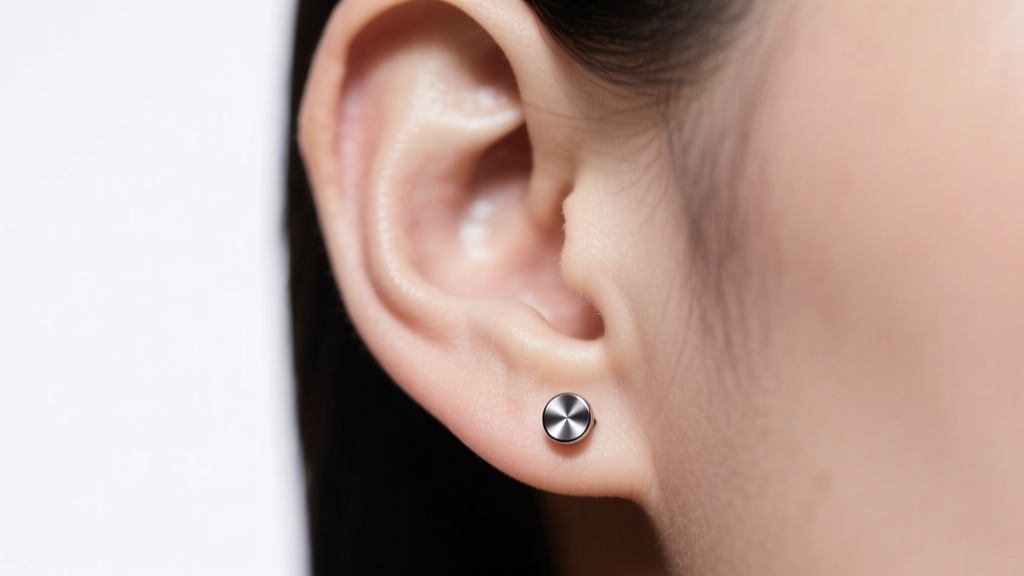
For those with sensitive ears or fresh piercings, you cannot risk taking out your jewelry for the 30 seconds it takes to shoot the photo. Implant-grade titanium (specifically ASTM F136) is the gold standard for healing piercings. A simple 3mm or 4mm matte titanium bead on an 18-gauge flat-back post costs between $8 and $15 from reputable body jewelry brands. The matte finish absorbs flash rather than reflecting it, and the low profile ensures zero shadow casting. This is arguably the highest-value 'earrings passport photo' solution available, as it serves a dual purpose for daily healing wear and travel compliance.
2. Opaque Enamel and Resin Coated Studs
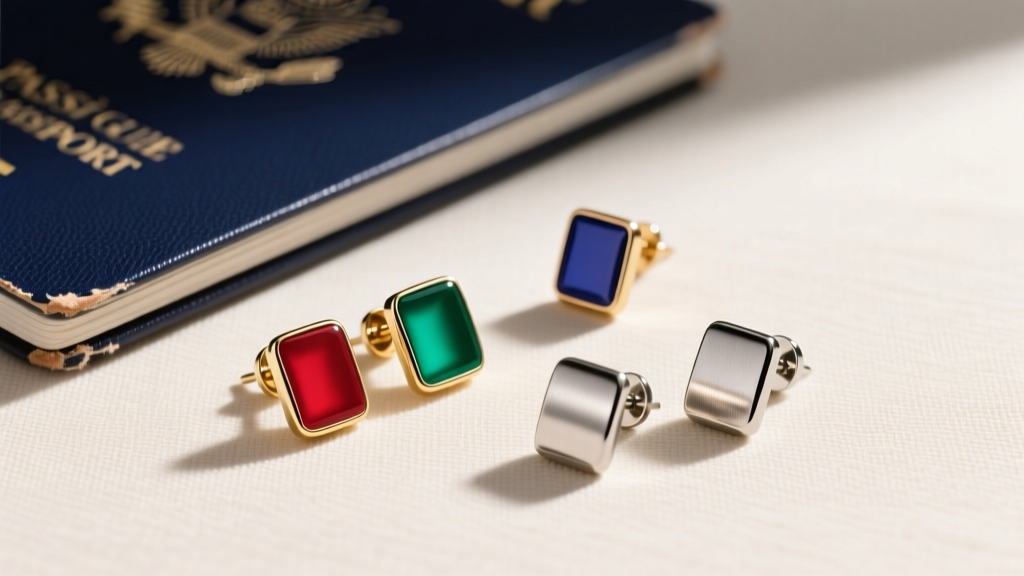
Enamel-coated brass or sterling silver studs offer a pop of color with zero refractive properties. Because the surface is glass-like but opaque, it diffuses light evenly. You can find high-quality enamel studs in the $10 to $20 range. Look for flat, disc-shaped designs (often called 'pancake' or 'coin' studs) that sit flush against the earlobe. Avoid domed enamel, as the curvature can still catch a directional flash and create a specular highlight on the edge of the lobe.
3. Brushed or Sandblasted PVD Gold
If you prefer the look of fine jewelry but need to eliminate glare, look for Physical Vapor Deposition (PVD) coated stainless steel with a brushed or sandblasted finish. The micro-abrasions on the surface of the metal scatter light beautifully, giving a soft, luxurious glow in photos without the harsh retroreflection of polished gold. These typically range from $15 to $28 and offer the aesthetic value of fine jewelry with the utilitarian compliance of matte metals.
Troubleshooting Common Pharmacy Kiosk Failures
Even with the correct budget-friendly earrings, the environment in which you take the photo can introduce variables that lead to rejection. Here is a practical troubleshooting framework for the most common kiosk failures related to jewelry and lighting:
- The Butterfly Back Shadow: If you wear standard stud earrings with large 'butterfly' friction backs, the bulky metal or plastic backing can protrude behind the earlobe. Under harsh overhead kiosk lighting, this can cast an unnatural shadow on the neck or jawline. Solution: Switch to flat-back labret studs or small, tight silicone O-rings for the photo.
- The Hair Tuck Trap: Many applicants tuck their hair behind their ears to 'show' the earring, believing it looks more professional. However, if your earring is larger than a 4mm stud, tucking the hair exposes the earring to the direct flash path. Solution: Let your hair fall naturally. If your earrings are small, flat, and matte, they can remain hidden behind the hair, which is 100% compliant and eliminates all glare risks.
- Asymmetry Rejections: Biometric software looks for facial symmetry. If you are wearing a curated ear setup with multiple cartilage studs on one side and none on the other, the asymmetrical shadows can occasionally confuse older kiosk software. Solution: Stick to a simple, symmetrical pair of lobe studs for the photo, and re-insert your cartilage jewelry immediately after the shutter clicks.
Final Verdict: Maximizing Value on Your Travel Docs
When evaluating the intersection of budget and compliance for your passport photo, the data is clear: intrinsic material value is inversely correlated with biometric utility. A $5,000 pair of diamond drops is a liability in a photo booth, while a $12 pair of brushed titanium flat-backs is a guaranteed asset.
By prioritizing matte finishes, opaque materials, and low-profile silhouettes, you protect yourself from the hidden costs of application delays and expedited shipping fees. The smartest budget strategy is not to buy 'passport-safe' jewelry as a gimmick, but to invest in high-quality, low-reflectivity basics like ASTM F136 titanium or brushed PVD steel that serve your daily wardrobe while quietly ensuring your travel documents pass every automated checkpoint in 2026 and beyond.


