Earrings Plaza New York: A Metallurgical Material Guide
Discover the metallurgical properties of fine metals sourced at Earrings Plaza New York. Compare titanium, gold, and platinum for sensitive ears.

The Sourcing Standard: Navigating Earrings Plaza New York
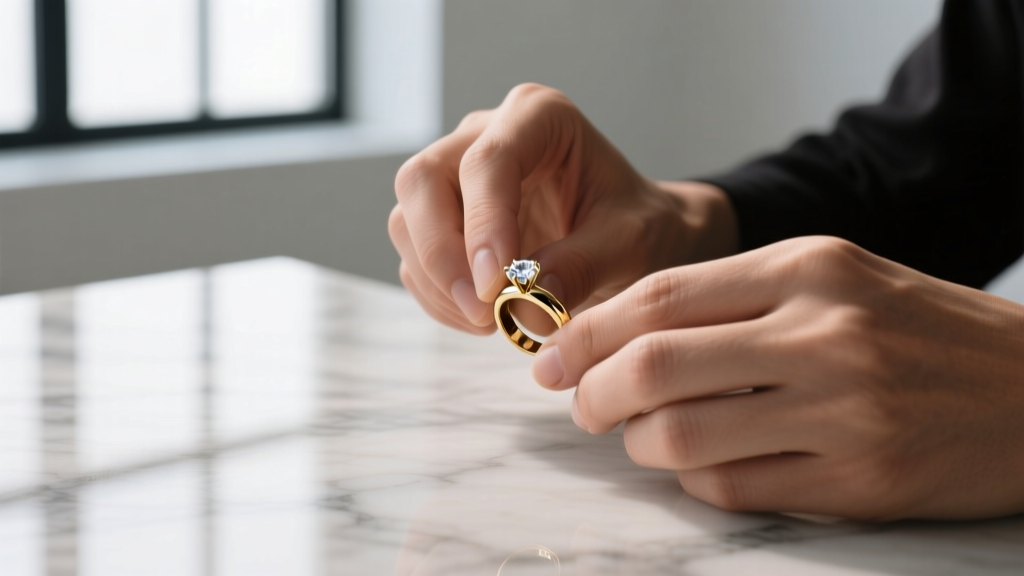
For serious collectors, bespoke designers, and wholesale buyers, the Earrings Plaza New York represents a pinnacle of metallurgical diversity and high-end jewelry sourcing. As we move through 2026, the demand for body-safe, hypoallergenic, and structurally sound earring materials has never been higher. Buyers are no longer satisfied with vague descriptors like 'surgical steel' or 'gold-plated.' Instead, the modern connoisseur demands exact alloy compositions, verifiable hallmarks, and an understanding of how specific metals interact with human tissue and environmental stressors.
Whether you are sourcing heavy 14k gold hoops for everyday wear or implant-grade titanium for fresh cartilage piercings, understanding the metallurgical properties of your materials is non-negotiable. This guide breaks down the precise material standards you should expect when evaluating inventory, comparing the tensile strength, biocompatibility, and long-term wear characteristics of the premier metals available in the market.
Decoding Precious Metals: Gold Alloys & Karat Weights
Pure 24-karat gold (99.9% Au) is virtually nonexistent in functional earring manufacturing due to its extreme malleability. With a Vickers hardness (HV) of roughly 25, pure gold will bend, warp, and lose its shape under the minimal pressure of a sleeping ear. Therefore, gold must be alloyed with other metals to increase its tensile strength and durability.
18k vs. 14k Gold: The Durability Matrix
At the upper echelon of fine jewelry, 18k gold (75% pure gold, 25% alloy) offers a rich, saturated color and excellent biocompatibility. However, its softer nature makes it less ideal for heavy, structural pieces like large-diameter hoops or threadless cartilage posts. Conversely, 14k gold (58.3% pure gold, 41.7% alloy) provides superior structural integrity. The higher alloy content—often a mix of copper, silver, and zinc—increases the Vickers hardness to approximately 120-140 HV, making it the optimal choice for huggies, clickers, and heavy drop earrings that require rigid clasps and secure prong settings.
The White Gold and Nickel Conundrum
White gold is not naturally white; it is created by alloying yellow gold with white metals. Historically, nickel was the primary bleaching agent, but nickel is a notorious contact allergen affecting up to 15% of the population. Today, premium vendors utilize palladium or manganese alloys to create nickel-free white gold. Furthermore, white gold is universally plated with rhodium to achieve a bright, reflective finish. When sourcing, verify the rhodium plating thickness; a high-quality application should measure between 0.75 and 1.0 microns to prevent premature wear-through on high-friction areas like earring posts and clutch backs.
Hypoallergenic Powerhouses: Titanium & Niobium
When addressing sensitive ears, fresh piercings, or metal hypersensitivities, the conversation shifts from precious metals to reactive and implant-grade materials. The Association of Professional Piercers strictly outlines which materials are safe for prolonged subdermal or transdermal contact.
ASTM F136 vs. Commercial Grade Titanium
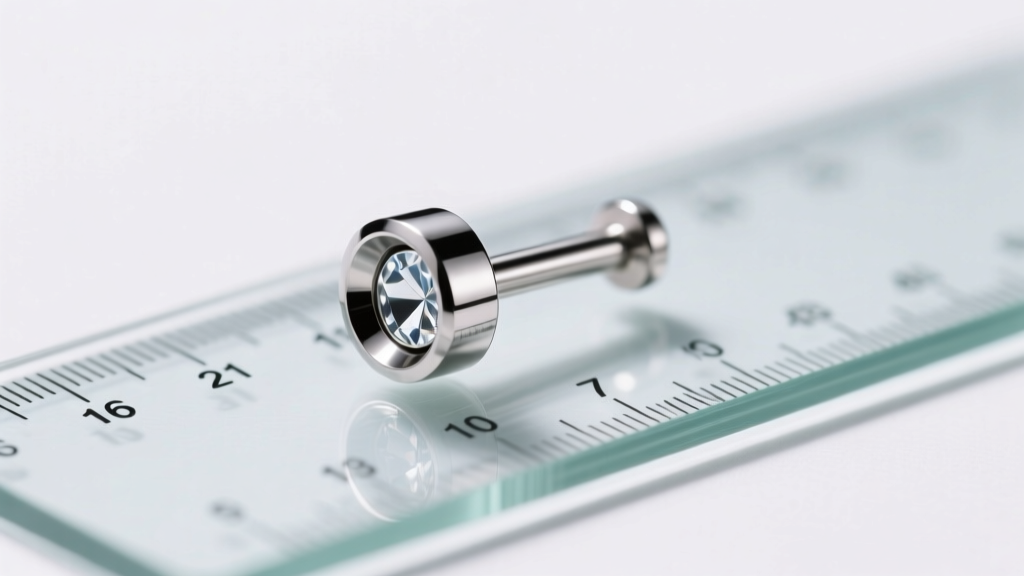
Not all titanium is created equal. Commercially pure titanium (ASTM B265) is lightweight and corrosion-resistant, but it lacks the specific metallurgical consistency required for medical implants. The gold standard for earring posts, particularly for cartilage and helix piercings, is Ti-6Al-4V ELI (Extra Low Interstitial), designated as ASTM F136. This specific alloy contains controlled amounts of aluminum and vanadium, offering exceptional tensile strength and biocompatibility. For cartilage jewelry, 16-gauge (1.2mm) and 14-gauge (1.6mm) ASTM F136 threadless or internally threaded labrets are the industry benchmark, providing the necessary rigidity to prevent migration and tissue tearing.
Niobium: The Anodizing Marvel
Niobium (Nb) is a highly reactive, hypoallergenic element that contains no alloys and no nickel. Its most unique property in jewelry making is its ability to be anodized. By applying specific voltages to the metal in an electrolytic bath, jewelers can alter the thickness of the surface oxide layer, which refracts light to produce vivid, permanent colors—such as deep blues, purples, and golds—without the use of toxic dyes or plating. While softer than titanium (making it less suitable for straight, load-bearing posts), niobium is exceptional for seamless segment rings and captive bead rings used in lobes and healed cartilage.
The Platinum Standard: Density and Patina
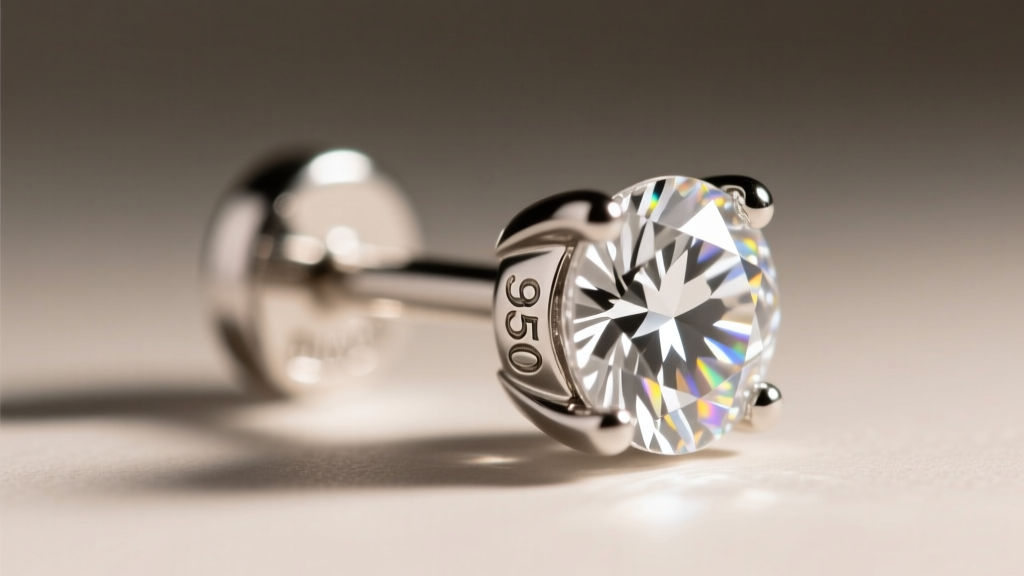
Platinum is the undisputed heavyweight champion of fine jewelry. Typically alloyed as 950 Platinum (95% pure platinum, 5% ruthenium or iridium), it possesses a staggering density of 21.45 g/cm³. This immense weight provides a luxurious, substantial feel, making it the premier choice for high-value diamond stud earrings and intricate chandelier drops.
Unlike white gold, platinum's white color is inherent and will never fade or require rhodium replating. However, platinum is a relatively soft metal in terms of scratch resistance; it displaces rather than loses material when scratched, developing a soft, matte finish known as a 'patina' over time. For earring posts, platinum's malleability is actually a benefit, as it allows bench jewelers to easily bend and adjust the post angle or securely tighten prongs over delicate gemstones without the risk of the metal snapping.
Material Comparison Matrix
| Material | Purity / Grade | Vickers Hardness (HV) | Biocompatibility | Best Earring Application |
|---|---|---|---|---|
| 18k Yellow Gold | 75% Au | ~125 HV | Excellent | Lobe studs, lightweight drops |
| 14k Rose Gold | 58.3% Au | ~140 HV | Very Good | Huggies, structural hoops |
| Titanium (Implant) | ASTM F136 | ~340 HV | Superior (Medical) | Cartilage posts, threadless ends |
| Niobium | 99.9% Nb | ~60 HV | Superior | Anodized seamless rings, lobe hoops |
| Platinum | 950 Pt | ~130 HV | Excellent | Heavy diamond studs, secure prongs |
Navigating Hallmarks and Assays at the Plaza
When sourcing from high-volume districts or specialized hubs like the Earrings Plaza New York, verifying material authenticity is critical. Visual hallmarks are the first line of defense. Look for precise laser or mechanical stamps: '750' or '18k' for 18-karat gold, '585' or '14k' for 14-karat gold, and '950' or 'PT' for platinum. However, hallmarks can be easily counterfeited on imported, mass-produced goods.
For absolute certainty, modern buyers and reputable vendors rely on X-ray Fluorescence (XRF) spectrometry. This non-destructive testing method fires X-rays into the metal and measures the fluorescent emission to determine the exact elemental composition down to the fraction of a percent. If a vendor claims a piece is nickel-free 14k white gold, an XRF scan will definitively prove the absence of nickel and confirm the exact gold-to-palladium ratio. Always request XRF assay reports when purchasing wholesale lots or high-carat bespoke pieces.
Conclusion: Making Informed Metallurgical Choices
The distinction between a mediocre piece of jewelry and a lifelong heirloom lies entirely in its metallurgical foundation. Whether you are prioritizing the rigid tensile strength of 14k gold for everyday hoops, the medical-grade safety of ASTM F136 titanium for fresh piercings, or the eternal density of 950 platinum for diamond studs, understanding these properties empowers you to make superior sourcing decisions. By demanding verifiable grades, precise gauges, and transparent alloy compositions, you ensure that every piece added to your collection meets the highest standards of both luxury and bodily safety.


