How to Prevent an Earring Lobe Infection: 2026 Style Guide
Discover how 2026 earring trends impact ear health. Learn to prevent an earring lobe infection with our expert guide on metals, weights, and hardware.

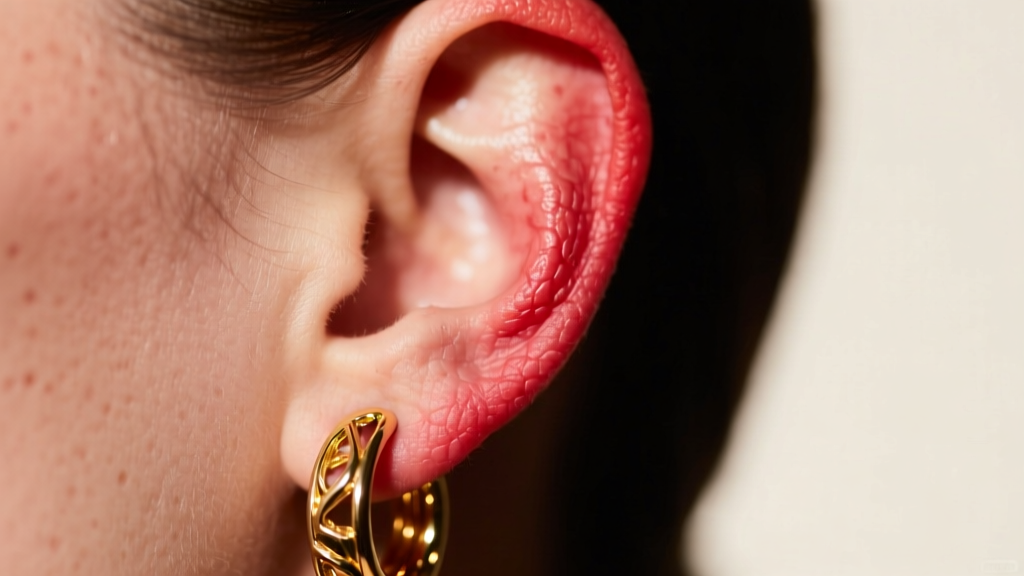
The Intersection of Maximalist Trends and Ear Health
The 2026 jewelry landscape is dominated by the "Statement Lobe" trend. We are seeing a massive resurgence of oversized, sculptural hoops, heavy mixed-metal drops, and layered ear stacks that push the boundaries of traditional lobe piercings. While these styles are visually striking, they have triggered a parallel spike in dermatological and piercing-related complications. Specifically, the search volume and clinical reports surrounding an earring lobe infection have surged alongside the popularity of heavyweight earwear.
As style enthusiasts, we must understand that the earlobe is not merely a piece of skin; it is a healed fistula—a mucosal-like tube of epithelial tissue. When subjected to the extreme weights and porous materials often found in fast-fashion statement pieces, this tissue undergoes micro-trauma. This comprehensive guide bridges the gap between high fashion and clinical dermatology, providing you with the metallurgical and anatomical knowledge required to wear 2026's heaviest trends without compromising your ear health.
Anatomy of a Flare-Up: Allergy vs. Bacterial Infection
Before adjusting your jewelry box, it is critical to differentiate between allergic contact dermatitis and a true bacterial earring lobe infection. Both present with erythema (redness), swelling, and localized heat, but their root causes and treatments are entirely different.
Allergic Contact Dermatitis
Often mistaken for an infection, this is an immune response to nickel or other base metals leaching into the skin. According to the Mayo Clinic, nickel allergies affect a significant portion of the population. When an earring contains nickel, the skin releases histamines, causing itching, clear fluid weeping, and flaking. There is no bacterial presence, meaning antibiotics will not resolve the issue.
True Bacterial Infection
A genuine earring lobe infection is typically caused by Staphylococcus aureus or Pseudomonas aeruginosa. The Centers for Disease Control and Prevention (CDC) notes that Staph bacteria naturally live on the skin but become dangerous when they bypass the epidermal barrier. In the context of heavy earrings, the sheer weight pulls the jewelry downward, creating microscopic fissures in the fistula lining. These micro-tears act as open doorways for bacteria trapped in hair products, unwashed hands, or porous jewelry crevices to enter the deeper dermal layers, resulting in pus, severe throbbing pain, and localized fever.
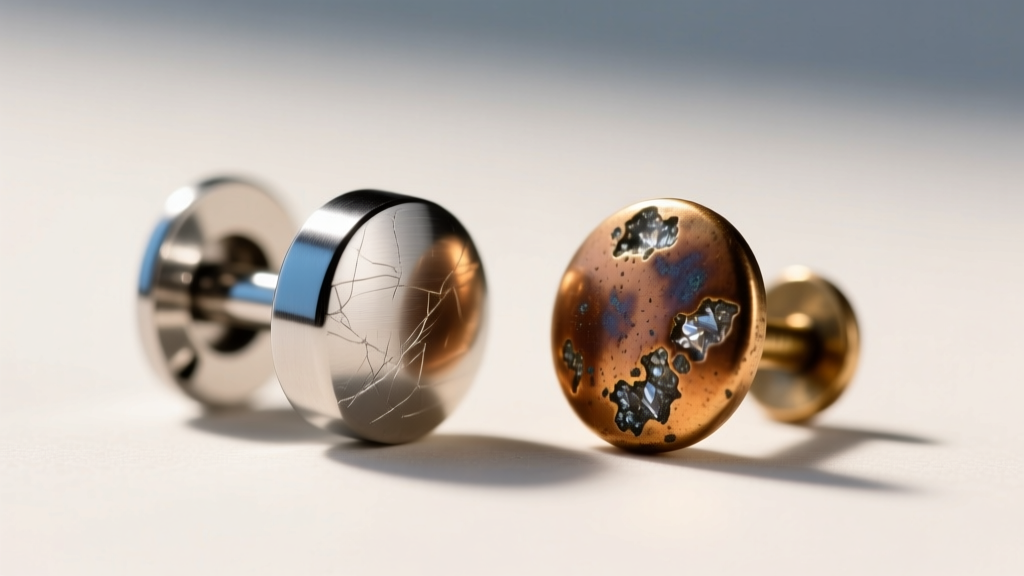
Metallurgy and the 2026 Heavyweight Trend
The most insidious cause of lobe complications is the material composition of the jewelry itself. Many 2026 statement pieces are manufactured using brass alloys or low-grade "surgical steel" that are heavily plated. Once the plating wears down from friction against the fistula, the base metal is exposed to the warm, moist environment of the earlobe.
| Material Grade | Nickel Content | Surface Porosity | Infection / Irritation Risk |
|---|---|---|---|
| ASTM F136 Implant-Grade Titanium | 0% (Nickel-Free) | Ultra-Low (Mirror Polish) | Minimal (Gold Standard for Healing) |
| 14k / 18k Solid Gold (Nickel-Free Alloy) | 0% (If Alloyed with Silver/Copper) | Low | Low (Safe for Long-Term Wear) |
| 316L Surgical Stainless Steel | 8% - 10.5% | Micro-Porous | Moderate to High (Allergy & Bacteria Trap) |
| Gold Vermeil / Plated Brass | High (in Base Metal) | High (Once Plating Chips) | Extreme (High Bacterial & Allergic Risk) |
For a deep dive into safe body jewelry materials, the Association of Professional Piercers (APP) strongly recommends ASTM F136 titanium or specific high-karat gold alloys. These materials possess a passive oxide layer that resists corrosion and prevents bacteria from adhering to the post.
Hardware Mechanics: Threading and Backings
Beyond the metal alloy, the physical construction of the earring post plays a massive role in fistula health. If you are wearing heavy statement earrings, the stress on the hardware is multiplied.
The Danger of External Threading
Externally threaded earrings (where the screw pattern is on the post itself) act like a microscopic cheese grater. Every time you insert or remove the earring, the sharp metal threads scrape the delicate epithelial lining of the fistula. This guarantees micro-tearing, which immediately invites an earring lobe infection. In 2026, always opt for internally threaded (the screw is on the decorative end) or threadless (tension-fit) jewelry to preserve the integrity of the lobe.
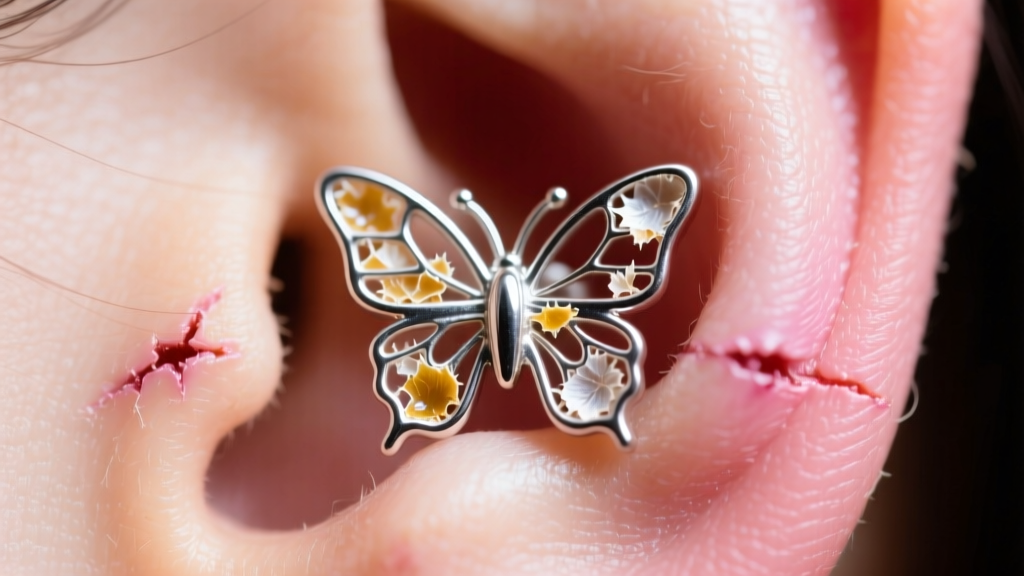
Friction Backs vs. Flat Backs
The traditional "butterfly" friction back is a notorious vector for infection. The tiny scrolls and crevices trap sebum, dead skin cells, and hair products. This organic matter decomposes, creating a breeding ground for bacteria right against the exit hole of the piercing. Furthermore, friction backs apply uneven pressure to the back of the lobe, restricting blood flow and lymphatic drainage, which delays healing and exacerbates swelling. Upgrading to flat-back labret studs or secure screw-on beads eliminates these "bacteria pockets" entirely.
Weight Limits and Fistula Migration
The 2026 trend of oversized, sculptural metal hoops often pushes earring weights past 25 grams per ear. For context, a standard lightweight stud weighs less than 2 grams. When a 25-gram hoop swings with the motion of your head, it generates kinetic force that pulls the fistula downward. Over time, this causes the piercing channel to elongate and migrate. The thinned-out tissue at the bottom of the elongated hole is highly susceptible to tearing, leading to chronic, recurring earring lobe infections. Rule of thumb: Reserve heavy statement pieces (over 15 grams) for short-term wear (under 6 hours) and immediately swap back to lightweight, implant-grade titanium studs to allow the lobe tissue to recover and contract.
Your 2026 Prevention & Care Protocol
To safely participate in current jewelry trends without triggering an earring lobe infection, implement this clinical-grade maintenance routine:
- Daily Saline Flush: Use a sterile, canned 0.9% sodium chloride wound wash. Avoid homemade sea salt solutions, as the incorrect osmolarity and trace iodine can cause cellular dehydration and contact dermatitis.
- Ultrasonic Jewelry Cleaning: Once a week, place your metal earrings (excluding soft gemstones like opals or pearls) in an ultrasonic cleaner with a few drops of mild, fragrance-free dish soap. This vibrates microscopic debris out of threading and clasp crevices that alcohol wipes cannot reach.
- The 20-Gauge vs. 18-Gauge Rule: Standard fashion earrings are often 20-gauge (0.8mm) or 22-gauge (0.6mm). These thin wires act like a blade cutting through cheese when subjected to heavy weights. Upgrade your heavy statement pieces to 18-gauge (1.0mm) or 16-gauge (1.2mm) posts to distribute the weight across a wider surface area of the fistula.
- Sleeping Protocol: Never sleep in hoop earrings or dangling styles. The friction against cotton pillowcases creates rotational torque on the lobe, forcing surface bacteria deep into the piercing channel.
Styling Around an Active Flare-Up
If you are currently battling an active earring lobe infection, the desire to maintain your curated ear aesthetic is understandable, but strict harm-reduction styling is required. Remove all hoops, dangles, and gold vermeil pieces immediately. Downsize to a lightweight, internally threaded ASTM F136 titanium flat-back labret stud. This provides the necessary clearance for swelling while preventing the jewelry from moving and agitating the infected tissue. Apply a sterile warm compress to encourage lymphatic drainage, and consult a dermatologist or professional piercer before reaching for your favorite 2026 statement hoops again.


