The 2026 Pearl Earring Size Guide: Trending Millimeter Fits
Master the 2026 pearl earring size guide. Discover trending millimeter fits, face-shape pairings, and luster grades for studs, drops, and ear cuffs.

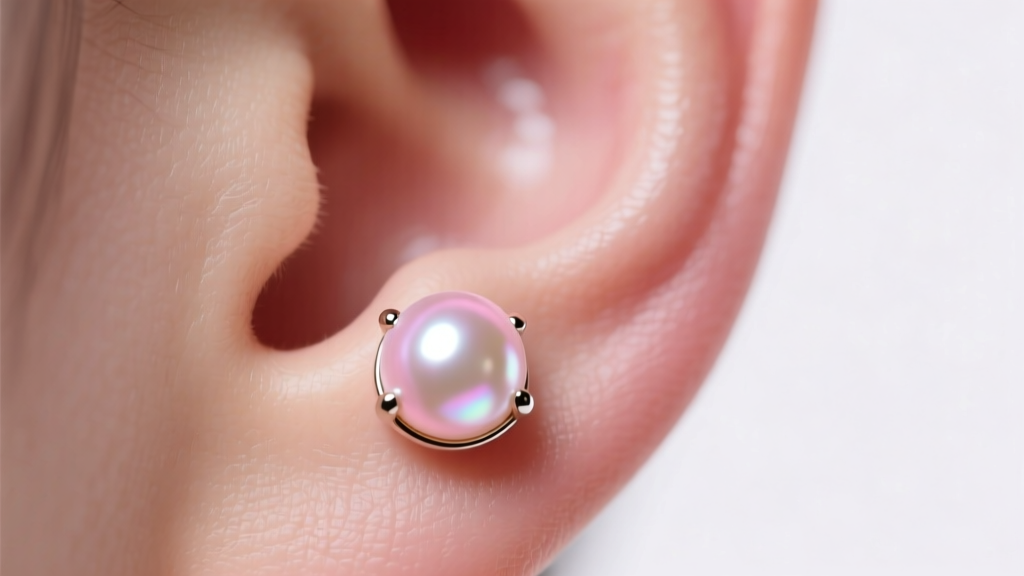
For decades, the pearl earring market was governed by a rigid, unspoken uniform: the 6mm to 7mm round white Akoya stud. It was the undisputed standard of conservative elegance. However, as we navigate the style landscape of 2026, the rules of proportion have radically shifted. Today, pearls are no longer just heirlooms; they are dynamic, architectural elements of personal style. This comprehensive pearl earring size guide breaks down the exact millimeter measurements, nacre requirements, and styling frameworks you need to master this year's most compelling ear trends.
The Shift in Pearl Proportions: 2026 Trend Overview
The current jewelry zeitgeist is defined by 'expressive proportions.' According to trend forecasters and the American Gem Society (AGS), consumers are moving away from safe, mid-range sizing and polarizing toward two distinct extremes: ultra-micro pearls for intricate cartilage stacking, and oversized, asymmetrical baroques for bold lobe statements. The traditional 6mm stud hasn't disappeared, but it has been recontextualized as a mere anchor point in a larger, multi-piercing constellation. Understanding the precise millimeter impact of these gems is critical for both designers and collectors aiming to curate a modern, trend-forward ear profile.
The Definitive Pearl Earring Size Guide by Millimeter
Pearl sizes are measured in millimeters (mm) across the diameter. Even a 1mm difference drastically alters the visual weight, price, and appropriate placement of the earring. Below is the 2026 sizing matrix:
| Size (mm) | Category | Best Placement | 2026 Trend Status |
|---|---|---|---|
| 3.0 - 4.5 | Petite / Seed | Helix, tragus, second/third lobes | High (Quiet Luxury staple) |
| 5.0 - 6.5 | Classic Standard | Primary lobe, everyday office wear | Moderate (Shifting to larger) |
| 7.0 - 8.5 | Statement Stud | Primary lobe, evening wear | High (The new everyday) |
| 9.0 - 11.0 | Bold / South Sea | Red carpet, editorial, single-ear | Niche but growing |
| 12.0+ | Baroque / Oversized | Avant-garde, asymmetric drops | Peak Trend (Focal point) |
As the Gemological Institute of America (GIA) notes, pearl value does not scale linearly with size. A jump from 8mm to 9mm in high-quality saltwater pearls can result in a 50% to 100% price increase due to the exponential rarity of larger, perfectly round specimens.
Face Shape & Proportion Matrix
Selecting the correct pearl size isn't just about personal preference; it is an exercise in facial geometry. The right millimeter measurement can soften harsh angles or provide necessary structure to soft features.
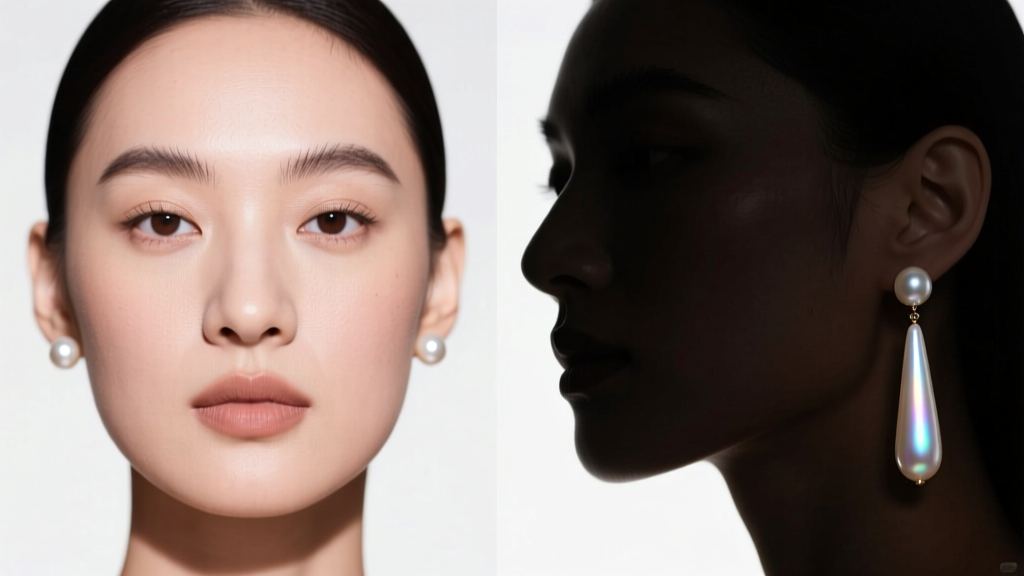
Round & Heart Faces
For round faces, the goal is elongation. Avoid large, perfectly round studs (8mm+), which can visually widen the cheeks. Instead, opt for elongated teardrop pearls measuring 7x10mm or 8x12mm. These draw the eye vertically, creating a slimming illusion. Heart-shaped faces benefit from bottom-heavy styling; a 5mm stud paired with a cascading 9mm pearl drop earring balances a narrower chin.
Oval & Square Faces
Oval faces possess balanced proportions, allowing them to carry the 2026 trend of oversized 12mm+ baroque studs without overwhelming their features. Square faces, characterized by strong jawlines, benefit from the softening effect of curved, organic shapes. A cluster of varied sizes—perhaps a 4mm, 6mm, and 8mm pearl fused into a single sculptural ear cuff—adds organic fluidity that contrasts beautifully with angular bone structure.
Luster, Nacre, and Pricing: What Size Demands What Quality
As you scale up in size, the demand for nacre thickness and luster quality becomes paramount. A large pearl with thin nacre will appear chalky and dull, entirely defeating the purpose of a statement piece.
- 3mm - 5mm (Akoya / Freshwater): High-quality Akoya pearls in this range should possess a mirror-like luster and a minimum nacre thickness of 0.4mm to 0.6mm. Expect to pay $150 to $300 for a premium matched pair. Freshwater alternatives offer a budget-friendly $40 to $80 price point but lack the sharp, metallic reflection of saltwater varieties.
- 6mm - 8mm (Hanadama Akoya): For the ultimate classic stud, seek 'Hanadama' certification from the Pearl Science Laboratory of Japan. These pearls boast exceptional luster and thick nacre. Pricing ranges from $400 to $800 per pair.
- 9mm - 11mm (Tahitian / South Sea): Akoya pearls rarely exceed 9mm. For larger sizes, you must transition to Tahitian or South Sea pearls. Tahitian pearls (known for their dark, peacock overtones) require a minimum nacre thickness of 0.8mm by French Polynesian law, though premium gems feature 2.0mm+ nacre. A matched pair of 10mm Tahitian earrings with high luster will command $1,500 to $3,500.
Cartilage vs. Lobe: Sizing for Non-Traditional Placements
The 2026 ear curation trend relies heavily on cartilage placements—helix, conch, and tragus. However, the hardware required to secure these pearls differs vastly from standard lobe studs, and the sizing rules are much stricter.
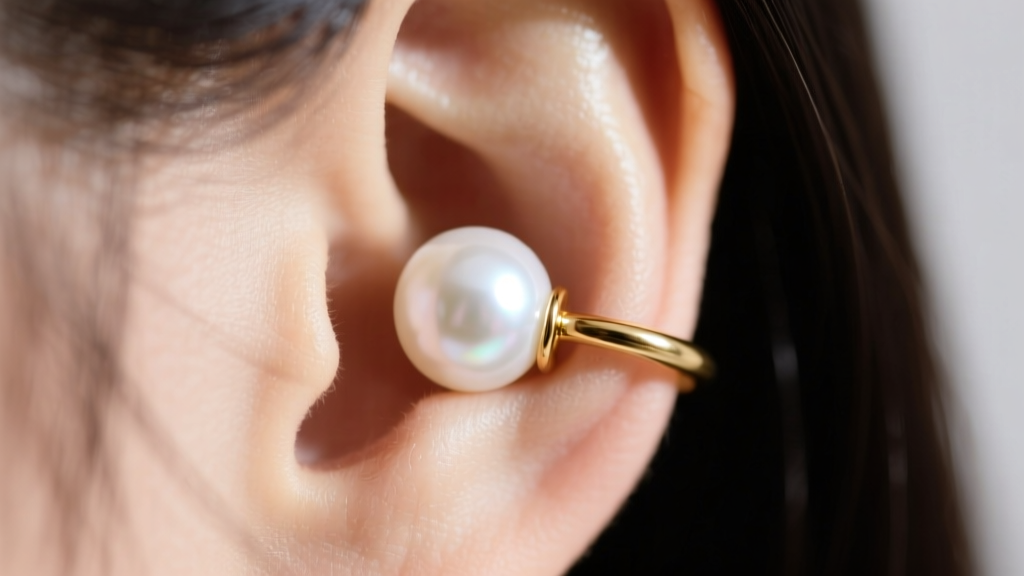
Cartilage is denser and more prone to irritation than the lobe. Standard butterfly backings are a functional failure mode for helix piercings; they snag on hair, harbor bacteria, and can cause pressure necrosis if the post is too long. For cartilage, you must use flat-back labrets.
For helix and conch piercings, a 16-gauge (1.2mm) or 14-gauge (1.6mm) internally threaded or threadless titanium post is the medical standard. The pearl end should be kept between 3mm and 5mm to prevent the jewelry from catching on clothing or masks.
Brands like NeoMetal offer threadless ends featuring 3mm and 4mm AAA-grade Akoya pearls that snap securely into 16-gauge titanium posts. This ensures the pearl sits flush against the cartilage, creating a seamless, 'floating' illusion that is highly coveted in modern styling.
The Asymmetry Rule: Mixing Sizes in One Ear
If there is one overarching rule for 2026, it is the death of the perfectly matched pair. The modern pearl earring size guide embraces deliberate asymmetry. The most editorial and fashion-forward approach involves anchoring one ear with a massive 11mm baroque drop, while the opposite ear features a tight, ascending gradient of 3mm, 4mm, and 5mm studs climbing the lobe and lower helix. This technique creates a dynamic visual rhythm, proving that pearls are no longer just for the country club—they are at the cutting edge of contemporary body art.


