Locking Back Earrings: Best Metals for Secure Posts & Mechanisms
Discover the best metals for locking back earrings. We compare titanium, gold, and steel posts for tensile strength, allergy safety, and thread durability.

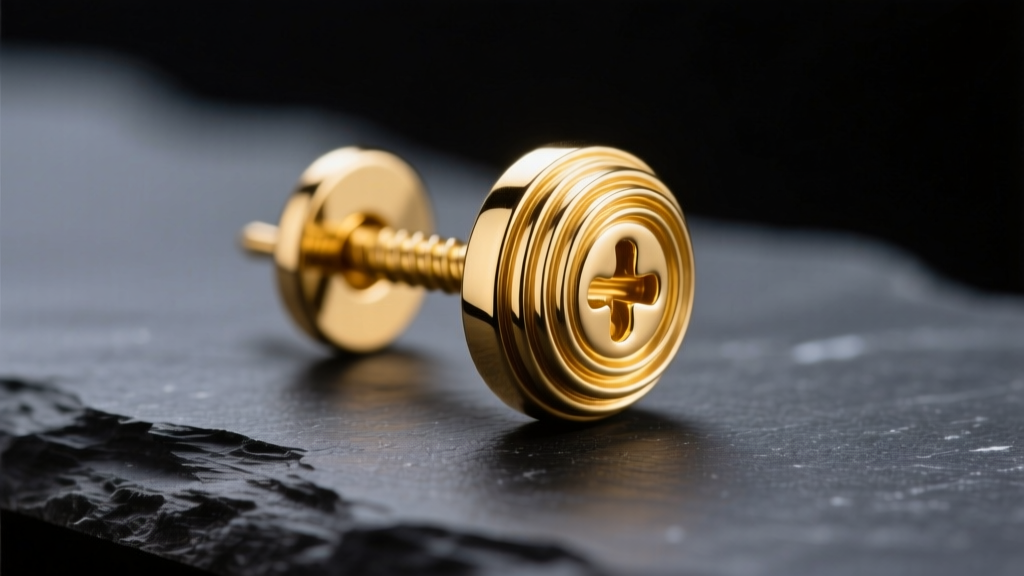
There are few things more stomach-dropping than reaching up to touch your ear and realizing your diamond stud is missing. For high-value jewelry or active lifestyles, standard friction backs simply do not provide adequate security. Enter locking back earrings—the ultimate safeguard against loss. However, the security of a locking mechanism is entirely dependent on the metallurgy of the post and the clutch. A poorly chosen metal will strip its threads, bend under weight, or cause severe contact dermatitis.
In this comprehensive material guide, we analyze the exact metallurgical properties required for secure earring backs, comparing tensile strength, thread durability, and biocompatibility across the industry's top metals.
The Anatomy of a Locking Back Earring
Before evaluating materials, we must understand the mechanical stress points of a locking earring. Unlike standard push-backs, locking mechanisms rely on precision engineering. The three main styles include:
- Screw Backs: The post features a continuous helical thread (usually 0.9mm to 1.2mm pitch) that mates with a threaded sleeve.
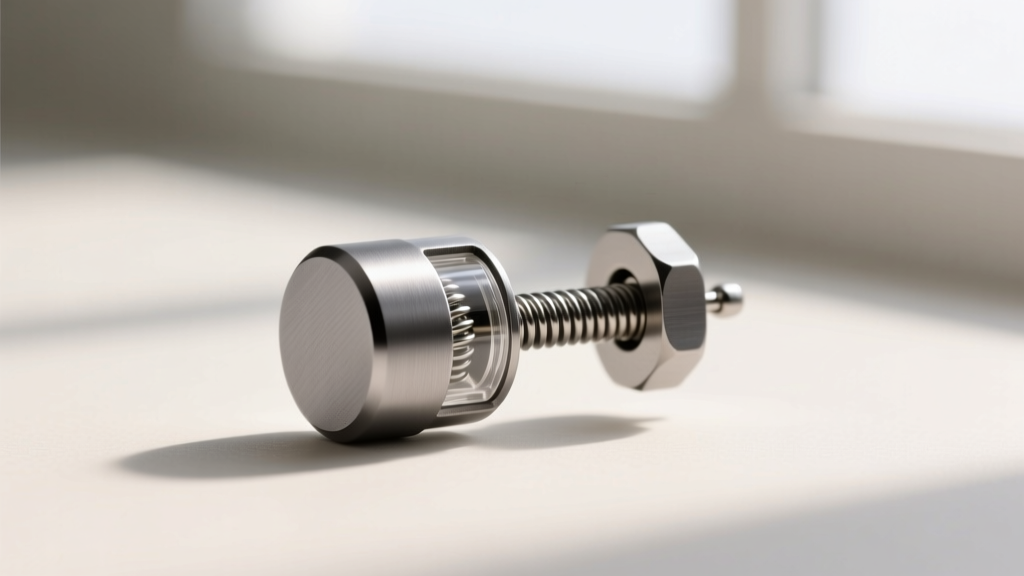
- La Pousette (Butterfly Lock): A spring-loaded internal mechanism inside the clutch that grips a grooved post.
- Friction-Lock Sleeves: A specialized silicone or metal-lined clutch that snaps over a widened post groove.
The primary failure points are thread stripping (where the male post threads wear down the female clutch threads) and post bending (where the core diameter of the post fails under the leveraged weight of a heavy gemstone).
Material Showdown: Post & Threading Durability
The lifespan of locking back earrings is dictated by the Vickers Hardness (HV) and the yield strength of the chosen alloy. Here is how the top contenders perform under repetitive mechanical stress.
14K vs. 18K Gold: The Thread Stripping Dilemma
Gold is the traditional choice for fine jewelry, but its purity directly impacts mechanical integrity. Pure 24K gold is far too soft for threading.
- 18K Gold (75% pure): With a Vickers Hardness of roughly 110-125 HV, 18K gold is soft enough to be prone to cross-threading. Over 500+ insertion cycles, the threads on an 18K post will gradually compress and strip, rendering the locking back useless.
- 14K Gold (58.5% pure): Alloyed with higher levels of copper, silver, and zinc, 14K gold achieves a hardness of 140-160 HV. This makes it significantly more resistant to thread deformation and the ideal gold standard for screw-back earrings.
According to metallurgical data from Ganoksin's Jewelry Metallurgy Archives, the addition of copper in 14K gold not only increases tensile strength but vastly improves the wear resistance of machined threads compared to higher-karat alloys.
Implant-Grade Titanium (ASTM F136)
Titanium is the undisputed king of biocompatibility, but it presents unique mechanical challenges for locking backs. Implant-grade titanium (Ti-6Al-4V ELI) is incredibly strong and lightweight. However, titanium is notorious for galling—a form of wear caused by adhesion between sliding surfaces. If the threads of a titanium post and titanium clutch are not machined to microscopic tolerances and highly polished, they can seize and cold-weld together, making the earring impossible to remove without pliers.
Platinum: The Heavyweight Champion
Platinum (usually 90-95% pure, alloyed with ruthenium or iridium) boasts a density and durability that outclasses gold. While it has a lower Vickers Hardness than 14K gold (around 110 HV for Pt950/Ru), platinum's malleability and displacement properties mean it does not easily lose material to friction. Instead of stripping, platinum threads tend to burnish and deform slightly, maintaining a secure grip over decades. The primary drawback is cost and weight; a thick platinum post adds noticeable heft to the earlobe.
Gauge Sizes and Thread Root Diameter
A critical, often overlooked factor in locking back earrings is the post gauge. Standard friction posts are typically 20-gauge (0.81mm) or 19-gauge (0.91mm). However, cutting threads into a 20-gauge post reduces the root diameter (the thinnest part of the thread) to roughly 0.65mm.
If you are mounting a 2-carat diamond, a 0.65mm core is highly susceptible to bending. For locking back earrings, experts recommend stepping up to an 18-gauge (1.02mm) or 17-gauge (1.14mm) post. This ensures the root diameter remains thick enough to support heavy center stones without compromising the structural integrity of the locking mechanism.
Material Properties Comparison Matrix
The following table synthesizes the mechanical and biological properties of common earring post materials to help you choose the right locking back configuration.
| Material | Hardness (HV) | Thread Durability | Allergy Risk | Best Application |
|---|---|---|---|---|
| 14K Yellow/White Gold | 140 - 160 | High | Moderate (if white gold contains nickel) | Everyday diamond studs (0.5ct - 1.5ct) |
| 18K Yellow Gold | 110 - 125 | Moderate | Low | Lightweight gemstone earrings |
| ASTM F136 Titanium | 330 - 360 | High (Prone to galling) | None (Hypoallergenic) | Sensitive ears, active lifestyles |
| Platinum (Pt950) | 110 - 135 | Exceptional (Burnishes) | None | Heavy, high-value heirloom stones (2ct+) |
| Surgical Steel (316L) | 150 - 190 | High | Moderate (Nickel content) | Budget-friendly fashion jewelry |
Allergies and Biocompatibility in Secure Backs
Locking backs sit flush against the back of the earlobe, creating an occlusive environment where sweat and moisture can become trapped. This makes the biocompatibility of the clutch material just as important as the post.
White gold is a popular choice for diamond earrings, but it is typically alloyed with nickel to achieve its silvery color. While the post may be coated in rhodium, the internal threads of the locking clutch are rarely plated. As the clutch rubs against the post, microscopic nickel particles can leach onto the skin. The Association of Professional Piercers (APP) strictly advises against using nickel-containing alloys for prolonged dermal contact, especially in occlusive environments.
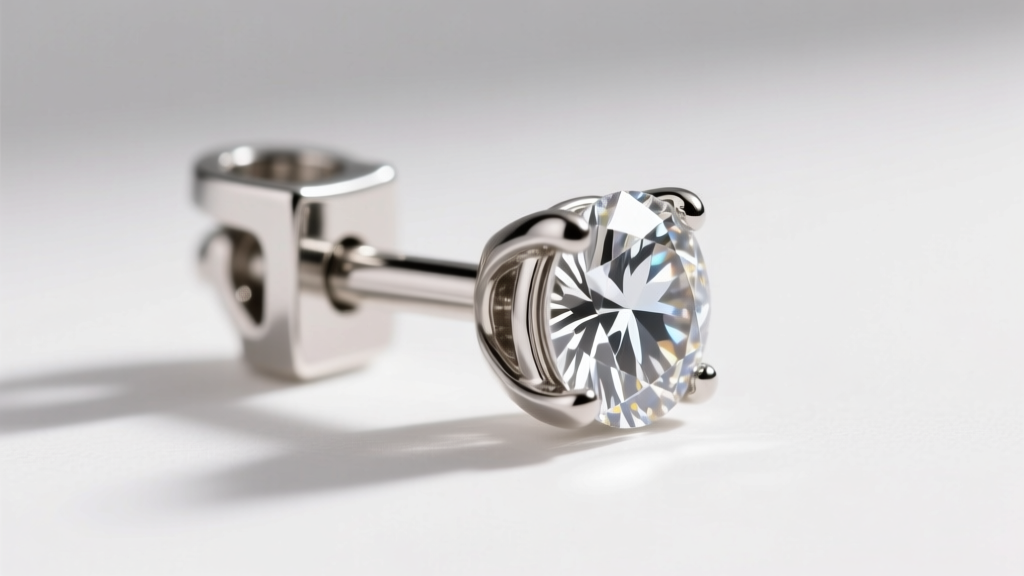
The Solution: If you require a silver-colored metal for your locking back earrings, opt for Platinum or Palladium-based white gold (which is nickel-free). Alternatively, an 18K yellow gold post paired with a medical-grade silicone locking sleeve eliminates metal-to-skin contact on the back of the ear entirely.
Expert Verdict: Matching Metal to Earring Weight
To maximize the lifespan of your locking back earrings, use this decision framework based on the weight of your jewelry and your lifestyle:
For Stones Under 1 Carat
Recommendation: 14K or 18K Gold with a standard screw-back or La Pousette clutch. The mechanical stress is minimal, and the softer gold will not strip under the weight of a lighter stone. Ensure the post is at least 19-gauge.
For Stones 1.5 to 3 Carats
Recommendation: Platinum or 14K Gold. You must use an 18-gauge post to prevent the leveraged weight of the diamond from bending the post and warping the locking sleeve. Platinum is preferred here as its density counterbalances the heavy front-facing diamond, keeping the earring upright on the lobe.
For Active Lifestyles & Gym-Goers
Recommendation: Implant-Grade Titanium (ASTM F136). Titanium's high strength-to-weight ratio ensures the post will not bend if accidentally snagged on a towel or clothing. Ensure the threads are highly polished by a reputable jeweler to prevent galling when you screw the back on with sweaty hands.
Final Thoughts on Maintenance
Even the most durable locking back earrings require maintenance. Threaded mechanisms can accumulate dead skin cells, lotion, and sebum, which act as an abrasive paste that accelerates thread wear. Clean your locking backs weekly with a soft toothbrush and warm dish soap. Never force a locking clutch if it meets resistance; cross-threading a 14K gold post will permanently ruin the mechanism. By matching the correct metallurgical properties to your specific jewelry needs, your locking backs will provide a lifetime of worry-free security.


