Seashell Dangle Earrings: Expert Guide to Weight & Care
Discover the technical details of seashell dangle earrings. Learn about nacre durability, weight distribution, hook gauges, and proper cleaning.

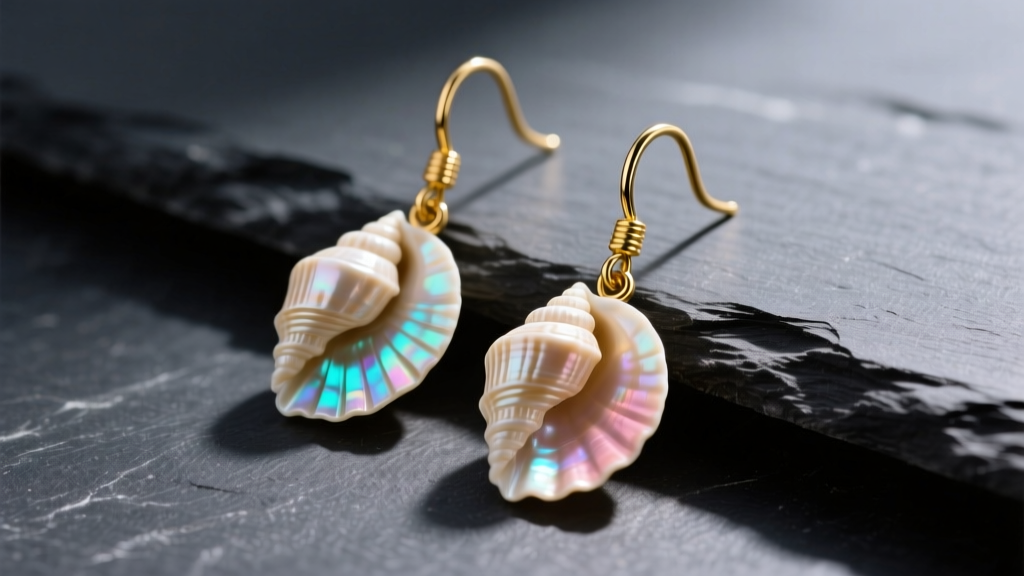
Seashell dangle earrings are frequently dismissed as simple seasonal accessories, but from a materials science and biomechanical perspective, they represent one of the most complex intersections of organic mineralogy and jewelry engineering. Unlike inert metals or faceted silicates, natural seashells are dynamic, porous, and highly reactive to their environment. When suspended as a dangle, the physics of pendulum motion introduce significant shear forces to the earlobe fistula. In this 2026 technical deep dive, we examine the structural realities of nacre, the metallurgy required to prevent galvanic corrosion, and the precise weight-to-gauge ratios necessary to prevent permanent tissue migration.
The Material Science of Natural Nacre vs. Synthetics
To properly care for and design with seashell dangle earrings, one must understand their crystalline matrix. Natural shells are primarily composed of aragonite (a crystalline form of calcium carbonate) bound together by conchiolin, an elastic biopolymer. This 'brick and mortar' microstructure gives nacre its legendary iridescence and surprising tensile strength, but it comes with severe limitations regarding surface hardness.
On the Mohs scale of mineral hardness, aragonite sits at a mere 2.5 to 4.0. For context, a standard copper penny is a 3.5, and household dust often contains quartz particles (hardness 7.0). This means that when seashell dangles swing and collide with one another, or brush against a zipper or collarbone, micro-abrasions are inevitable. According to the Gemological Institute of America (GIA), organic gems like nacre require vastly different handling than traditional faceted stones due to this inherent softness and their chemical sensitivity to acids.
Biomechanics: Managing Dangle Weight and Lobe Stress
The defining feature of a dangle earring is its kinetic movement. However, this pendulum effect creates a moment of inertia that multiplies the static weight of the shell. A 15-gram shell suspended 50mm below the piercing hole exerts significantly more shear force on the fistula than a 15-gram stud sitting flush against the skin. Over time, this repetitive micro-trauma leads to earlobe ptosis (sagging) and permanent elongation of the piercing tract.
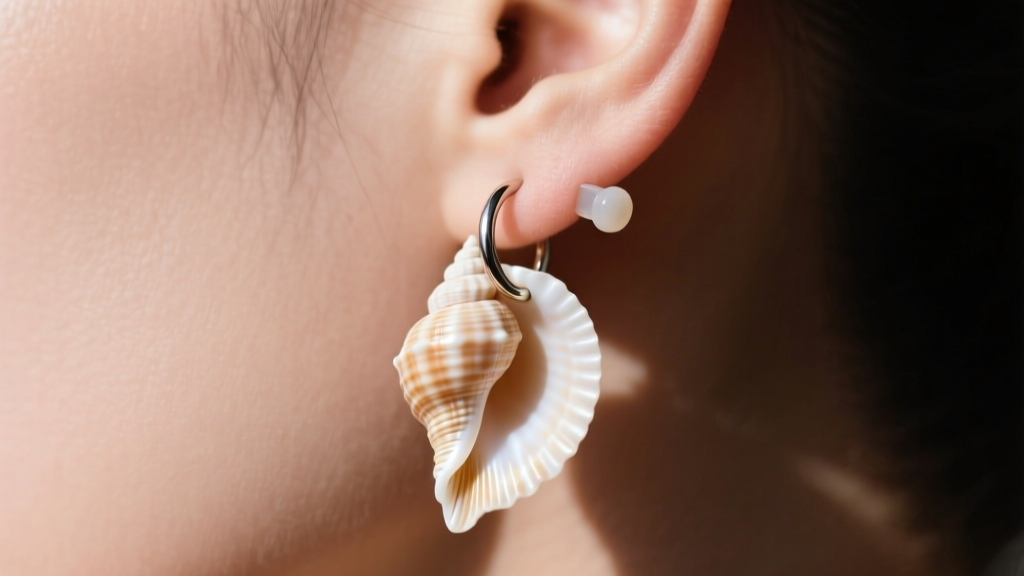
Optimal Wire Gauge Specifications
The 'cheese-cutter effect' occurs when a thin wire pulls through the earlobe tissue under the stress of a heavy dangle. To prevent this, the wire gauge of the earring hook must be strictly matched to the total weight of the shell component. Below is the engineering standard for seashell dangle earrings:
| Wire Gauge (AWG) | Diameter (mm) | Max Safe Shell Weight | Recommended Finding Type |
|---|---|---|---|
| 22 Gauge | 0.64 mm | < 6 grams | Standard Fishhook (with silicone O-ring) |
| 20 Gauge | 0.81 mm | 6 - 12 grams | Heavy Fishhook or French Wire |
| 18 Gauge | 1.02 mm | 12 - 20 grams | Leverback or Locking Ear Wire |
| 16 Gauge | 1.29 mm | 20+ grams | Thick Leverback (Custom/Bespoke) |
Expert Troubleshooting: If you inherit or purchase a heavy 18-gauge shell dangle but your piercing is stretched to accommodate only 20-gauge wires, do not force the thicker wire. Instead, use a 20-gauge titanium jump ring as an adapter between the hook and the shell's wire-wrapping to distribute the kinetic load safely.
Hardware Metallurgy: Preventing Galvanic Corrosion
Seashells are naturally porous and hygroscopic, meaning they absorb and trap moisture, sweat, and environmental salts. When these trapped electrolytes come into contact with base metal findings (such as brass, copper, or low-grade silver), they trigger galvanic corrosion. This electrochemical reaction not only degrades the metal wire wrapping but also leaches copper sulfides into the shell's nacreous layer, causing permanent green or black staining that cannot be polished out.
To prevent this, the hardware on high-quality seashell dangle earrings must be highly inert. ASTM F136 Titanium is the gold standard for the wire wrapping that directly touches the shell, as it forms a passive oxide layer that completely resists saltwater corrosion. For the ear wire itself, 14k or 18k solid gold is preferred. The American Academy of Dermatology (AAD) frequently warns against nickel-containing alloys in jewelry; because the earlobe is under constant tension from a dangle, microscopic fissures in the skin can increase the absorption of nickel ions from cheap surgical steel, leading to severe contact dermatitis.
Advanced Maintenance and Chemical Avoidance
The most common failure mode for seashell dangle earrings is not physical breakage, but chemical degradation. Calcium carbonate is highly alkaline and reacts violently with acids. Exposure to substances with a pH below 5.5—such as vinegar, citrus-based cosmetics, lactic acid exfoliants, and even acidic human sweat—will slowly dissolve the aragonite platelets, leaving the shell chalky, dull, and structurally compromised.
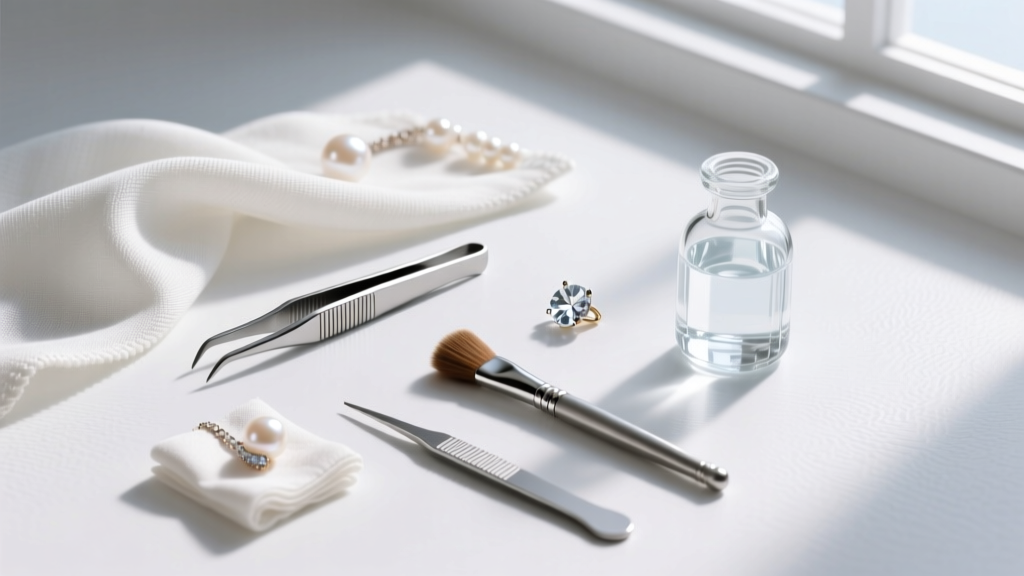
The Ultrasonic Cleaner Danger
Never place seashell earrings in an ultrasonic jewelry cleaner. These devices use high-frequency sound waves to create microscopic cavitation bubbles in a liquid solvent. When these bubbles implode against the surface of the shell, the resulting localized shockwaves easily exceed the tensile strength of the conchiolin matrix, causing the nacre layers to delaminate, flake, or shatter entirely.
- Routine Cleaning: Wipe gently with a damp microfiber cloth moistened with distilled water (pH 7.0) after every wear to remove skin oils.
- Deep Cleaning: Use a drop of castile soap in lukewarm water. Never soak the shell for more than 30 seconds.
- Drying: Pat dry immediately. Do not use compressed air or heat, which can dehydrate the conchiolin protein and cause micro-fractures.
Pricing Tiers and Authenticity Verification
As the 2026 market sees a surge in sustainable, ocean-inspired aesthetics, the market is flooded with resin and acetate imitations. Verifying authentic seashell requires specific sensory tests:
- Thermal Conductivity: Real aragonite feels distinctly cold to the touch and takes several seconds to warm to skin temperature. Resin feels room-temperature and warms instantly.
- Acoustic Resonance: Gently tap two shells together. Real nacre produces a sharp, high-pitched, glassy 'clack'. Synthetic imitations yield a dull, hollow 'thud'.
- Visual Stratification: Under a 10x jeweler's loupe, real shell shows parallel growth lines and a 'stair-step' cleavage pattern where it has been cut. Resin will show mold seams or swirling dye patterns.
Market Pricing Brackets
Understanding the cost structure helps identify ethical sourcing versus mass-produced exploitation.
- $15 - $35 (Tier 1): Mass-produced, machine-stamped shells often harvested from protected wild beds, paired with base-metal or gold-plated brass wire. High risk of corrosion and allergic reaction.
- $45 - $95 (Tier 2): Hand-carved shells sourced as byproducts of the sustainable seafood industry (e.g., mother-of-pearl from oyster farming). Paired with gold-filled or titanium wire. This is the optimal price-to-quality ratio for daily wear.
- $120 - $300+ (Tier 3): Bespoke designer pieces featuring ethically traceable, CITES-compliant rare shells (like ethically sourced paua or conch), set in solid 14k/18k gold with locking leverback mechanisms engineered for heavy kinetic loads.
By treating seashell dangle earrings not merely as beachwear, but as delicate organic minerals requiring precise biomechanical support and strict chemical boundaries, collectors and designers can ensure these iridescent pieces remain structurally sound and visually brilliant for decades.


