Gold Orchid Earrings Buying Guide: 2026 Styles & Fit
Discover our 2026 buying guide for gold orchid earrings. Learn about metal purity, enamel craftsmanship, weight distribution, and secure closures.

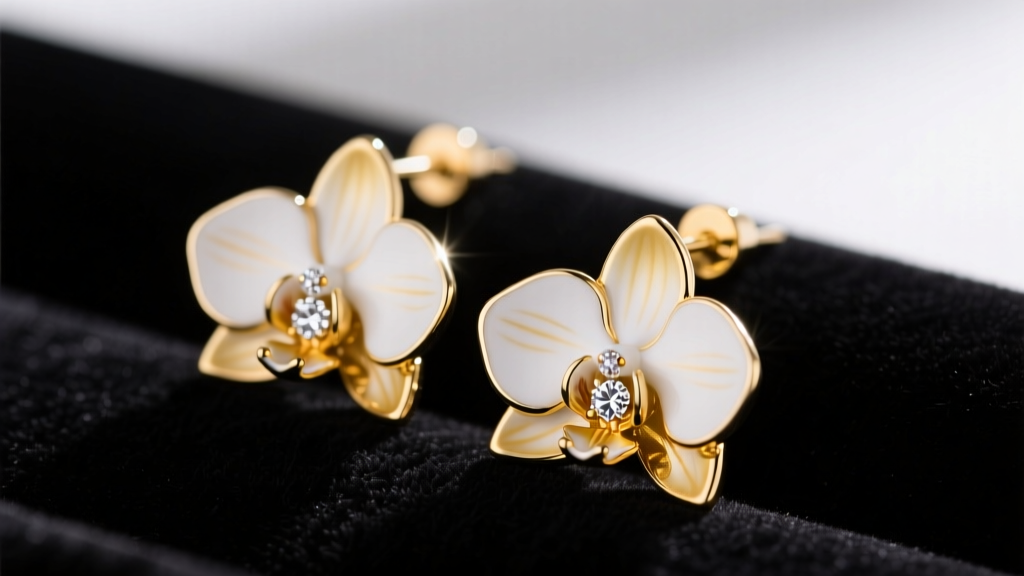
The Botanical Appeal of Orchid Earrings in 2026
Botanical jewelry has transcended seasonal trends to become a permanent fixture in fine jewelry collections, and the orchid remains the undisputed queen of floral motifs. Unlike simpler daisy or rose designs, the orchid offers complex, asymmetrical geometry that challenges jewelers to showcase their highest level of craftsmanship. When shopping for gold orchid earrings in 2026, buyers are moving away from flat, one-dimensional stampings and gravitating toward sculptural, multi-textured pieces that mimic the organic depth of the living flower. Whether you are seeking a subtle 14k gold orchid stud for the office or an enameled drop earring for evening wear, understanding the structural and material nuances of these designs is critical to making a sound investment.
Decoding Metal Purity: Solid Gold vs. Vermeil vs. Plated
The foundation of any fine floral earring is its metal base. Orchid petals require a delicate balance of malleability for shaping and rigidity to prevent warping. The Gemological Institute of America (GIA) notes that alloy composition drastically affects both the color and durability of gold jewelry. For intricate orchid designs, 14k solid gold (58.5% pure gold) is often the superior choice for the structural framework, as its copper and silver alloys provide the tensile strength needed to support thin, extended petals without bending. Conversely, 18k gold (75% pure) offers a richer, warmer yellow hue but is softer, making it better suited for smaller stud designs or heavily reinforced drops.
| Metal Type | Composition & Standards | Best For | 2026 Price Range | Longevity |
|---|---|---|---|---|
| 14k Solid Gold | 58.5% Gold, 41.5% Alloy | Everyday studs, structural drops | $450 - $1,200 | Lifetime (Heirloom) |
| 18k Solid Gold | 75% Gold, 25% Alloy | Small accents, high-end pavé | $1,500 - $4,000+ | Lifetime (Heirloom) |
| Gold Vermeil | Sterling Silver base, ≥2.5μm Gold | Statement pieces, occasional wear | $120 - $350 | 5-10 Years (with care) |
| Gold Plated | Brass/Copper base, <0.5μm Gold | Trend-driven, fast fashion | $30 - $80 | 6-12 Months |
When considering vermeil, always verify the micron thickness. According to the Federal Trade Commission (FTC) Jewelry Guides, true vermeil must feature a sterling silver base plated with at least 2.5 microns of gold. Anything less is considered standard gold plating, which will quickly wear through the friction of hair and clothing, exposing the base metal and potentially causing contact dermatitis.
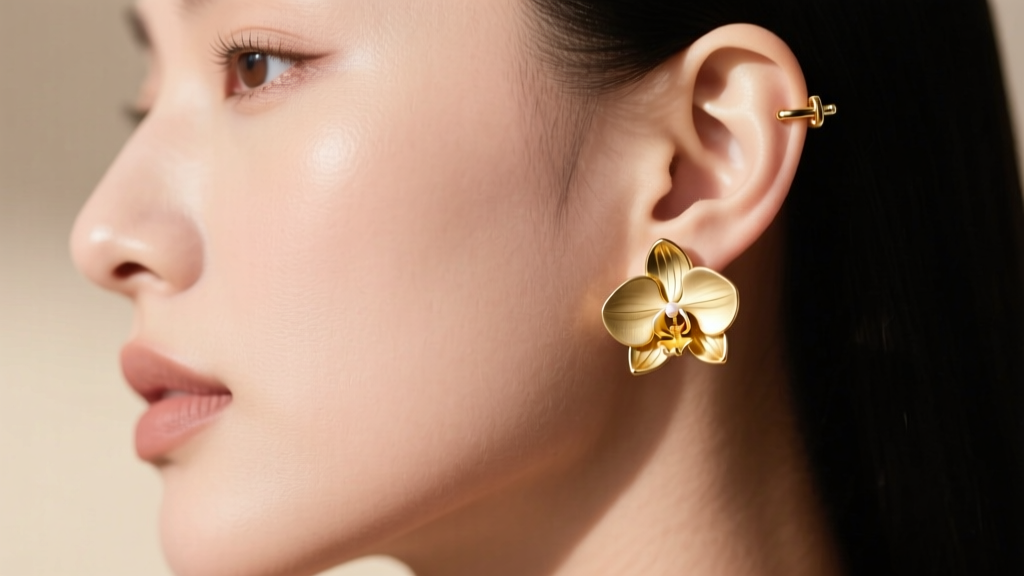
Anatomy of a Well-Crafted Orchid Design
Cast vs. Hand-Fabricated Frameworks
Mass-produced gold orchid earrings are typically cast using the lost-wax method. While casting captures incredible detail, it can result in microscopic porosity, making the metal slightly more brittle. High-end artisan jewelers often hand-fabricate the central stem and labellum (the modified lower petal of the orchid) from gold wire and sheet, soldering them together. Hand-fabricated pieces are denser, more durable, and possess a distinct, organic asymmetry that cast pieces lack. When inspecting a piece, look for clean, seamless solder joints where the petals meet the central column.
Enamel Work and Gemstone Inlays
To capture the vibrant colors of species like the Phalaenopsis or Cattleya, jewelers frequently employ enamel. Vitreous (glass) enamel, fired at temperatures exceeding 1400°F, fuses permanently to the gold and offers a luminous, translucent finish. Guilloché enamel—where the gold base is engine-turned with geometric patterns before applying translucent enamel—creates a mesmerizing rippled light effect that mimics the delicate veins of an orchid petal. Avoid cold enamel (epoxy resin) for heirloom pieces, as it is prone to yellowing and scratching over time. For the centerpiece, look for bezel-set or flush-set gemstones; traditional prong settings on floral motifs often snag on hair and silk fabrics.
Weight Distribution and Closure Mechanics
Orchids are inherently wide and voluminous. A beautifully proportioned 20mm orchid drop earring crafted in solid 14k gold can easily weigh between 7 and 12 grams per ear. If the weight is not properly managed, the earring will droop, causing the flower to face downward rather than outward, while simultaneously stretching the earlobe piercing.
- For Studs (Under 4g): Standard butterfly backs are insufficient for wide floral heads. Opt for La Pousette clutches (which feature a secure double-notch locking mechanism) or screw-backs to ensure the heavy front does not tilt forward.
- For Drops and Dangles (5g - 10g): French wires must be paired with high-grade silicone stoppers. Alternatively, leverback closures provide a secure, closed loop that prevents the earring from slipping out when removing winter scarves or sweaters.
- For Heavy Statement Pieces (10g+): Seek out designs that utilize an omega back or a clip-on mechanism with a silicone pad to distribute the weight across a broader surface area of the earlobe, rather than concentrating it entirely on the piercing hole.
- Wire Gauge: The main stem or drop wire of an orchid earring should be at least 18-gauge (1.02mm). Thinner 20-gauge or 22-gauge wires will inevitably bend when you take the earrings off.
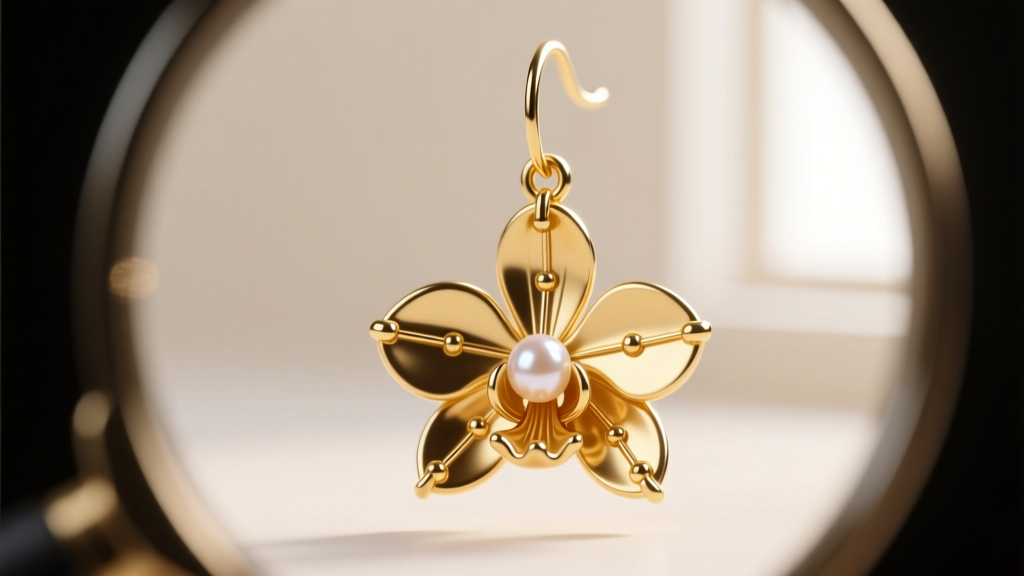
Face Shape and Scale Pairing
The architectural nature of the orchid requires careful scaling relative to your facial structure. For round and square face shapes, elongated orchid dangle earrings (where the flower blooms at the bottom of a 1.5-inch gold chain) help draw the eye vertically, softening the jawline. Conversely, those with long or oval faces benefit from wide, asymmetrical orchid studs or huggies where the floral motif wraps horizontally around the earlobe, adding visual width and balance. Always measure the millimeter dimensions listed in the product description against a ruler; a "medium" orchid from one brand may be a sprawling 30mm statement piece, while another's might be a modest 12mm accent.
Maintenance: Preventing Enamel Chips and Prong Snags
Cleaning gold orchid earrings requires a departure from standard jewelry care routines. Never use ultrasonic cleaners on enameled floral jewelry or pieces featuring freshwater pearl accents. The high-frequency vibrations can cause vitreous enamel to micro-fracture or shatter, and will strip the nacre from pearls. Instead, use a few drops of mild, phosphate-free dish soap in lukewarm water. Agitate gently with a soft-bristled baby toothbrush, focusing on the crevices where the petals meet the central column, as this is where skin oils and cosmetics accumulate. Dry thoroughly with a microfiber cloth, ensuring no moisture is trapped behind the earring post.
Expert Insight: "When storing enameled gold orchid earrings, never toss them loosely into a jewelry box. The gold framework will survive, but the enamel petals will chip upon impact with other metal pieces. Store them individually in soft flannel pouches or their original rigid boxes."
Final Verdict: Sourcing Authentic Gold Orchid Earrings
Purchasing gold orchid earrings is an exercise in appreciating miniature sculpture. By prioritizing 14k or 18k solid gold for structural integrity, verifying vermeil micron counts, and demanding secure, weight-appropriate closures, you ensure your botanical jewelry remains as vibrant and resilient as the flower it emulates. Whether you choose a minimalist gold-wire outline or a fully enameled, gemstone-studded masterpiece, the right orchid earring is a timeless testament to nature's most complex geometry.


