Earrings Teardrop Gold: The Ultimate Buying Guide
Discover how to choose the perfect gold teardrop earrings. Our expert buying guide covers karat weights, closures, pricing, and face-shape matching.

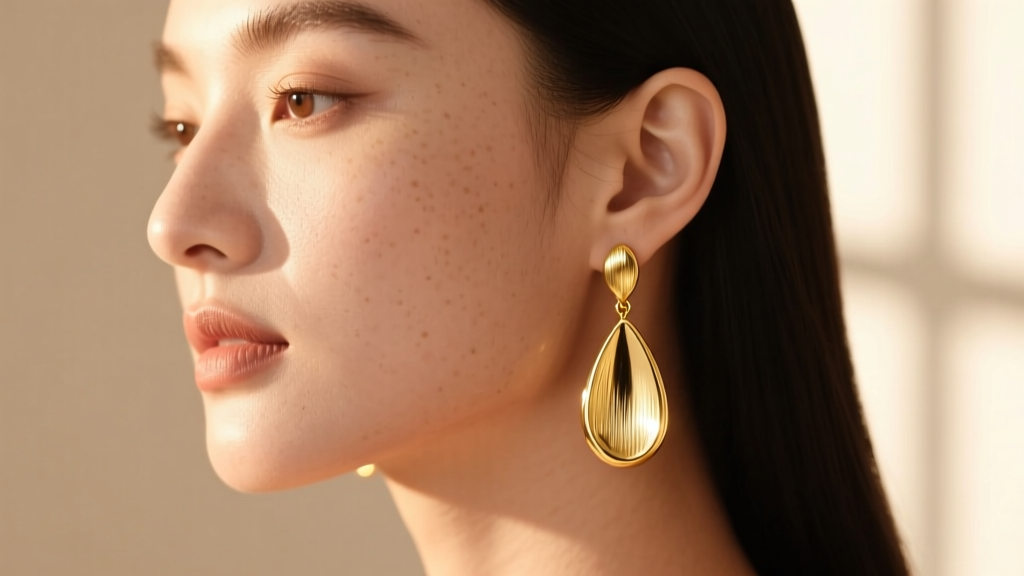
The teardrop silhouette—often referred to as a pear or briolette shape in fine jewelry—strikes a rare balance between dramatic movement and understated elegance. Finding the ideal earrings teardrop gold design requires more than just picking a pretty shape; it demands a keen eye for metallurgy, structural integrity, and ergonomic weight distribution. As we navigate the fine jewelry market in 2026, the shift toward solid, ethically sourced metals means buyers must be more vigilant than ever about gold purity and manufacturing quality.
Whether you are investing in a heavy 22k heirloom piece or a sleek, minimalist 14k everyday drop, this comprehensive buying guide will equip you with the exact specifications, data points, and troubleshooting insights needed to make a flawless purchase.
The Anatomy of a High-Quality Teardrop
Not all teardrops are created equal. The geometry of the drop dictates how it catches the light and how it behaves in motion. A classic teardrop features a rounded bottom that tapers to a distinct point at the top. When evaluating the physical dimensions, consider the following benchmarks:
- Small/Everyday Drops: 15mm to 25mm in length. These sit close to the earlobe and are ideal for professional environments or active lifestyles.
- Statement Drops: 30mm to 50mm. These provide significant visual weight and require robust closure mechanisms to prevent earlobe stretching.
- Width-to-Length Ratio: The most universally flattering teardrop maintains a 1:2 ratio (e.g., 15mm wide by 30mm long). Wider, more obtuse teardrops tend to visually widen the face, while narrow, elongated drops create a slimming effect.
Pro-Tip on Thickness: Avoid teardrops that are entirely flat (under 2mm thick) unless they are heavily textured. A slightly domed or convex front face (3mm to 5mm thick) captures ambient light far better than a flat sheet of stamped gold.
Decoding Gold Purity and Alloys
Gold purity drastically alters both the color and the structural durability of your earrings. According to the Gemological Institute of America (GIA), pure 24k gold is too soft for daily wear jewelry, meaning alloy metals like copper, silver, and zinc are added to create structural integrity. Here is how the most common karat weights perform in teardrop designs:
| Karat Weight | Gold Content | Color Profile | Durability & Best Use |
|---|---|---|---|
| 10k Gold | 41.7% | Pale, slightly washed-out yellow | Highest durability (Vickers hardness ~135). Best for large, heavy statement teardrops that need rigid structural support. |
| 14k Gold | 58.3% | Warm, classic yellow | Excellent balance of hardness and rich color. The industry standard for everyday drop earrings and French wire hooks. |
| 18k Gold | 75.0% | Deep, rich, buttery yellow | Softer (Vickers hardness ~125). Ideal for luxury, occasional-wear teardrops. Prone to scratching if worn during physical activity. |
| 22k Gold | 91.6% | Intense, orange-leaning yellow | Very soft. Usually reserved for cultural or heirloom pieces. Teardrops in 22k must be thick and heavy to avoid bending. |
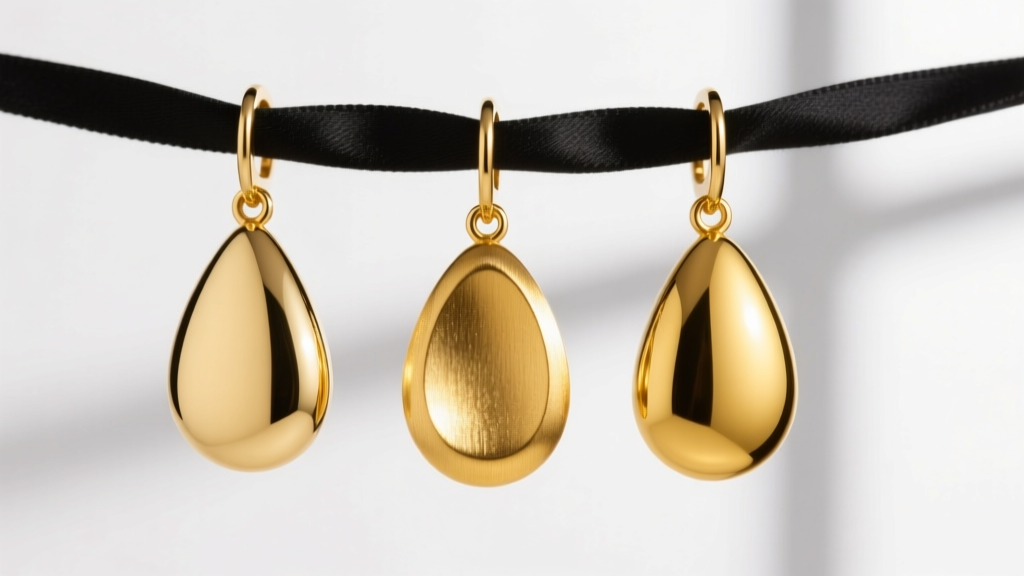
Why Earrings Teardrop Gold Designs Suit Every Face Shape
One of the primary reasons the teardrop silhouette dominates the drop earring category is its incredible versatility. By adjusting the width and length of the drop, you can manipulate facial proportions to achieve perfect harmony.
- Round Faces: Opt for elongated, narrow teardrops (e.g., 10mm x 35mm). The sharp top point and extended vertical line draw the eye downward, creating an illusion of length and slimming the jawline.
- Square Faces: Choose wider, more rounded teardrops with a softer bottom curve. Avoid extremely sharp or geometric drops, which can exaggerate the angularity of the jaw. A 20mm x 30mm ratio works beautifully.
- Heart-Shaped Faces: You want to add visual weight to the lower half of the face to balance a wider forehead. Bottom-heavy, wide teardrops or briolette-style drops that flare out at the base are your best option.
- Oval Faces: The universal donor of face shapes. Oval faces can pull off any teardrop proportion, from tiny 15mm studs with micro-drops to dramatic 50mm chandelier teardrops.
Closure Mechanisms: Security vs. Comfort
The failure point of 80% of lost drop earrings is the closure mechanism. When buying gold teardrops, the hardware must match the weight of the drop. A standard 14k solid gold teardrop measuring 30mm by 15mm typically weighs between 2.5 and 4.2 grams. Here is how to match the closure to the weight:
French Wire (Fishhook)
Best for lightweight drops (under 3 grams). The wire should be exactly 20-gauge (0.81mm) or 22-gauge (0.64mm). Avoid 18-gauge French wires, as they are too thick for standard lobe piercings and will cause stretching and discomfort over time. Always ensure the earring comes with a secure silicone or gold scroll back to prevent the hook from slipping out.
Leverback
The gold standard for medium to heavy teardrops (3 to 6 grams). A leverback features a hinged wire that snaps securely into a catch at the back of the earring. It distributes weight more evenly across the earlobe and eliminates the risk of the earring sliding off. When inspecting a leverback, check the hinge tension; it should snap shut with a crisp, audible click.
Omega Clip / Huggie Hybrid
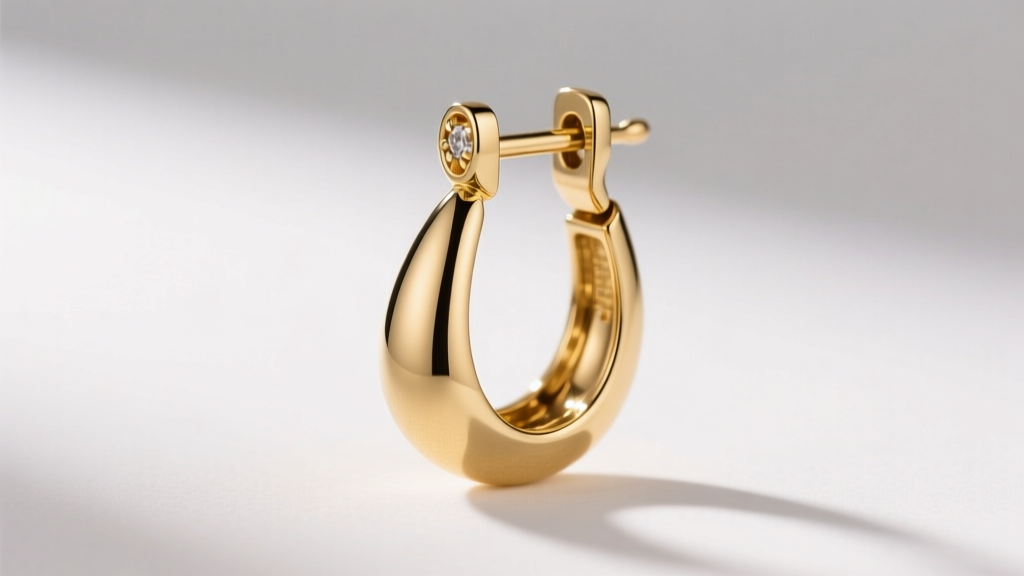
For statement teardrops exceeding 6 grams, an Omega back or a thick huggie hoop with a drop attachment is mandatory. These mechanisms clamp onto the earlobe and often feature a post for pierced ears, providing dual-point security that prevents the heavy gold from dragging the piercing downward.
Pricing Tiers and Market Value in 2026
Understanding the pricing architecture of gold jewelry prevents overpaying for inferior manufacturing. According to market data tracked by Jewelers of America, the price of gold teardrop earrings is dictated by metal weight, manufacturing method, and brand markup.
- Budget Tier ($150 - $350): Typically features 10k gold or hollow electroformed 14k gold. Warning: Hollow electroformed gold is incredibly lightweight but highly susceptible to denting. Once dented, it is virtually impossible for a jeweler to repair.
- Mid-Range Tier ($400 - $900): The sweet spot for solid 14k gold teardrops weighing 3 to 5 grams. These are usually cast or die-struck, offering excellent durability, rich color, and the ability to be polished or repaired if scratched.
- Luxury & Artisan Tier ($1,200 - $3,500+): Solid 18k or 22k gold, often featuring hand-forged textures, hammer finishes, or accent gemstones (like pave diamonds or cabochon turquoise). You are paying for superior alloy quality, artisan labor, and brand prestige.
Red Flags and Failure Modes to Avoid
When inspecting gold teardrop earrings, either in person or via high-resolution macro photography online, look out for these critical manufacturing flaws:
- Weak Solder Joints: The tiny loop (bail) connecting the teardrop to the ear wire is the highest stress point. If the loop is soldered with a visible, bulky seam, it is prone to snapping. Look for laser-welded or seamless jump rings which offer vastly superior tensile strength.
- Nickel Allergens: While pure gold is hypoallergenic, the alloys used in lower-karat white gold or poorly regulated yellow gold can contain nickel. If you have sensitive skin, explicitly verify that the 14k or 18k yellow gold is alloyed with silver, copper, or zinc, and is 100% nickel-free.
- Porosity in Casting: Inspect the surface of the gold under bright light. Tiny, pinhole-like pits indicate gas porosity from a poor casting process. This not only ruins the aesthetic but creates weak points where the metal can crack under pressure.
Final Verdict: Investing in Timeless Elegance
The teardrop gold earring is not merely a passing trend; it is a foundational pillar of a well-curated jewelry wardrobe. By prioritizing solid 14k or 18k gold, demanding precise 20-gauge wire thicknesses, and selecting a closure mechanism that respects the physical weight of the drop, you ensure your earrings will remain secure, comfortable, and breathtaking for decades. Skip the hollow, mass-produced imitations and invest in structural integrity—your earlobes and your personal style will thank you.


