How to Properly Secure and Remove Rowan Earring Backs
Learn how to properly attach, clean, and safely remove Rowan earring backs with this step-by-step guide. Prevent loss and protect your piercings.

Understanding the Rowan Locking Mechanism
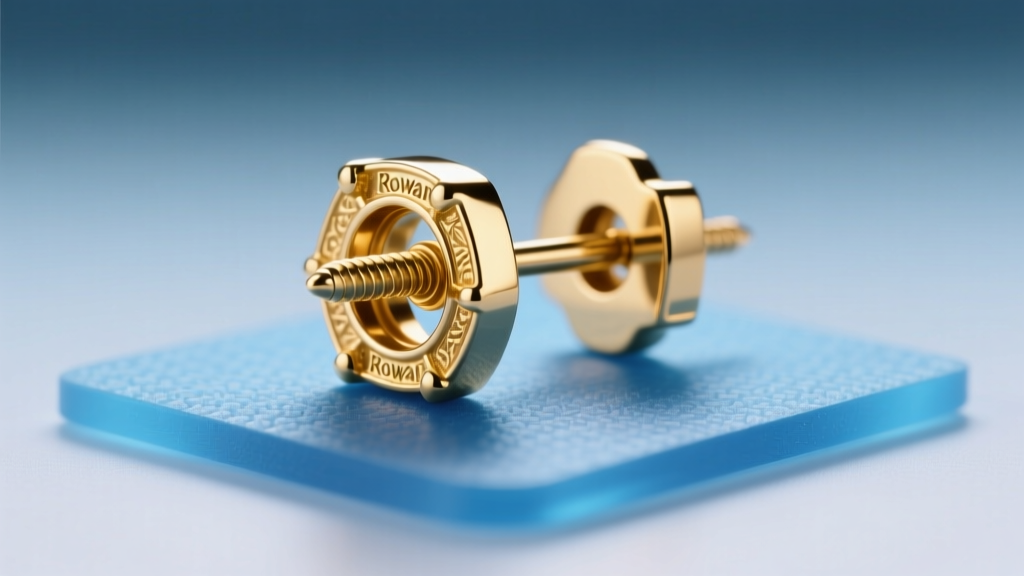
Rowan earring backs represent a significant upgrade from standard friction-push butterfly clutches. Designed primarily for security studs, active lifestyles, and pediatric piercings, these backs utilize a precision-machined screw thread or a proprietary locking clutch system to prevent accidental loss. Unlike standard backs that rely on the weak tension of bent metal, Rowan backs physically lock onto the earring post, ensuring the jewelry remains flush against the earlobe or cartilage.
To master the use of these backs, you must first understand their anatomy. A standard Rowan security earring features an 18-gauge (1.0mm) or 20-gauge (0.8mm) post with a threaded tip. The corresponding back contains an internal threading mechanism, often supplemented by a medical-grade silicone O-ring that provides secondary friction and prevents the metal threads from grinding against each other. This dual-action security is why they are highly recommended by professionals for healing piercings and high-value diamond studs.
Material Grades and Hypoallergenic Properties
Before handling your jewelry, it is crucial to recognize the materials you are working with. Rowan utilizes highly specific, biocompatible metals to prevent contact dermatitis and piercing rejection.
- ASTM F138 Implant-Grade Stainless Steel: This is the gold standard for body jewelry. It contains virtually no free nickel, keeping nickel release rates well below the European Union's strict limit of 0.5 µg/cm²/week.
- 14k and 18k Solid Gold: Rowan's gold options are alloyed specifically for body safety, avoiding the copper-heavy mixes that can cause green discoloration or allergic reactions in sensitive earlobes.
- Medical-Grade Silicone Inserts: The internal O-rings are made from biocompatible, non-porous silicone that withstands repeated sterilization without degrading.
Step-by-Step: How to Attach Rowan Earring Backs
Proper attachment is critical to avoid cross-threading, which can permanently strip the microscopic threads on the earring post. Follow this protocol for a secure, damage-free application.
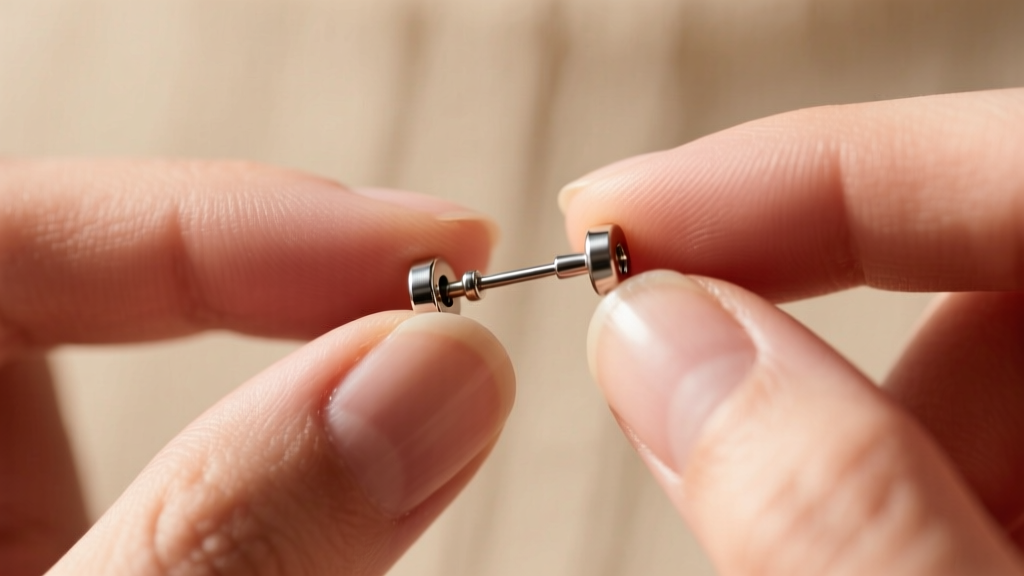
- Prep and Sanitize: Wash your hands thoroughly with antibacterial soap. Wipe the earring post and the interior of the Rowan back with a lint-free pad soaked in 70% isopropyl alcohol. Allow them to air dry completely.
- Align the Axis: Hold the earring post steady between the thumb and index finger of your non-dominant hand. Bring the Rowan back up to the tip of the post, ensuring both components are perfectly parallel. Do not apply pressure yet.
- The Reverse-Threading Trick: Before screwing the back on, gently rotate it counter-clockwise (lefty-loosey) until you feel a subtle "click" or drop. This indicates the threads have perfectly aligned and prevents cross-threading.
- Secure the Back: Rotate the back clockwise. Use only your fingertips. Stop turning the moment you feel firm resistance. The silicone O-ring should compress slightly, creating a watertight seal against the post.
- Verify the Flush Fit: Ensure the back is not overtightened, which can cause pressure necrosis on the back of the earlobe. There should be a 0.5mm gap between the back and the skin to allow for lymphatic drainage and cleaning.
Step-by-Step: How to Remove Stubborn Rowan Backs
Because these backs are designed not to move, they can become incredibly stubborn over time. The primary culprit for stuck Rowan backs is the accumulation of sebum, dead skin cells, and hardened soap residue within the threading. Never use pliers or metal tools, as these will scratch the gold or steel and destroy the threads.
The Warm Water Soak Method
If the back will not budge with standard finger pressure, you must dissolve the biological adhesive (sebum) locking the threads.
- Soak a clean cotton pad in warm (not hot) saline solution or warm water mixed with a drop of mild, fragrance-free liquid soap.
- Press the soaked pad firmly against the back of the earlobe, completely enveloping the Rowan back. Hold for 3 to 5 minutes to soften the debris.
- Don a pair of clean, powder-free nitrile medical gloves. The rubber provides immense grip on smooth metal surfaces.
- Grip the earring front with one hand and the back with the gloved hand. Apply steady, counter-clockwise pressure. The added friction from the nitrile will almost always break the seal.
Expert Warning: Never apply oils (like olive oil or baby oil) to loosen stuck threads on healing piercings. Oils can trap bacteria in the fistula (the piercing tunnel) and cause severe infections. Stick to sterile saline and warm water.
Maintenance and Cleaning Protocol
Routine maintenance ensures the threading remains pristine and the silicone O-rings retain their elasticity. Below is a comparison of cleaning agents and their safety profiles for Rowan components.
| Cleaning Agent | Metal Components (Steel/Gold) | Silicone O-Ring Insert | Recommended Frequency |
|---|---|---|---|
| 70% Isopropyl Alcohol | Safe (Excellent for sanitizing) | Degrades over time | As needed for sterilization |
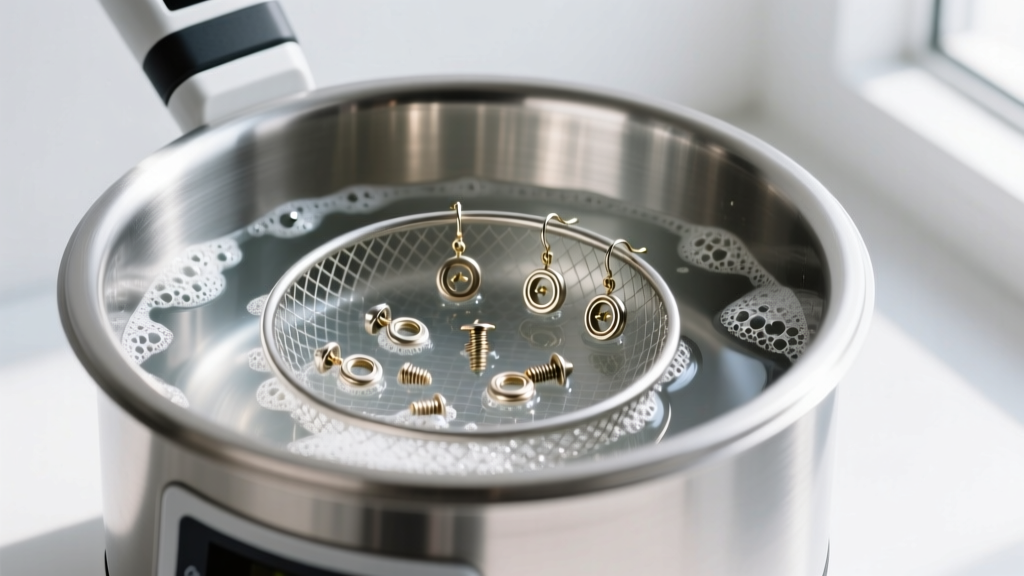
| Ultrasonic Cleaner (Water) | Safe (Removes micro-debris) | Safe | Monthly deep clean |
| Mild Liquid Soap & Water | Safe | Safe | Weekly routine cleaning |
| Hydrogen Peroxide | Unsafe (Causes pitting) | Unsafe (Causes cracking) | Never use |
Common Troubleshooting & Failure Modes
Even with premium jewelry, mechanical failures can occur. Recognizing these early prevents permanent damage to your earrings and your piercings.
- Cross-Threaded Posts: If the back goes on crooked and you force it, the threads will strip. A stripped post cannot be repaired at home and must be sent back to the manufacturer for re-tipping or replacement.
- Missing Silicone O-Rings: If the internal O-ring falls out during cleaning, the metal back will screw directly against the metal post. This causes grinding, micro-metal shavings, and eventual thread failure. Always inspect the interior of the clutch before reattaching.
- Bent Posts: Sleeping on 20-gauge (0.8mm) posts can cause them to bend. A bent post will never thread smoothly into a Rowan back. If your post is bent, take it to a professional jeweler who can roll it straight on a steel mandrel without snapping the metal.
Travel Tips for Security Earrings
Traveling with high-value security earrings requires specific logistical planning. Airport security and hotel sinks are the primary enemies of small jewelry components. When traveling, always carry a small, hard-sided pill organizer to store disassembled Rowan backs. Never place them loose in a ziplock bag, where the static electricity and thin plastic can easily lead to loss. Furthermore, if you are passing through TSA, you do not need to remove ASTM F138 steel or 14k gold earrings, as they rarely trigger the millimeter-wave scanners or metal detectors in a way that requires removal.
When to Replace Your Rowan Backs
While the metal components of Rowan earring backs can last a lifetime, the internal friction mechanisms do have a lifespan. According to guidelines supported by the Association of Professional Piercers, you should monitor the tension of your locking backs. If the back screws on with zero resistance and relies entirely on the silicone O-ring to stay put, the internal metal threads may be worn down.
Additionally, if you notice any pitting, rust, or green oxidation on stainless steel components, discard them immediately. This indicates a breach in the passivation layer of the steel, which can lead to heavy metal exposure and severe localized allergic reactions. For comprehensive standards on implant-grade metals, refer to the material specifications outlined by ASTM International. Proper care, as recommended by the American Academy of Dermatology, ensures your piercings remain healthy and your investment in premium jewelry is protected for decades.


