Edwardian Pearl Earrings: A Material & Metal Comparison Guide
Compare metals and nacre types in Edwardian pearl earrings. Discover how platinum, white gold, and pearl origins affect value and wear.

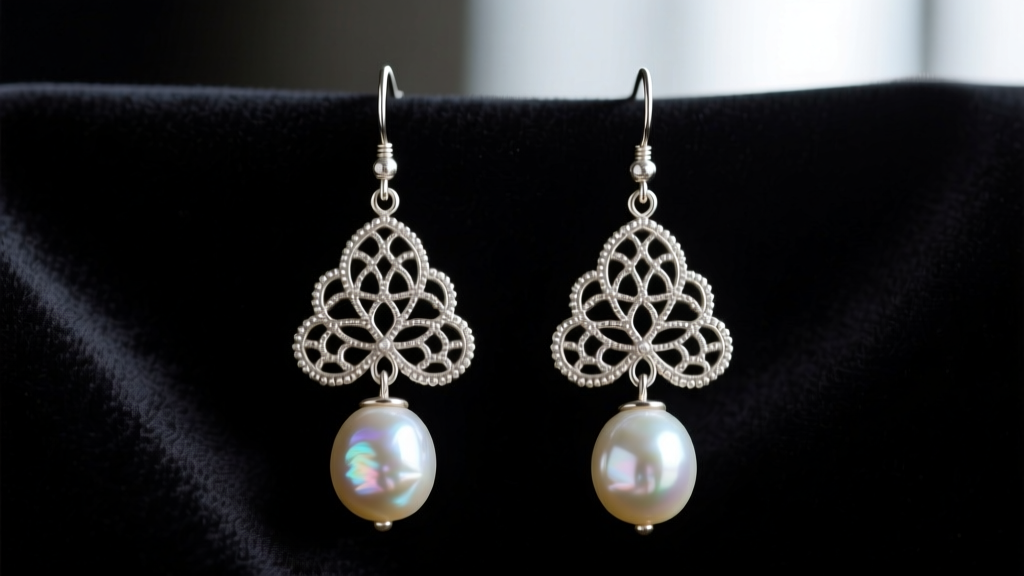
The Metallurgy of the Era: Platinum vs. White Gold vs. Silver
When evaluating Edwardian pearl earrings, understanding the base metal is just as critical as assessing the gemstones. The Edwardian era (1901–1915) marked a revolutionary shift in jewelry metallurgy. Prior to this period, jewelers relied heavily on silver-topped gold to achieve a white metal look, which inevitably tarnished and stained the skin. The introduction of platinum to mainstream jewelry completely changed the structural possibilities of earring design, allowing for the ultra-fine, lace-like filigree and delicate garland motifs that define the era. Today, as collectors and enthusiasts navigate the market in 2026, distinguishing between authentic antique metals and modern reproduction alloys is essential for accurate valuation and long-term wearability.
Platinum (900-950 Grade): The Edwardian Standard
Authentic Edwardian pearl earrings are predominantly crafted in 900/1000 or 950/1000 platinum, meaning the alloy contains 90% to 95% pure platinum, typically mixed with iridium or ruthenium. This specific alloy composition provides a unique combination of high tensile strength and malleability. Unlike gold, which loses microscopic particles when scratched, platinum merely displaces. This property is vital for the intricate milgrain edges and microscopic prongs used to secure delicate natural pearls. According to the Lang Antiques University, the ability to draw platinum into incredibly fine wires without it snapping allowed Edwardian master jewelers to create the iconic 'lace' patterns that remain impossible to perfectly replicate with lower-grade metals.
14k and 18k White Gold: The Modern Reproduction Choice
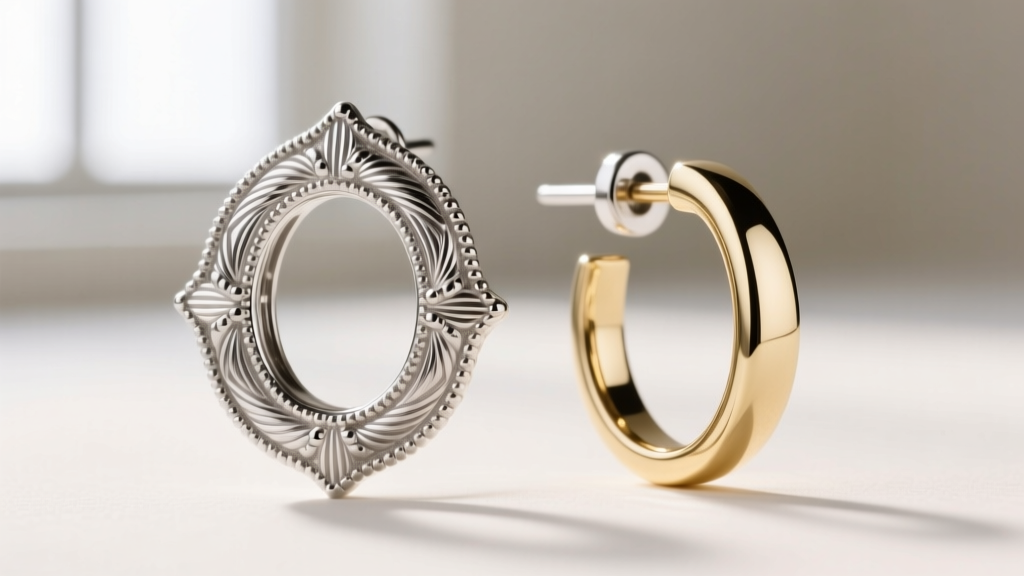
While white gold was patented around 1915 (notably by the Belais company), it did not see widespread use until the Art Deco period. Consequently, if you encounter Edwardian-style pearl earrings made of white gold, they are almost certainly later reproductions. Modern 14k and 18k white gold alloys rely on nickel, palladium, or silver to achieve their color, and they require a rhodium plating (typically 0.75 to 1.0 microns thick) to mask the underlying yellowish-gray tint. Over time, friction against the earlobe and hair causes this rhodium layer to wear away, requiring periodic re-plating—a maintenance burden that original platinum Edwardian earrings do not share.
Pearl Material Properties: Natural Saltwater vs. Cultured
The soul of Edwardian pearl earrings lies in the pearls themselves. During the early 20th century, the cultured pearl industry (pioneered by Kokichi Mikimoto) was still in its infancy. Therefore, genuine antique pieces feature natural saltwater pearls, primarily harvested from the Persian Gulf or the waters off Ceylon (Sri Lanka). Today, high-end reproductions or 'married' pieces (where original settings are fitted with newer pearls) typically utilize cultured Akoya or Freshwater pearls. The material properties of these pearls differ drastically in nacre structure, luster orient, and specific gravity.
Nacre Thickness and Luster Orient
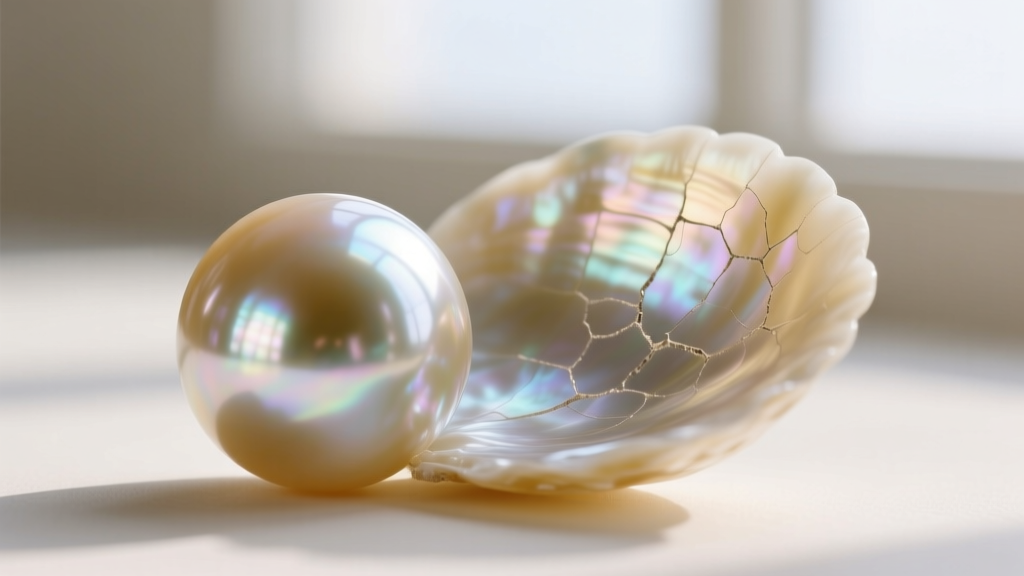
Natural saltwater pearls form without a bead nucleus, resulting in a solid nacre structure. This gives them a deep, inner glow known as 'orient'—a complex optical effect caused by light diffracting through dozens of microscopic aragonite platelet layers. In contrast, modern Akoya cultured pearls are bead-nucleated with a mother-of-pearl shell bead, coated with a relatively thin layer of nacre (typically 0.2mm to 0.8mm). While high-grade Akoya pearls possess a sharp, mirror-like surface luster that is highly desirable, they often lack the deep, translucent orient of a natural saltwater pearl. Freshwater pearls, often used in budget-friendly Edwardian reproductions, are tissue-nucleated and possess thick nacre, but their luster tends to be softer and more diffuse, lacking the sharp 'ping' of light reflection seen in saltwater varieties.
Surface Blemishes and Authenticity Markers
Gemological testing is frequently required to definitively separate natural from cultured pearls in antique settings. The Gemological Institute of America (GIA) utilizes real-time X-ray microradiography to examine the internal structure. Natural pearls reveal concentric, onion-like layers of nacre all the way to the center, whereas bead-nucleated cultured pearls reveal a distinct boundary between the solid shell bead nucleus and the outer nacre layers. Additionally, natural Edwardian pearls often exhibit slight variations in size and subtle surface blemishes, as finding perfectly matched, flawless natural pearls in the early 1900s was exceptionally rare and reserved only for royalty or elite aristocracy.
Comparative Data: Material Durability and Pricing
To provide a clear framework for buyers and collectors, the following table breaks down the material specifications, estimated market values, and physical properties of the three most common categories of Edwardian pearl earrings found in today's market.
| Material Profile | Base Metal | Pearl Type | Nacre Structure | Est. Price Range (USD) | Mohs Hardness |
|---|---|---|---|---|---|
| Authentic Antique | 900/1000 Platinum | Natural Saltwater | Solid, concentric | $8,500 - $45,000+ | 2.5 - 3.0 |
| High-End Reproduction | 950 Platinum | Cultured Akoya | Bead-nucleated (0.4mm+) | $2,200 - $6,500 | 2.5 - 3.0 |
| Commercial Reproduction | 14k White Gold / Silver | Cultured Freshwater | Solid, tissue-nucleated | $150 - $800 | 2.5 - 3.0 |
Structural Failure Modes in Antique Filigree
Owning authentic Edwardian pearl earrings requires an understanding of how century-old metals behave under modern stress. Platinum is highly durable, but it is susceptible to 'work hardening.' If a delicate platinum filigree wire is bent repeatedly, the crystalline structure of the metal locks up, becoming brittle and eventually snapping. This is a common failure mode in antique drop earrings that have been caught on clothing or handled roughly during cleaning.
Another critical vulnerability lies in the earring posts and backing mechanisms. Original Edwardian earrings frequently utilized screw-backs or early friction clutches with relatively thick, low-karat gold or platinum posts. Many modern owners choose to have these posts snipped off and replaced with modern butterfly friction posts to accommodate contemporary piercing preferences. However, shearing the original post and laser-welding a new one can alter the historical integrity of the piece, significantly reducing its value to serious antiquarians. Furthermore, if a jeweler uses a lower-melting-point white gold solder to repair a platinum filigree joint, it introduces a galvanic weak point that can lead to catastrophic structural failure or localized corrosion over time.
Sourcing and Verifying Edwardian Materials
When acquiring Edwardian pearl earrings, always demand a comprehensive gemological report from a recognized laboratory like the GIA or AGS, specifically noting the natural origin of the pearls. Visually inspect the metal under a 10x jeweler's loupe. Authentic Edwardian platinum will show microscopic tool marks and a slightly grayish, unpolished patina in the deep recesses of the filigree, whereas modern cast reproductions in white gold will appear overly uniform, with rounded edges and a bright, rhodium-plated finish that pools in the crevices. By focusing on the precise metallurgical and gemological properties rather than just the aesthetic silhouette, you ensure that your investment in Edwardian jewelry is both historically authentic and structurally sound for generations to come.
Expert Insight: Never use ultrasonic cleaners on Edwardian pearl earrings. The high-frequency vibrations can shatter the delicate, century-old platinum filigree wires and severely damage the nacre of both natural and cultured pearls. Always clean these pieces with a soft, damp microfiber cloth and a mild, non-detergent soap.


