The Ultimate Beginner Guide to Elf Ear Earrings & Cuffs
Discover how to choose, fit, and style elf ear earrings. Our beginner guide covers non-pierced cuffs, cartilage wraps, and hypoallergenic metals.

What Are Elf Ear Earrings? Understanding the Fantasy Appeal
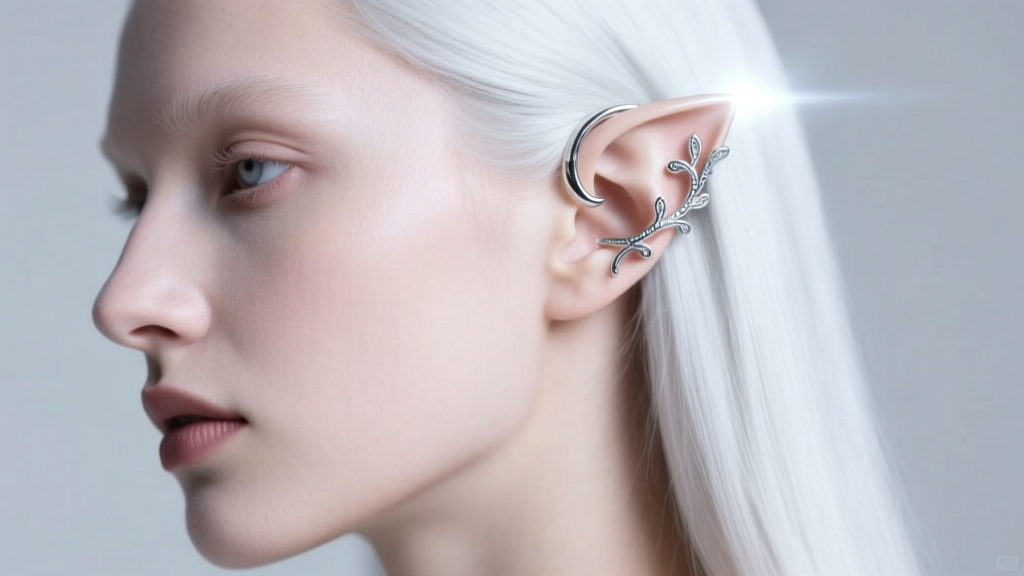
Elf ear earrings have transcended their origins in Renaissance faires and high-fantasy cosplay to become a staple in everyday alternative and "fantasycore" fashion. Unlike traditional studs or hoops that hang from the earlobe, elf ear earrings are designed to trace the natural, sweeping curves of the outer ear. They mimic the elongated, pointed ears of mythical creatures by drawing the eye upward and outward along the cartilage.
For beginners, the terminology can be confusing. You will often see these pieces marketed as ear cuffs, cartilage wraps, helix climbers, or fantasy ear wraps. While they share a similar aesthetic goal, their attachment mechanisms and anatomical placements differ vastly. Understanding these differences is the first step toward finding a piece that is comfortable, secure, and visually striking.
Mapping the Anatomy: Where Do They Sit?
To choose the right elf ear earring, you must understand the topography of your ear. Jewelers design these pieces to interact with specific anatomical landmarks:
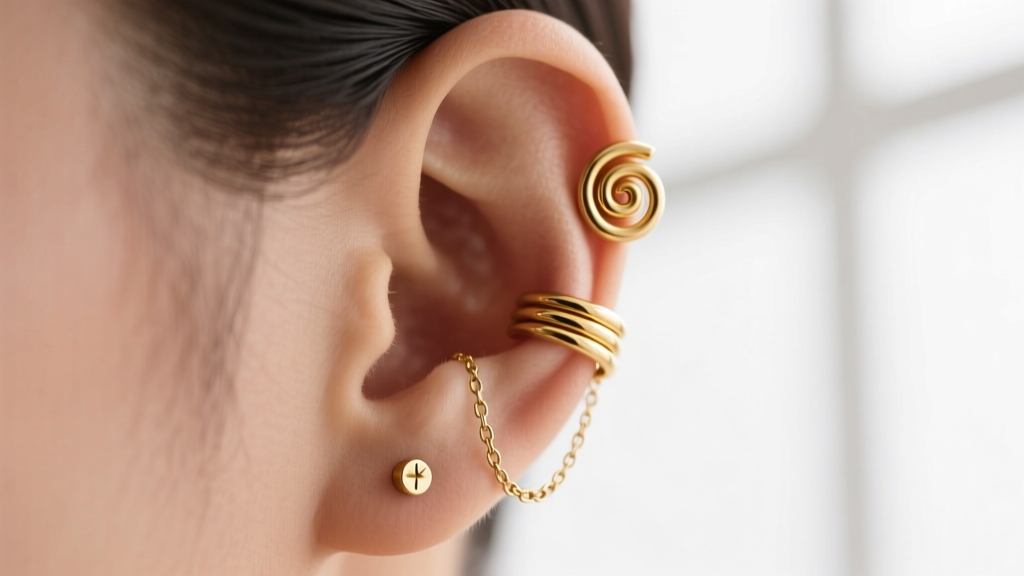
- The Helix: The outer, rolled edge of the upper ear. Most elf ear cuffs grip the thinnest part of the helix.
- The Scapha: The shallow, flat depression between the helix and the antihelix. Wire-wraps often lay flat against this area to create a "webbed" or "vined" look.
- The Antihelix: The inner ridge parallel to the helix. Some intricate designs hook over the helix and rest against the antihelix for added stability.
- The Conch: The deep, bowl-like center of the ear. Large fantasy shields may cover the conch and extend outward.
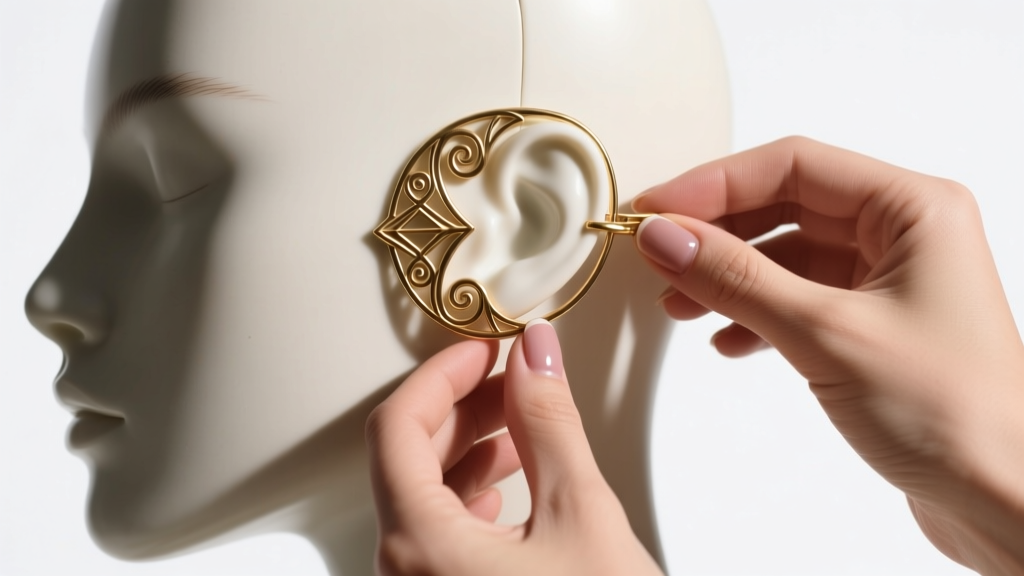
Because every person's ear anatomy is entirely unique—much like a fingerprint—an elf ear earring that fits perfectly on a display mannequin may require careful adjustment to suit your specific cartilage ridges.
Pierced vs. Non-Pierced: Choosing Your Attachment Method
The most critical decision when shopping for elf ear earrings is whether you want a pierced or non-pierced design. Both offer distinct advantages and limitations.
Non-Pierced Tension Cuffs
Non-pierced elf ear cuffs rely on mechanical tension. They feature a narrow, C-shaped channel that slides over the thinnest edge of your helix cartilage. The metal's natural spring-back creates a gentle squeeze, holding the piece in place. These are ideal for beginners who want to experiment with fantasy styling without committing to a new cartilage piercing. However, they require a specific ear shape; if your helix is too thick or heavily folded, the cuff may not seat properly.
Pierced Cartilage Wraps and Chains
Pierced elf ear earrings utilize an existing hole—usually in the helix, industrial, or lobe—as an anchor point. From this anchor, a rigid wire or delicate chain extends across the ear. A popular variation is the lobe-to-helix chain, which connects a standard lobe stud to a small helix cuff or stud, creating a draped, elven effect. These are vastly more secure than tension cuffs and will not slip off during physical activity.
Material Metallurgy: Avoiding Allergies and the "Green Ear"
Fantasy jewelry is notorious for being cast in cheap, reactive alloys. Because the skin on the outer ear is thin and sits close to the bone, poor-quality metals can cause severe contact dermatitis or leave a stubborn green/black oxidation stain on your skin. When investing in elf ear earrings, you must scrutinize the material grade.
| Material Grade | Hypoallergenic? | Durability & Tension | Average Price Range |
|---|---|---|---|
| ASTM F136 Implant-Grade Titanium | Yes (Nickel-Free) | Excellent spring-back; retains tension without snapping. | $45 - $120 |
| ASTM F138 Implant-Grade Steel | Mostly (Contains trace nickel) | Very rigid; requires careful bending to avoid metal fatigue. | $30 - $85 |
| 925 Sterling Silver | Varies (Check copper/nickel alloy) | Soft; prone to work-hardening and snapping if over-adjusted. | $40 - $150 |
| Brass / Zinc Alloy ("Tibetan Silver") | No (High allergy & oxidation risk) | Brittle; loses tension quickly and bends out of shape. | $10 - $25 |
According to the Association of Professional Piercers (APP), implant-grade titanium (ASTM F136) is the gold standard for any jewelry that rests against sensitive cartilage or unhealed piercings. It is completely nickel-free and lightweight, which is crucial for elaborate elf ear designs that might otherwise drag down on the ear due to excessive weight.
The Physics of Fitting: How to Adjust Your Ear Cuff
Buying a non-pierced elf ear cuff is only half the battle; fitting it to your unique anatomy is where most beginners struggle. If your cuff is slipping off or causing pain, you need to adjust the tension gap. However, you must be aware of a metallurgical concept called work hardening.
Work hardening occurs when metal is bent or stressed repeatedly. As the crystal lattice of the metal shifts, it becomes harder but significantly more brittle. If you repeatedly squeeze and pull open a sterling silver or brass ear cuff, it will eventually snap. According to the Gemological Institute of America (GIA), sterling silver requires gentle, deliberate handling to maintain its structural integrity.
Step-by-Step Fitting Guide
- Locate the Thinnest Point: Feel the outer edge of your ear. Find the spot on the helix where the cartilage rolls into the thinnest, flattest edge.
- Slide, Don't Squeeze: Gently slide the open channel of the cuff over this thin edge. Do not force it.
- Rotate into Place: Once the cuff is on the edge, rotate it slightly downward so the decorative face sits on the front of your ear, and the tension band rests securely behind the ridge.
- Micro-Adjustments: If it is too loose, gently squeeze the sides together just a millimeter. If it is too tight, use a smooth, rounded tool (like a wooden dowel or a thick pen) to gently widen the gap. Avoid using your fingers, as uneven pressure can warp the design.
Pro-Tip: If you purchase a highly intricate, cast-metal elf ear cuff, do not attempt to bend it yourself. Cast metals are inherently porous and brittle. Instead, look for "adjustable wire-wrap" styles made from forged or drawn wire, which are designed to be shaped by the wearer.
Troubleshooting Common Fit Issues
Even with the right materials and careful adjustment, beginners often encounter a few common hurdles when wearing elf ear earrings.
The Cuff Keeps Slipping Off
The Cause: The tension gap is too wide, or your helix cartilage is too thick for the specific cuff design, preventing the "lip" of the cuff from catching behind the ridge.
The Fix: Try moving the cuff to a different part of the ear, such as the mid-helix or even the tragus. If the design allows, gently reduce the gap width. Alternatively, switch to a pierced helix-to-lobe chain for guaranteed security.
The Cuff Pinches and Causes Pain
The Cause: The tension is too high, cutting off superficial circulation to the skin, or the inner edge of the cuff has a rough casting seam that is scratching the cartilage.
The Fix: Widen the gap slightly. Inspect the inside of the cuff with a magnifying glass; if you see rough metal burrs, gently buff them with a jeweler's polishing cloth or a fine-grit nail buffer. Never wear a pinching cuff to sleep or during exercise, as swelling will exacerbate the pain.
My Skin is Turning Green or Itching
The Cause: A reaction to copper or nickel in the alloy, or trapped moisture causing oxidation. The American Academy of Dermatology notes that nickel allergy is one of the most common causes of contact dermatitis, often triggered by cheap fantasy jewelry.
The Fix: Immediately remove the piece. Clean your ear with mild soap and water. Upgrade to ASTM F136 Titanium or high-quality 14k/18k gold. If you must wear a brass or copper piece for a specific costume, coat the inner band with a thin layer of clear, flexible jewelry sealant or clear nail polish to create a barrier between the metal and your skin.
Styling Fantasy Jewelry for Everyday Wear
The key to integrating elf ear earrings into a modern, everyday wardrobe is balancing the fantasy elements with minimalist clothing. An elaborate, vine-wrapped ear cuff that spans the entire scapha and helix acts as a statement piece. Let it be the focal point of your look by keeping your neckline bare and opting for simple, structured garments like a plain turtleneck or a crisp button-down shirt.
For a more subtle, "stealth fantasy" approach, opt for a single, small elven leaf or dagger motif that hugs only the uppermost tip of the helix. Pair this with a standard hoop or stud in the lobe to bridge the gap between alternative styling and traditional jewelry norms. Remember that asymmetry is your friend; wearing a heavy, elaborate elf ear wrap on one side while leaving the other ear bare creates a striking, editorial silhouette that feels intentional rather than costumey.
Final Thoughts on Ear Care and Maintenance
Elf ear earrings require the same maintenance as fine jewelry, with one added caveat: tension fatigue. Always store your non-pierced cuffs in a soft pouch where they will not be crushed by heavier items, which can warp the tension gap. Clean them regularly with a non-abrasive polishing cloth to remove skin oils and environmental oxidation, which can degrade the metal over time. By respecting the metallurgy and anatomy involved, you can comfortably wear your fantasy-inspired pieces every day, turning a mythical aesthetic into a personal signature style.


