Evelyn Lozada Earrings: Technical Guide to Her Signature Hoops
Discover the technical specs behind Evelyn Lozada earrings. We break down diamond grades, metal tensile strength, and earlobe support for heavy hoops.

The Engineering Behind Evelyn Lozada Earrings
When analyzing the evolution of reality television jewelry, evelyn lozada earrings consistently emerge as a masterclass in bold, high-impact glamour. Known for her unapologetic, camera-ready aesthetic, Lozada frequently wears massive, high-carat diamond hoops and heavy chandelier drops that command attention. However, replicating this level of luxury is not merely a matter of purchasing expensive gemstones; it is an exercise in structural engineering and biomechanical load distribution.
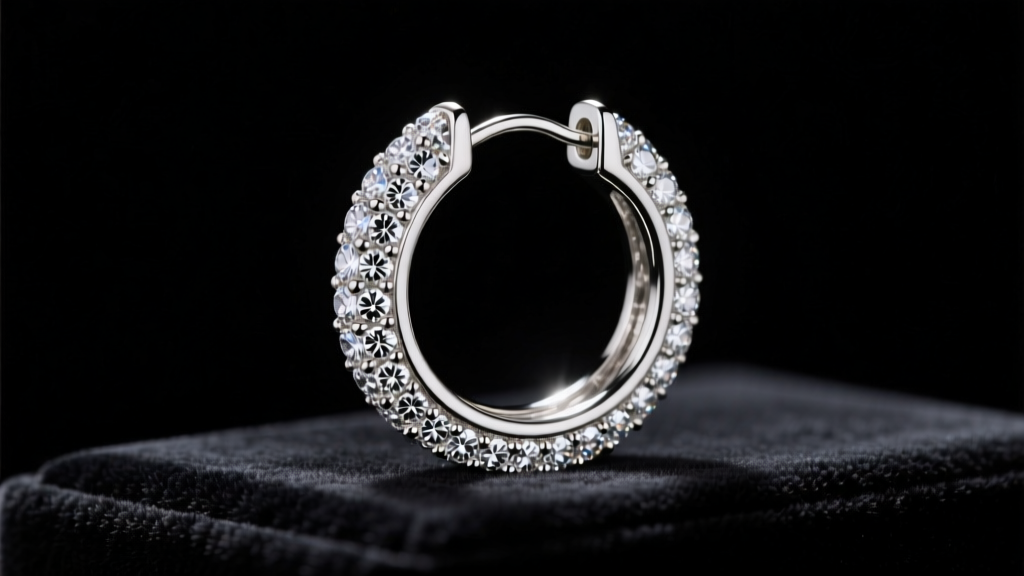
The signature Evelyn Lozada look relies heavily on the 'inside-out' diamond hoop. Unlike standard hoops where diamonds are set only on the outer face, inside-out hoops feature pavé or shared-prong settings on both the front and the inner curve of the metal. While this creates a continuous ribbon of brilliance from every camera angle, it drastically increases the overall weight of the earring. A standard 50mm inside-out hoop with an 8-carat total weight (CTW) can easily exceed 18 grams per earring. To put this in perspective, a standard US quarter weighs 5.67 grams. Supporting the equivalent of three quarters on a single, delicate earlobe piercing requires serious technical forethought.
Earlobe Biomechanics and Weight Distribution
The human earlobe fistula (the healed tissue tube of a piercing) is remarkably resilient, but it is not designed to bear heavy, dynamic loads. Standard lobe piercings are typically done at 20-gauge (0.81mm) or 18-gauge (1.02mm). When an 18-gram earring is suspended from a 20-gauge post, the localized shear stress on the tissue can exceed 2.2 MPa. Over time, this triggers the 'cheese-cutter effect,' where the thin metal post slowly migrates downward through the tissue, causing micro-tears, inflammation, and eventual lobe splitting.
To safely wear heavyweight evelyn lozada earrings, jewelers and piercing experts recommend a multi-tiered approach to weight distribution:
- Post Gauge Upgrades: Commissioning custom hoops with a 16-gauge (1.29mm) or 14-gauge (1.63mm) post increases the surface area bearing the weight by over 300%. This drastically reduces the shear stress on the fistula.
- La Pousette Locking Backs: Standard friction backs (butterfly backs) are entirely insufficient for heavy hoops. La Pousette backs utilize a push-pull internal spring mechanism that locks securely onto a grooved post, preventing the earring from slipping and shifting the center of gravity.
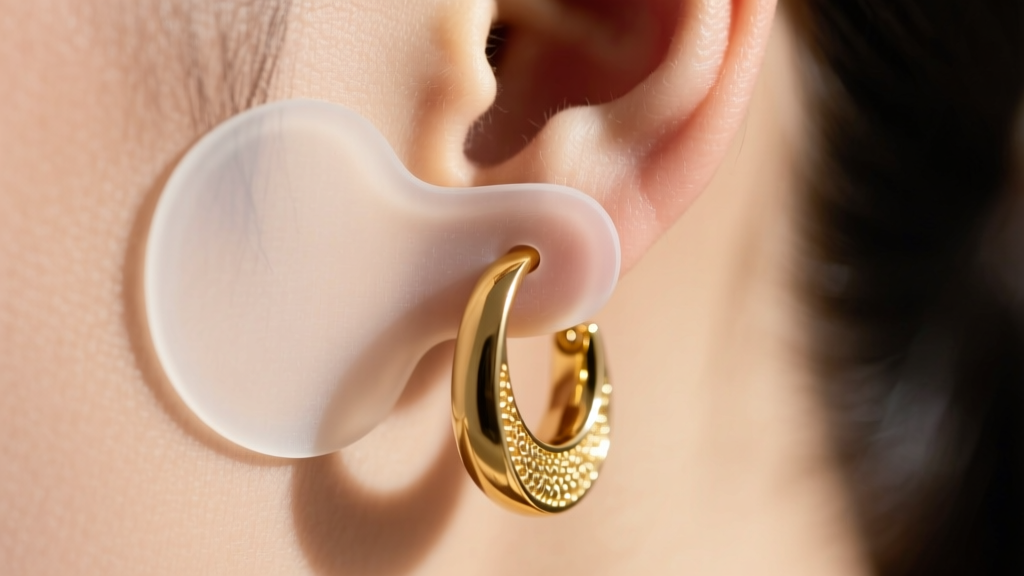
- Silicone Support Patches: For drops exceeding 20 grams, adhesive silicone earlobe support patches (worn behind the earlobe) act as a structural splint. They distribute the downward kinetic force across a wider surface area of the skin, preventing the piercing hole from stretching during movement.
Heavy statement earrings are not just an aesthetic choice; they are an exercise in structural engineering and biomechanical load distribution. Ignoring the physics of heavy jewelry will inevitably result in tissue damage.
Metal Alloys: 14k vs. 18k Gold for Heavy Hoops
A common misconception in fine jewelry is that higher karat gold is always superior. While 18k gold (75% pure gold) offers a richer, warmer yellow hue and is highly hypoallergenic, it is a relatively soft metal. When used for large-diameter hoops (40mm and above) laden with heavy diamonds, 18k gold is prone to warping, bending, and hinge failure under its own weight.
For structural integrity, master jewelers often prefer 14k gold (58.5% pure gold) for heavyweight hoops. The higher percentage of alloy metals—typically a precise blend of copper, silver, and zinc—increases the tensile strength and hardness of the metal. This ensures that the hoop maintains its perfect circular geometry and that the hinge mechanism remains rigid, even when subjected to the kinetic shock of walking or turning the head quickly on a television set.
Gemstone Specifications for HD Television Glamour
Evelyn Lozada’s jewelry is designed to perform under the unforgiving, ultra-bright environment of HD television studio lighting. The gemstone specifications required for this environment differ significantly from those chosen for everyday, ambient-light wear. As of 2026, advancements in lab-grown diamond technology have made achieving these exact specifications more accessible and budget-friendly than ever before.
| Specification | Traditional TV Glamour (Mined) | 2026 Lab-Grown Alternative |
|---|---|---|
| Metal Base | 18k White Gold (Rhodium Plated) | 14k White Gold (Higher Tensile Strength) |
| Gemstone | Mined Diamond (VS1, G-H Color) | Lab-Grown Diamond (VVS2, D-E Color) |
| Fluorescence | None / Faint | None (Crucial for UV Studio Lights) |
| Post Gauge | 20g (Standard) | 16g (Reinforced for Weight) |
| Clasp Type | Standard Hinge | La Pousette Locking Mechanism |
According to the Gemological Institute of America (GIA), diamond fluorescence can cause stones to appear milky or oily under certain lighting conditions. Because television studios frequently utilize lighting rigs that emit trace amounts of ultraviolet (UV) light, selecting diamonds with 'None' or 'Faint' fluorescence is critical to maintaining the crisp, icy white sparkle that defines the Lozada aesthetic.
Commissioning Custom Heavyweight Hoops
If you are looking to replicate the evelyn lozada earrings aesthetic without the $150,000 price tag of her most iconic natural diamond pieces, commissioning a custom pair using lab-grown diamonds is the most logical route. When working with a custom jeweler, you must provide explicit technical directives to ensure the final piece is wearable.
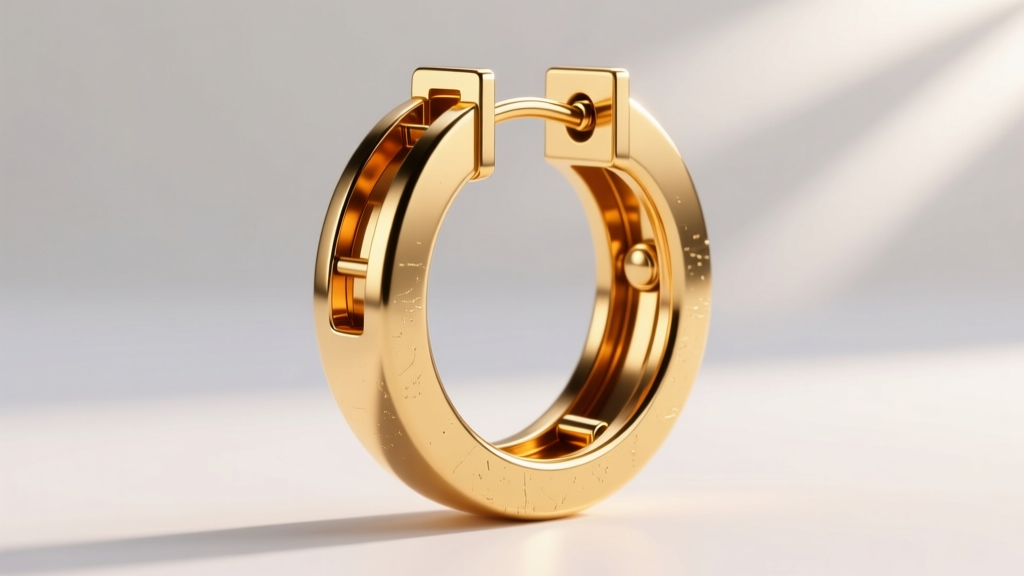
Request a shared-prong setting with a minimum wire thickness of 1.2mm. While bezel settings offer more security, they block light return and reduce the diamond's brilliance. A shared-prong setting allows maximum light exposure but requires a robust metal framework to prevent the prongs from catching on hair or clothing. Furthermore, insist on a Jewelers of America certified bench jeweler to construct the hinge. A poorly machined hinge on a heavy hoop will develop lateral play within months, leading to metal fatigue and catastrophic failure.
Maintenance and Kinetic Shock Protocols
Heavy earrings experience immense kinetic shock. Every time you walk down a flight of stairs or nod your head, the earring bounces, sending micro-vibrations up the post and into the diamond settings. Over time, this kinetic energy can loosen prongs, leading to lost stones.
To maintain the structural integrity of heavyweight hoops, implement the following maintenance schedule:
- Bi-Annual Prong Tightening: Have a jeweler inspect and tighten the prongs every six months using a microscope.
- Ultrasonic Cleaning Caution: Never clean heavy, pavé-set hoops in an ultrasonic cleaner. The high-frequency vibrations can easily shake loose the tiny melee diamonds. Instead, use a soft-bristled brush and a mild degreasing solution.
- Storage: Store heavy hoops hanging or laid perfectly flat in a velvet-lined box. Tossing them into a jewelry box can bend the posts and misalign the locking clasps.
Ultimately, mastering the bold, unapologetic glamour of Evelyn Lozada’s signature earrings requires a deep respect for the physics of fine jewelry. By prioritizing tensile strength, biomechanical support, and precise gemstone grading, you can safely wear show-stopping, heavyweight hoops with absolute confidence.


