Troubleshooting a Crochet Earring: Fix Sagging and Fraying
Learn how to troubleshoot a crochet earring with expert fixes for sagging shapes, fraying threads, and tarnished wire findings in this detailed guide.

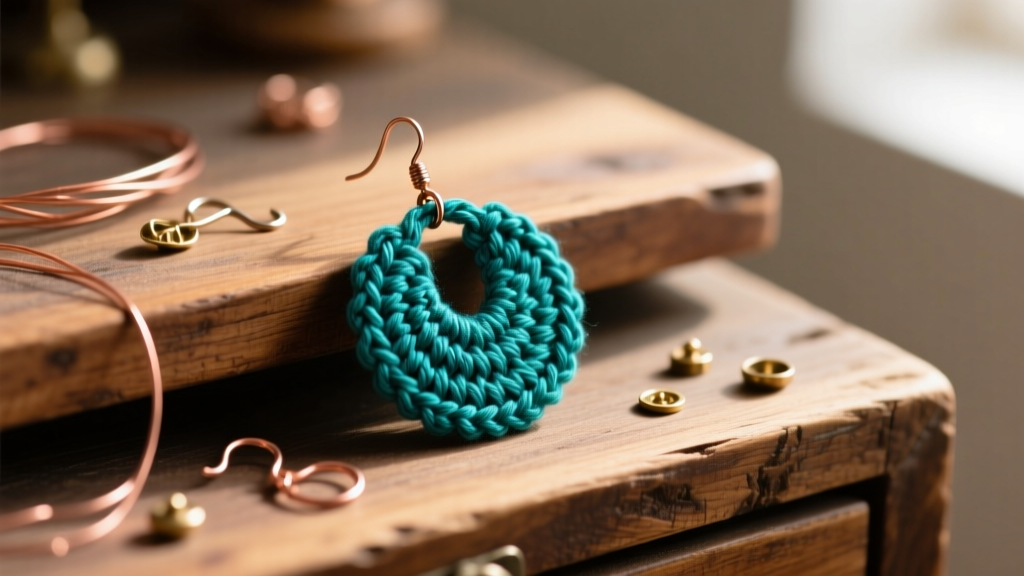
As we navigate the handmade jewelry renaissance of 2026, the crochet earring remains a staple for artisans blending hyper-textural fibers with minimalist metal findings. However, merging soft textiles with structural jewelry requirements introduces a unique set of engineering challenges. Unlike stamped metal or cast resin, yarn is a dynamic, interlocking series of loops that reacts to gravity, humidity, and friction. Whether you are working with ultra-fine size 20 mercerized cotton thread for micro-crochet or bulky bamboo yarn for statement hoops, structural failure is a constant threat.
This comprehensive troubleshooting guide dives deep into the material science and jewelry-making mechanics required to fix, stiffen, and preserve your handmade fiber earrings. We will move past generic craft advice and explore exact chemical ratios, wire gauge specifications, and tension-distribution techniques used by professional fiber-jewelers.
The Anatomy of a Crochet Earring and Common Failure Points
Before applying a fix, it is crucial to understand why a crochet earring fails. The primary vulnerability lies in the bias stretch of the crochet fabric. Because crochet stitches are essentially diagonal interlocking chains, the weight of a metal jump ring or ear wire pulling on a single top stitch creates a cascading distortion down the piece. Furthermore, the friction between metal findings and natural fibers acts like a microscopic saw, eventually severing the yarn.
The three most common failure points we see in fiber jewelry are:
- Structural Sagging: The earring loses its geometric shape due to gravity and ambient humidity.
- Fiber Fraying: The anchor points where metal meets yarn begin to unravel or snap.
- Hardware Tarnish and Snagging: Oxidized metals stain the yarn, or micro-abrasions on the wire catch and pull the fibers.
Problem 1: The Earring is Sagging or Losing Its Shape
A sagging crochet earring is usually the result of using a yarn with high drape (like bamboo or silk blends) without an internal or external armature. To fix this, you must introduce rigidity without sacrificing the tactile beauty of the stitches.
Solution A: Chemical Stiffeners and the Capillary Method
Commercial fabric stiffeners like Aleene's Stiffen-Quik are popular, but they can leave a glossy, brittle shell if applied incorrectly. For a professional, matte finish that retains a slight flexibility, a customized PVA (Polyvinyl Acetate) mixture is superior.
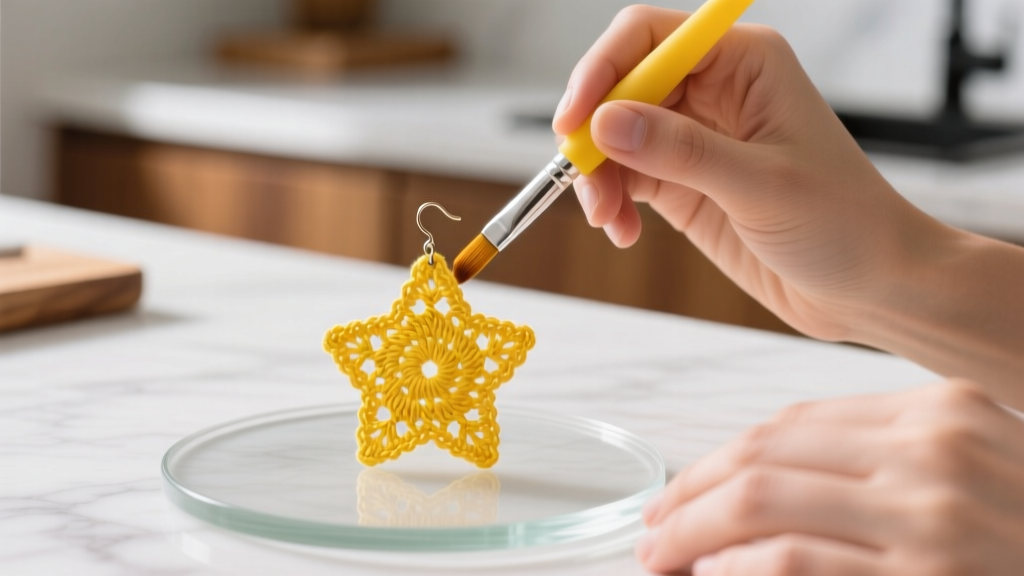
The Professional PVA Recipe: Mix 1 part high-quality PVA glue (like Mod Podge Matte) with 1 part distilled water. Critical Step: Add exactly one drop of mild dish soap. The soap breaks the liquid's surface tension, allowing the stiffener to penetrate the core of the yarn fibers via capillary action rather than just coating the exterior.
Apply the mixture using a soft silicone brush, ensuring you saturate the inner loops of the stitches. Pin the earring flat onto a foam blocking board using rust-proof T-pins, stretching it to the exact desired dimensions. Allow it to cure for 24 hours in a low-humidity environment.
Solution B: Structural Wire Armatures
If chemical stiffeners are not enough—particularly for large geometric shapes or hoops—you must crochet over a wire skeleton. According to jewelry making experts at The Spruce Crafts, selecting the correct wire gauge is vital for armatures.
- 28-Gauge Dead-Soft Copper: Best for intricate, lace-like micro-crochet where the wire needs to bend effortlessly inside tiny size 30 thread stitches.
- 24-Gauge Half-Hard Brass: The ideal middle-ground for standard worsted or DK weight yarns, providing enough rigidity to hold a circle or triangle shape without snapping during the crochet process.
Problem 2: Fraying Threads and Unraveling Knots
The friction point where the ear wire connects to the crochet body is the highest stress zone. If your yarn is fraying here, the issue is likely a combination of metal abrasion and improper knot sealing.
The Micro-Torch vs. Solvent Method
Your repair method depends entirely on the fiber content of your yarn:
- Synthetic Fibers (Acrylic, Nylon, Polyester): Do not use liquid sealants, as they will not bond properly. Instead, use a micro-torch or a heated beading tool to melt the synthetic fibers into a hard, microscopic bead. Keep the flame exactly 1.5 inches away to avoid scorching the surrounding stitches.
- Natural Fibers (Cotton, Wool, Bamboo): Melting is impossible and will cause charring. Use a cyanoacrylate-based adhesive (super glue) applied with a micro-needle tip. Place a single, microscopic drop directly onto the final slip knot. Alternatively, use a specialized liquid seam sealant like Dritz Fray Check, but be aware that it can darken light-colored cottons.
Problem 3: Tarnished Wire and Jump Ring Failures
Nothing ruins a delicate crochet earring faster than green oxidation bleeding from raw copper or black tarnish from sterling silver transferring onto light-colored yarn. Furthermore, standard machine-cut jump rings have microscopic burrs at the seam that will shred yarn fibers over time.
Upgrading Your Findings
To troubleshoot hardware failures, you must upgrade your metal components and change how you attach them. Interweave Crochet frequently highlights the importance of matching fiber longevity with metal longevity. Below is a troubleshooting matrix for selecting the right wire for fiber jewelry:
| Wire Material | Gauge Recommendation | Tarnish Resistance | Yarn Snag Risk |
|---|---|---|---|
| Copper (Raw) | 24g (Armature), 20g (Hooks) | Low (Oxidizes quickly, stains yarn) | High (if unpolished) |
| Argentium Silver | 22g (Weaving), 19g (Ear Wires) | Extremely High (Firescale resistant) | Low (Smooth finish) |
| Niobium | 20g (Ear Wires only) | High (Anodized, hypoallergenic) | Very Low |
| Brass | 24g (Armature) | Medium (Requires lacquer coating) | Medium |
The Wire-Wrapped Bail Technique
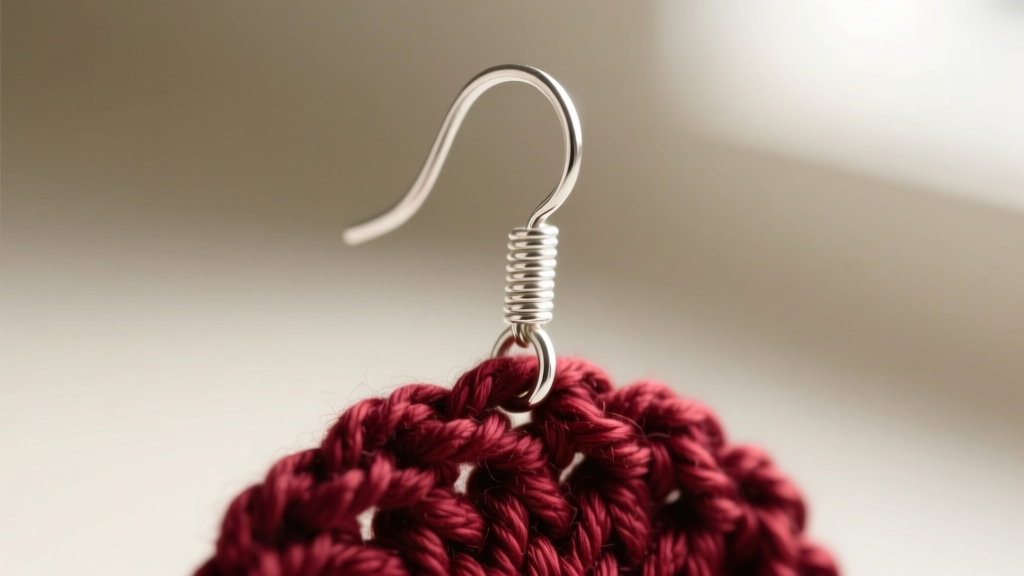
Never attach a heavy metal ear wire directly through a single crochet chain space. The metal will eventually saw through the yarn. Instead, use a 26-gauge dead-soft silver wire to create a 'wire-wrapped bail'. By wrapping the wire across three to four top stitches, you distribute the kinetic tension and weight of the earring across a wider surface area of the textile, completely eliminating the friction-sawing effect.
Preventative Care and Storage for Handmade Yarn Jewelry
Troubleshooting is reactive; proper storage is proactive. Yarn is highly susceptible to UV fading, moisture-induced mildew, and pest damage (specifically from silverfish and clothes moths).
- Humidity Control: Store your crochet earrings in a sealed acrylic organizer with rechargeable silica gel desiccant packets. This prevents the yarn from absorbing ambient moisture, which causes the fibers to swell and relax, undoing your stiffening efforts.
- Anti-Tarnish Strips: If using sterling silver or copper findings, place 3M anti-tarnish strips inside the storage container. These strips absorb sulfur compounds from the air before they can react with the metal and stain your yarn.
- UV Protection: Dyed mercerized cotton is prone to photodegradation. Never display or store brightly dyed crochet earrings in direct sunlight, as the UV rays will break down the chemical dye bonds within 3 to 6 months.
By treating your crochet earrings not just as textiles, but as complex, multi-material engineering projects, you can ensure they remain structurally sound, visually pristine, and comfortable to wear for years to come. For more advanced techniques on integrating beads into your fiber work, consult the metal and wire guides available through Rio Grande, a premier supplier for hybrid jewelry makers.


