Stud and Hoop Earrings: A Beginner's Guide to Everyday Styling
Master your everyday look with our beginner's guide to stud and hoop earrings. Learn about metal grades, gauge sizes, and face-shape styling.

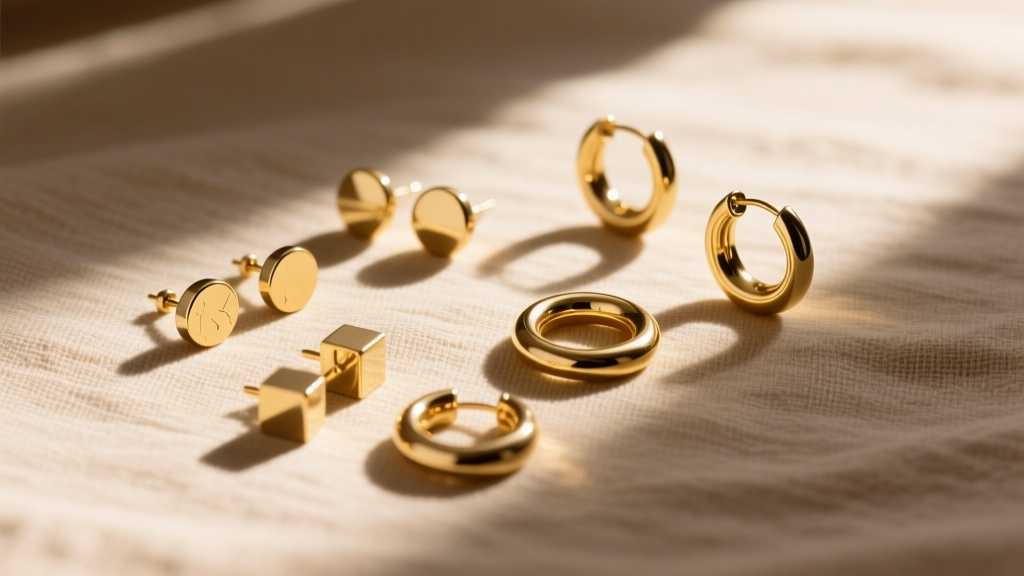
The Anatomy of a Perfect Earring Capsule
Building a reliable jewelry collection starts with mastering the essentials. When it comes to foundational ear styling, stud and hoop earrings are the undisputed workhorses of any capsule wardrobe. Whether you are stepping into the world of fine jewelry for the first time or simply looking to upgrade from fast-fashion accessories, understanding the mechanics, materials, and proportions of these two styles is critical.
A true beginner-friendly approach goes beyond simply picking out pretty designs. It requires understanding how metal grades interact with your skin, how gauge thickness affects your piercing health, and how hoop diameters alter your facial proportions. In this guide, we will break down the exact specifications you need to curate a high-quality, everyday earring stack that lasts a lifetime.
Material Matters: Decoding Metal Grades
The most common mistake beginners make is prioritizing aesthetics over metallurgy. Your ear piercings are essentially permanent fistulas (tunnels of healed tissue), and the metal resting inside them dictates your long-term comfort and health.
- Implant-Grade Titanium (ASTM F-136): The gold standard for sensitive ears and fresh piercings. It is entirely nickel-free, lightweight, and highly biocompatible. Brands like BVLA and Maria Tash use this for their internal threading and flat-back studs.
- Solid Gold (14k or 18k): According to the Gemological Institute of America (GIA), 14k gold offers the best balance of durability and rich color for everyday wear. 18k is softer and more prone to scratching but offers a deeper yellow hue. Avoid anything below 10k for piercings.
- Surgical Steel (316L): Often marketed as "hypoallergenic," standard surgical steel actually contains up to 10% nickel. While fine for fully healed lobes, it is a major trigger for contact dermatitis in cartilage piercings. The Association of Professional Piercers (APP) recommends avoiding it for initial jewelry or sensitive wearers.
- Gold Vermeil & Plated Brass: Acceptable for occasional wear, but the thin gold layer will eventually wear off, exposing the base metal. Never sleep in plated earrings.
Sizing and Gauges: Getting the Fit Right
Wearing the wrong gauge (thickness) or diameter can lead to migration, tearing, or the dreaded "cheese-cutter effect" where a thin hoop slowly slices through your earlobe. Below is the definitive sizing chart for standard piercings.
| Piercing Location | Standard Gauge | Millimeter (mm) | Ideal Hoop Diameter |
|---|---|---|---|
| Standard Earlobe | 20g or 18g | 0.81mm - 1.02mm | 10mm - 15mm (Huggies) |
| Upper Lobe / Flat | 18g or 16g | 1.02mm - 1.29mm | 6mm - 8mm (Mini Hoops) |
| Helix / Cartilage | 16g | 1.29mm | 8mm - 10mm (Clickers) |
| Tragus / Conch | 16g | 1.29mm | 6mm - 8mm (Flat-back Studs) |
Pro Tip: For cartilage piercings, always opt for flat-back labret studs rather than traditional butterfly-back studs. Butterfly backs trap moisture and bacteria against the skin, leading to irritation bumps, while flat-backs sit flush and allow the tissue to breathe.
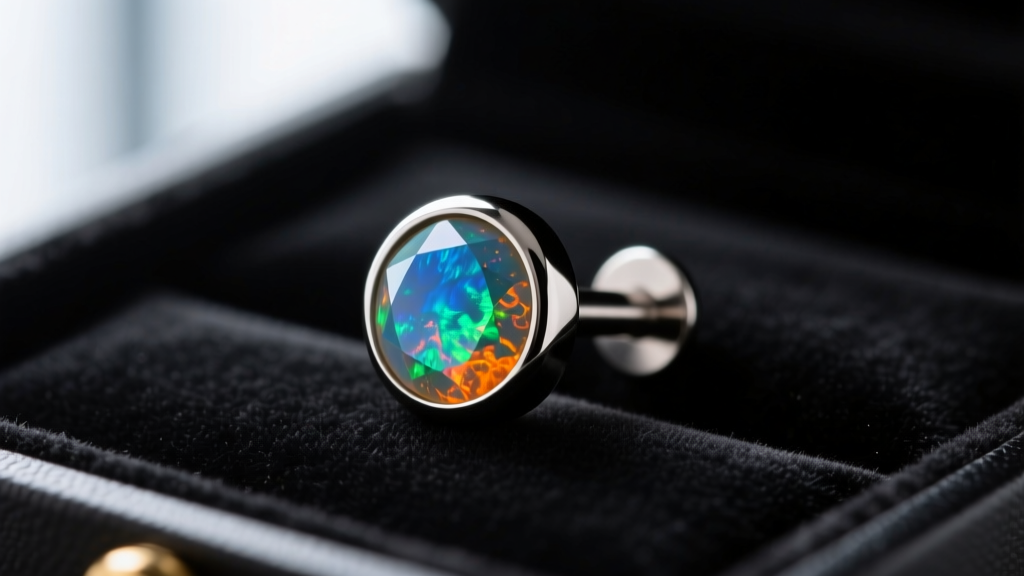
Styling Stud and Hoop Earrings for Your Face Shape
While personal preference always rules, understanding geometric balance can help you select stud and hoop earrings that flatter your natural bone structure.
Round and Oval Faces
If you have a round face, your goal is to create the illusion of length and angles. Avoid perfectly circular, chunky hoops, as they will echo the roundness of your face. Instead, opt for angular geometric studs (like squares or marquise cuts) and elongated drop hoops. Oval faces are the most versatile and can pull off almost any style, from tight 10mm huggies to dramatic 30mm statement hoops.
Square and Heart Faces
Square jawlines benefit from softening curves. Medium-sized circular hoops (15mm to 20mm) and round, bezel-set diamond studs help balance sharp angles. For heart-shaped faces (wider forehead, narrow chin), you want to draw the eye downward. Teardrop-shaped studs and bottom-heavy hoop designs add visual weight to the lower half of the face, creating beautiful symmetry.
"The secret to a curated ear stack is the rule of thirds: mix your textures and sizes. Pair a chunky 12mm gold huggie in the lobe with a delicate 16-gauge diamond stud in the helix to create visual tension."
Common Beginner Mistakes and How to Avoid Them
Even with the best intentions, beginners often fall into habits that damage their piercings or ruin their jewelry. Here are the most frequent failure modes:
- Sleeping in Hoops: Tossing and turning can catch a hoop on your pillowcase, applying sudden torque to the fistula. This causes micro-tears and swelling. Always switch to flat-back studs for sleeping.
- Overloading Heavy Lobe Hoops: Wearing heavy, thick-gauge statement hoops daily will gradually stretch your lobe piercing downward. Reserve heavy hoops for evening wear and stick to lightweight, thin-gauge huggies for the office.
- Using Harsh Chemicals: Cleaning your stud and hoop earrings with bleach or rubbing alcohol will strip the patina from oxidized silver and degrade the alloy mix in lower-karat gold. Use a mild dish soap and warm water solution with a soft-bristled baby toothbrush.
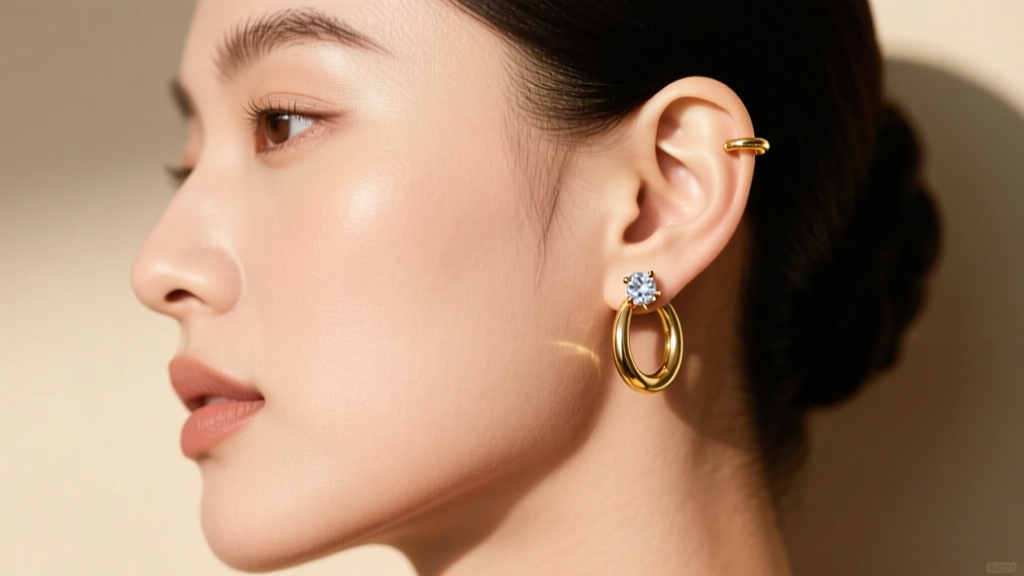
Building Your First Collection: Budget and Pricing
Curating a high-quality collection of stud and hoop earrings is an investment. Here is a realistic pricing framework to help you allocate your budget wisely:
The Entry Tier ($30 - $80)
At this price point, you are looking at sterling silver or gold vermeil. These are excellent for trendy, seasonal pieces, but expect the vermeil to fade after 6 to 12 months of daily wear. Brands like Mejuri and Gorjana dominate this space, offering accessible designs with decent craftsmanship.
The Mid-Tier ($100 - $300)
This is the sweet spot for everyday solid 14k gold studs and small huggie hoops. You are paying for the intrinsic value of the metal and the security of solid construction. Seamless hoops and internally threaded studs in this range will last decades if properly maintained.
The Fine Tier ($350+)
Here, you enter the realm of high-end body jewelry and fine diamonds. Brands like BVLA, Anatometal, and Maria Tash offer precision-machined 14k and 18k gold clickers and threadless studs featuring VS-clarity diamonds and genuine gemstones. The engineering at this level ensures the prongs will never snag your hair, and the closing mechanisms will remain secure for a lifetime.
Final Thoughts on Curating Your Look
Mastering the art of wearing stud and hoop earrings is a journey of trial, error, and refinement. Start by investing in high-quality, implant-grade metals for your primary lobe and cartilage piercings. Once your baseline is secure and your skin is happy, you can begin experimenting with varying diameters, textures, and gemstone cuts. Remember that a truly great ear stack is not about wearing as much jewelry as possible; it is about intentional placement, perfect proportions, and respecting the anatomy of your unique ear shape.


