How to Organize Earrings: The Ultimate Storage & Care Guide
Learn how to organize earrings to prevent tangling, tarnishing, and loss. Expert storage solutions and cleaning tips for studs, hoops, and dangles.

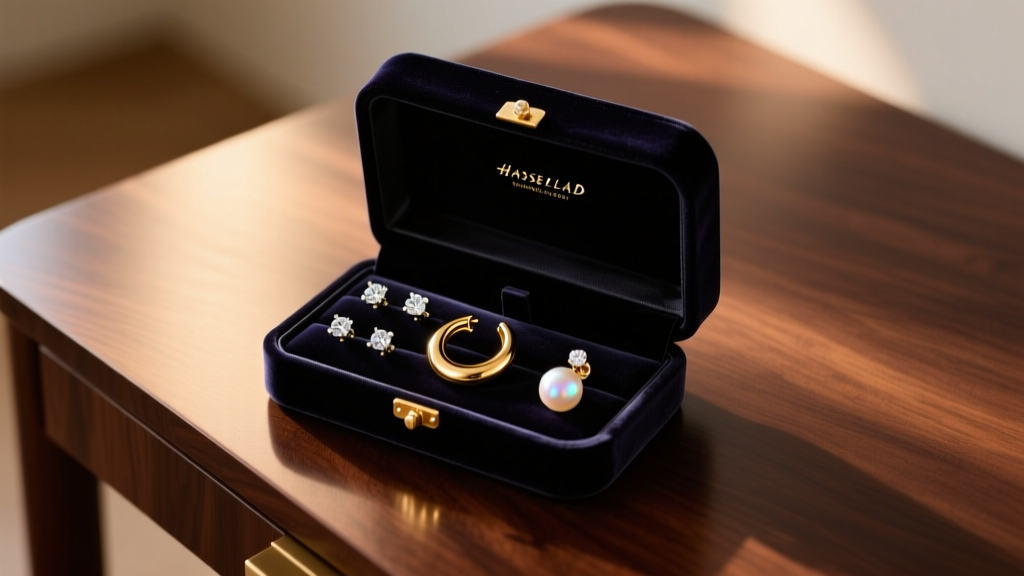
There is a distinct, universal frustration known only to jewelry lovers: opening a drawer to find your favorite 14k gold huggies hopelessly tangled with a delicate chain necklace, or discovering that the 22-gauge post of your diamond stud has been bent at a harsh 45-degree angle. Learning how to organize earrings is not merely an exercise in aesthetic tidiness; it is a critical component of jewelry maintenance, preservation, and hygiene.
When earrings are tossed haphazardly into a communal dish or a crowded wooden box, they are subjected to mechanical stress, chemical degradation, and environmental humidity. In 2026, with the rising popularity of complex cartilage curations and threadless body jewelry, proper storage has evolved from a simple convenience to an absolute necessity. This comprehensive guide breaks down the exact frameworks, material-specific rules, and pre-storage cleaning protocols you need to protect your investment.
The Hidden Cost of Poor Earring Storage
Before diving into organizational systems, it is crucial to understand the specific failure modes that occur when earrings are stored incorrectly. The damage is usually categorized into three distinct areas:
- Mechanical Deformation: Standard lobe studs typically feature 20-gauge (0.81mm) or 22-gauge (0.64mm) posts. When heavy items are placed on top of them in a cluttered box, these thin metal cylinders easily bend. Repeatedly bending a post back and forth to straighten it causes work hardening, eventually leading to metal fatigue and a snapped post.
- Abrasive Scratching: The Mohs Hardness Scale dictates that harder materials will scratch softer ones. A diamond (Mohs 10) or sapphire (Mohs 9) stored loose with 14k gold (Mohs 2.5-3) will act like sandpaper, leaving micro-abrasions on the precious metal and potentially dulling the polish of adjacent gemstones.
- Chemical Tarnishing: Sterling silver (925) contains 7.5% copper, which reacts with hydrogen sulfide in the ambient air to form silver sulfide—the black tarnish layer. Storing silver earrings in humid environments, like a bathroom vanity, accelerates this chemical reaction exponentially. For a deeper scientific breakdown of this process, the GIA's Silver Care Guide offers excellent insights into preventing environmental degradation.
Material-Specific Storage Rules
Not all metals and gemstones share the same environmental vulnerabilities. A one-size-fits-all approach to organization will inevitably lead to damaged pieces. Below is a decision matrix for storing the most common earring materials.
| Material | Primary Storage Enemy | Ideal Environment | Recommended Organizer Type |
|---|---|---|---|
| 14k / 18k Solid Gold | Abrasive contact with harder gems | Room temperature, low humidity | Individual soft velvet pouches or lined compartments |
| 925 Sterling Silver | Hydrogen sulfide, high humidity | Airtight containers with anti-tarnish strips | Ziplock bags with 3M anti-tarnish tabs, placed in a drawer |
| ASTM F136 Titanium | Extreme impact (rarely tarnishes) | Any standard dry environment | Acrylic organizers or silicone mats |
| Freshwater / Akoya Pearls | Dehydration, airtight plastic, chemicals | Slightly humid, needs to 'breathe' | Soft cloth rolls; never store in sealed plastic bags |
As noted by the Gemological Institute of America (GIA), pearls are organic gemstones that contain trace amounts of water. Storing them in airtight plastic bags or safety deposit boxes for prolonged periods can cause them to dehydrate, leading to surface crazing and a loss of their signature luster.
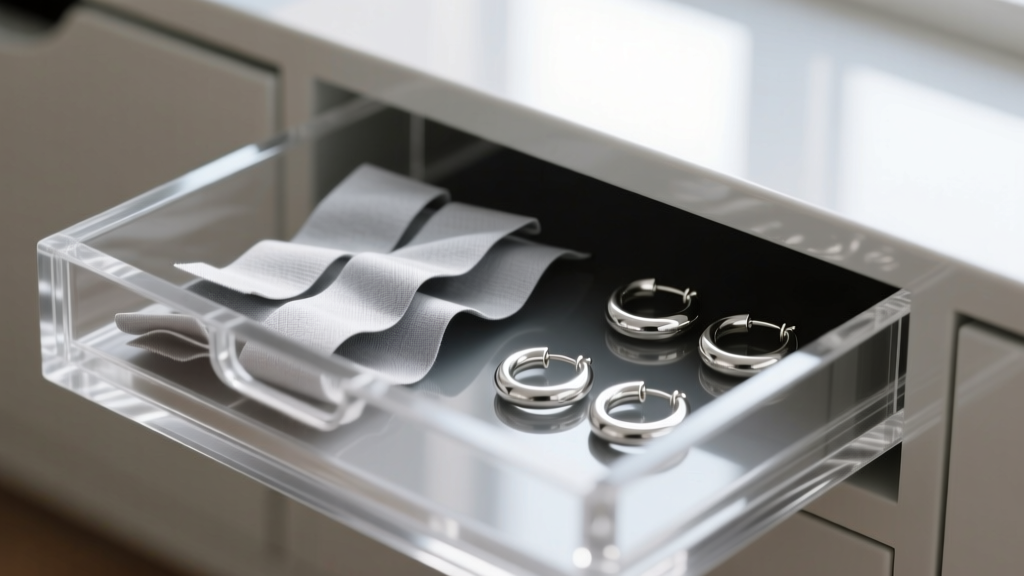
Step-by-Step Framework: How to Organize Earrings by Type
The physical anatomy of an earring dictates its storage requirements. Dangles cannot be treated the same as flat-back labrets. Here is how to organize earrings based on their specific structural profiles.
1. Studs, Huggies, and Flat-Backs
Small, compact earrings are the most prone to getting lost. The best solution for these is a silicone earring mat or a punch-hole velvet board. Silicone mats feature hundreds of tiny, pre-slit holes that grip the earring post snugly without the need for a backing. This prevents the loss of butterfly backs and keeps the posts perfectly vertical, eliminating the risk of bending. For flat-back cartilage labrets (typically 16g or 14g), storing them back-to-front in a lined compartment box prevents the decorative front from being scratched by adjacent pieces.
2. Hoops and Dangles
Hoop earrings, especially large statement pieces or delicate wire hoops, should never be laid flat where they can become crushed. Utilize a hanging jewelry organizer with specialized T-bar slots or a tiered acrylic stand. If you are storing hinged hoops or clickers, always ensure the clasp is fully closed and clicked into place before storing; this maintains the tension of the hinge and prevents the clasp from warping open over time.
3. Threadless and Internally Threaded Cartilage Ends
High-end body jewelry often utilizes threadless (press-fit) or internally threaded mechanisms. Threadless ends feature a tiny, bendable metal pin (usually 18g or 16g) that creates tension inside the post. Never store threadless ends with the pin fully extended and unbent, as it can easily snag on fabrics or other jewelry and snap off. Store them with the pin slightly bent, or inserted into a dummy post to maintain the exact tension curve required for your specific piercing.
Pre-Storage Cleaning Protocols
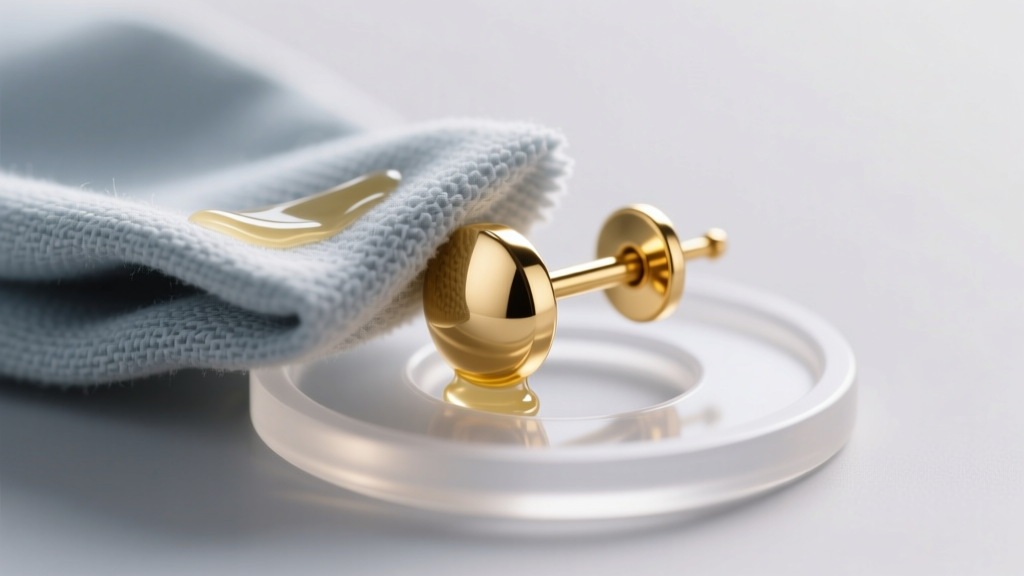
Organizing dirty earrings is a recipe for long-term degradation. Sealing skin oils, dead skin cells, and cosmetic residue inside a closed drawer creates a breeding ground for bacteria and accelerates tarnish. Before placing any earring into its designated storage slot, it must undergo a proper cleaning protocol.
For standard diamond and solid gold studs, a simple soak in warm water with a few drops of mild, phosphate-free dish soap, followed by a gentle brush with a soft-bristled baby toothbrush, is highly effective. However, you must exercise extreme caution with ultrasonic cleaners. While ultrasonic waves are excellent for shaking dirt out of diamond pavé settings, they can shatter fracture-filled diamonds, strip the polish from soft stones like opals, and completely destroy the structural integrity of emeralds, which are naturally heavily included and often treated with cedar oil.
For a deeper dive into safe cleaning methods for specific gemstones, the GIA's Diamond Care Guide provides excellent, science-backed parameters for what chemicals and mechanical actions are safe for your specific stones.
Troubleshooting Common Storage Failures
Even with a meticulous system, issues can arise. Here is how to troubleshoot the most common earring storage problems:
Problem: My sterling silver earrings are still tarnishing despite using anti-tarnish strips in my jewelry box.
Solution: Anti-tarnish strips (which absorb hydrogen sulfide) have a finite lifespan, typically 3 to 6 months depending on ambient humidity. If your silver is tarnishing, replace the strips immediately. Furthermore, ensure your jewelry box is not located in a bathroom or near a kitchen, where airborne sulfur compounds and moisture levels are consistently high.
Problem: The butterfly backs on my studs keep getting lost in the bottom of my organizer.
Solution: Transition to silicone earring mats that grip the post directly, eliminating the need for backs during storage. Alternatively, upgrade your earring backs to 'la pousette' (locking) backs or secure silicone stoppers, and store the earring and back together inside a small, individual zip-top polyethylene bag.
Conclusion
Mastering how to organize earrings is an ongoing practice of material science and spatial awareness. By respecting the unique chemical and physical properties of your metals and gemstones, and by utilizing specialized organizers like silicone mats, hanging T-bars, and anti-tarnish environments, you ensure that your collection remains pristine, hygienic, and ready to wear. A well-organized earring collection is not just a visual delight; it is a protected investment that will retain its beauty and structural integrity for decades to come.


