Evil Eye Stud Earrings: 2026 Trend Analysis & Styling Guide
Discover 2026 trends for evil eye stud earrings. We analyze material durability, gauge specs, and curated ear styling for this iconic motif.

The Resurgence of Protection: Evil Eye Studs in 2026
The evil eye motif, historically rooted in Mediterranean and West Asian cultures as a talisman against malevolent glares, has transcended its traditional boundaries to become a staple in contemporary fine jewelry. As we navigate the 2026 jewelry landscape, the ubiquitous evil eye stud earrings have evolved from loud, novelty souvenir pieces into sophisticated, micro-sculptural investments. The current 'quiet luxury' movement has heavily influenced this shift, favoring subtle gemstone inlays and minimalist gold silhouettes over the chunky, brightly colored enamel styles that dominated the early 2020s.
For jewelry enthusiasts and collectors, understanding the material integrity, piercing specifications, and styling nuances of these protective studs is essential. Whether you are adorning a standard lobe piercing or curating an intricate helix constellation, the devil—and the protection—is in the details.
Material Breakdown: Enamel vs. Gemstone vs. Glass
Not all evil eye stud earrings are created equal. The concentric circles of the motif require contrasting materials, which directly impacts the earring's longevity, price point, and skin compatibility. Below is a comparative analysis of the primary materials used in today's market.
| Material Type | Durability & Wear | 2026 Price Range | Best Application |
|---|---|---|---|
| Cold Enamel (Epoxy) | Low; prone to chipping and yellowing from UV exposure | $25 - $60 | Occasional wear, fast-fashion trends |
| Vitreous Enamel | High; fired at 1400°F, fuses to metal, resists scratching | $85 - $250 | Daily wear, demi-fine collections |
| Chalcedony & Lapis Lazuli | Medium-High; natural stones require care against hard impacts | $150 - $400 | Heirloom pieces, fine jewelry lovers |
| Sapphire & Diamond | Exceptional; Mohs scale 9-10, virtually scratch-proof | $450 - $1,200+ | Investment pieces, cartilage/lobe security |
The Enamel Dilemma: Cold vs. Vitreous
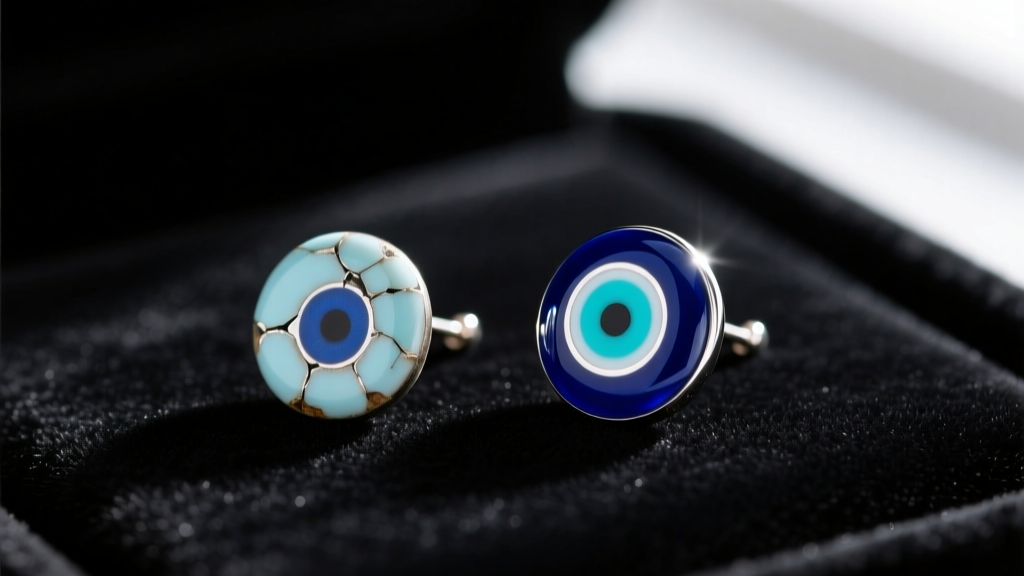
Many mass-market brands utilize 'cold enamel,' which is essentially a two-part epoxy resin poured into metal cavities. While initially vibrant, cold enamel degrades over time, often chipping upon impact or yellowing when exposed to sunlight and cosmetics. In contrast, vitreous enamel is a powdered glass fused to precious metal at extreme temperatures. When shopping for high-quality evil eye studs, always verify if the brand uses kiln-fired vitreous enamel, which guarantees a glass-like, permanent finish.
Gemstone Alternatives for the Modern Collector
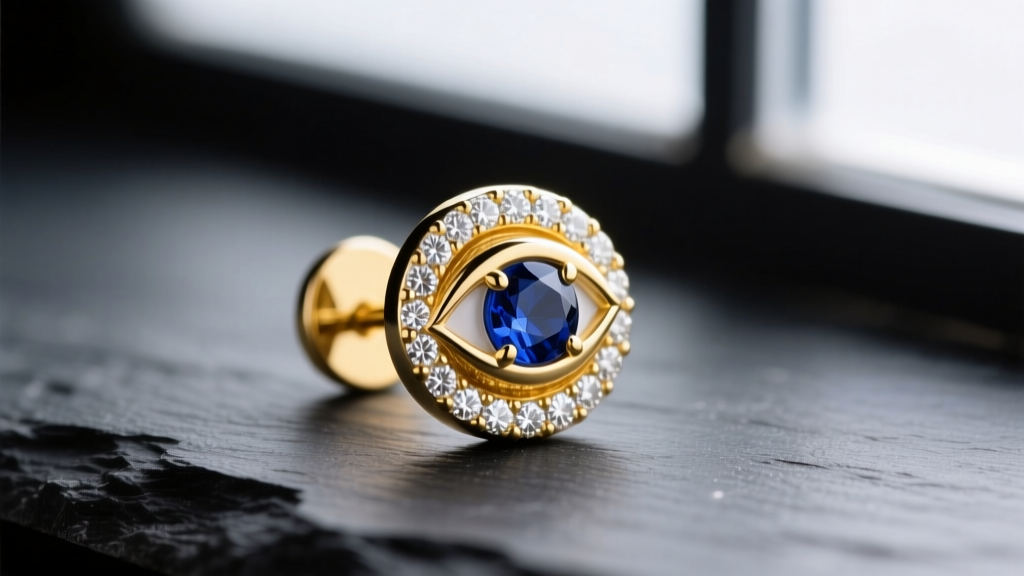
According to the Gemological Institute of America (GIA), blue chalcedony has seen a massive surge in demand for evil eye jewelry due to its natural, translucent blue hue that perfectly mimics the traditional 'iris' of the motif without the fragility of enamel. For the ultimate luxury tier, jewelers are now using precision-cut blue sapphires surrounded by micro-pavé white diamonds to create the outer 'white' of the eye, ensuring the stud catches the light brilliantly even at a 3mm micro-size.
Piercing Placement & Gauge Specifications
The anatomy of your ear dictates the functional requirements of your evil eye stud earrings. Wearing a standard butterfly-back lobe stud in a cartilage piercing is a recipe for irritation bumps and sleep discomfort. Here is the technical framework for selecting the correct hardware.
- Standard Earlobe (20G or 18G): Most commercial evil eye studs are crafted at 20-gauge (0.8mm) or 18-gauge (1.0mm) with a post length of 5mm to 6mm. Butterfly friction backs are acceptable here, though screw-in backs offer superior security for high-value diamond or sapphire pieces.
- Helix & Flat Cartilage (16G or 18G): Cartilage piercings generally require a thicker 16-gauge (1.2mm) or 18-gauge post to prevent the 'cheese-cutter effect.' More importantly, you must opt for flat-back (labret) posts. A flat titanium disc sits flush against the back of the ear, eliminating the pressure points caused by traditional butterfly clasps when sleeping or wearing headphones.
- Material Safety: For fresh piercings or highly reactive cartilage, the Association of Professional Piercers (APP) strictly recommends implant-grade titanium (ASTM F-136). Many premium jewelers now offer evil eye stud fronts that thread directly into titanium flat-back posts, marrying 14k gold aesthetics with medical-grade biocompatibility.
2026 Styling Trends: Beyond the Single Lobe
The way we style protective jewelry has shifted dramatically. The solitary, centered lobe stud is being replaced by intentional, asymmetrical ear curation. The evil eye is no longer just a standalone piece; it is an anchor in a broader narrative.
The Asymmetrical Constellation
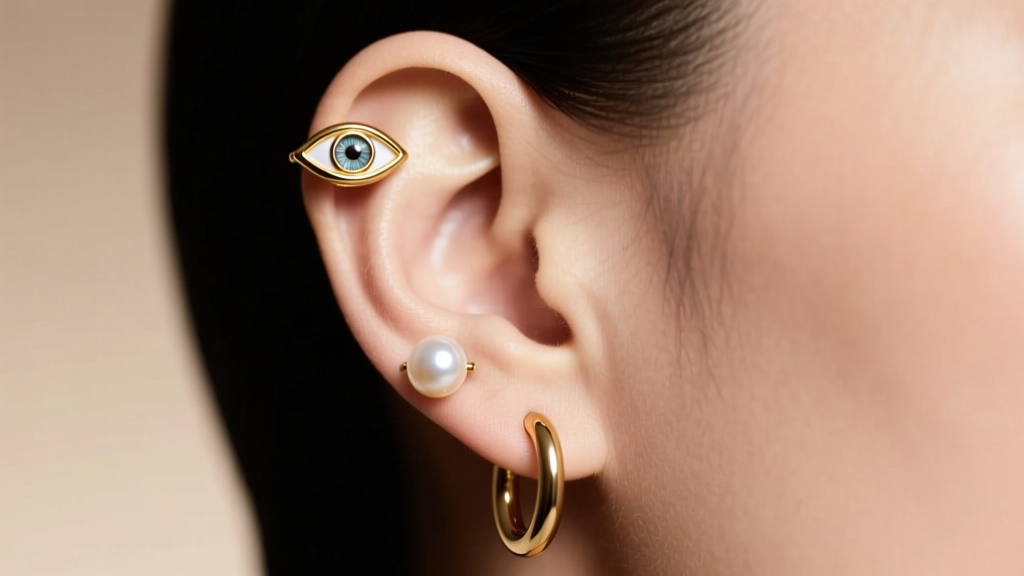
Leading stylists in 2026 are championing the 'protective constellation' look. This involves wearing a slightly larger evil eye stud (e.g., 5mm) in the primary lobe piercing, and pairing it with a micro 2.5mm evil eye stud in the upper helix or forward helix. The asymmetry draws the eye across the profile of the face, while the varying scales create depth. Pairing the blue tones of the evil eye with warm metallic huggies and neutral diamond solitaires prevents the look from appearing costumey.
"The modern approach to talismanic jewelry is subtlety. We are moving away from overt, oversized symbols and embracing micro-studs that offer personal meaning to the wearer without shouting for attention from across the room." — Elara Vance, Lead Curator at Helix & Lobe Studio
Mixed Metal Layering
While yellow gold remains the traditional metal for evil eye jewelry due to its historical association with the sun and warmth, 2026 has introduced a wave of mixed-metal styling. Stacking a white gold diamond-encrusted evil eye stud alongside warm gold hoops creates a dynamic, contemporary contrast that bridges the gap between vintage heirlooms and modern minimalist pieces.
Care and Maintenance for Longevity
To ensure your evil eye stud earrings maintain their protective brilliance, a rigorous care routine is necessary, particularly for mixed-material pieces.
- Avoid Chemical Degradation: Hairsprays, perfumes, and chlorine are the enemies of both porous gemstones (like lapis lazuli) and resin-based cold enamels. Always apply cosmetics before inserting your studs.
- Ultrasonic Cleaning Warnings: Never place enamel or fractured gemstone evil eye studs in an ultrasonic cleaner. The high-frequency vibrations can shatter cold enamel and loosen micro-pavé diamond settings. Instead, use a soft baby toothbrush with warm water and a drop of mild, phosphate-free dish soap.
- Storage Protocols: Store studs individually in soft microfiber pouches. The diamond or sapphire 'whites' of the eye can easily scratch the gold backing or the softer chalcedony 'iris' of another earring if tossed loosely into a jewelry box.
Final Verdict: Investment vs. Fast Fashion
The market for evil eye stud earrings in 2026 is distinctly bifurcated. If you are seeking a trendy, seasonal accessory to test the asymmetrical styling waters, a $40 cold-enamel sterling silver stud serves its purpose. However, for a piece meant to act as a permanent, daily-wear talisman, investing in vitreous enamel or natural gemstones set in 14k/18k gold with secure, anatomically correct post options is non-negotiable. By prioritizing material science and precise gauge specifications over fleeting fast-fashion iterations, you ensure that your protective jewelry remains as resilient as the meaning behind it.


