The Evolution of Male Earring Styles: 2026 Trend Guide
Discover the top male earring styles shaping 2026. Explore gauge sizes, premium materials, and expert placement guides for modern men's ear curation.

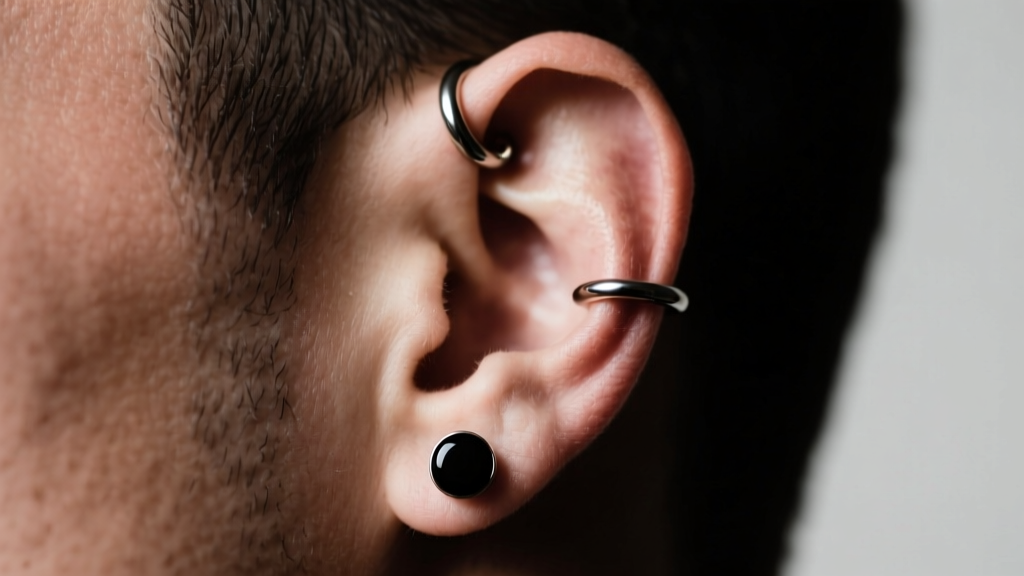
The landscape of men's jewelry has undergone a radical transformation over the last decade. Gone are the days when male earring styles were limited to a single, generic diamond stud or a bulky steel hoop. As we navigate through 2026, the modern 'ear curation' movement has firmly entered the mainstream masculine lexicon. Today, men are approaching their ear piercings with the same bespoke, architectural mindset previously reserved for fine horology or custom tailoring. According to trend analyses by GQ Style, the contemporary male earscape is defined by intentional asymmetry, premium metallurgy, and a deep understanding of individual ear anatomy.
This guide deconstructs the current state of male earring styles, moving beyond surface-level fashion advice to explore the precise gauge standards, material grades, and structural considerations that separate a curated ear from a cluttered one.
The End of the Kiosk Era: Anatomy and Gauge Standards
To understand modern male earring styles, one must first understand the structural foundation of professional piercing. The era of the spring-loaded piercing gun is universally condemned by industry experts. These tools cause blunt-force trauma to the cartilage, leading to hypertrophic scarring and prolonged healing. Instead, the 2026 standard relies on hollow, single-use bevel needles that remove a microscopic core of tissue, ensuring a clean fistula.
Gauge sizing—the thickness of the jewelry post—is critical for both aesthetics and tissue health. While standard mall kiosks often default to flimsy 20-gauge (0.8mm) wire, professional piercers utilize thicker jewelry to prevent the 'cheese-cutter effect,' where thin metal slowly migrates through the tissue under the weight of the jewelry.
- Standard Lobe Piercings: Typically pierced at 18-gauge (1.0mm) or 16-gauge (1.2mm) to support heavier drop earrings and signet studs without sagging.
- Helix and Tragus (Cartilage):** Strictly pierced at 16-gauge (1.2mm) to provide structural stability in dense cartilage tissue.
- Industrial Scaffolds:** Often pierced at 14-gauge (1.6mm) to bear the tension of the connecting barbell across the ear.
Material Science: Why Titanium is the New Gold Standard
When investing in high-end male earring styles, the metal grade is non-negotiable. Many commercial jewelry brands market 'surgical steel' as hypoallergenic, but this is a pervasive myth. 316L surgical steel contains up to 10% nickel. When exposed to the saline environment of a healing fistula, nickel ions leach into the skin, triggering allergic contact dermatitis, localized swelling, and eventual jewelry rejection.
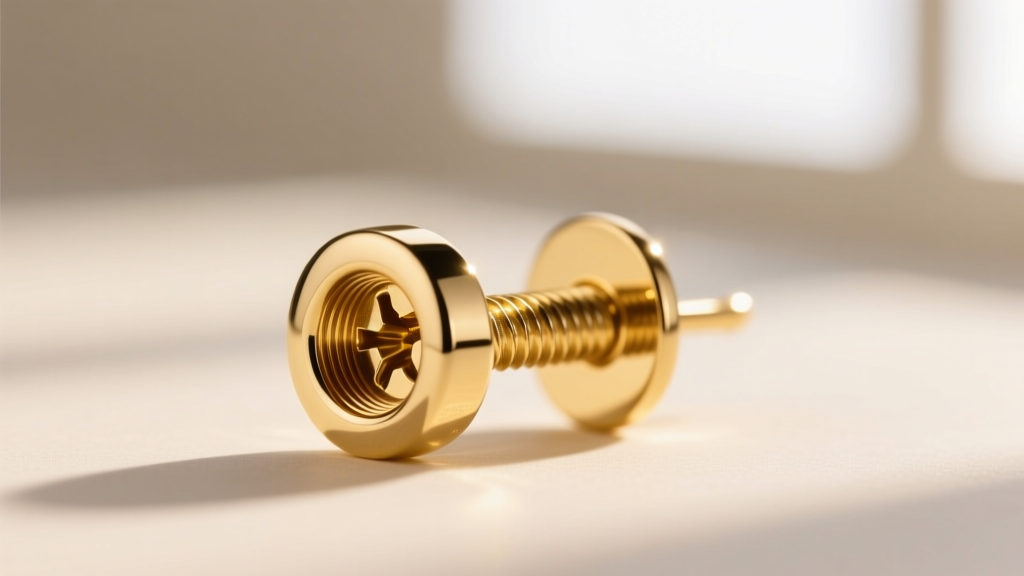
The undisputed king of modern body jewelry is ASTM F136 Implant-Grade Titanium. This is the exact same alloy used in orthopedic hip replacements and pacemakers. It contains zero nickel, is highly corrosion-resistant, and can be anodized to produce deep blacks, gunmetals, and golds without the use of toxic plating. For those who prefer the warmth of precious metals, 14k or 18k solid gold (specifically alloyed with palladium or silver rather than nickel) remains a premium choice, though it commands a significantly higher price point.
Furthermore, the Association of Professional Piercers (APP) strongly advises against externally threaded jewelry, where the screw mechanism is located on the post itself. Forcing sharp threads through a piercing channel causes micro-tears. The 2026 standard demands either internally threaded jewelry (where the post is smooth and the screw is on the decorative end) or threadless (push-fit) systems that rely on tension, offering a seamless insertion and a secure, snag-free fit.
4 Dominant Male Earring Styles in 2026
1. The Seamless Clicker Hoop (16G)
Replacing the traditional captive bead ring (CBR), the clicker hoop features a hidden hinge and a satisfying snap closure. It offers a continuous, unbroken circle of metal that sits flush against the helix or tragus. Matte black anodized titanium and brushed yellow gold are the dominant finishes this year, offering a subtle, industrial edge that pairs well with both streetwear and formal suiting.
2. Threadless Flat-Back Studs
The traditional 'butterfly back' earring clasp is a relic of the past. It traps dead skin, moisture, and bacteria, often leading to localized infections and foul odors. Modern male lobe and flat piercings utilize threadless labret studs with flat titanium discs that sit flush against the back of the ear. This not only improves hygiene but also allows men to sleep comfortably without the post digging into their neck.
3. The Asymmetric Drop Earring
Popularized by cultural icons and high-fashion runways, the single, statement drop earring worn in one lower lobe has become a hallmark of avant-garde menswear. These pieces often feature architectural elements, oxidized silver chains, or singular baroque pearls. The key to pulling off this style is restraint; the drop earring should stand alone on one side, balanced by minimalist studs on the opposite ear.
4. Ear Cuffs and Helix Chains
For men hesitant to commit to additional cartilage needles, the ear cuff has evolved from a cheap novelty into a precision-milled accessory. High-end cuffs now feature adjustable tension screws that grip the helix fold securely without slipping. Additionally, delicate 18k gold chains connecting a helix stud to a lobe stud have emerged as a sophisticated way to bridge the anatomy of the ear without requiring complex industrial piercings.
The Curator's Matrix: Style, Placement, and Pricing
| Jewelry Style | Ideal Placement | Standard Gauge | Material Grade | Avg. Price Range (USD) |
|---|---|---|---|---|
| Seamless Clicker | Helix, Tragus, Daith | 16G (1.2mm) | ASTM F136 Titanium | $45 - $120 |
| Threadless Stud | Lobe, Flat, Conch | 18G or 16G | 14k/18k Solid Gold | $80 - $350+ |
| Drop / Dangle | Lower Lobe Only | 18G (1.0mm) | Oxidized Sterling Silver | $60 - $250 |
| Tension Ear Cuff | Helix Fold (No pierce) | N/A | Platinum or 18k Gold | $150 - $600 |
Ear Architecture: Working With Your Anatomy
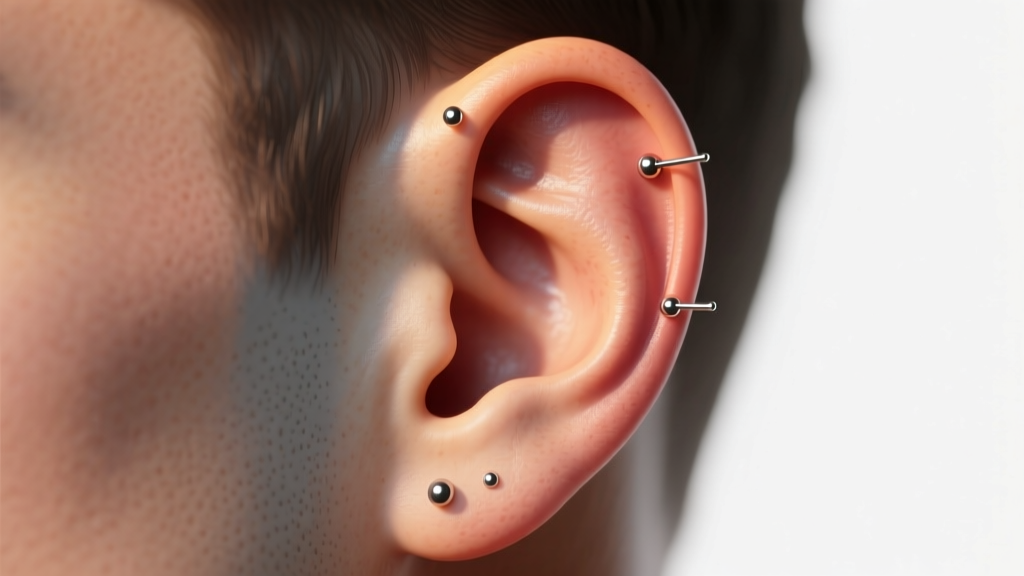
A common mistake men make when adopting new earring styles is ignoring their unique ear topography. Not every ear can support every piercing. A prominent antihelix fold (the inner ridge of cartilage) might cause a standard flat-back stud to sit at an awkward, outward angle. Similarly, a shallow conch (the bowl-like depression of the ear) may not provide enough surface area for large decorative ends, leading to constant snagging on headphones and hoodie strings.
Face shape also plays a subtle role in jewelry proportion. Men with sharper, angular jawlines often benefit from the softening effect of curved seamless hoops or small baroque pearl studs. Conversely, those with rounder facial structures can introduce definition and verticality through geometric drop earrings or vertically stacked lobe piercings utilizing sharp, angular signet fronts.
Aftercare and the 'No-Twist' Protocol
The failure rate of men's cartilage piercings is disproportionately high, largely due to outdated aftercare advice. The antiquated practice of 'twisting' the jewelry to prevent it from healing into the skin is now known to introduce surface bacteria deep into the fistula and disrupt the fragile new cellular matrix.
'The golden rule of modern piercing aftercare is benign neglect. Spray twice daily with sterile 0.9% sodium chloride wound wash, let it air dry, and do not touch it. Your body knows how to heal; your hands only introduce complications.' - Professional Piercing Standard, 2026
Healing timelines require patience. While lobes may heal in 6 to 8 weeks, cartilage piercings like the helix or conch are avascular (lacking direct blood supply) and can take 9 to 14 months to fully mature. During this window, swapping out jewelry prematurely or sleeping on the affected side will almost certainly result in irritation bumps (often misidentified as keloids) and prolonged inflammation.
Conclusion: The Intentional Earscape
The evolution of male earring styles in 2026 is a testament to the broader shift in men's grooming and adornment. It is no longer about rebellion or adherence to a single cultural trope; it is about personal architecture. By prioritizing implant-grade materials, respecting precise gauge standards, and working in tandem with a professional piercer to map out a bespoke layout, men can cultivate an ear curation that is as refined, durable, and intentional as any other element of their personal style.


