The Ultimate 2026 Gift Guide for Men That Wear Earrings
Discover the 2026 gift guide for men that wear earrings. Learn gauge sizes, premium materials, and occasion-based styling for lobe and cartilage.

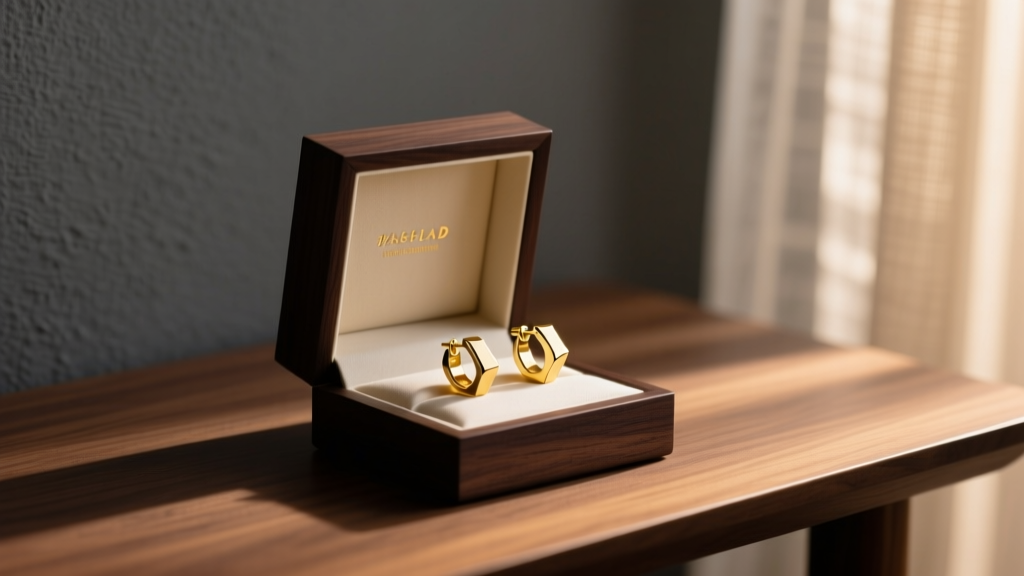
The landscape of men's jewelry has undergone a massive cultural shift over the last decade, and as we navigate 2026, the demographic of men that wear earrings spans every profession, age group, and style archetype. Gifting earrings to a man, however, requires far more nuance than buying a standard watch or a leather wallet. Piercing anatomy, metal biocompatibility, and lifestyle constraints all dictate what makes a successful gift. Whether you are shopping for a partner with a single lobe piercing or a friend curating an intricate cartilage constellation, this comprehensive guide breaks down the exact specifications, materials, and occasion-based styling required to choose the perfect pair.
Decoding the Piercing: Gauge and Placement Matter
The most common mistake shoppers make when buying gifts for men that wear earrings is assuming a 'one-size-fits-all' approach to post thickness and hoop diameter. Piercings are measured in gauges (g), where a lower number indicates a thicker piece of jewelry. Gifting a 20-gauge earring to a man with a 16-gauge cartilage piercing will result in a frustrating return, as the post will simply not slide through the fistula.
| Piercing Placement | Standard Gauge Size | Typical Post/Hoop Dimensions | Best Jewelry Style for Gifting |
|---|---|---|---|
| Standard Lobe | 20g (0.81mm) or 18g (1.02mm) | 6mm - 8mm post length; 8mm - 12mm hoop | Flat-back studs, small huggies, solitaire diamonds |
| Helix / Upper Cartilage | 16g (1.29mm) or 18g | 6mm - 8mm post length; 10mm - 12mm hoop | Threadless ends, seamless clickers, geometric studs |
| Tragus | 16g (1.29mm) | 6mm - 8mm post length (requires short post) | Low-profile bezel-set gems, minimalist titanium balls |
| Daith / Rook | 16g (1.29mm) | N/A (Hoop dependent); 10mm inner diameter | Hinged segment rings, captive bead rings |
| Conch | 14g (1.60mm) or 16g | 8mm - 10mm post length | Large statement studs, ornate threadless ends |
Before purchasing, discreetly check his current jewelry. If he wears a standard butterfly-back earring in his lobe, he is likely at 20g or 18g. If he wears a thicker, smooth post in his cartilage, he is almost certainly at 16g. When in doubt, a gift certificate to a high-end, APP-certified piercing studio is a highly appreciated alternative that allows him to select the exact fit.
Material Grades: What to Buy (and What to Avoid)
Men's skin can be highly reactive to cheap alloys, particularly in cartilage piercings which are prone to irritation bumps and prolonged healing. When investing in a premium gift, material integrity is non-negotiable.
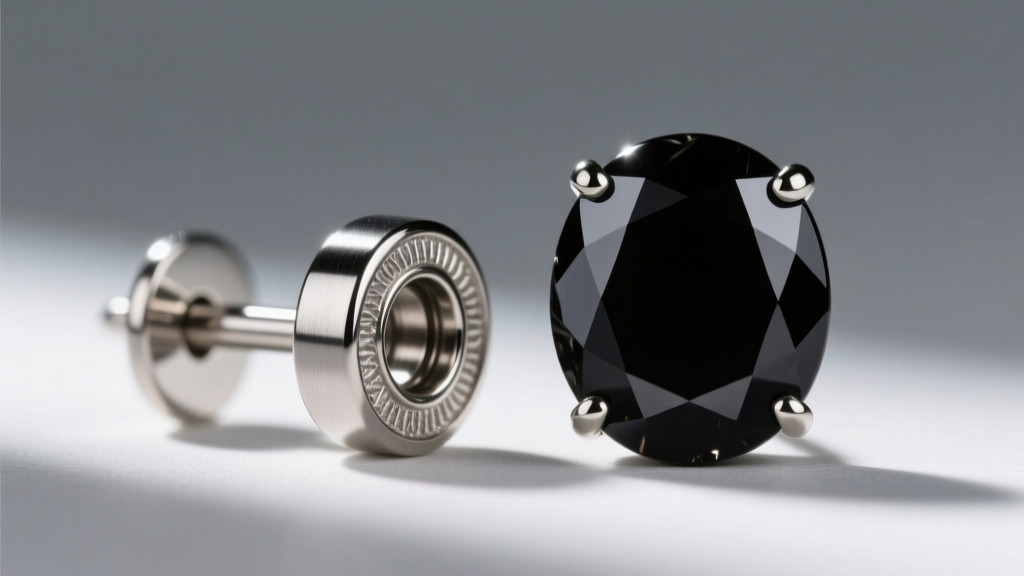
The Gold Standard: Implant-Grade Titanium
For everyday wear, especially for active men or those with metal sensitivities, ASTM F136 implant-grade titanium is the undisputed champion. Unlike 'surgical steel'—a misleading marketing term that often contains nickel and causes contact dermatitis—implant-grade titanium is entirely nickel-free, lightweight, and highly polished. Brands like BVLA and Industrial Strength craft exquisite threadless ends in titanium that range from $40 to $150, offering luxury without the heavy price tag of solid gold.
The Luxury Investment: Solid 14k and 18k Gold
For milestone occasions, solid gold is the premier choice. According to Blue Nile's Metal Education Guide, 14k gold (58.5% pure gold) offers the perfect balance of rich color and structural durability for daily wear, while 18k gold (75% pure gold) provides a warmer, deeper yellow hue but is slightly softer. Never gift gold-plated, gold-filled, or vermeil earrings for cartilage piercings. The plating will eventually wear away, exposing the base metal to the piercing channel and causing severe allergic reactions or infections.
Occasion-Based Gift Guide for Men That Wear Earrings
Matching the earring to the man's lifestyle and the occasion of the gift is where true gifting expertise shines. Here is how to navigate the three primary style archetypes in 2026.
1. The Corporate Professional: Subtle & Refined
For the man navigating boardrooms, client meetings, and conservative dress codes, the goal is understated elegance. Flashy dangles or oversized hoops are out; precision-engineered minimalism is in.
- The Huggie Hoop: A 10mm inner-diameter huggie in 14k white or yellow gold sits flush against the earlobe. It offers a sophisticated silhouette that won't catch on telephone headsets or suit collars.
- The Flat-Back Solitaire: A 3mm or 4mm bezel-set diamond or black onyx cabochon on a titanium flat-back post. The flat back ensures it won't poke him while he sleeps or wears over-ear noise-canceling headphones during commutes.
- Budget Range: $150 - $450 for solid gold; $40 - $90 for premium titanium.
2. The Milestone Celebration: Bold & Permanent
Anniversaries, major graduations, or landmark birthdays call for pieces that carry weight and permanence. This is the arena for high-clarity diamonds and rare gemstones.
- The Princess-Cut Diamond Stud: A 14k yellow gold setting housing a VS-clarity, F-color princess-cut diamond (approx. 0.25 to 0.50 carats per ear). The sharp, geometric lines of the princess cut appeal heavily to masculine aesthetics compared to traditional round brilliants.
- The Signet or Crest Motif: Custom-engraved 18k gold flat discs featuring a subtle matte finish or a personal insignia.
- Budget Range: $600 - $2,500+ depending on gemstone carat weight and clarity.
3. The Cartilage Curator: Alternative & Technical
For the man with a curated ear project—think helix, daith, and conch combinations—gifting is about technical innovation and niche artistry. These men view their ears as a canvas, and they appreciate the mechanics of high-end body jewelry.
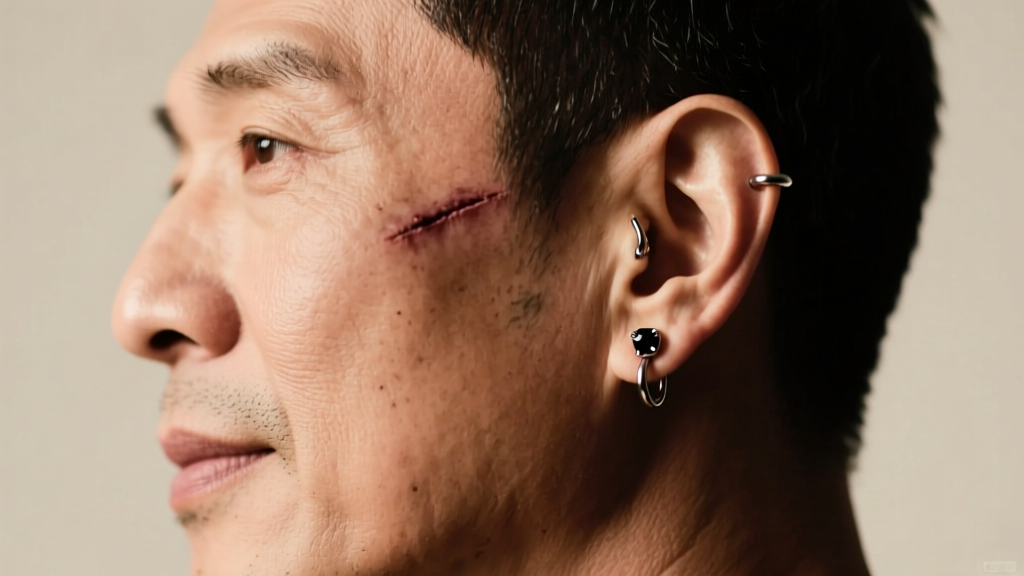
- Threadless Ends: The threadless system (where a slightly bent pin snaps securely into a hollow post) is the gold standard for cartilage. Gifting a cluster of black zircon or raw uncut diamond threadless ends from a brand like Maria Tash or BVLA shows a deep understanding of piercing culture.
- The Hinged Clicker: A 16-gauge titanium hinged segment ring with a subtle PVD coating (like rose gold or black niobium) is perfect for a daith or helix piercing. PVD (Physical Vapor Deposition) is a safe, biocompatible way to achieve black or colored metal tones without using toxic paints or plating.
- Budget Range: $80 - $300 per individual piece.
Sizing & Fit: Avoiding the 'Gift Return' Trap
Even the most beautiful 18k gold earring will be returned if the post length is incorrect. The Association of Professional Piercers (APP) emphasizes that post length must accommodate the specific thickness of the tissue and any residual swelling.
For Healed Standard Lobes: A 6mm (1/4 inch) post is generally the standard for flat-back studs. If he has thicker lobes, an 8mm (5/16 inch) post is required to prevent the jewelry from embedding into the skin.
For Cartilage (Helix/Conch): Cartilage is highly variable. A standard healed helix usually takes a 6mm or 8mm post. However, if the piercing is less than a year old, it may still require an 8mm or 10mm 'downsize' post to account for long-term swelling.
A Note on Threading: Never purchase externally threaded jewelry (where the screw is on the post that passes through the skin). The threads act like a file, tearing the delicate fistula tissue upon insertion. Always opt for internally threaded (the screw is on the decorative end) or threadless (snap-fit) jewelry. This single detail separates novice shoppers from true jewelry connoisseurs.
The Final Gifting Checklist
Before you check out, run your selection through this rapid E-E-A-T (Expertise, Experience, Authoritativeness, and Trust) checklist for men's jewelry:
- Gauge Verified: Did I confirm if he needs 18g (lobe) or 16g (cartilage)?
- Material Safe: Is it solid 14k/18k gold, ASTM F136 titanium, or niobium? (No surgical steel or plated metals).
- Mechanism Secure: Is it threadless, internally threaded, or a secure clicker? (No butterfly backs or external threads).
- Lifestyle Matched: Will this earring interfere with his headphones, helmets, or professional dress code?
By prioritizing anatomical precision and material integrity over generic department store displays, you elevate the act of gifting. For men that wear earrings, jewelry is deeply personal and physically integrated into their bodies. A gift that respects that reality—through perfect sizing, premium metals, and thoughtful design—will be worn daily and appreciated for a lifetime.


