How to Clean and Maintain Your Fidget Earrings Safely
Learn how to clean, lubricate, and maintain fidget earrings. Discover expert tips for spinner hinges, material care, and preventing seized parts.

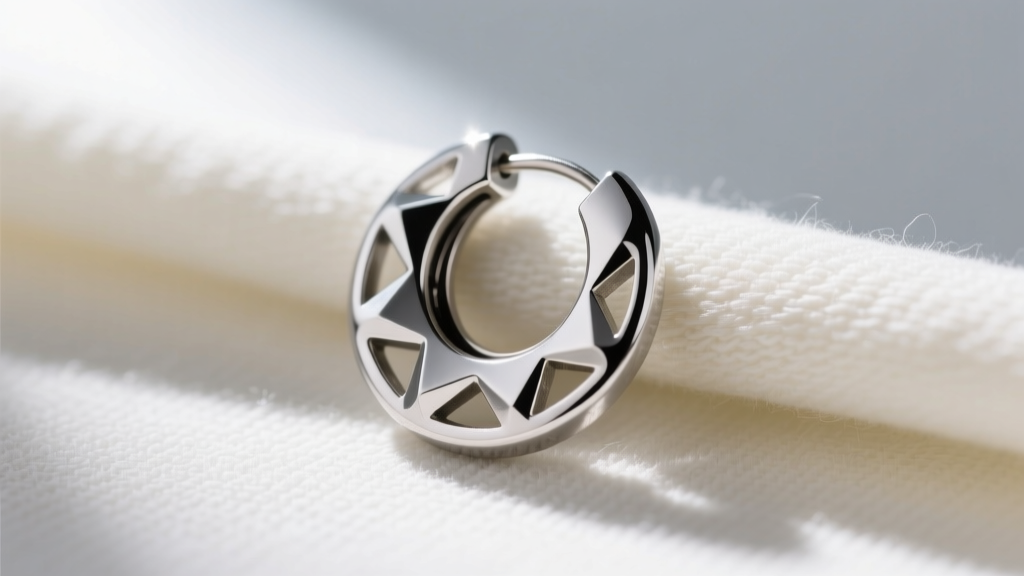
The Hidden Dirt Trap: Why Fidget Earrings Need Special Care
Fidget earrings—featuring spinners, clickers, sliding beads, and sensory gears—offer incredible tactile relief and stylish interactivity. However, the very mechanics that make them fun also make them notorious dirt traps. Sebum, dead skin cells, soap scum, hard water minerals, and pocket lint easily wedge into the microscopic tolerances of spinner hinges and clicker bearings. When left unaddressed, this buildup creates friction, causing your once-smooth spinning earring to grind, squeak, or seize entirely.
Unlike standard stud earrings or simple seamless hoops, fidget earrings require a proactive maintenance routine. The moving parts are highly susceptible to environmental wear, and the constant touching associated with sensory jewelry transfers natural skin oils directly into the mechanical joints. In this comprehensive guide, we will break down the exact protocols for cleaning, lubricating, and troubleshooting your fidget earrings to ensure they spin flawlessly for years to come.
Material Breakdown: What Are Your Spinner Earrings Made Of?
Before applying any cleaning solution, you must identify the base metal of your fidget earrings. The wrong chemical can strip plating, cause rapid oxidation, or trigger severe contact dermatitis. According to the Association of Professional Piercers, implant-grade metals are the safest for long-term wear, but they still require specific care when mechanical parts are involved.
| Material | Grade / Standard | Rust & Tarnish Risk | Best Cleaning Method |
|---|---|---|---|
| Implant-Grade Titanium | ASTM F136 | Zero | Warm soapy soak, ultrasonic safe |
| Surgical Stainless Steel | 316L | Low (can pit in salt/sweat) | Mild soap, avoid prolonged soaking |
| Niobium | Unalloyed (99.9%) | Zero | Saline wipe, gentle brushing |
| Brass / Copper Core | Commercial / Plated | High (oxidizes rapidly) | Dry polishing, keep away from moisture |
ASTM F136 Titanium vs. 316L Surgical Steel
Most high-quality fidget earrings are crafted from either ASTM F136 titanium or 316L surgical steel. Titanium is incredibly lightweight, which reduces the drag on your earlobe when spinning heavier gear components, and it is completely nickel-free. 316L steel contains molybdenum, which increases corrosion resistance, but it still contains trace amounts of nickel. If you have a known nickel allergy, prolonged exposure to sweat trapped in the hinge of a steel fidget earring can trigger a reaction. For sensitive ears, titanium is the undisputed champion of sensory jewelry.
Step-by-Step Deep Cleaning Protocol for Moving Parts
To restore a sluggish spinner or a sticky clicker hinge, you need to dissolve the biological buildup without damaging the metal or any PVD (Physical Vapor Deposition) color coatings. Follow this exact protocol:
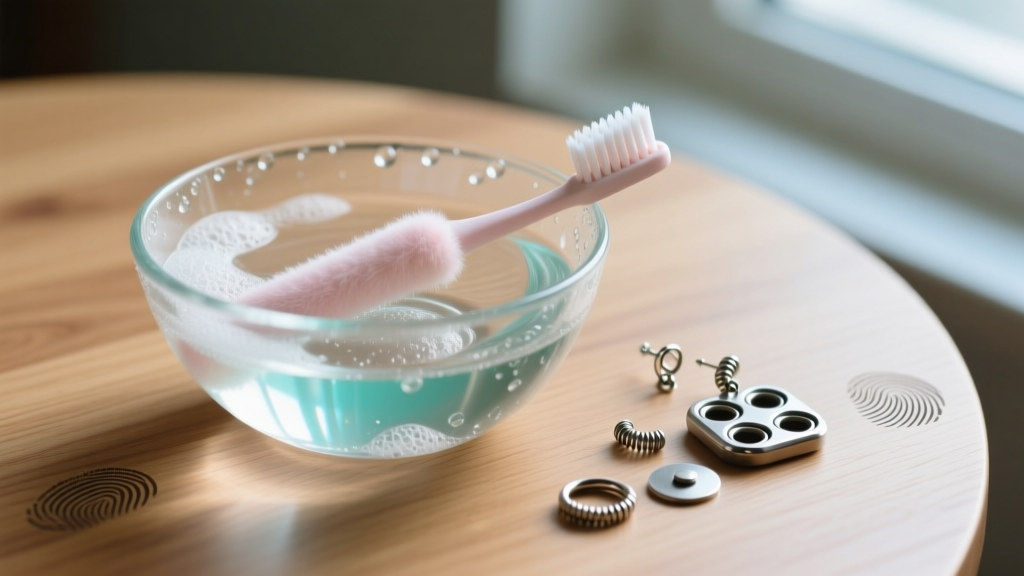
- Preparation: Remove the earrings and wash your hands thoroughly. Prepare a small glass bowl with warm (not hot) distilled water and three drops of unscented, mild Castile soap (such as Dr. Bronner’s Baby Unscented).
- The Soak: Submerge the fidget earrings for exactly 5 to 7 minutes. This softens the hardened sebum and dead skin trapped in the bearing tracks.
- Agitation: Using a soft-bristled baby toothbrush, gently scrub the hinge and the seam where the spinner meets the base. Never use adult toothbrushes or stiff bristles, as they will leave micro-scratches on polished metals and can strip delicate PVD gold or rose gold coatings.
- The Spin Flush: While the earring is still submerged in the soapy water, spin the fidget component rapidly. This forces the soapy water through the microscopic gaps in the bearing, flushing out dissolved debris.
- Rinsing: Rinse under a gentle stream of distilled water. Avoid tap water, as the dissolved minerals and chlorine can leave hard water spots that increase friction in the joint.
- Drying: Pat dry with a lint-free microfiber cloth. Use a hair dryer on the cool setting to blow out any remaining moisture from inside the hinge. Trapped moisture is the primary cause of rust in steel clickers.
The Danger of Ultrasonic Cleaners
While ultrasonic jewelry cleaners are fantastic for solid diamond studs or plain titanium bands, they can be catastrophic for certain fidget earrings. Ultrasonic cleaners work via cavitation—creating microscopic bubbles that implode with intense localized heat and pressure.
Expert Warning: Never place fidget earrings with glued-in gemstones, resin inlays, or enamel detailing into an ultrasonic cleaner. The high-frequency vibrations will shatter the adhesive bond, causing stones to fall out. Furthermore, ultrasonic waves can degrade the molecular structure of PVD color coatings over time, causing your gold-plated spinners to flake and peel. For coated or gemstone-set sensory jewelry, stick to manual soaking and brushing. (Source: Gemological Institute of America)
Lubricating Seized Spinner Hinges Safely
If your fidget earring is perfectly clean but still refuses to spin smoothly, the metal-on-metal friction requires lubrication. However, you must be incredibly careful about what you introduce to a piece of jewelry that sits against your skin and is constantly touched by your fingers.
Never use WD-40, standard machine oil, or silicone sprays. These products contain petroleum distillates and harsh solvents that will cause severe contact dermatitis, disrupt your skin’s natural microbiome, and attract a sticky layer of dust that will eventually seize the hinge worse than before. For a detailed look at how improper metals and chemicals cause skin reactions, refer to the National Library of Medicine's overview on Contact Dermatitis.
The Safe Lubrication Method:
- Use 100% pure, food-grade mineral oil or pure, cold-pressed jojoba oil. Jojoba oil closely mimics human sebum and is non-comedogenic, meaning it won't clog pores around your ear.
- Dip the very tip of a wooden toothpick or a micro-swab into the oil. You only need a microscopic drop.
- Touch the oiled toothpick to the seam of the spinner hinge.
- Spin the component continuously for 30 seconds to draw the oil into the bearing via capillary action.
- Wipe away all excess oil from the exterior with a clean microfiber cloth. If the earring feels greasy, it will immediately attract pocket lint.
Troubleshooting Common Failure Modes
Even with meticulous care, the mechanical nature of fidget earrings means they will occasionally experience wear and tear. Here is how to diagnose and fix the most common issues:
- The 'Wobble' Effect: If your spinner wobbles laterally instead of spinning flat, the central post or the internal O-ring has worn down. For 16g (1.2mm) or 18g (1.0mm) clicker earrings, you can often purchase replacement silicone O-rings from the manufacturer to tighten the tolerance.
- Stripped Threads on Screw-In Backs: Many heavy fidget dangles use screw-in backs to prevent loss. If the threads strip, do not use superglue to secure it. The cyanoacrylate will permanently fuse the jewelry and release toxic fumes as it cures. Replace the backing or visit a professional jeweler to re-tap the thread.
- Green Skin Discoloration: If the skin behind your fidget earring turns green or black, the jewelry is likely a brass or copper alloy plated with a thin layer of silver or gold. The friction from spinning wears away the plating at the contact points, exposing the reactive base metal to your sweat. The only solution is to retire the piece and upgrade to solid ASTM F136 titanium or solid 14k/18k gold.
Daily Maintenance Habits for Sensory Jewelry
Preventing buildup is always easier than deep cleaning. Incorporate these quick habits into your daily routine to keep your fidget earrings spinning silently and smoothly:
- The Nightly Wipe: Before removing your earrings for bed, give them a quick wipe with a dry microfiber cloth to remove the day's accumulation of skin oils and environmental dust.
- Shower Removal: Always remove fidget earrings before showering. Shampoo and conditioner contain heavy silicones and waxes that coat the metal and create a gummy residue inside the bearings that is incredibly difficult to dissolve.
- Rotate Your Collection: If you wear fidget earrings daily, the constant mechanical stress will eventually fatigue the metal. Rotate between 2-3 pairs to allow the metal to 'rest' and to give yourself time to properly clean and dry each pair between wears.
By understanding the mechanics of your jewelry and respecting the materials they are crafted from, you can ensure your fidget earrings remain a reliable, soothing, and stylish accessory for years to come. Treat the moving parts with the same precision you would a fine watch, and they will reward you with flawless, silent spins every time.


