Filigree Hoop Earrings: 2026 Budget & Value Guide
Evaluate the true cost of filigree hoop earrings in 2026. We break down metal grades, manufacturing methods, and structural value for smart buyers.

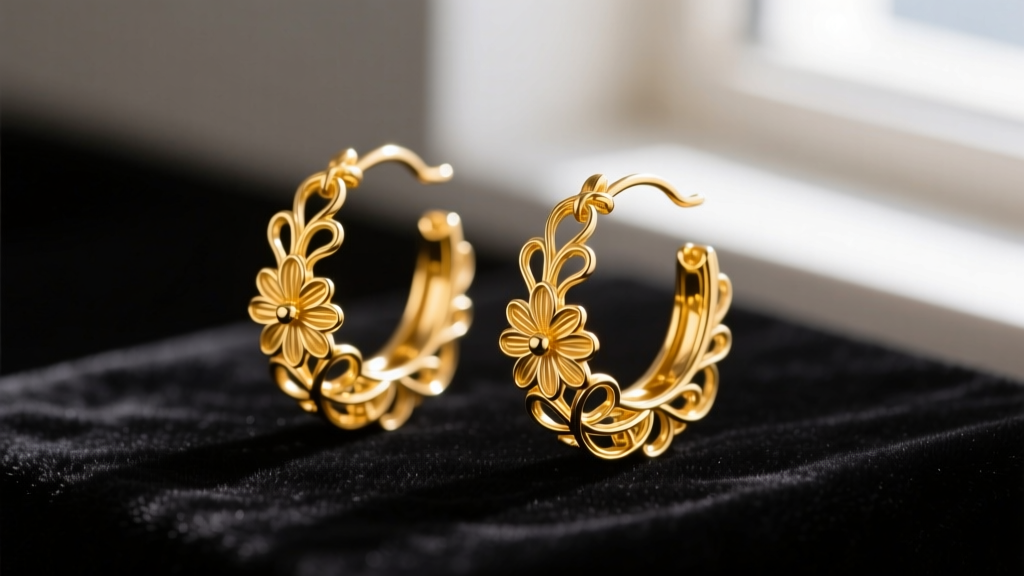
Filigree hoop earrings represent a fascinating intersection of ancient metallurgy and modern everyday wear. Characterized by delicate, lace-like metalwork created by curling, twisting, and soldering fine wires, filigree requires immense precision. However, as we navigate the jewelry market in 2026, buyers are confronted with a massive pricing disparity. You can find a pair of 'filigree hoops' for $28 on a fast-fashion marketplace, while a seemingly similar pair from a heritage jeweler might command $2,800.
Understanding where your money actually goes—and where it is being wasted—requires looking past the surface aesthetics. This comprehensive value assessment breaks down the material grades, manufacturing techniques, and structural vulnerabilities of filigree hoop earrings to help you make an informed, budget-conscious decision.
The True Cost of Filigree Craftsmanship in 2026
True filigree is not merely a textured surface cast into a solid piece of metal; it is an openwork structure built from individual wire threads. The historical technique, documented extensively in the Victoria and Albert Museum Jewelry Archives, involves soldering microscopic wire beads and twisted threads onto a metal framework.
In today's market, the term 'filigree' has been heavily diluted. Many budget brands use the word to describe die-stamped or cast metal that merely mimics the look of wirework. The price you pay is directly correlated to how the piece was manufactured, the purity of the metal, and the structural integrity of the hoop's frame. A genuine hand-soldered filigree hoop requires hours of bench time, which is why labor costs often eclipse raw material costs in high-end pieces.
Material Grades & Pricing Tiers
When assessing value, the base metal dictates the baseline price, longevity, and wearability of the earrings. Here is how the current market tiers break down.
Brass & Base Metals (The $20–$60 Trap)
Budget filigree hoops are typically made from brass, copper, or zinc alloys, often plated with a microscopically thin flash of gold or silver. While the upfront cost is low, the value proposition is poor. Base metals are highly reactive. The thin plating will wear off within weeks of daily use, exposing the porous base metal to oxygen and skin acids, leading to rapid tarnishing and potential contact dermatitis. Furthermore, base metal filigree wires are brittle and prone to snapping under minor pressure.
Sterling Silver & Gold Vermeil (The $80–$250 Sweet Spot)
For most buyers, 925 sterling silver offers the best balance of affordability and durability. Sterling silver is alloyed with copper for strength, making it robust enough to hold intricate filigree shapes without snapping. If you prefer a gold tone, look for 'gold vermeil' rather than standard gold plating. According to the Federal Trade Commission Jewelry Guides, vermeil must consist of a sterling silver base coated with at least 2.5 microns of gold (usually 14k or 18k). This thicker layer provides years of wear before requiring re-plating, making the $120–$250 price tag a justifiable investment for everyday hoops.
Solid 14K & 18K Gold (The $800+ Investment)
Solid gold filigree hoops are heirloom-quality investments. 14K gold (58.5% pure gold) is the ideal choice for filigree because the alloying metals (like zinc and copper) provide the necessary tensile strength to protect the fragile wirework. 18K gold is richer in color but softer, making it slightly more vulnerable to bending. Expect to pay $800 to $3,000+ for solid gold, with the price heavily influenced by the gram weight and the complexity of the hand-soldering.
Manufacturing Methods: Die-Stamped vs. Cast vs. Handmade
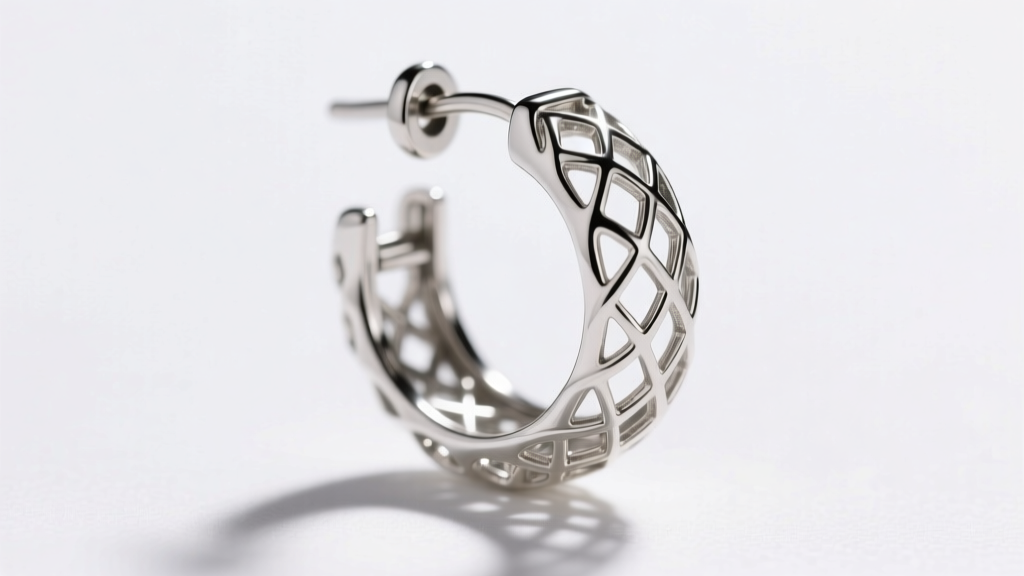
The way the filigree pattern is achieved is the single biggest factor in both the price and the structural lifespan of the earring. Use this comparison chart to evaluate product descriptions when shopping.
| Method | Process | Durability | Price Range |
|---|---|---|---|
| Die-Stamped | Sheet metal is punched with a mold to create a lace-like cutout. | Low. Edges are sharp; metal fatigues and cracks easily. | $20 - $75 |
| Cast (3D/Wax) | Molten metal is poured into a mold of a carved wax filigree model. | Medium. Can be slightly brittle if the 'wires' are too thick or porous. | $80 - $400 |
| Hand-Soldered | Individual wires are twisted, shaped, and soldered onto a frame by a jeweler. | High. Wires have natural flexibility and tensile strength. | $500 - $3,000+ |
Pro-Tip: To identify cast filigree versus handmade, look closely at the 'wires.' Cast filigree often has slightly rounded, puffy edges and lacks the sharp, crisp twists of physically drawn wire. Hand-soldered pieces will also show microscopic tool marks and slight, organic asymmetries that prove human craftsmanship.
Structural Vulnerabilities: What Breaks First?
Filigree is inherently delicate. When conducting a value assessment, you must inspect the structural engineering of the hoop, not just the decorative center. Here are the three most common failure points in filigree hoop earrings.
1. Inadequate Frame Gauge
The decorative filigree wire inside the hoop is typically 22-gauge (0.64mm) or 24-gauge (0.51mm). This is necessary for the delicate look. However, the outer frame of the hoop must be significantly thicker to prevent the earring from bending out of its circular shape. A high-value filigree hoop will feature an outer frame of at least 18-gauge (1.02mm) or 16-gauge (1.29mm) wire. If the outer frame is as thin as the inner filigree, the earring will warp the first time it catches on a sweater.
2. Clasp Mechanism Failure
The clasp bears the mechanical stress of daily insertion and removal.
- Latchback (Fishhook): Common in vintage and budget styles. The thin wire hook eventually bends, and the tension degrades, leading to lost earrings.
- Snap Hinge (Omega/Hinge Back): The modern standard for quality hoops. A sturdy post clicks securely into a grooved catch. This mechanism costs more to manufacture but drastically reduces the risk of loss.
- Saddleback: A curved wire that flips over a post. Often found on mid-century vintage pieces, these are notorious for loosening over time.
3. Solder Joint Fatigue
In hand-soldered filigree, every intersection where a decorative wire meets the outer frame is a solder joint. If the jeweler uses too much heat or low-grade solder, these joints become brittle. When cleaning your earrings, never use ultrasonic cleaners on hand-soldered filigree, as the high-frequency vibrations will shatter weak solder joints, causing the lacework to collapse.
The Value Assessment Framework: How to Buy Smart
Before adding a pair of filigree hoops to your cart, run them through this quick E-E-A-T (Expertise, Experience, Authoritativeness, and Trustworthiness) inspired checklist to ensure you are getting genuine value for your budget.
The 2026 Filigree Buyer's Checklist:
- Verify the Metal: Look for '925', '14K', or '18K' stamps. Avoid 'gold plated' without a stated base metal or micron thickness.
- Check the Frame Thickness: Ensure the outer hoop wire is visibly thicker than the inner decorative wire.
- Inspect the Clasp: Prioritize hinged snap closures over traditional latchbacks for secure, everyday wear.
- Assess the Weight: Filigree should be lightweight, but it shouldn't feel hollow or flimsy. A 25mm solid 14k gold filigree hoop should weigh roughly 2.5 to 4 grams per earring.
- Review the Return Policy: Because filigree is fragile, ensure the retailer offers a robust repair policy or warranty against manufacturing defects.
Final Verdict: Where Should You Spend Your Money?
If you are buying filigree hoop earrings for occasional, trend-driven wear, a $60–$90 pair of die-stamped sterling silver hoops offers acceptable value, provided you store them carefully to prevent crushing. However, if you are seeking a 'signature' everyday hoop that will withstand the rigors of daily life, the true sweet spot in 2026 lies in the $180–$350 range. At this price point, you can secure cast or partially hand-assembled 14K gold vermeil or solid 14K gold hoops with reinforced 18-gauge frames and secure hinge clasps.
Ultimately, value in fine jewelry is not just about the lowest price; it is about the cost-per-wear over a decade. Investing an extra $100 in a structurally sound, properly alloyed pair of filigree hoops will save you the frustration of broken wires, lost earrings, and green earlobes, proving that true craftsmanship always pays for itself in the long run.


