How to Choose the Best Earrings With Hooks: A Buyer's Guide
Discover what to look for when buying earrings with hooks. Learn about wire gauges, hypoallergenic metals, and secure backings in our expert guide.

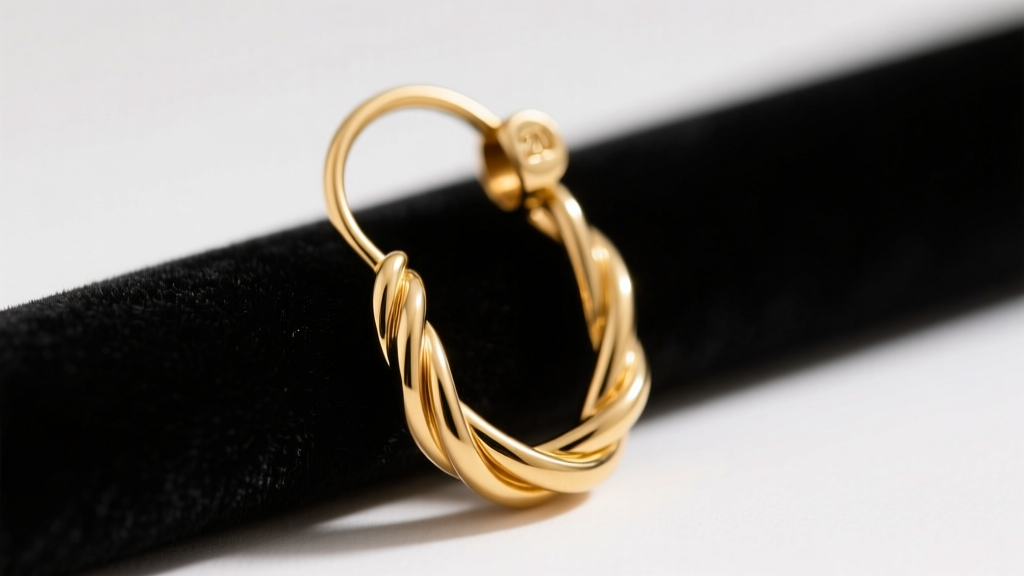
The Anatomy of Earrings With Hooks
Earrings with hooks—often referred to interchangeably as French hooks, fishhooks, or shepherd hooks—remain one of the most enduring and elegant earring styles in the jewelry market. Their appeal lies in their minimalist hardware, which allows the decorative elements of the earring to dangle freely and catch the light with every movement. However, as any seasoned jeweler or piercing professional will tell you, not all hook earrings are created equal. The seemingly simple wire that passes through your earlobe is a highly engineered component that dictates the comfort, security, and longevity of the piece.
When shopping for earrings with hooks in 2026, consumers must look beyond the aesthetic charm of the dangle and scrutinize the structural integrity of the wire itself. From the specific American Wire Gauge (AWG) to the metallurgical purity of the alloy, making an informed purchase requires a deep understanding of how these earrings interact with human anatomy. This comprehensive buying guide will equip you with the technical knowledge needed to select hook earrings that are comfortable, hypoallergenic, and secure.
Wire Gauge and the "Cheese-Cutter" Effect
The most critical, yet frequently overlooked, specification when buying earrings with hooks is the wire thickness, measured in gauges. The jewelry industry standard for standard lobe piercings is 20-gauge (0.81mm). However, many mass-market fashion brands cut costs by utilizing 22-gauge (0.64mm) or even 24-gauge wire. While thinner wires are easier to insert, they introduce a severe structural risk known in the body modification community as the "cheese-cutter effect."
If a heavy gemstone or solid metal dangle is suspended from a 22-gauge hook, the downward force concentrates on a microscopic surface area of your earlobe. Over weeks or months of continuous wear, this pressure can literally slice through the tissue, migrating the piercing downward and causing permanent damage. Conversely, an 18-gauge (1.02mm) wire provides excellent support for heavy statement pieces but may cause discomfort or stretching in older, more delicate piercings.
| Wire Gauge | Diameter (mm) | Best Use Case | Risk Factor |
|---|---|---|---|
| 22-Gauge | 0.64mm | Ultra-lightweight, delicate chains | High risk of tissue migration (cheese-cutter effect) |
| 20-Gauge | 0.81mm | Standard everyday dangles, medium weight | Industry standard; lowest risk for average lobes |
| 18-Gauge | 1.02mm | Heavy gemstones, thick hoops, statement pieces | May cause discomfort in tight or fresh piercings |
According to the Association of Professional Piercers, maintaining an appropriate gauge-to-weight ratio is essential for long-term tissue health. Always check the product specifications for the exact gauge before purchasing, especially if the earring features dense materials like solid brass, bronze, or large natural stones.
Metallurgy Matters: What Touches Your Piercing
The hook of the earring is the only component that maintains continuous contact with the internal fistula (the skin tunnel of the piercing). Therefore, the metal grade is non-negotiable. While the decorative front of an earring might be crafted from beautiful enamel or brass, the hook itself must be biocompatible.
For individuals with nickel sensitivities or newly healed piercings, the gold standard is ASTM F138 implant-grade titanium or solid 14k/18k nickel-free gold. Be highly skeptical of "gold-plated" or "gold-filled" hooks. While these may be perfectly safe for short-term wear, the friction of inserting and removing the earring inevitably wears down the microscopic outer layer of gold, exposing the base metal (often brass or nickel-silver) to the sensitive tissue inside the ear. The Federal Trade Commission strictly regulates jewelry metal purity claims, but imported fast-fashion jewelry frequently bypasses these guidelines, leading to sudden contact dermatitis.
Expert Tip: If you are buying vintage or antique earrings with hooks, assume the wire contains nickel. Have a local bench jeweler snip off the original hooks and solder on new, solid 14k gold or titanium French wires before wearing them.
Engineering Security: Preventing Loss
The primary drawback of earrings with hooks is their lack of inherent security. Unlike post-and-butterfly-clutch earrings, a standard fishhook relies entirely on gravity and the natural curve of the wire to stay in the ear. A snagged sweater, a brush of hair, or even sleeping on the wrong side can easily dislodge them. When evaluating a purchase, look for hooks that incorporate modern security features:
- The French Wire Bead: A tiny soldered metal ball near the end of the hook that acts as a physical stopper, preventing the earring from sliding completely out if pulled forward.
- Leverback Mechanisms: A hinged, locking variation of the hook that snaps securely into place, completely enclosing the earlobe. This is the most secure option for expensive diamond or gemstone drops.
- Accompanying Silicone O-Rings: High-end brands often include medical-grade silicone bullet clutches or O-rings in the packaging to lock the hook in place from behind.
If your favorite hooks lack these features, you can easily purchase "French wire guards"—small, curved, flexible plastic tubes that slide over the end of the hook behind the earlobe, acting as a custom-fitted, invisible stopper.
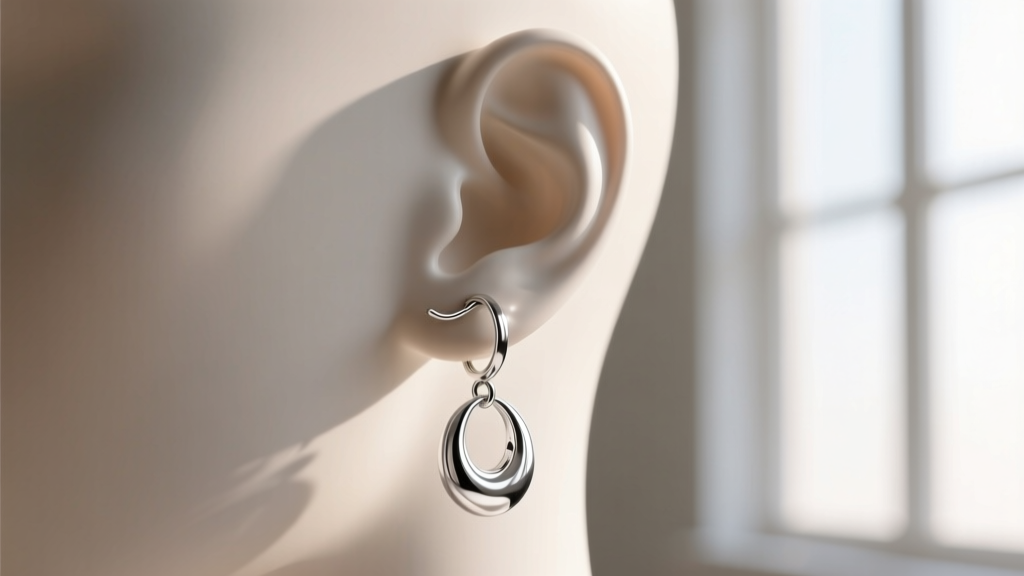
Proportion and Face Shape Pairing
Because earrings with hooks allow the decorative element to hang freely, they create strong vertical lines that can dramatically alter the perceived proportions of the face. Selecting the right length and visual weight is just as important as the technical specifications.
For round or wide face shapes, long, linear drop earrings suspended from a simple fishhook are highly recommended. The elongated vertical movement draws the eye up and down, creating a slimming, lengthening illusion. Avoid short, wide cluster earrings on hooks, as they will emphasize the width of the cheekbones.
For long or oblong face shapes, opt for shepherd hooks that feature wider, horizontally oriented designs, such as geometric shields, chandeliers, or clustered pearls. The horizontal volume adds necessary balance and width to the face. Keeping the drop length relatively short (under 1.5 inches) prevents the face from looking overly drawn out.
Maintenance and Metal Fatigue
One of the most common failure modes of hook earrings is metal fatigue. Many wearers have a habit of pulling the hook open and bending it back and forth to insert it into the ear. Metals like sterling silver and gold are malleable; repeated bending causes "work hardening," a metallurgical process where the metal becomes brittle and eventually snaps at the stress point.
To preserve the structural integrity of your earrings with hooks, always insert them by gliding the wire straight through the piercing, using the natural curve of the hook to guide it, rather than aggressively bending the wire backward. Clean the hooks weekly with a gentle, non-abrasive jewelry polishing cloth to remove sebum, oxidized oils, and environmental pollutants that can degrade the metal surface over time. By respecting the engineering of the wire, your hook earrings will remain a secure and elegant staple in your collection for years to come.


