Fishhook Earrings: A Beginner's Guide to Styling & Fit
Discover everything about fishhook earrings. Learn about wire gauges, hypoallergenic metals, and how to keep your French wires secure all day.

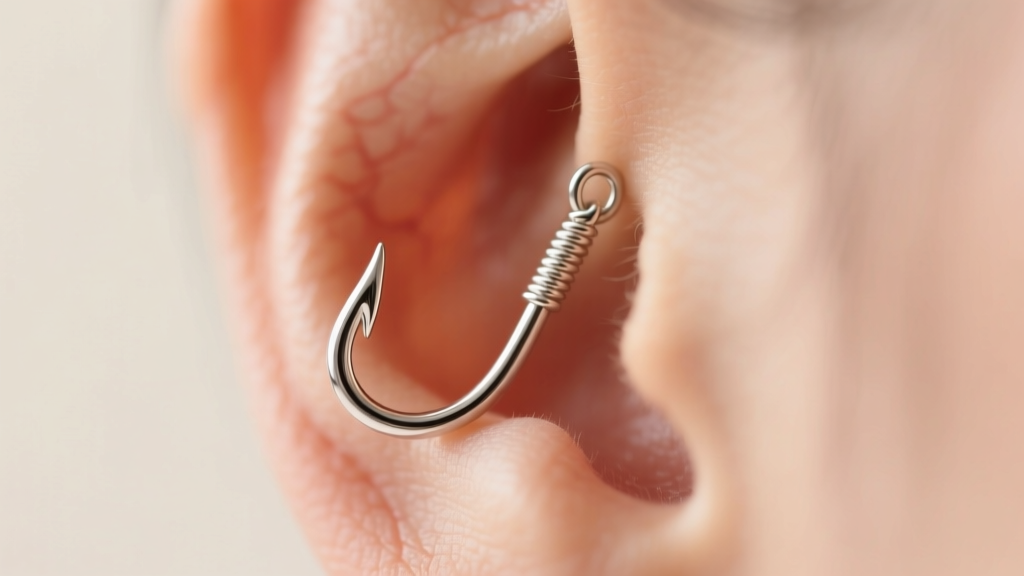
Fishhook earrings—often referred to as French wires or shepherd's hooks—are a staple in jewelry boxes worldwide. Their elegant, sweeping curve and minimalist design make them the default choice for everything from delicate pearl drops to bold, bohemian dangles. Yet, for beginners, these seemingly simple ear wires can present a surprising array of challenges: they fall out, they snag on sweaters, and cheap versions can turn earlobes green or itchy.
If you are new to wearing dangle or drop earrings, understanding the mechanics, metallurgy, and proper fit of fishhook earrings is essential. In this 2026 beginner's guide, we break down the exact specifications you need to know to wear French wires comfortably and securely.
The Anatomy of a French Wire
Before diving into sizing, it helps to understand the four distinct parts of a standard fishhook earring:
- The Loop: The small ring at the front that attaches to the decorative element of the earring.
- The Curve (or Hook): The sweeping arch that rests over the top of the earlobe cartilage.
- The Notch (or Dimple): A small indentation near the back of the wire designed to catch on earring backs or friction stoppers.
- The Tail: The straight, pointed end that exits the back of the piercing.
Understanding this anatomy is crucial when selecting security backs, as the placement of the notch dictates which type of stopper will actually stay in place.
Decoding Wire Gauges: Why Thickness Matters
One of the most common mistakes beginners make is ignoring wire thickness, technically known as the 'gauge'. In the American Wire Gauge (AWG) system, the higher the number, the thinner the wire. Wearing a wire that is too thin for your specific piercing can lead to discomfort and long-term tissue damage.
| Gauge Size | Millimeter (mm) | Best Use Case | Potential Risks |
|---|---|---|---|
| 22-Gauge | 0.64 mm | Ultra-lightweight studs, delicate vintage pieces | High risk of the 'cheese-cutter effect' in heavy dangles |
| 20-Gauge | 0.81 mm | Standard dangles, everyday drop earrings | Can cause migration if worn in stretched lobes |
| 18-Gauge | 1.02 mm | Heavy statement dangles, thicker earlobes | May not fit through older, un-maintained standard piercings |
The 'Cheese-Cutter Effect' Explained
If you wear a heavy glass or gemstone dangle on a thin 22-gauge fishhook, the weight of the earring concentrates entirely on that tiny 0.64mm surface area. Over time, gravity and movement cause the thin wire to slowly slice downward through the earlobe tissue—a phenomenon piercers call the 'cheese-cutter effect'. To prevent permanent lobe stretching or splitting, always pair heavy earrings with thicker 18-gauge or 16-gauge wires.
The Metallurgy of Ear Wires: Avoiding Allergic Reactions
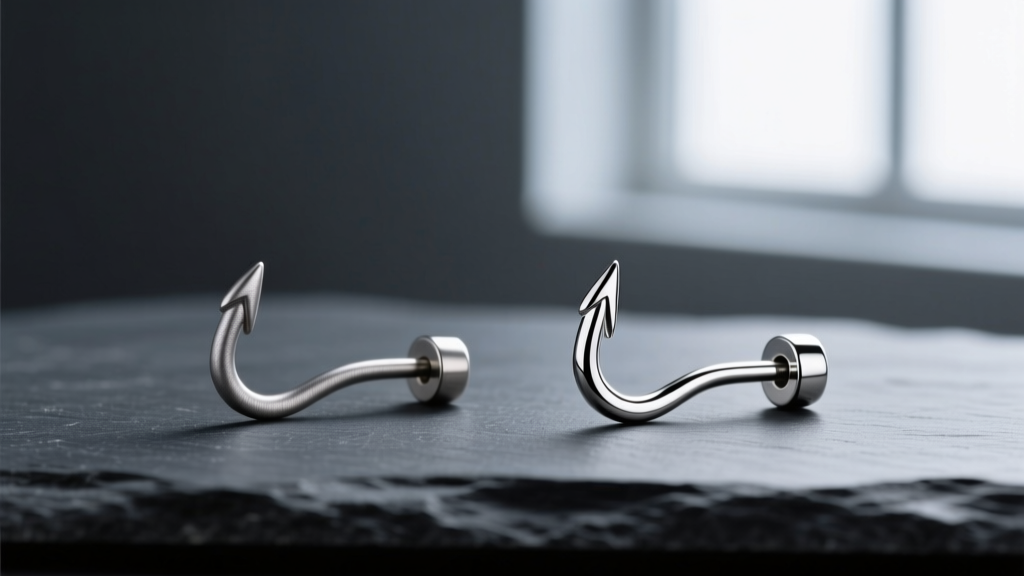
Because fishhook earrings slide directly through a fistula (the healed skin tube of your piercing) and rest against sensitive tissue, the metal grade is non-negotiable. Many beginners mistakenly believe 'surgical steel' is hypoallergenic. In reality, 316L surgical steel contains up to 10% nickel, which can leach out when exposed to the natural salts and moisture of the skin.
According to the American Academy of Dermatology, nickel allergy is the most common cause of allergic contact dermatitis, affecting roughly 18% of adults. To avoid the dreaded 'itchy lobe' syndrome, look for these specific metal grades:
- Implant-Grade Titanium (ASTM F136): The gold standard for sensitive ears. It is entirely nickel-free, lightweight, and highly biocompatible. The Association of Professional Piercers highly recommends this for all initial and sensitive piercings.
- Niobium: A highly reactive metal that is naturally hypoallergenic and can be anodized into brilliant colors without using surface plating that might chip off.
- Solid 14k or 18k Gold: Safe for most, provided it is nickel-free yellow or rose gold. Avoid white gold, as it is frequently alloyed with nickel to achieve its silver color.
How to Keep Fishhook Earrings from Falling Out
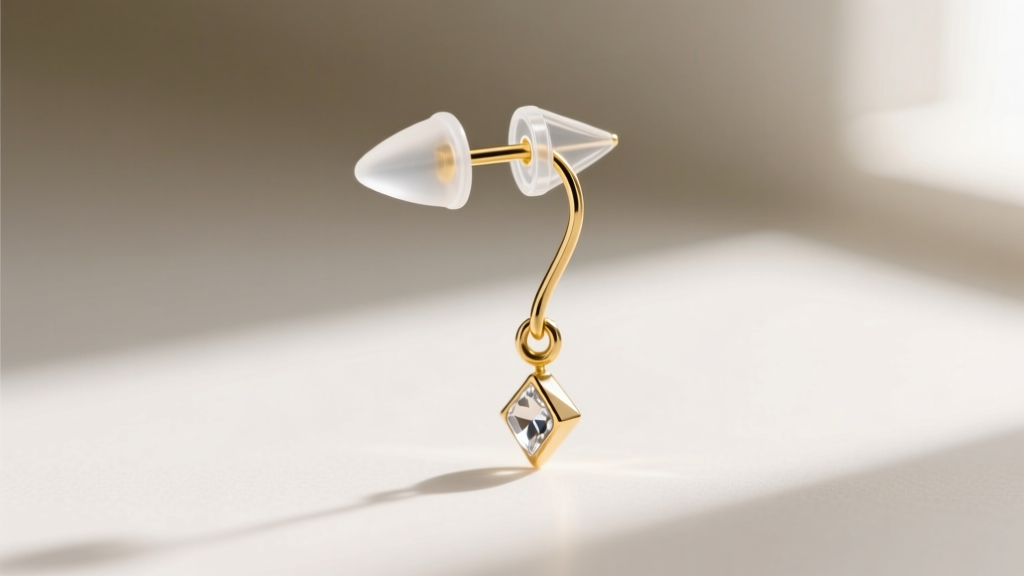
The open-back design of fishhook earrings makes them notoriously prone to slipping out, especially when taking off scarves or brushing hair. Here are the three most effective, professional-grade methods to secure your French wires:
- Clear Silicone Ear Nuts: These bullet-shaped stoppers slide onto the tail of the earring and lock into the notch. They are inexpensive, discreet, and provide excellent friction. Replace them every few months as silicone degrades and stretches over time.
- French Wire Guards: These are tiny, curved plastic sleeves that slide over the entire hook portion of the earring. They not only prevent the earring from sliding forward out of the ear but also protect the metal from tarnishing from skin oils and prevent hair from snagging on the curve.
- Locking Ear Wires: If you frequently lose earrings, consider upgrading your findings to 'locking' fishhooks. These feature a tiny hinged lever or a twist-lock mechanism at the back of the curve that physically closes the loop, making it impossible for the earring to slip out without manual release.
Troubleshooting Common Fishhook Pain Points
'The most common complaint I hear about drop earrings isn't about the design, but about earlobe fatigue. When a heavy fishhook earring pulls the lobe forward, it creates a micro-tension headache behind the ear.'
— Master Jeweler & Ear Curation Specialist
Fixing Earlobe Droop
If your favorite heavy dangle earrings cause your lobes to point awkwardly downward, the issue is a lack of surface area support. You can solve this by purchasing plastic earring support discs. These clear, flower-shaped pads slide onto the back of the earring tail before you attach the stopper. They distribute the weight of the heavy wire across a wider area of the back of your earlobe, keeping the earring standing perfectly upright and relieving tension on the piercing hole.
Dealing with Snagging
Fishhooks are notorious for catching on turtlenecks and loose curls. If you love the look of French wires but hate the snagging, opt for 'leverback' earrings. Leverbacks mimic the front-facing sweep of a fishhook but feature a hinged wire that snaps completely shut at the back, creating a closed, continuous hoop that hair and fabric can easily glide over without catching.
By paying attention to gauge thickness, demanding high-quality titanium or solid gold, and utilizing simple silicone stoppers, you can transform fishhook earrings from a frustrating hazard into your most reliable, elegant everyday accessory.


