Material Guide: Choosing The Best Ear Jacket Earring Metal
Discover which metals work best for an ear jacket earring. We compare titanium, gold, and steel for weight, skin safety, and post durability.

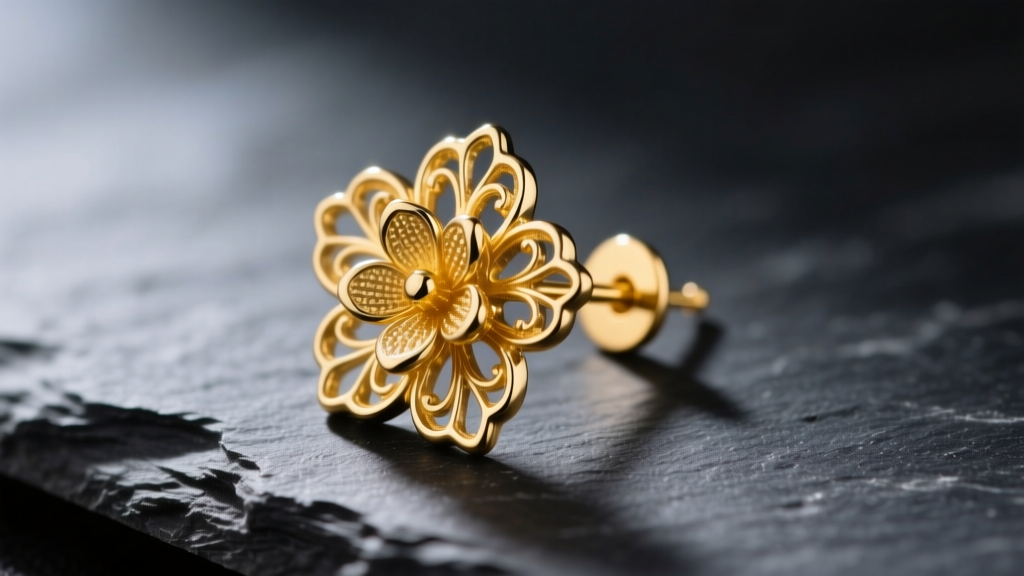
The Anatomy and Physics of an Ear Jacket Earring
Unlike traditional studs or hoops, an ear jacket earring introduces a complex structural dynamic to your piercing. The defining feature of this style is the decorative 'jacket' component that attaches to the earring post behind the earlobe, draping downward or fanning outward along the jawline and neck. Because of this unique cantilevered design, the metallurgical properties of the jewelry are not just a matter of aesthetics—they are a matter of physics, comfort, and dermatological safety.
When you wear an ear jacket earring, the post acts as a fulcrum. The front stud provides the anchor, while the back jacket exerts a continuous downward and outward gravitational pull. If the metal is too soft, the post will bend. If the metal is too heavy, the earlobe will sag, leading to discomfort and potential tissue stretching over time. Furthermore, because the jacket rests directly against the sensitive skin of the neck and mastoid area, the alloy's oxidation rate and nickel-release properties become critical factors in preventing contact dermatitis.
The Plating Trap: Why Base Metals Fail as Jackets
Many fast-fashion brands manufacture ear jackets using brass or copper alloys, finishing them with a thin layer of rhodium or gold plating. While this may look acceptable on a standard stud, it is a catastrophic failure point for an ear jacket earring. The constant friction against the neck, combined with the acidic pH of human sweat and the friction from clothing collars, will strip microscopic plating layers within weeks.
Once the base metal of a plated jacket is exposed, copper oxidation reacts with sweat to create copper chloride, leaving a persistent green or black stain on the side of the neck. More dangerously, exposed brass alloys often contain high levels of nickel and lead, triggering severe allergic contact dermatitis in the highly sensitive sub-auricular skin zone.
For an ear jacket earring, you must strictly invest in solid metals or highly stable, hypoallergenic alloys. Let us break down the top three materials used by fine jewelers and body modification experts.
Material Breakdown: Titanium vs. Gold vs. Surgical Steel
1. ASTM F136 Titanium (The Biocompatible Standard)
Implant-grade titanium, specifically Ti6Al4V ELI (ASTM F136), is the undisputed champion for sensitive skin and heavy jewelry designs. Titanium has an exceptionally high strength-to-weight ratio. An intricate, oversized ear jacket earring crafted from titanium will weigh roughly 45% less than the exact same design cast in 14k gold. This drastic reduction in weight minimizes the cantilever pull on the earlobe, allowing for dramatic, avant-garde jacket designs that remain comfortable for all-day wear. However, titanium is notoriously difficult to machine and cast, meaning intricate lace-like or micro-pave jacket designs are rare and command a premium price.
2. 14k and 18k Gold Alloys (The Classic Choice)
Gold remains the most popular material for fine ear jackets due to its casting versatility, allowing jewelers to create complex floral, geometric, and articulated designs. However, the karat weight dictates the structural integrity. According to the Gemological Institute of America (GIA), pure 24k gold is far too soft for jewelry that bears tension. 18k gold (75% pure gold) offers a rich color but can be prone to bending if the jacket extends more than an inch below the lobe. 14k gold (58.5% pure gold) is alloyed with metals like zinc, copper, or palladium, providing a significantly harder, more rigid structure that resists the bending forces exerted by a heavy jacket.
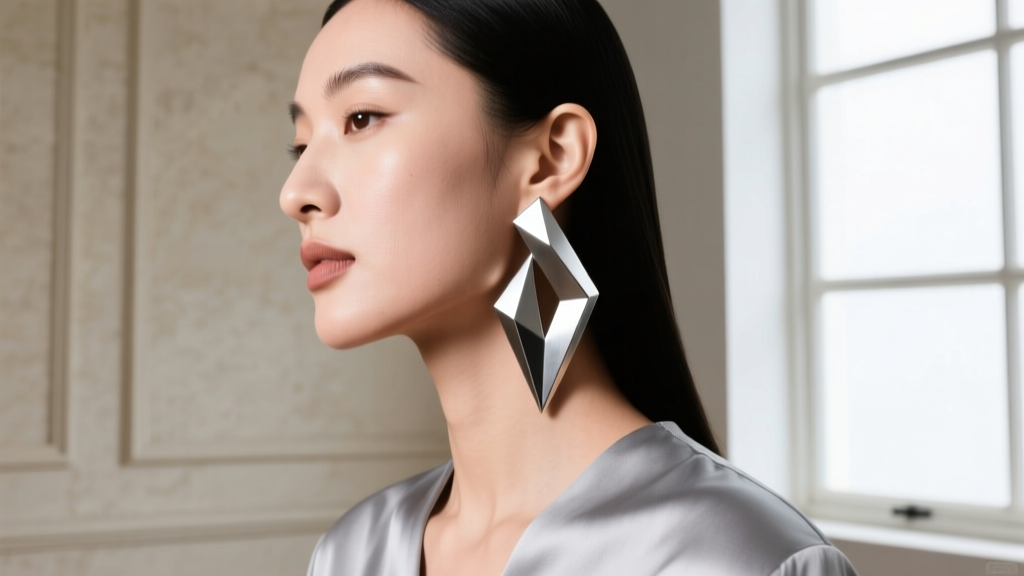
3. 316L Surgical Stainless Steel (The Budget Alternative)
Surgical steel is highly durable, resistant to tarnish, and affordable. However, it is not entirely nickel-free. 316L steel contains between 8% and 10.5% nickel. While the nickel is tightly bound within the crystalline structure of the steel, prolonged contact with acidic sweat can cause trace leaching. The National Center for Biotechnology Information (NCBI) notes that while surgical steel is generally safe for initial piercings, prolonged dermal contact on the neck (as experienced with ear jackets) can trigger reactions in individuals with severe nickel hypersensitivity. If you choose steel for an ear jacket earring, ensure the back piece has a high-polish finish to minimize microscopic surface area where sweat can accumulate.
Comparative Material Matrix
| Material | Grade / Standard | Relative Weight | Post Rigidity | Skin Safety Profile | Avg. Price Range |
|---|---|---|---|---|---|
| Titanium | ASTM F136 (Ti6Al4V) | Very Light | Extremely High | 100% Hypoallergenic | $80 - $250+ |
| 14k Gold | 58.5% Au Alloy | Heavy | High | Excellent (if nickel-free alloy) | $150 - $600+ |
| 18k Gold | 75% Au Alloy | Very Heavy | Moderate | Excellent | $250 - $1,000+ |
| Surgical Steel | 316L | Moderate | High | Good (Trace Nickel) | $25 - $80 |
The Hidden Danger: Post Gauge and Friction Back Compatibility
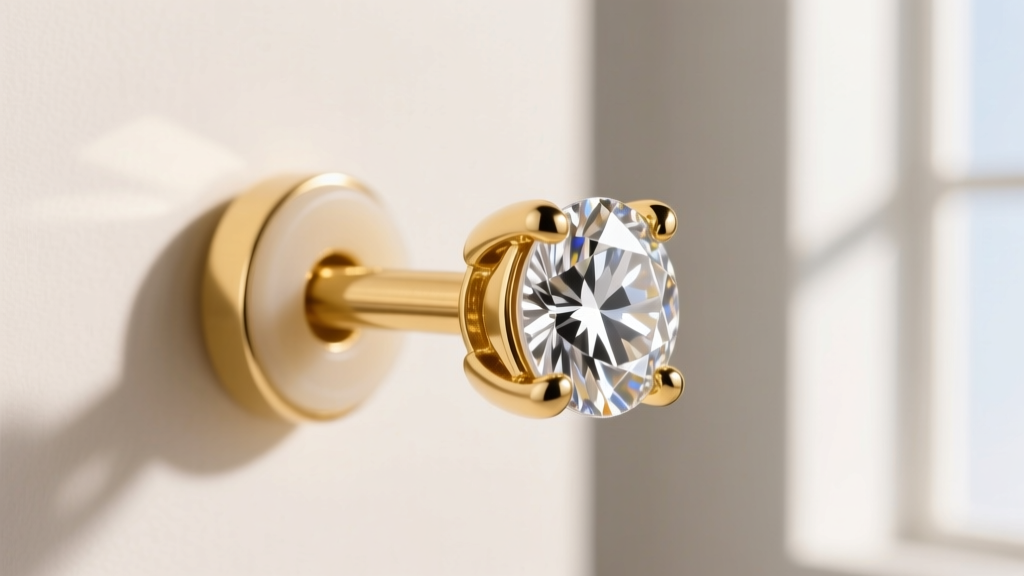
The most frequently overlooked aspect of buying an ear jacket earring is the thickness of the post, measured in gauge sizes. The standard earring post is 20-gauge (0.81mm thick). While a 20G post is perfectly adequate for a lightweight diamond stud, it is entirely insufficient for supporting the cantilevered weight of a metal jacket.
Why 18-Gauge is the Minimum Requirement
When a jacket hangs below the lobe, gravity pulls it downward, creating a bending moment at the exact point where the post exits the back of the earlobe. Over time, a 20G post will permanently bend, causing the front stud to tilt awkwardly forward. For any ear jacket earring that extends more than 15mm below the piercing, you must seek out an 18-gauge (1.02mm) or even a 16-gauge (1.29mm) post. The cross-sectional thickness of an 18G wire provides nearly 60% more bending resistance than a 20G wire.
Friction Backs: Silicone vs. Metal Butterflies
The jacket must be sandwiched securely between the earlobe and the friction back. Standard metal 'butterfly' backs often fail to grip the post tightly enough to support the extra weight of a jacket, leading to the jacket slipping down the post and hanging loosely. For ear jackets, wide-disc silicone friction backs or threaded screw-backs are mandatory. They provide a flush, high-friction surface that locks the jacket firmly against the back of the lobe, ensuring the design sits exactly as the jeweler intended.
Expert Verdict: Which Metal Should You Choose?
Selecting the right metal for your ear jacket earring ultimately depends on your anatomical sensitivity and the scale of the design you desire. If you are commissioning or buying a large, dramatic, avant-garde jacket that covers the lower ear and neck, ASTM F136 Titanium is the only logical choice to prevent earlobe fatigue and post bending. If you prefer intricate, classic fine jewelry designs like floral motifs or diamond-encrusted halos that sit close to the lobe, 14k Gold offers the perfect balance of structural rigidity, casting detail, and long-term value. Avoid plated base metals entirely, and always verify that the post gauge is thick enough to bear the beautiful, unique weight of the jacket design.


