Ivory Hoop Earrings: Material Deep Dive, Ethics, and Sizing Guide
Explore the technical realities of ivory hoop earrings. We cover CITES laws, tagua nut alternatives, gauge sizes, and moisture-proof care.

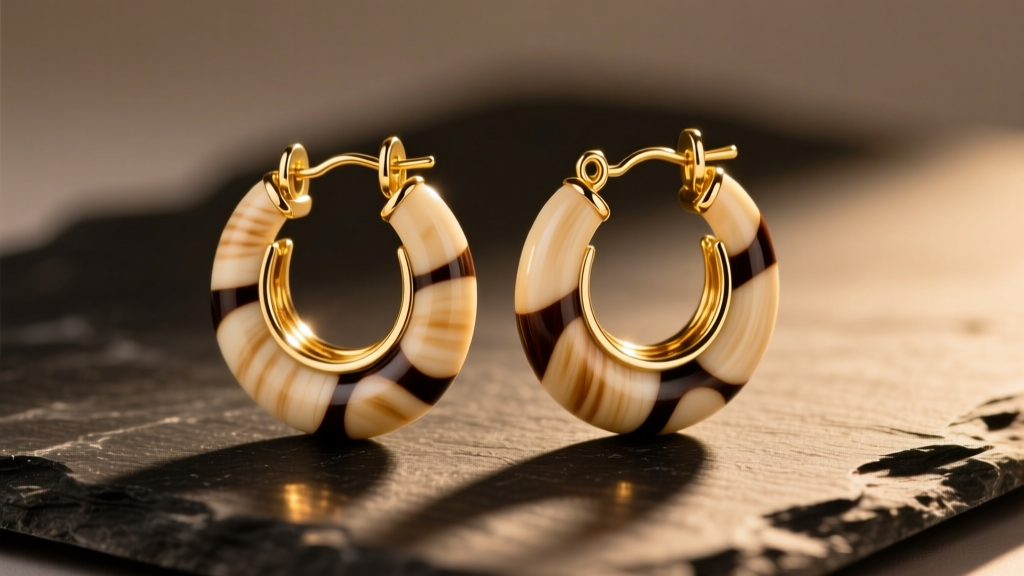
The Legal and Ethical Reality of Ivory in Modern Jewelry
When discussing ivory hoop earrings in the contemporary market, we must first address the legal and ethical boundaries of the material. Genuine elephant ivory is strictly regulated under the Convention on International Trade in Endangered Species (CITES). Following the near-total ban enacted by the U.S. Fish and Wildlife Service in 2016 and similar global restrictions, the commercial trade of newly sourced elephant ivory is effectively illegal in most major markets. As of 2026, any reputable jeweler offering genuine antique ivory must provide exhaustive provenance documentation, including pre-1976 CITES certificates and appraisals from certified gemologists.
Consequently, the modern jewelry industry has pivoted toward highly sophisticated, legal alternatives that mimic the luminous, milky aesthetic of dentin without the ethical baggage. For the discerning collector and the technical jeweler, understanding the material science of these alternatives is critical. Not all faux ivory is created equal, especially when subjected to the structural demands of a hoop earring, which requires a delicate balance of tensile strength, moisture resistance, and weight distribution.
Technical Breakdown: Legal Ivory Alternatives for Hoops
The transition away from animal ivory has driven innovation in organic and synthetic substitutes. However, forming these materials into the continuous curve of a hoop earring presents unique engineering challenges. Below is a deep dive into the three primary materials used in high-end ivory hoop earrings today.
Tagua Nut (Vegetable Ivory)
Harvested from the Phytelephas aequatorialis palm in South America, tagua nut is the closest organic analog to elephant ivory. Its cellular structure is composed of densely packed hemicellulose, giving it a Mohs hardness of roughly 2.5 to 3.0. While it polishes to a brilliant, creamy luster, tagua is inherently brittle. When carved into large-diameter hoops (over 40mm), tagua lacks the internal flexibility to withstand the torque applied during insertion and removal. Therefore, technical jewelers reinforce tagua hoops with a hidden internal armature of 14k or 18k gold wire, ensuring the organic material serves purely as an aesthetic sleeve rather than a structural load-bearer.
Casein and Galalith
Galalith, a historic plastic derived from milk protein (casein) cross-linked with formaldehyde, offers a warmer, more organic feel than modern petroleum-based plastics. It takes dye exceptionally well and can be carved to mimic the subtle Schreger lines of real ivory. However, casein is highly hygroscopic. According to conservation guidelines from the Victoria and Albert Museum, organic polymers like casein are highly susceptible to dimensional swelling when exposed to ambient humidity or direct water contact. In hoop earrings, this means the material can warp over time if not properly sealed with a micro-crystalline wax or polyurethane coating.
2026 Bio-Resin Composites
The latest advancement in the 2026 jewelry market is the use of high-density polylactic acid (PLA) and polyhydroxyalkanoate (PHA) bio-resins. These lab-grown polymers are engineered to match the exact specific gravity of dentin (approximately 1.85 g/cm³). Unlike traditional epoxy resins, which can yellow under UV exposure, modern bio-resins are stabilized with titanium dioxide and optical brighteners to maintain their ivory hue indefinitely. They are entirely non-porous, making them the superior choice for intricate, unreinforced huggie hoops that require high tensile strength.
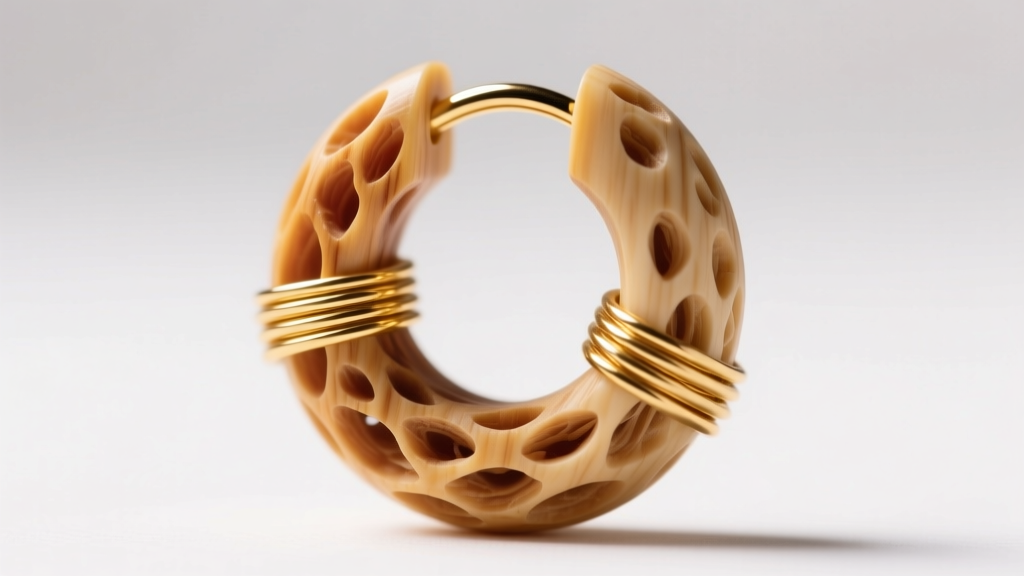
Structural Engineering: Material Density and Hoop Limits
Designing a hoop earring requires an understanding of the material's density and tensile limits. A hoop that is too heavy will cause tissue migration (the 'cheese-cutter effect'), while a material that is too brittle will snap at the hinge point. The table below outlines the engineering constraints for unreinforced ivory alternatives.
| Material | Density (g/cm³) | Moisture Absorption | Max Unreinforced Hoop Diameter | Recommended Core Wire |
|---|---|---|---|---|
| Tagua Nut | 1.40 | Moderate | 25mm | 18G Gold-Filled |
| Galalith (Casein) | 1.35 | High | 35mm | None (if sealed) |
| Bio-Resin (PHA) | 1.85 | Negligible | 60mm | None required |
| Bone (Bleached) | 1.80 | Low | 45mm | 20G Sterling Silver |
Hardware Integration: Hinges, Gauges, and Closures
The intersection of metal hardware and organic or semi-organic ivory alternatives is the most common point of failure in hoop earring construction. You cannot use traditional torch soldering near tagua or casein; the thermal conductivity of the metal will scorch, melt, or crack the adjacent ivory material. Expert bench jewelers rely entirely on cold connections, precision crimping, and aerospace-grade epoxy to set the hinges.
Gauge Sizing and Tissue Health
The gauge of the wire that passes through the earlobe is a critical, often overlooked specification. Standard fashion earrings typically use 20-gauge (0.81mm) or 22-gauge (0.64mm) wire. However, ivory alternative materials are denser than hollow metals or lightweight acrylics. A 50mm bio-resin hoop can easily weigh 8 to 12 grams per earring. When this weight is concentrated on a 22-gauge wire, the downward force creates a shear stress on the earlobe piercing, leading to discomfort and eventual tissue thinning.
Expert Recommendation: For any ivory hoop earring exceeding 35mm in diameter or 6 grams in weight, the wire or post must be upgraded to a minimum of 18-gauge (1.02mm), with 16-gauge (1.29mm) being the clinical standard for optimal weight distribution and lobe health.
Closure Mechanisms
For huggie-style ivory hoops, the saddle hinge is the superior mechanism. A well-machined saddle hinge features a flush, interlocking joint that prevents the earring from catching on hair or clothing. Because the ivory material cannot be soldered directly to the hinge plate, the metal armature must be internally threaded and screwed into a brass insert that is permanently bonded inside the resin or tagua body. This internal threading ensures that the mechanical stress of opening and closing the earring is absorbed by the metal insert, not the brittle ivory substitute.
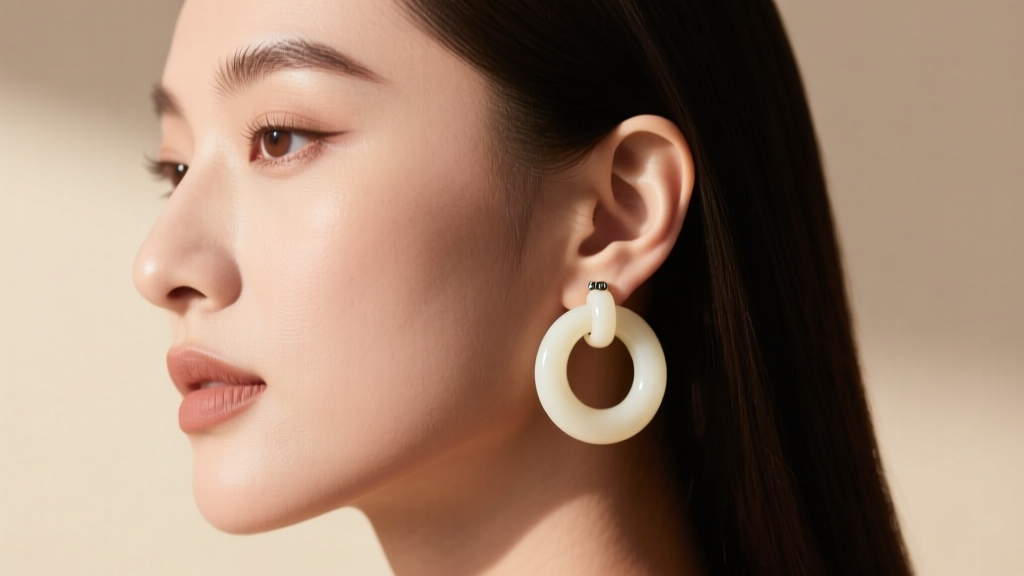
Environmental Vulnerabilities and Preventative Care
Maintaining the pristine, creamy finish of ivory hoop earrings requires a strict departure from standard jewelry cleaning protocols. The most common mistake consumers make is placing organic or semi-organic jewelry into ultrasonic cleaners. The high-frequency cavitation bubbles generated by ultrasonic waves will violently fracture the micro-cellular structure of tagua nut and will cause casein to revert to a porous, chalky state.
- Daily Cleaning: Use a dry, untreated microfiber cloth to wipe away sebum and cosmetic residues immediately after wearing. Sebum is slightly acidic and can degrade unsealed casein over time.
- Deep Cleaning: For bio-resins and sealed tagua, use a barely damp cloth with a pH-neutral soap. Never submerge the earrings in water.
- Hydration (Tagua Only): Tagua nut can dry out and develop micro-fissures in low-humidity environments (such as airplane cabins or winter climates). Apply a single drop of food-grade mineral oil to a cotton swab and lightly buff the surface every three months to maintain internal moisture equilibrium.
- Storage: Store ivory alternative hoops in a breathable cotton pouch. Airtight plastic bags can trap moisture, leading to mold growth on organic materials like tagua and bone.
Expert Buying Checklist for 2026
When evaluating a pair of ivory hoop earrings, whether vintage or contemporary, use this technical checklist to ensure you are purchasing a structurally sound and ethically compliant piece:
- Provenance Verification: If claimed as genuine antique ivory, demand CITES pre-convention documentation and a UV fluorescence test report (genuine ivory fluoresces bright white/blue, while most early plastics absorb UV and appear dull).
- Hardware Inspection: Examine the hinge under a 10x jeweler's loupe. Ensure there is no visible glue squeeze-out and that the metal insert is flush with the organic material.
- Weight-to-Gauge Ratio: Verify that the ear wire is at least 18-gauge if the hoop diameter exceeds 35mm.
- Thermal Stability: Ask the jeweler about the material's thermal limits. Bio-resins and casein can warp if left on a dashboard in direct sunlight, whereas tagua is slightly more heat-resistant but prone to UV yellowing if unsealed.
By understanding the material science and structural engineering behind these beautiful accessories, collectors can confidently navigate the market. The modern era of ivory hoop earrings is defined not by the exploitation of endangered species, but by the mastery of sustainable alternatives and precision jewelry mechanics.
For further reading on international wildlife trade regulations, consult the CITES Ivory Control database.


