The Anatomy of Pave Heart Earrings: Settings, Metals & Stone Loss
An expert technical breakdown of pave heart earrings. Explore micro-pave vs. bead settings, metal grades, stone loss prevention, and maintenance.

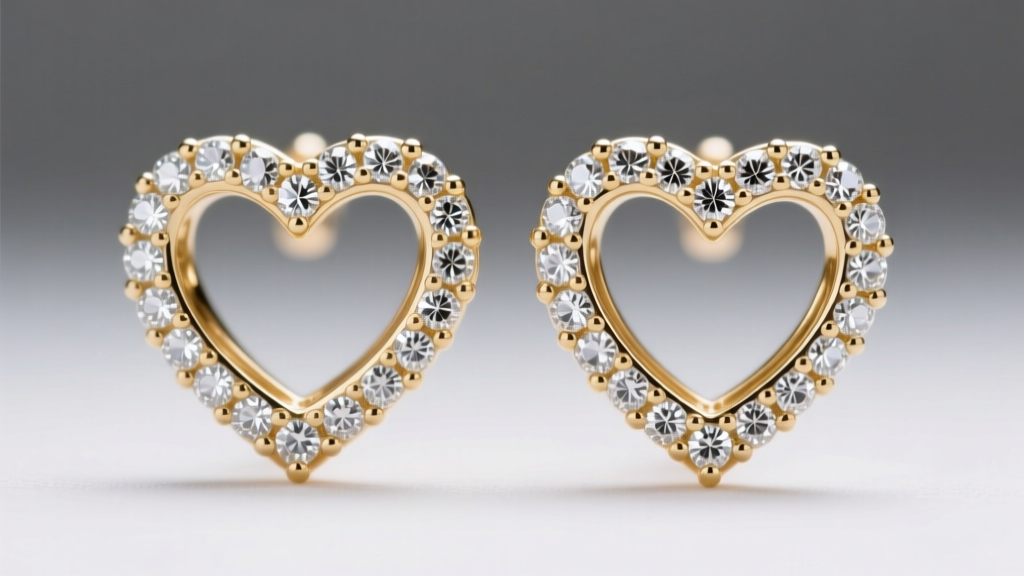
Pave heart earrings represent a fascinating intersection of romantic design and rigorous micro-engineering. While the untrained eye simply sees a shimmering silhouette, a master jeweler sees a complex matrix of subtractive metalwork, precise stone calibration, and structural stress points. The heart shape, with its sharp upper cleft and tapered bottom point, introduces unique geometric challenges that do not exist in standard round or oval halo settings. In this technical deep dive, we deconstruct the anatomy of pave heart earrings, examining the metallurgy, setting techniques, and failure modes that separate heirloom-quality pieces from mass-produced costume jewelry.
The Engineering Behind the Sparkle: Micro-Pave vs. Bead Settings
The term "pave" (from the French word for "paved") is frequently misused in the commercial jewelry market. True pave settings involve stones set so closely together that the metal substrate is nearly invisible. However, there is a distinct technical divide between standard bead setting and true micro-pave.
Standard Bead Setting
In a standard bead-set heart earring, the diamonds typically range from 0.015 to 0.03 carats each. The jeweler uses a hart bur to carve a seat into the metal, places the stone, and then uses a beading tool to push the surrounding metal over the diamond's girdle. According to the Gemological Institute of America (GIA), the girdle is the outer edge of the diamond, and securing it properly is paramount to preventing the stone from rocking or spinning in its seat.
True Micro-Pave
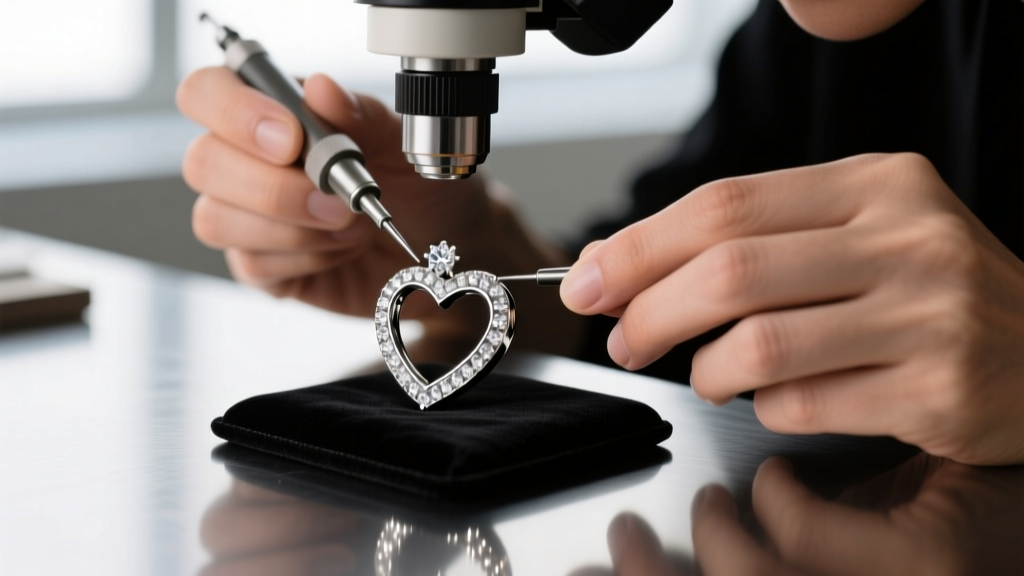
Micro-pave utilizes melee diamonds that are incredibly small, generally between 0.005 and 0.01 carats (roughly 1mm to 1.3mm in diameter). Because the stones are so minute, traditional beading tools cannot be used without obscuring the diamond's table. Instead, jewelers use pneumatic engravers and microscopes to raise microscopic beads of metal directly from the substrate. This requires immense skill; the metal beads holding the stones are often less than 0.2mm in diameter. In high-quality pave heart earrings, you should see six tiny metal beads surrounding each micro-stone, creating a honeycomb-like structural integrity.
Metal Substrates: Why 14k and 18k Gold Behave Differently
The choice of metal in pave heart earrings is not merely an aesthetic decision regarding color; it is a structural necessity governed by the Vickers Hardness (HV) scale. The tiny metal beads that hold the diamonds in place are subject to constant micro-abrasions from clothing, hair, and daily wear.
- 14k Gold (approx. 135 HV): Because it contains 41.7% alloy metals (like copper, silver, and zinc), 14k gold is significantly harder and more rigid. This makes it the superior technical choice for micro-pave settings, as the raised beads resist flattening and hold the stones securely over decades of wear.
- 18k Gold (approx. 120 HV): With 75% pure gold, 18k is softer and more malleable. While it offers a richer yellow hue and is hypoallergenic, the pave beads in 18k gold are more prone to wearing down or catching on fabrics, which can pull the bead away from the diamond's girdle.
- Platinum (approx. 125 HV but highly dense): Platinum behaves differently than gold. Instead of wearing away, platinum displaces. If a pave bead is struck, it will bend or flatten rather than snap off. Furthermore, platinum does not require rhodium plating, eliminating a major maintenance variable for white metal earrings.
The Rhodium Plating Dilemma
White gold pave heart earrings are plated with rhodium to achieve a bright, silvery finish. Over time, this plating wears off, revealing the slightly yellowish alloy beneath. Re-plating requires the earrings to be polished and submerged in an electroplating bath. If the micro-pave stones are not perfectly seated, the ultrasonic cleaning required before plating can dislodge them. Furthermore, porous stones like opals or emeralds (if used as center stones surrounded by a pave heart halo) can be destroyed by the chemicals in the plating bath.
The Stone Loss Phenomenon: Failure Modes in Heart-Shaped Pavé
Why do stones fall out of pave heart earrings more frequently than from round halos? The answer lies in the geometry of the heart. The deep cleft at the top and the sharp vertex at the bottom are high-stress zones. When the earring is bumped, the kinetic energy transfers to these acute angles, putting immense lateral pressure on the microscopic pave beads.
| Failure Mode | Technical Cause | Preventative Maintenance |
|---|---|---|
| Stone Loss at the Cleft | Lateral impact bends the metal substrate at the sharpest inner angle, popping the stone out of its seat. | Avoid wearing during high-impact activities; have a jeweler check the cleft beads annually. |
| Bead Flattening | Friction from hair, scarves, or sleeping on the earrings wears down the 0.2mm metal prongs. | Always store in a separate soft pouch; never sleep in pave earrings. |
| Ultrasonic Shake-Loose | High-frequency cavitation in ultrasonic cleaners vibrates improperly seated micro-stones out of their bur-carved seats. | Clean only with warm water, mild dish soap, and a soft baby toothbrush. Follow Jewelers Mutual care guidelines. |
| Substrate Warping | Thin metal backing (under 1mm thick) flexes when the earring post is pushed through the lobe, breaking the pave matrix. | Ensure the heart silhouette has a solid, reinforced backplate rather than a hollowed-out casting. |
Sizing, Gauge, and Ergonomics for Lobe vs. Cartilage
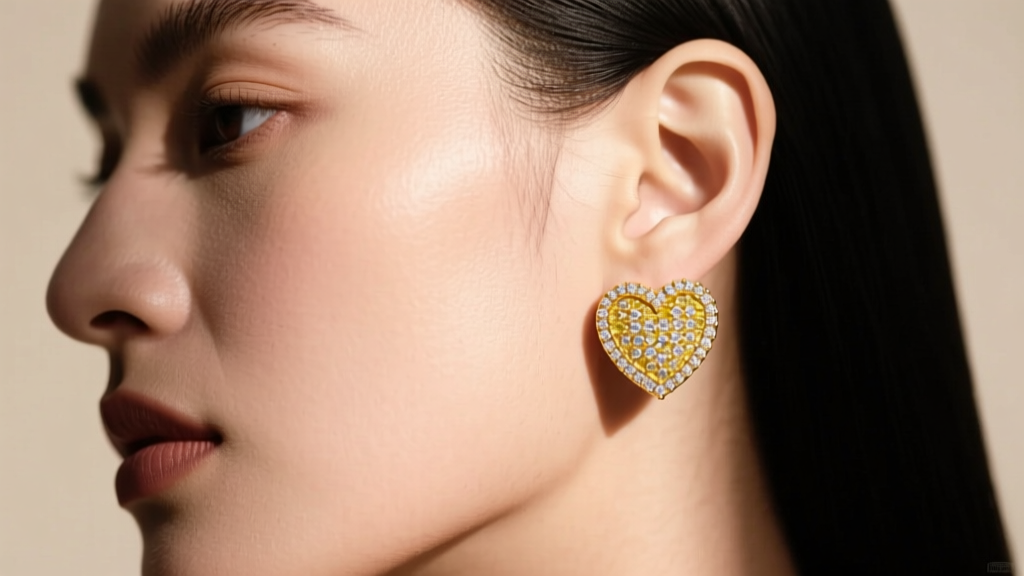
The structural integrity of pave heart earrings extends beyond the face of the jewelry to the post and backing system. Pave settings add significant weight; a solid 12mm pave heart earring can easily weigh between 1.8 and 2.5 grams per ear. This weight dictates the necessary gauge (thickness) of the earring post.
Standard Gauge Specifications
Most commercial earrings use a 20-gauge (0.81mm) post. However, for a heavy pave heart design, a 20g post is prone to bending when inserting it into the earlobe, which can warp the heart's backing plate and loosen the stones. Expert jewelers recommend an 18-gauge (1.02mm) or even a 16-gauge (1.29mm) post for heart-shaped pave studs over 10mm in size. The thicker post provides the rigidity needed to push through the lobe without flexing the metal face.
Backing Systems
Standard butterfly friction backs are insufficient for heavy pave hearts. The constant downward pull of gravity causes the heart to "droop" or tilt forward on the earlobe, ruining the visual alignment and putting uneven pressure on the top pave beads. Instead, utilize a La Pousette backing system, which uses a mechanical locking mechanism with a silicone O-ring for tension, or a heavy-duty jumbo silicone disc that distributes the weight across a wider area of the back of the earlobe.
Pricing Tiers: What You Are Actually Paying For
When evaluating the cost of pave heart earrings, consumers often mistakenly believe they are paying primarily for the diamond carat weight. In reality, true micro-pave is a labor-intensive art form. Setting 50 microscopic stones can take a master setter three to four hours under a microscope.
- Mass-Market / Cast-in-Place ($150 - $400): Stones are placed into a rubber mold before the metal is cast. The "beads" are actually just rough metal blobs. High risk of stone loss; poor light return due to imprecise stone seating.
- Commercial Hand-Set ($500 - $1,200): The heart is cast solid, and a setter uses traditional burs to carve seats and push beads. Usually features 18k or 14k gold with SI-clarity melee diamonds. Good durability for daily wear.
- Master Micro-Pave ($1,500 - $4,000+): Executed under high magnification using pneumatic tools. Features VS-clarity melee diamonds, perfectly honeycombed bead structures, and reinforced backing plates. Often set in platinum or heavy 18k gold.
Expert Verdict: Selecting the Right Pair
Pave heart earrings are a brilliant display of micro-jewelry engineering, but they demand respect for their structural limitations. If you prioritize longevity and plan to wear them daily, opt for 14k white gold or platinum to maximize the hardness and durability of the microscopic setting beads. Insist on an 18-gauge post to prevent substrate warping, and strictly avoid ultrasonic cleaners. By understanding the metallurgy and geometry beneath the sparkle, you can select a pair of pave heart earrings that will maintain their structural integrity and brilliance for a lifetime.


