Halloween Stud Earrings: Fixing Allergic Reactions & Breakage
Learn how to troubleshoot Halloween stud earrings causing allergic reactions, sagging lobes, and breakage with expert jewelry repair solutions.

The Hidden Dangers of Novelty Halloween Stud Earrings
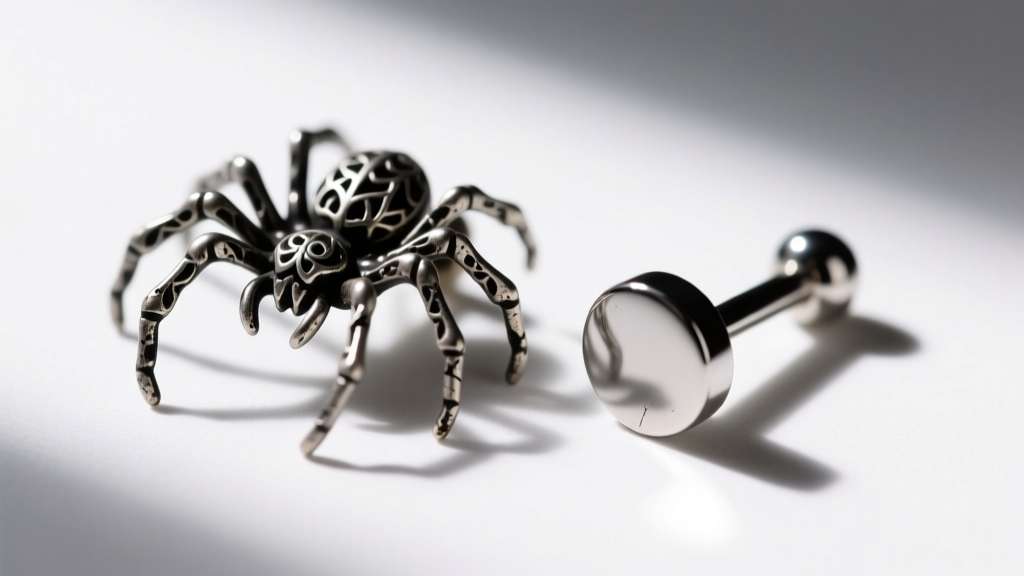
As October approaches, the market floods with seasonal jewelry, and halloween stud earrings become a staple for festive styling. From enameled pumpkins and silver-toned bats to tiny resin skulls, these novelty pieces offer immediate seasonal flair. However, from a metallurgical and structural standpoint, mass-produced seasonal earrings are a minefield of troubleshooting issues. Because they are manufactured rapidly and cheaply to meet seasonal demand, they frequently suffer from high nickel content, poorly soldered joints, and disproportionate weight distribution.
For jewelry enthusiasts and everyday wearers alike, these flaws translate into three primary problems: severe contact dermatitis, earlobe sagging (the 'cheese-cutter effect'), and catastrophic motif breakage. In this comprehensive troubleshooting guide, we will dissect the exact failure modes of novelty Halloween studs and provide professional-grade solutions to salvage, repair, or upgrade your seasonal jewelry collection.
Troubleshooting Contact Dermatitis and 'Green Ear'
The most common complaint surrounding cheap halloween stud earrings is the rapid onset of itchy, red, and flaking skin on the earlobe. This is almost always allergic contact dermatitis triggered by nickel release. Many fast-fashion seasonal earrings are cast from 'Zinc Alloy' or 'Tibetan Silver,' which are unregulated pot metals containing upwards of 15% nickel to increase hardness and lower melting points during casting.
The Nickel Threshold and EU Standards
According to the Mayo Clinic, nickel allergy is one of the most common causes of allergic contact dermatitis. The European Union's Nickel Directive strictly limits nickel release from post-assemblies to 0.5 µg/cm²/week. Independent testing of unbranded seasonal novelty studs frequently reveals release rates between 2.0 and 5.0 µg/cm²/week—up to ten times the safe limit. Furthermore, the 'green ear' phenomenon is not an infection, but a chemical reaction where copper in the base metal oxidizes with your skin's natural acids and sweat, leaving a harmless but unsightly copper chloride stain.
Quick Fixes vs. Permanent Solutions
If you are already experiencing a reaction, remove the earrings immediately and clean the lobe with a sterile saline solution. To salvage the earrings for future wear without triggering another reaction, you must create an impermeable barrier between the post and the skin.
- The Temporary Fix: Coat the earring post in three layers of clear, hypoallergenic nail polish (such as those free of tosylamide/formaldehyde resin). Allow 24 hours to cure. This buys you roughly 3 to 5 wears before the friction of insertion wears the coating away.
- The Permanent Fix: Snip off the cheap alloy post using flush cutters. Clean the back of the motif with isopropyl alcohol, and use a two-part jeweler's epoxy to attach a sterile, implant-grade titanium flat-back labret post. This completely removes the allergen from the piercing channel.
Fixing Sagging and Drooping Novelty Studs
Another major structural failure of halloween stud earrings is the 'droop.' Novelty motifs—like a 15mm wide cast-metal spider or a heavy resin ghost—are often top-heavy. When paired with the standard, flimsy 20-gauge (0.8mm) or 22-gauge (0.6mm) posts found on seasonal jewelry, the center of gravity pulls the motif downward. This not only ruins the aesthetic but causes the thin wire to act like a blade, slowly slicing through the earlobe tissue under the weight of the motif, a phenomenon piercers call the 'cheese-cutter effect.'
Upgrading Backings and Post Gauges
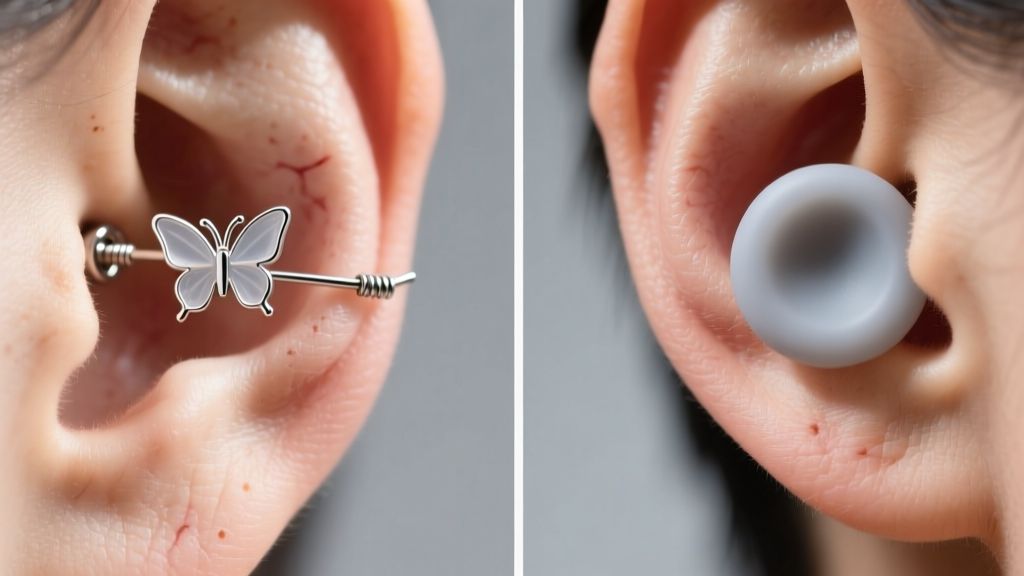
To troubleshoot sagging, you must address both the post thickness and the backing surface area. The standard 'butterfly' clutch concentrates all the weight onto a 2mm point on the back of the earlobe, causing immense localized pressure.
| Backing Type | Surface Area | Weight Distribution | Best For |
|---|---|---|---|
| Standard Butterfly Clutch | ~3 mm² | Poor (High Pressure) | Lightweight, tiny 4mm studs |
| Silicone Disc Backing | ~50 mm² | Good (Dispersed) | Medium-weight novelty motifs |
| Flat-Back Labret (Threadless) | ~28 mm² | Excellent (Flush) | Heavy cast metals, wide motifs |
If your Halloween studs feature heavy motifs, discard the butterfly backs entirely. Upgrade to 10mm or 12mm wide silicone friction discs. If the post is too thin to hold the disc securely, the ultimate troubleshooting step is to have a jeweler laser-weld an 18-gauge (1.0mm) or 16-gauge (1.2mm) titanium post to the motif, providing the structural rigidity required to keep the earring sitting flush and forward-facing on the lobe.
Repairing Broken Solder Joints on Cast Motifs
It is incredibly common to take a seasonal stud out of its packaging only to find the motif has already snapped off the post, or for it to break after a single night of wear. This happens because mass manufacturers use low-temperature, lead-free tin solder to attach the post to the cast motif. Tin solder has very low shear strength and cannot withstand the lateral torque applied when pushing a butterfly backing onto the post.
Why Epoxy Fails and Laser Welding Succeeds
Many consumers attempt to fix broken halloween stud earrings using household superglue or standard epoxy. This is a temporary failure. The surface area where a 1mm post meets a flat cast back is too small for chemical adhesives to hold against rotational torque. Furthermore, the oils from the casting process often prevent proper adhesive bonding.
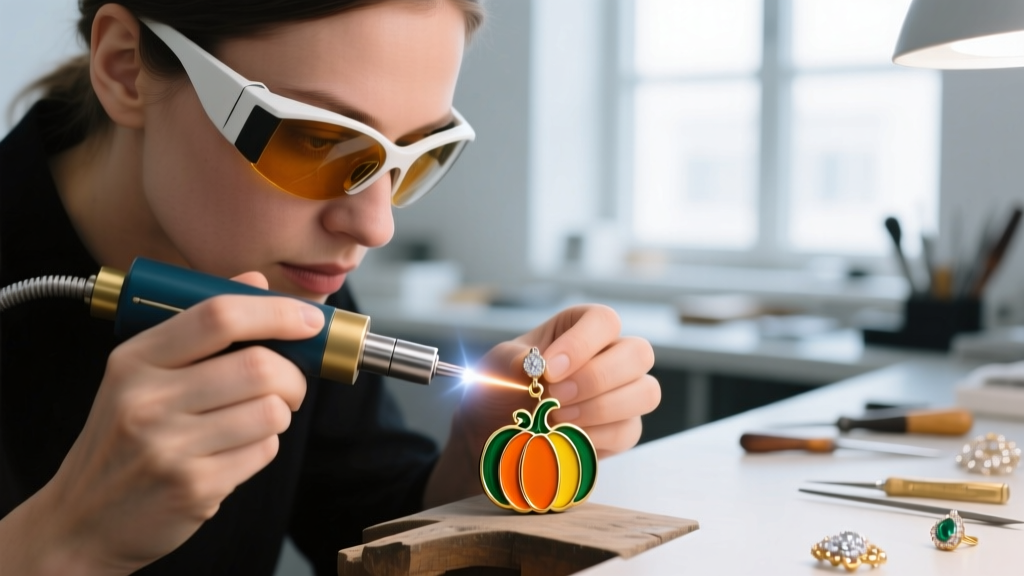
The professional troubleshooting method is laser welding. A jeweler will use a pulsed Nd:YAG laser to melt a microscopic amount of filler wire (matching the base metal) directly into the joint. Laser welding creates a metallurgical bond that is often stronger than the original casting itself, without applying the widespread heat of a traditional jeweler's torch, which would melt the cheap enamel paint or resin details commonly found on Halloween motifs.
Sourcing Hypoallergenic Halloween Studs for the Future
If you are tired of troubleshooting broken and irritating seasonal jewelry, the market has finally begun to adapt. As we move through 2026, several independent jewelers and specialized body jewelry brands have started releasing seasonal collections that adhere to professional piercing standards. When shopping for high-quality halloween stud earrings, look for the following material certifications:
- ASTM F136 Implant-Grade Titanium: The gold standard for body jewelry. It contains zero nickel and is highly resistant to corrosion. The Association of Professional Piercers (APP) highly recommends this for all fresh and sensitive piercings.
- Niobium: A highly malleable, nickel-free reactive metal that can be anodized to create vibrant, permanent colors (like deep purples, blood reds, and toxic greens) without the use of irritating chemical paints or enamels.
- Solid 14k or 18k Gold (Nickel-Free Alloyed): Ensure the gold is alloyed with silver or palladium, not nickel, which is sometimes used in lower-quality white gold castings.
Final Troubleshooting Checklist
Before wearing any novelty or seasonal earrings, run them through this quick diagnostic checklist to save your earlobes from unnecessary trauma:
- The Magnet Test: Bring a strong neodymium magnet near the post. If it sticks strongly, the post contains high levels of ferromagnetic metals (like cheap stainless steel or iron) and is highly likely to contain nickel. Discard or replace the post.
- The Weight Test: Balance the earring on your finger. If the motif heavily outweighs the post, immediately swap the backing for a wide silicone disc to prevent lobe sagging.
- The Joint Inspection: Look closely at where the post meets the motif. If you see a dull, silvery ring of cheap solder, handle the backing with extreme care to avoid snapping the joint, or take it to a professional for laser reinforcement.
By understanding the metallurgy and structural physics behind your seasonal accessories, you can enjoy the festive aesthetics of October without sacrificing the health and comfort of your piercings.


