How to Fix, Clean & Style Heavy Christmas Ornament Earrings
Troubleshoot heavy Christmas ornament earrings with expert tips on lobe support, post upgrades, and weight distribution for pain-free holiday styling.

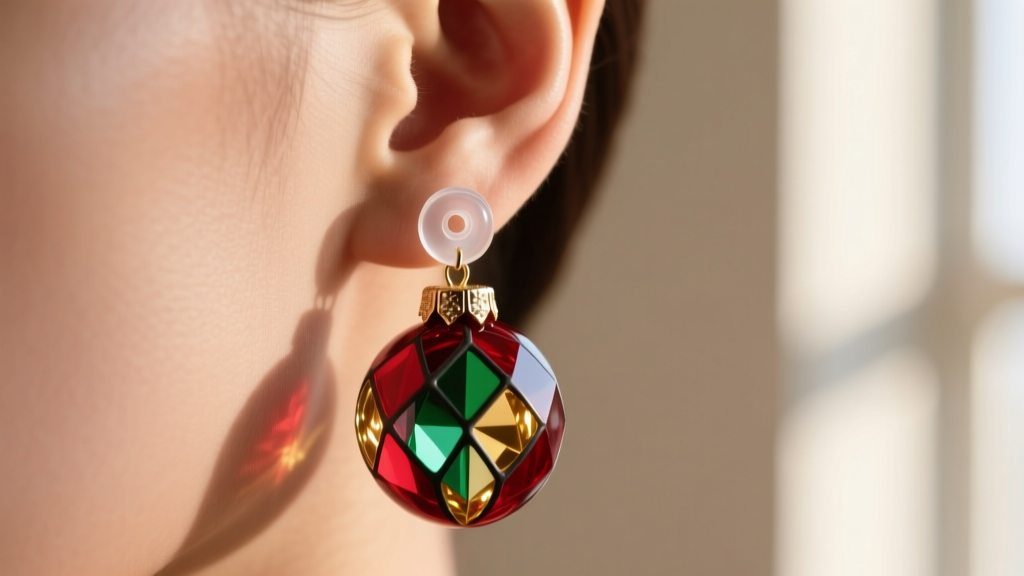
Christmas ornament earrings are a staple of holiday styling, offering a festive touch that ranges from miniature glass baubles to intricate metal filigree snowflakes. However, from a structural and anatomical perspective, these seasonal pieces are often poorly engineered for long-term wear. The primary issue? Weight distribution. While a standard earlobe piercing can comfortably support everyday studs weighing 2 to 4 grams, many decorative holiday earrings easily exceed 12 to 18 grams. This excessive weight acts as a lever against the fistula tract, leading to micro-tears, lobe sagging, and severe discomfort.
In this comprehensive troubleshooting guide, we will break down the mechanical failures of heavy holiday jewelry and provide actionable, expert-level solutions to reinforce your piercings, upgrade cheap hardware, and protect your skin from winter-induced allergic reactions.
The Physics of Lobe Sagging and Fistula Migration
When you insert a heavy glass or resin Christmas ornament earring into a standard 20-gauge (0.81mm) piercing, gravity pulls the decorative face downward. Because the post acts as a fulcrum, the bottom of the fistula tract bears the brunt of the pressure. Over the course of an 8-hour holiday party, this continuous tension restricts localized blood flow and causes the tissue to stretch. Repeatedly wearing heavy holiday earrings without support can lead to permanent fistula migration, where the piercing hole slowly elongates downward toward the edge of the earlobe.
Calculating the Weight Threshold
Most professional piercers recommend keeping daily-wear earrings under 7 grams to prevent tissue fatigue. To determine if your Christmas ornament earrings are safe, use a digital kitchen or jewelry scale. If a single earring weighs more than 10 grams, you must employ structural support methods before wearing them for extended periods.
Troubleshooting Sagging: The Support Patch Method
If your holiday earrings are front-heavy and droop awkwardly, the most effective, non-invasive solution is the use of invisible earring support patches. These are small, medical-grade silicone or hydrocolloid adhesives that distribute the weight of the earring across a wider surface area of the earlobe, rather than concentrating it on the piercing hole.
Step-by-Step Application for Heavy Baubles
- Cleanse the Area: Wipe the back of your earlobe with an alcohol prep pad to remove natural sebum and lotions. Allow it to dry completely; adhesive will fail on oily skin.
- Apply the Patch: Peel the support patch and align the pre-punched hole with your piercing. Press firmly for 15 seconds to activate the cyanoacrylate-based adhesive.
- Wait Before Piercing: Allow the patch to set for 5 to 10 minutes before pushing the earring post through. This prevents the adhesive from tearing away from the skin.
- Secure the Backing: Use a wide, flat silicone earring back rather than a standard metal butterfly clutch. The flat surface grips the patch securely and prevents the heavy ornament from tilting forward.
Fixing Cheap Hardware: Post Upgrades and Allergy Prevention
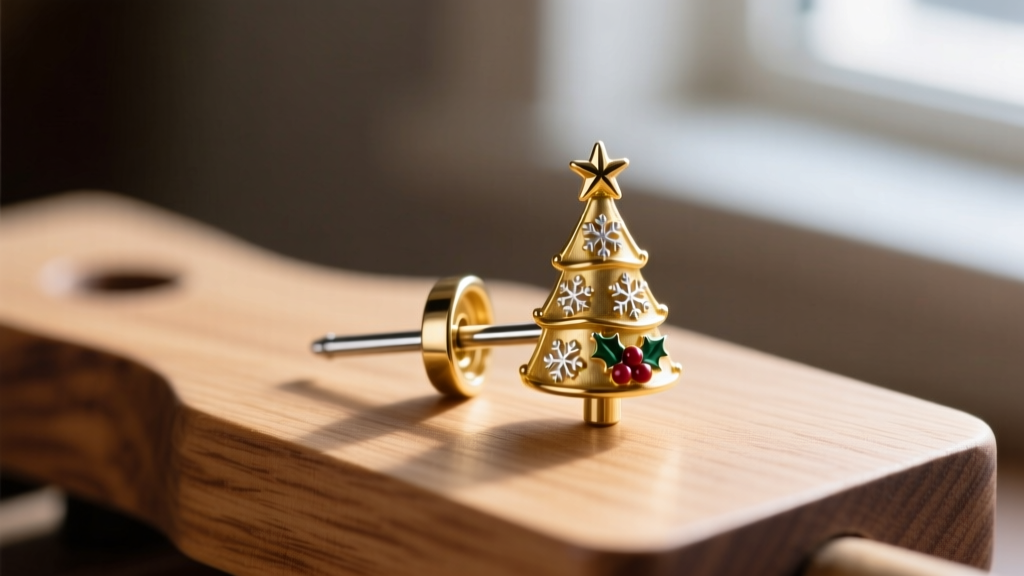
Many mass-produced Christmas ornament earrings utilize cheap base metals for their posts and caps. These are typically 22-gauge or 24-gauge brass or copper alloys plated with a microscopically thin layer of gold or silver. This creates two major problems: the posts bend under the weight of the ornament, and the exposed base metals cause severe contact dermatitis.
The 'Green Ear' Oxidation Problem
When copper-heavy base metals are exposed to the natural acidity of your skin, combined with winter sweat and indoor heating, they oxidize rapidly. This leaves a stubborn green or black residue on your earlobe. According to the American Academy of Dermatology, nickel and copper are leading culprits for allergic contact dermatitis, which can cause the fistula to swell, weep, and reject the jewelry entirely.
Upgrading to Implant-Grade Titanium
To permanently fix bent posts and allergic reactions, you can swap the cheap hardware for high-quality components. The Association of Professional Piercers (APP) strongly recommends ASTM F136 implant-grade titanium for sensitive piercings. Because titanium is entirely nickel-free and highly resistant to corrosion, it eliminates the risk of oxidation and allergic flare-ups.
How to execute the swap: If the ornament cap is attached via a tiny jump ring, use two pairs of flat-nose jewelry pliers to twist the ring open, remove the cheap post, and attach an 18-gauge (1.02mm) titanium flat-back labret post. The thicker 18G gauge provides the necessary rigidity to hold a 15-gram glass ornament perfectly straight without bending.
Holiday Earring Troubleshooting Matrix
| Common Issue | Root Cause | Expert Fix | Estimated Cost |
|---|---|---|---|
| Lobe Drooping / Pain | Ornament exceeds 10g; 20G post acts as lever | Apply silicone support patches; use flat-back silicone O-rings | $8 - $15 |
| Green/Black Skin Stain | Copper oxidation from cheap base-metal caps | Coat cap with clear polyurethane nail polish; upgrade to PVD titanium | $2 - $25 |
| Post Bending / Snapping | 22G or 24G brass wire lacks structural integrity | Replace with 18G ASTM F136 titanium wire or labret post | $15 - $30 |
| Snagging on Winter Scarves | Sharp filigree edges or long drop chains | Convert to stud-style using a jump ring; apply clear resin coating | $5 - $10 |
Preventing Snags with Winter Wardrobes
Christmas ornament earrings featuring intricate metal filigree, dangling chains, or sharp resin points are notorious for catching on chunky knit wool scarves and winter coats. A sudden snag can easily tear the earlobe or bend the earring beyond repair.

The Clearance Rule and Resin Coating
When styling holiday earrings with winter layers, adhere to the 'One-Inch Clearance Rule.' The decorative face of the earring should not extend more than one inch below the bottom of the earlobe. If your favorite vintage glass baubles are too long, have a local jeweler shorten the connecting chain or wire.
For sharp metal snowflakes or stars, you can blunt the microscopic sharp edges by applying a thin coat of clear, UV-cured jewelry resin or even a layer of clear topcoat nail polish to the points. This creates a smooth, rounded barrier that allows wool and cashmere fabrics to glide past the earring rather than catching on the metal prongs.
Cleaning and Storing Delicate Holiday Pieces
Proper maintenance of Christmas ornament earrings is crucial, especially when dealing with mixed materials like glass glued to metal, or painted resin. Submerging these pieces in commercial silver dips or ultrasonic cleaners will dissolve the industrial adhesives holding the ornament to the post, ruining the piece instantly.
Targeted Cleaning Protocol
- For Glass Baubles with Metal Caps: Use a dry, untreated microfiber cloth to buff the glass. For the metal cap, apply a tiny amount of silver polishing paste to a cotton swab, carefully avoiding the glue joint where the cap meets the glass. Wipe away residue immediately with a damp cloth.
- For Painted Resin Ornaments: Never use alcohol-based cleaners, as they will strip the holiday paint and clear-coat finishes. Clean only with a slightly damp microfiber cloth and a drop of mild, pH-neutral dish soap.
- Storage: Store heavy holiday earrings individually in soft flannel pouches. Storing them loosely in a jewelry box allows the heavy glass or metal pieces to collide, resulting in chipped glass, scratched resin, and bent titanium posts.
By understanding the structural limitations of your piercings and upgrading the hardware of your festive jewelry, you can wear even the heaviest, most elaborate Christmas ornament earrings comfortably and safely throughout the entire holiday season.


