Troubleshooting Black Pearls Earrings: Fakes, Care & Fit
Expert troubleshooting for black pearls earrings: learn to spot dyed fakes, prevent peeling nacre, and select secure hardware for heavy Tahitian drops.

The Authenticity Crisis: Tahitian vs. Dyed Freshwater
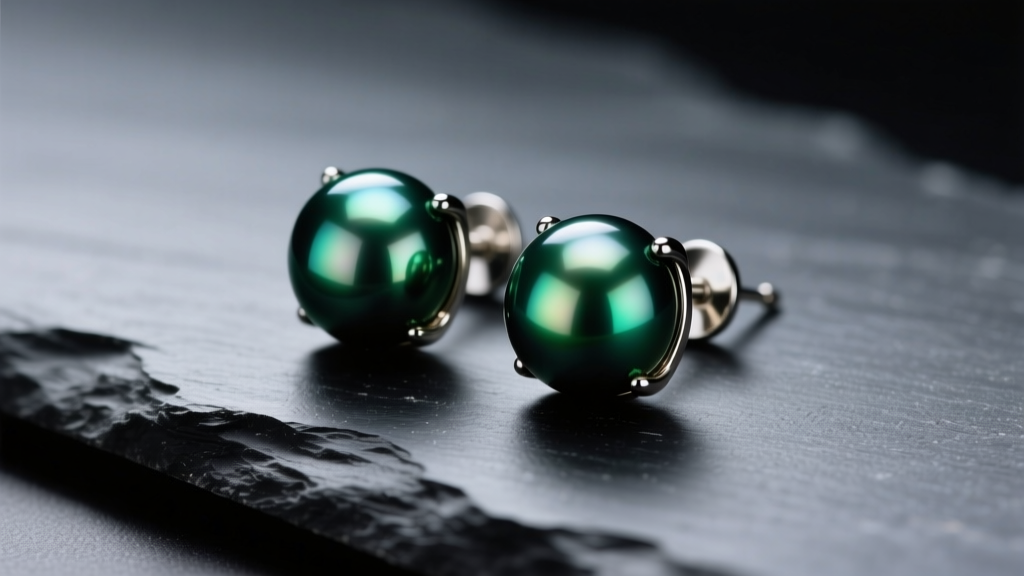
The market for black pearls earrings is currently saturated with misleading listings. As of 2026, e-commerce platforms are flooded with uniformly dark, perfectly round pearls priced under $150, often marketed as 'Tahitian.' In reality, genuine Tahitian pearls, produced by the Pinctada margaritifera oyster in French Polynesia and the Cook Islands, rarely sell for less than $300 per pair for commercial-grade matching. The vast majority of affordable black pearls are actually dyed freshwater pearls. Troubleshooting this authenticity gap is the first step in protecting your jewelry investment.
Visual Diagnostics: The Drill Hole and Overtone Test
To authenticate your black pearls earrings, you need a 10x jeweler's loupe and a good light source. Genuine Tahitian pearls derive their color from natural organic pigments within the nacre layers. They are rarely flat black; instead, they exhibit complex overtones like peacock (green-purple), aubergine (deep purple), or pistachio (green-yellow). Dyed freshwater pearls, conversely, often appear flat, inky, and overly uniform.
Inspect the drill hole closely. According to the Gemological Institute of America (GIA), dye concentration is a primary indicator of treatment. If you see dark, concentrated rings of color pooling inside the drill hole or along surface micro-crevices, the pearl has been artificially colored. Furthermore, the 'tooth test' can help: gently rub the pearl against the edge of your front tooth. Genuine nacre feels slightly gritty or sandy due to microscopic aragonite crystals, while heavily dyed or coated imitation pearls often feel unnaturally smooth or plasticky.
Troubleshooting Nacre Damage: Peeling, Chalking, and Dulling
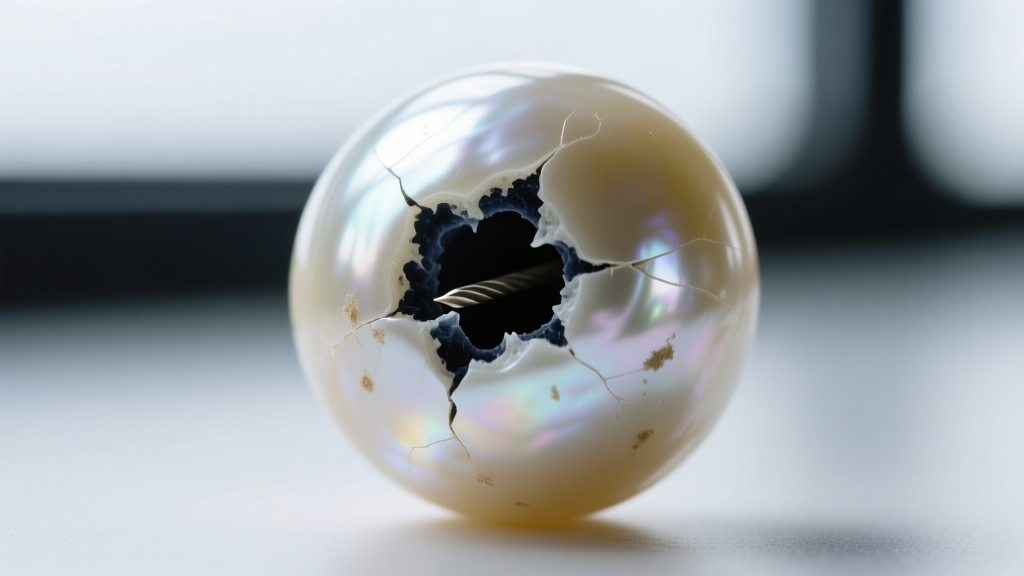
Pearls are organic gemstones composed of calcium carbonate (aragonite) held together by an organic protein called conchiolin. This structure makes them exceptionally vulnerable, ranking only 2.5 to 4.5 on the Mohs hardness scale. If your black pearls earrings are losing their luster, chalking, or peeling, environmental and chemical exposure is almost always the culprit.
| Symptom | Primary Cause | Troubleshooting & Prevention |
|---|---|---|
| Nacre Peeling | Extreme dehydration or physical impact causing layer separation. | Peeling cannot be reversed. The pearl must be replaced. Store with a damp cloth in extreme dry climates. |
| Chalking / Dulling | Acidic sweat, perfumes, and hairspray dissolving the calcium carbonate surface. | Wipe with a damp microfiber cloth after every wear. Never use ultrasonic cleaners or steamers. |
| Surface Pitting | Exposure to harsh chemicals like chlorine in pools or household bleach. | Remove earrings before swimming or cleaning. Pitting is permanent; consult a jeweler for re-polishing if nacre is thick enough. |
It is critical to understand that once the nacre is compromised, no amount of 'pearl polish' will restore it. Commercial polishes often contain mild abrasives that will strip the remaining nacre down to the shell bead nucleus, completely ruining the earring. For deep cleaning, use only a drop of mild, phosphate-free dish soap in distilled water, and dry immediately with a lint-free cloth. For more on organic gemstone care, refer to the Pearl Paradise Education Guide.
Hardware Failures: Supporting Heavy Tahitian Drops
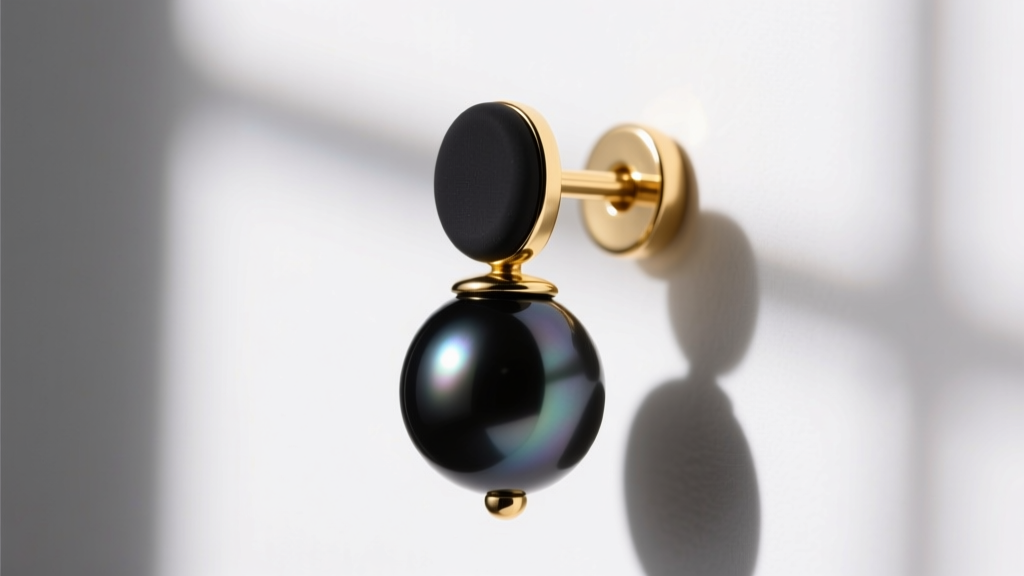
A frequent complaint among buyers of high-quality black pearls earrings is that the studs 'droop' or point downward, failing to sit flush against the earlobe. This is rarely a flaw in the pearl itself, but rather a hardware failure caused by the density and weight of the gemstone. A premium 12mm Tahitian pearl can weigh between 1.5 and 2.5 grams. Standard earring posts are typically 20-gauge (0.81mm thick), which is simply too thin to support this weight without bending under gravity and daily movement.
Upgrading Gauge Sizes and Clutches
To troubleshoot drooping black pearl studs, you must address both the post thickness and the earring back (clutch).
- Post Gauge: Request or custom-order posts in 18-gauge (1.02mm) or 16-gauge (1.29mm). The slight increase in thickness provides exponentially more structural rigidity, keeping the heavy pearl oriented forward.
- Friction Backs: Standard metal butterfly backs offer a surface area that is too small, causing them to slip down the post and fail to support the earlobe. Upgrade to jumbo silicone friction backs, which provide a wider, grippier base against the back of the ear.
- Locking Mechanisms: For heirloom or high-value Tahitian drops, invest in La Pousette locking backs or screw-backs. These mechanisms physically lock onto a threaded or notched post, ensuring that a $2,000 pair of earrings will not fall out and get lost during daily wear.
Adhesive Breakdown: Why Your Pearl Keeps Falling Off the Post
Most black pearl drop earrings and dangles are constructed using a 'cup and peg' mounting system, where a metal peg is inserted into a drilled hole in the pearl and secured with adhesive. If your pearl frequently detaches from the metal finding, the wrong adhesive was likely used at the factory.
Many mass-market jewelers use cyanoacrylate (commonly known as Super Glue) for quick assembly. While it bonds instantly, cyanoacrylate becomes highly brittle over time and degrades when exposed to the natural oils and moisture of human skin. When the glue shatters, the pearl slides right off the peg.
The Two-Part Epoxy Repair Protocol
To permanently fix a loose black pearl earring, you must clean the old adhesive and re-set it using a flexible, jewelry-grade two-part epoxy. Here is the professional troubleshooting method:
- Remove Old Glue: Carefully pick out the brittle cyanoacrylate from the pearl's drill hole using a wooden toothpick or a soft brass pin. Never use a steel needle, as it can scratch the delicate inner nacre.
- Degrease: Wipe the metal peg and the inside of the drill hole with a cotton swab lightly dampened with isopropyl alcohol to remove skin oils. Let it dry completely.
- Mix Epoxy: Use a slow-setting, two-part jeweler's epoxy (such as Epoxy 330). Slow-setting epoxies cure with a slight flexibility, allowing the bond to absorb minor shocks without snapping.
- Set and Cure: Apply a microscopic amount of epoxy to the peg, insert it into the pearl, and wipe away any excess immediately. Prop the earring upright in a small cup of sand or rice so gravity keeps the pearl seated against the metal cup while it cures for 24 hours.
By understanding the specific biological and structural vulnerabilities of black pearls, you can effectively troubleshoot authenticity, prevent irreversible nacre damage, and ensure your hardware is engineered to support the unique weight and beauty of these oceanic gems.


