Roxanne Assoulin Earrings UK: The Ultimate Care & Cleaning Guide
Discover expert care, cleaning, and maintenance tips for your Roxanne Assoulin earrings in the UK. Protect enamel, plating, and beads from hard water.

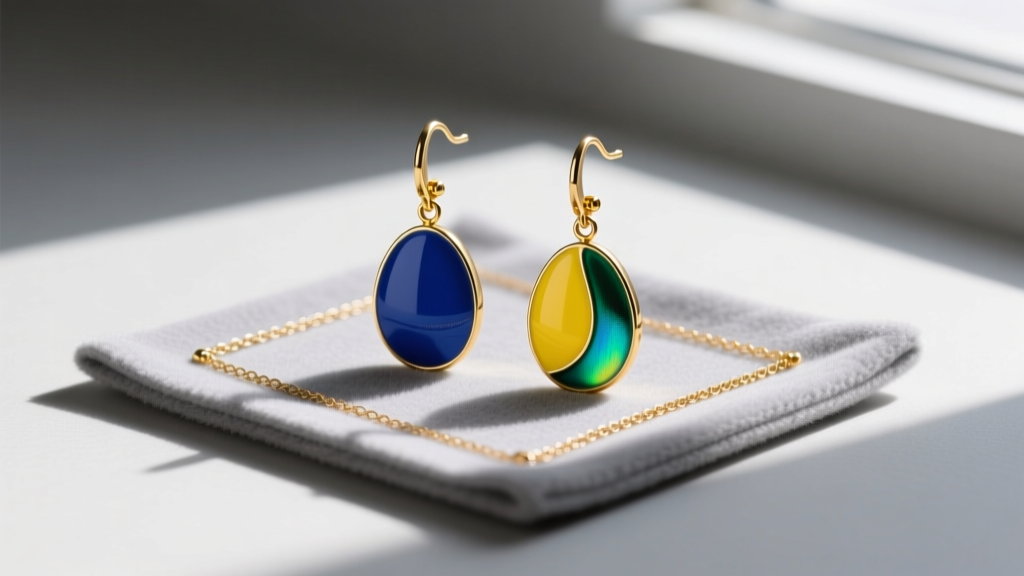
Roxanne Assoulin’s jewelry is globally iconic for its playful motifs, vibrant vitreous enamel, and intricate Czech glass beadwork. However, maintaining these statement pieces requires far more than a quick wipe-down with a generic polishing cloth. As of 2026, the secondary and primary market for Roxanne Assoulin earrings UK-wide has surged, with collectors sourcing rare colorways and vintage initial studs from global retailers. Yet, many owners inadvertently damage their pieces by treating them like solid gold or platinum. For owners of Roxanne Assoulin earrings, UK-based collectors must adapt their cleaning routines to combat local environmental factors, particularly hard water and high humidity. This comprehensive guide provides a masterclass in preserving the structural integrity, plating thickness, and visual brilliance of your RA earrings.
The Anatomy of Roxanne Assoulin Earrings
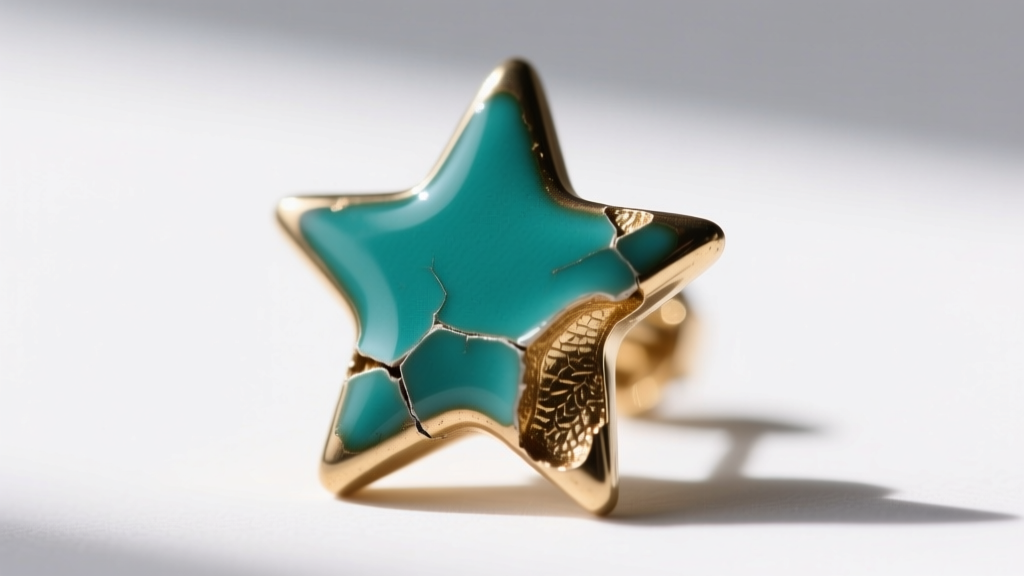
To clean jewelry effectively, you must first understand its material science. Roxanne Assoulin earrings are predominantly crafted from a brass base metal, heavily plated in 14k gold or silver, and adorned with vitreous enamel or glass beads. Vitreous enamel is essentially fused silica (glass) that is kiln-fired onto the metal. While it boasts a Mohs hardness of around 5 to 6—making it resistant to light scratching—it is inherently brittle. A simple drop onto a marble bathroom counter can cause 'spalling,' where the enamel chips away to reveal the raw brass beneath.
Furthermore, the brand frequently utilizes sterling silver for the earring posts (the part that pierces the ear) to ensure hypoallergenic wear, while the decorative front remains gold-plated brass. According to the Gemological Institute of America (GIA), enamel requires entirely different care protocols than porous gemstones or solid precious metals. Using harsh chemical dips designed for silver will instantly strip the gold plating from the brass base and cloud the enamel finish.
The UK Hard Water Problem: Why Tap Water is the Enemy
One of the most overlooked threats to jewelry in the United Kingdom is the local water profile. Much of England, particularly London and the South East, has 'hard' to 'very hard' water, meaning it is heavily saturated with dissolved calcium and magnesium ions. When you rinse your Roxanne Assoulin earrings under the tap after cleaning, the water evaporates and leaves behind microscopic limescale deposits.
On a matte or high-polish gold-plated surface, these mineral deposits manifest as a stubborn, cloudy white film that mimics tarnish. More dangerously, these minerals can accumulate in the crevices of the earring clutch backs and post hinges, causing mechanical friction that wears away the gold plating prematurely. To combat this, UK collectors must exclusively use distilled water or cooled, boiled water (which reduces temporary hardness) when cleaning their pieces. Never use ultrasonic cleaners; the high-frequency cavitation bubbles will shatter the glass beads and fracture the vitreous enamel.
The 4-Step Cleaning Protocol for Enamel and Plated Brass
Forget commercial jewelry dips and abrasive pastes. Follow this precise, conservation-grade protocol to safely remove sebum, cosmetic residue, and environmental dust from your earrings.
- Dry Dusting: Before introducing any moisture, use a clean, ultra-soft makeup brush (like a goat-hair blending brush) to sweep away loose dust and dried skin cells from the beadwork and enamel grooves. This prevents scratching during the wet wash.
- The Distilled Water Bath: Mix three drops of pH-neutral, lotion-free dish soap (such as original Fairy Liquid) into a small bowl of lukewarm distilled water. Submerge the earrings for no more than 60 seconds to loosen oils.
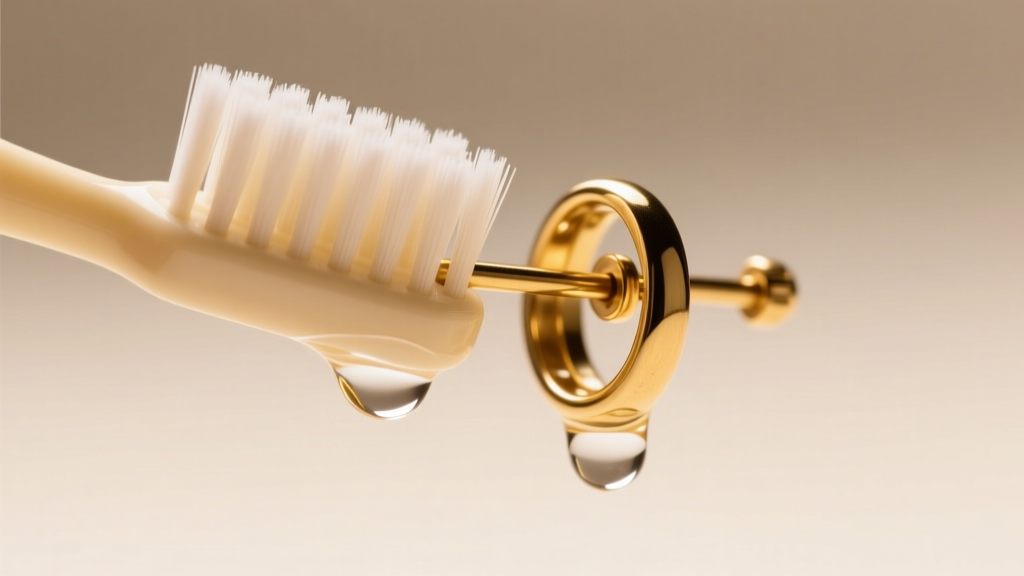
- Targeted Agitation: Use a baby toothbrush with ultra-soft bristles to gently agitate the earring post and the back of the decorative face. Never scrub the front enamel or glass beads with bristles; the friction can create micro-scratches on the glass surface over time.
- Rinsing and Drying: Rinse briefly under a slow stream of distilled water. Immediately pat dry with a lint-free microfibre cloth, then use a hairdryer on the 'cool' setting to blow moisture out of the post crevices. Air-drying is strictly prohibited, as it invites water spots and brass oxidation.
The Chemistry of Brass Oxidation and Plating Wear
Why do some earrings turn your skin green, while others do not? The answer lies in the chemistry of the brass base metal. Brass is an alloy of copper and zinc. When the 14k gold plating on a Roxanne Assoulin earring begins to wear thin—often accelerated by the acidic pH of human sweat or the frequent application of perfume—the underlying copper is exposed to oxygen and chlorides.
This reaction forms copper chloride, a green compound that transfers directly to your earlobes. While harmless, it is highly undesirable. The British Association of Dermatologists notes that prolonged exposure to oxidizing base metals can also trigger irritant contact dermatitis in sensitive individuals. If you notice the gold plating thinning on the back of your RA studs, apply a microscopic layer of clear, flexible nail polish to the brass contact points to create a temporary moisture barrier until you can seek professional re-plating.
Troubleshooting Common Wear and Tear
Even with meticulous care, daily wear introduces specific challenges. Use this diagnostic table to identify and resolve common issues without causing further damage to your pieces.
| Issue | Root Cause | Actionable Solution |
|---|---|---|
| White, crusty buildup on posts | Hard water minerals mixing with natural ear sebum. | Soak a cotton swab in distilled white vinegar and apply strictly to the metal post. Avoid all contact with enamel. Wipe clean with distilled water. |
| Dull, cloudy glass beads | Hairspray, perfume, or sunscreen residue bonding to the glass. | Dampen a microfibre cloth with 70% isopropyl alcohol and gently buff the glass beads only. Keep alcohol away from the gold plating. |
| Chipped or spalled enamel | Impact damage from dropping on hard surfaces. | Do not attempt DIY resin fills. Store the piece safely and consult a specialist enamel restorer. Avoid wearing chipped pieces as moisture will rust the exposed brass. |
| Loose Czech glass beads | Adhesive degradation due to heat or chemical exposure. | Stop wearing immediately to prevent bead loss. Take to a professional jeweler for re-setting using jewelry-grade epoxy. |
Strategic Storage: Beating British Humidity
The UK’s damp climate, particularly during the autumn and winter months, creates an environment ripe for metal oxidation. Storing your Roxanne Assoulin earrings in an open jewelry box on a bathroom vanity is a guarantee of premature tarnishing. Proper storage is just as critical as the cleaning process itself.
- Micro-Climates: Store each pair of earrings in its own individual polyethylene ziplock bag. Polyethylene is chemically inert and will not react with the gold plating or emit sulfur gases like some cheap plastics do.
- Moisture Absorption: Drop a small, fresh silica gel packet into your main jewelry drawer or safe to actively pull ambient humidity out of the air.
- Anti-Tarnish Strips: Place 3M anti-tarnish strips inside your storage containers. These strips absorb airborne sulfur compounds and hydrogen sulfide before they can react with the silver posts or brass bases. Replace these strips every six months.
- Friction Prevention: Never toss multiple pairs into a single velvet pouch. The glass beads on one pair can easily scratch the enamel on another. Use a compartmentalized jewelry roll with soft, lint-free dividers.
Expert Insight: 'The longevity of gold-plated brass jewelry is entirely dictated by how it is treated when it is not being worn. Removing your earrings before swimming, showering, or applying skincare is the single most effective way to preserve the factory plating thickness.' — Master Jewelry Conservator
By understanding the unique material composition of Roxanne Assoulin designs and adapting your maintenance routine to counteract the UK's specific environmental challenges, you can ensure your vibrant enamel and gleaming gold-plated pieces remain in pristine, gallery-ready condition for decades to come.


