London Blue Topaz Earring Guide: Gemology & Metal Pairings
Discover the gemological science behind the London blue topaz earring. Learn about irradiation treatments, ideal metal pairings, and setting security.

The Gemological Science of London Blue Topaz
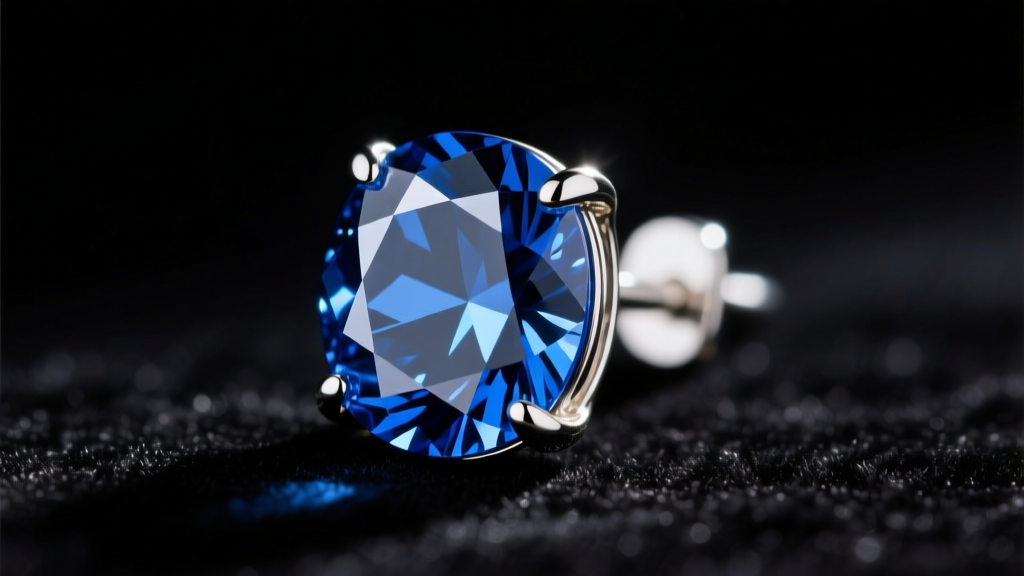
When evaluating a London blue topaz earring, understanding the gemological origin of its color is paramount. Unlike naturally occurring blue gemstones like aquamarine or sapphire, the deep, inky blue hue of London blue topaz is the result of sophisticated human intervention. According to the Gemological Institute of America (GIA), colorless topaz is subjected to a two-step irradiation process—typically combining electron beam and gamma ray treatments—followed by a precise heating protocol to stabilize the color centers within the crystal lattice.
This specific combination of treatments yields the signature London blue: a dark, saturated blue with slight grayish or greenish secondary modifiers. Because the starting material is usually flawless colorless topaz, the resulting gem is virtually eye-clean. However, as a buyer or collector in 2026, you must ensure that retailers comply with the FTC Jewelry Guides, which mandate full disclosure of any irradiation or heat treatments applied to gemstones.
Treatment & Color Comparison Chart
| Topaz Variety | Color Profile | Treatment Method | Avg. Price per Carat (Calibrated) |
|---|---|---|---|
| Sky Blue | Light, pastel blue | Gamma ray irradiation | $5 - $10 |
| Swiss Blue | Vivid, medium-light blue | Electron beam + heat | $8 - $15 |
| London Blue | Deep, inky blue with gray/green undertones | Electron beam + gamma ray + heat | $12 - $25 |
Structural Integrity: Cleavage Planes and Setting Engineering
The most critical technical factor when designing or purchasing a London blue topaz earring is the stone's cleavage. Topaz possesses perfect basal cleavage along the (001) plane. This means that a sharp impact parallel to the base of the crystal can cause the stone to split cleanly in half. This structural vulnerability heavily dictates the appropriate setting style for daily-wear earrings.
Prong vs. Bezel: Mitigating Fracture Risk
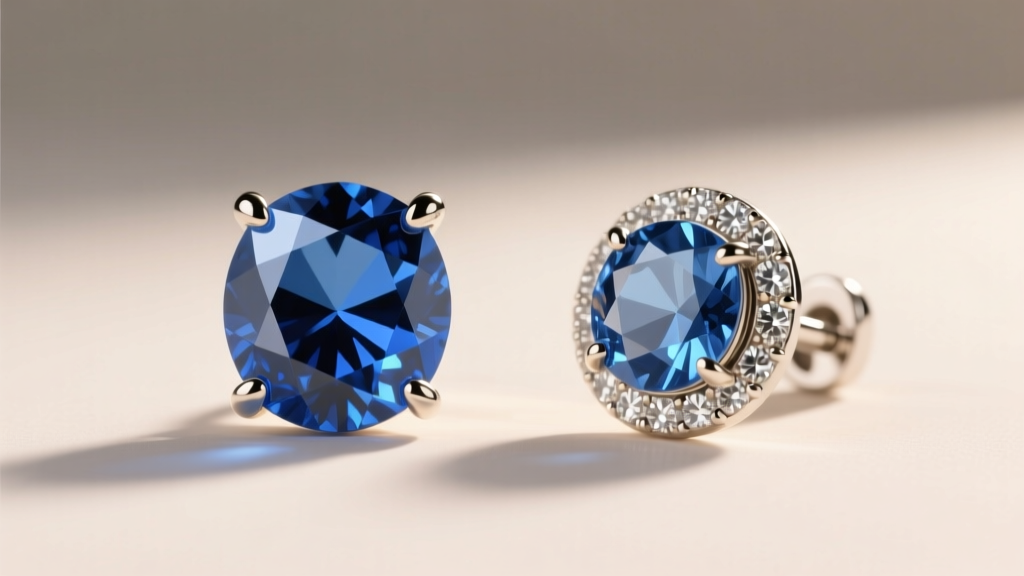
For stud earrings, standard four-prong or six-prong settings are generally safe, provided the prongs are thick enough (minimum 0.4mm wire gauge) to absorb lateral shocks. However, for dangle or drop earrings, which are prone to swinging and striking surfaces, a bezel or V-prong setting is highly recommended.
- V-Prongs: Essential for pear, marquise, or trillion cuts. The V-prong cups the sharp, vulnerable points of the stone, preventing direct impact on the cleavage planes.
- Full Bezel: Offers maximum protection by encircling the entire girdle. While it slightly reduces light entry from the crown, a well-proportioned London blue topaz with a checkerboard cut will maintain high brilliance even in a bezel.
- Half-Bezel: A modern compromise that protects two opposing sides of the girdle while leaving the ends open for maximum light return.
Metallurgical Pairings: Enhancing the Inky Hue
The dark saturation of London blue topaz requires careful metal selection to prevent the stone from looking "black" or "dead" in low lighting. The reflectivity and color of the precious metal alloy play a massive role in the earring's overall optical performance.
White Gold and Platinum (The Reflectivity Standard)
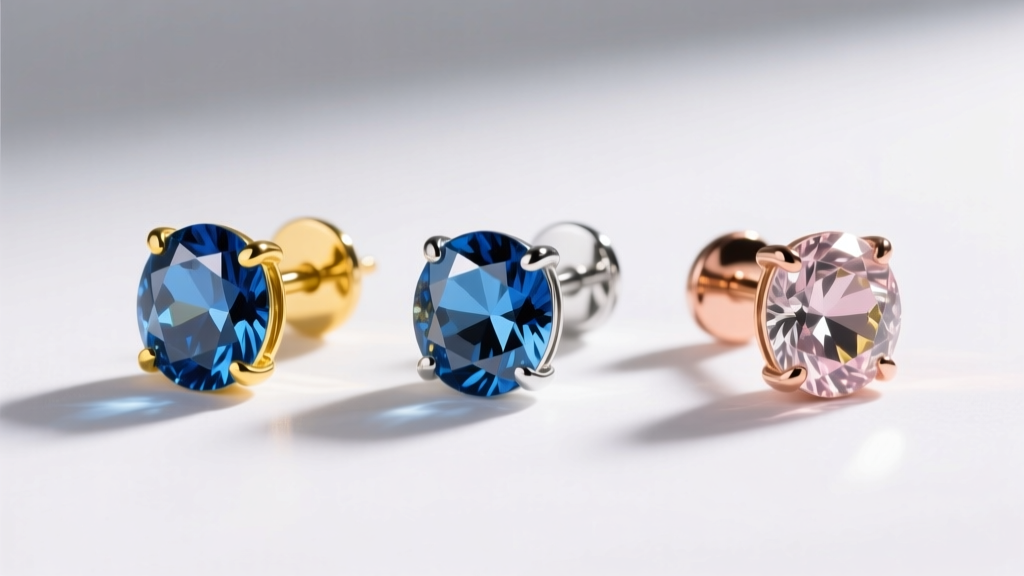
18k white gold (rhodium-plated) and 950 platinum are the industry standards for London blue topaz. The bright, mirror-like finish of these white metals acts as a secondary light source, bouncing ambient light back through the pavilion of the stone. Platinum is particularly advantageous for heavy topaz drops due to its high density and tensile strength, which prevents the earring post from bending under the stone's weight (topaz has a specific gravity of 3.53, making it notably heavier than quartz or beryl).
Yellow Gold (The High-Contrast Approach)
Pairing London blue with 14k or 18k yellow gold creates a striking complementary color contrast. The warm, rich tones of the gold alloy neutralize the grayish secondary modifiers inherent in London blue, making the primary blue hue appear warmer and more vibrant. For 2026, matte or brushed yellow gold finishes are trending, as they reduce metal glare and force the eye directly to the gemstone's internal fire.
Earring Post Gauges and Weight Distribution
A frequently overlooked technical detail in gemstone earrings is the post gauge. Because London blue topaz is often cut into large, heavily calibrated sizes (e.g., 10x8mm ovals or 12mm cushion cuts) to maximize the depth of color, the physical weight of the earring can cause standard posts to droop or bend.
Expert Specification: Standard lobe piercings accommodate 22-gauge (0.64mm) or 20-gauge (0.81mm) posts. For London blue topaz drops exceeding 4 carats per earring, insist on an 18-gauge (1.02mm) or heavy-duty 20-gauge post. Furthermore, always utilize friction-backs with a minimum 6mm diameter or secure screw-backs to distribute the weight evenly across the earlobe and prevent tearing.
Lapidary Precision: Avoiding the Extinction Effect
Because London blue topaz is naturally dark, poor lapidary work can easily result in "extinction"—areas where light fails to return to the viewer's eye, creating dead, black zones within the stone. When inspecting a London blue topaz earring, evaluate the pavilion depth.
Many commercial cutters cut the pavilion too deep to retain carat weight, which traps light and darkens the stone excessively. Conversely, a shallow cut creates a "window" in the center of the stone where light leaks out the bottom. The ideal cut for London blue is a modified brilliant or a step-cut with a shallow crown and a precisely angled pavilion (typically between 40 and 42 degrees) to ensure maximum light return without sacrificing the prized inky saturation.
Maintenance and Long-Term Care Protocols
Proper maintenance ensures the longevity of your London blue topaz earrings. According to GIA care guidelines, topaz is relatively hard (8 on the Mohs scale), but its perfect cleavage makes it highly susceptible to thermal shock and mechanical vibration.
- Avoid Ultrasonic Cleaners: The high-frequency vibrations can propagate microscopic internal fractures, eventually causing the stone to shatter.
- Steam Cleaning Risks: Sudden temperature changes can induce thermal shock. Never use a steam cleaner on irradiated topaz.
- The Safe Protocol: Use a soft-bristled brush, lukewarm water, and a mild, phosphate-free dish soap. Dry immediately with a microfiber cloth to prevent water spots on the metal settings.
By understanding the gemological treatments, structural vulnerabilities, and precise metallurgical requirements of the London blue topaz earring, you can make highly informed purchasing decisions that prioritize both aesthetic brilliance and lifelong durability.


