Keloid Pressure Earrings: The Beginner's Guide to Ear Scar Care
Discover how keloid pressure earrings work to flatten ear scars. Learn about materials, wear times, and best practices for effective piercing aftercare.

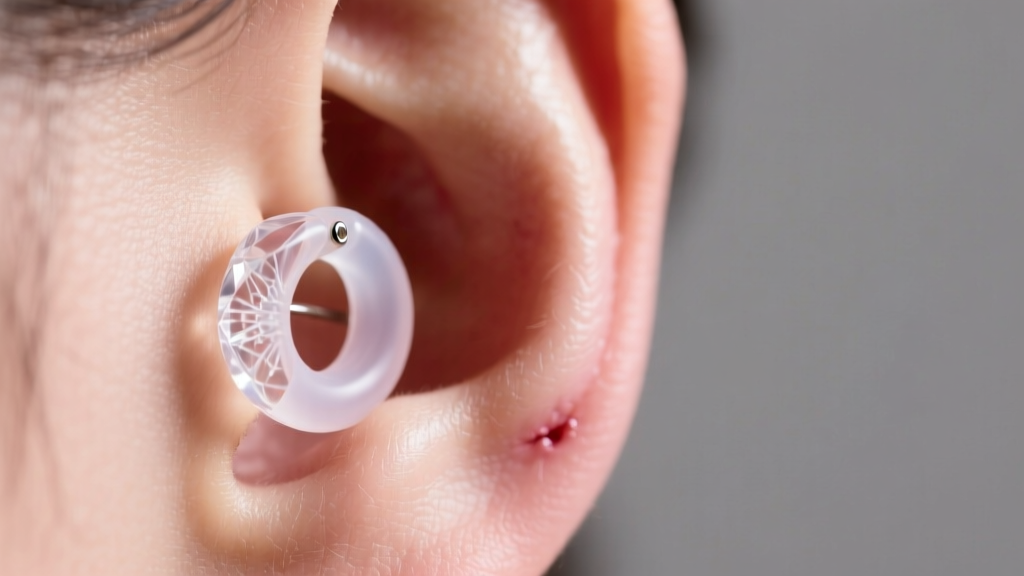
What Are Keloid Pressure Earrings?
If you have ever noticed a raised, firm, and sometimes itchy bump forming around an ear piercing, you may be dealing with a keloid or a hypertrophic scar. While hypertrophic scars stay within the boundaries of the original piercing wound, keloids are benign fibroproliferative tumors that aggressively grow beyond the initial injury site. For beginners navigating piercing aftercare or post-surgical ear recovery, keloid pressure earrings (also known as pressure therapy studs or magnetic clips) represent a non-invasive, first-line defense against these stubborn scars.
Unlike standard decorative jewelry, pressure earrings are specialized medical devices designed to apply continuous, localized mechanical force to the healing tissue. By compressing the scar, they restrict the overproduction of collagen, effectively flattening the keloid over time and preventing recurrence after surgical excision.
The Science of Pressure Therapy for Ear Scars
To understand why pressure earrings work, we have to look at the cellular level. According to the American Academy of Dermatology, pressure therapy is a gold-standard conservative treatment for keloids. The mechanism relies on mechanotransduction—the process by which cells convert mechanical stimuli into chemical signals.
- Hypoxia Induction: Applying 24 to 30 mmHg of pressure (just enough to cause tissue blanching without cutting off circulation entirely) creates localized hypoxia (low oxygen).
- Collagenase Activation: This low-oxygen environment stimulates collagenase, an enzyme that breaks down excess collagen fibers.
- Fibroblast Downregulation: Pressure decreases the activity of fibroblasts, the cells responsible for producing the thick, rubbery scar tissue characteristic of keloids.
- TGF-Beta Suppression: Continuous compression reduces the expression of Transforming Growth Factor-beta (TGF-β), a protein heavily implicated in aggressive scar formation.
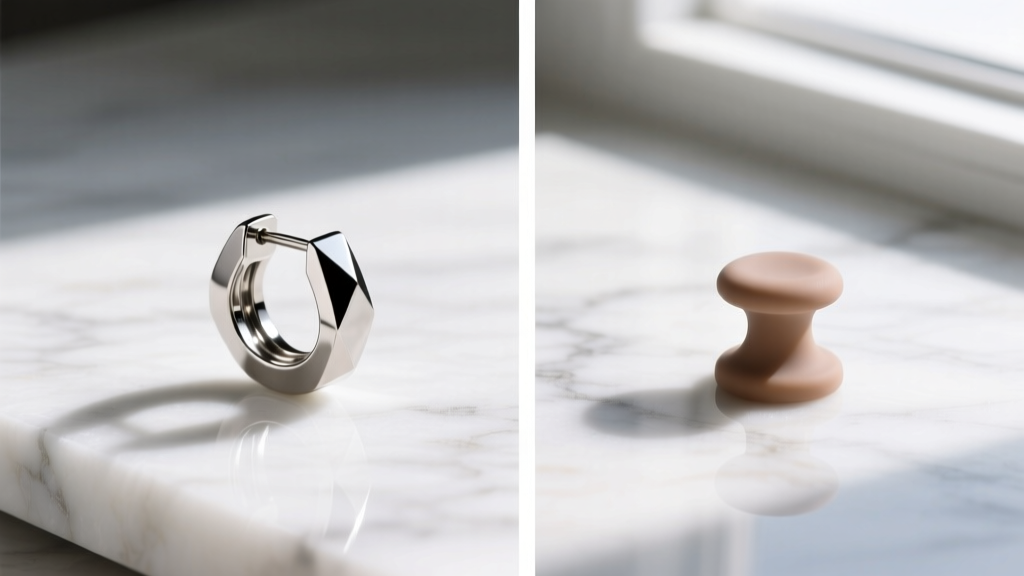
Materials Matter: What to Look For
Not all pressure earrings are created equal. Because you will be wearing them for 12 to 24 hours a day, biocompatibility and structural integrity are paramount. Here is a breakdown of the materials you will encounter on the market.
Medical-Grade Silicone
Silicone pressure discs (typically featuring a Shore A hardness of 40-50) are the most common beginner option. Silicone is highly biocompatible, flexible, and conforms to the uneven surface of a healing earlobe or cartilage ridge. Furthermore, silicone inherently hydrates the stratum corneum, which independently helps regulate fibroblast activity. However, silicone can trap sweat and sebum, requiring rigorous daily cleaning to prevent contact dermatitis or secondary bacterial infections.
Implant-Grade Titanium (ASTM F136)
For rigid, uniform pressure, titanium is the ultimate standard. You will often find titanium used in magnetic pressure earrings, where two flat titanium discs snap together over the earlobe. Titanium is entirely nickel-free, hypoallergenic, and will not degrade when exposed to saline solutions or bodily fluids. If you have a known metal allergy or are treating a fresh surgical excision site, ASTM F136 titanium is the only metal you should consider.
PTFE (Teflon) Coatings
Some high-end magnetic pressure earrings feature a PTFE coating over neodymium magnets. PTFE provides an ultra-low friction surface that prevents the jewelry from sticking to weeping or crusting wounds, making it an excellent choice for the first few weeks of post-operative scar management.
Comparison Chart: Pressure Earring Types
Choosing the right mechanism depends on your piercing status, pain tolerance, and the location of the scar. Use this table to identify the best option for your specific needs.
| Type | Pressure Mechanism | Best For | Pros | Cons | Price Range |
|---|---|---|---|---|---|
| Silicone O-Rings / Discs | Friction fit on a standard earring post | Active piercings with minor hypertrophic bumps | Cheap, comfortable, conforms to tissue | Can trap moisture; pressure is hard to calibrate | $10 - $25 |
| Magnetic Titanium Studs | Neodymium magnets encased in titanium | Closed excision scars, unpierced earlobes | Highly calibrated pressure, easy to remove | Can slip if earlobe is thin; magnets may weaken over years | $45 - $90 |
| Screw-Back Pressure Studs | Threaded post with an adjustable backing plate | Cartilage keloids, thick earlobe scars | Exact pressure control, extremely secure | Difficult to put on one-handed; threads can harbor bacteria | $60 - $120 |
| Clip-On Pressure Cuffs | Spring-loaded tension cuff (no hole required) | Helix or ear rim keloids | No piercing needed, targets outer cartilage | Can cause tension headaches if worn too long | $30 - $75 |
How to Wear Them: A Step-by-Step Protocol
According to the American Society for Dermatologic Surgery, consistency is the single most important factor in pressure therapy success. Wearing your pressure earrings for a few hours a day will yield zero results. Here is the clinical protocol adapted for at-home use.
Gauge Size and Piercing Compatibility
If you are using a post-style pressure earring (like a screw-back or silicone disc on a barbell), ensure the gauge matches your existing piercing to avoid tearing. Standard earlobe piercings are usually 18G or 16G, while cartilage is often 16G or 14G. If you are treating a surgically removed keloid where the piercing hole was closed, you must use magnetic or clip-on styles that do not require a fistula (piercing hole).
Daily Wear Schedule and Hygiene
- Start Time: Begin pressure therapy 2 to 4 weeks after a piercing is fully epithelialized, or immediately after surgical sutures are removed.
- Duration: Aim for 12 to 24 hours of continuous wear daily. Remove them only for showering and cleaning.
- Timeline: Commit to a minimum of 6 to 12 months. Keloid remodeling is incredibly slow; stopping at month three will likely result in scar rebound.
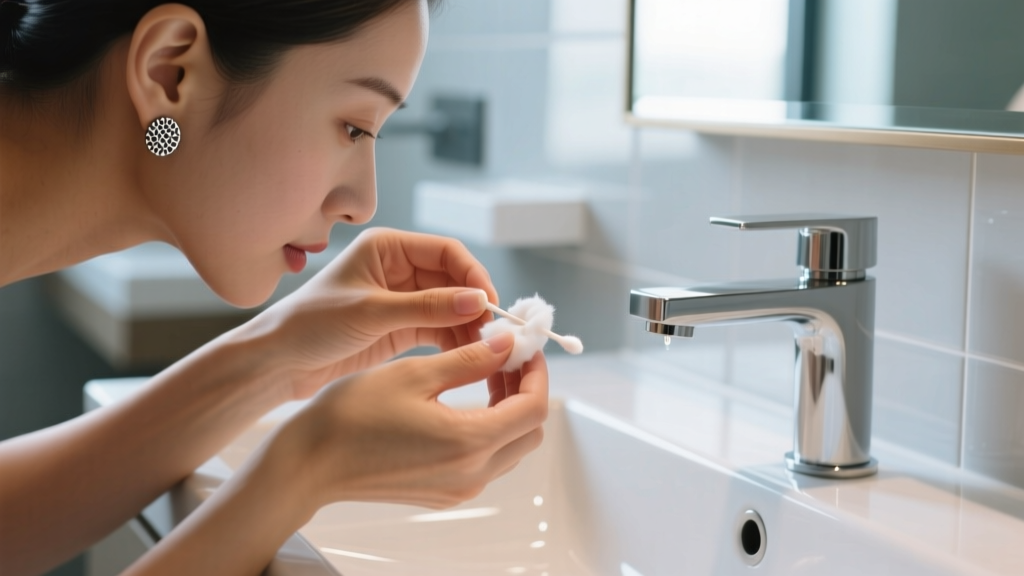
- Cleaning Routine: Every 12 hours, remove the earring. Clean the earlobe with a sterile saline wound wash (0.9% sodium chloride). Wipe the pressure earring with a cotton swab dipped in 70% isopropyl alcohol or a specialized jewelry cleaning solution to strip away sebum and dead skin cells.
Troubleshooting Common Issues
Even with the best equipment, beginners often encounter hurdles. Here is how to troubleshoot the most frequent pressure therapy failures.
Tissue Necrosis (Too Much Pressure)
If your earlobe turns deep purple, feels cold, or develops an open sore, the pressure is too high. You have exceeded the 30 mmHg threshold and cut off capillary blood flow entirely, leading to tissue death. Solution: Switch to a softer silicone disc, or if using a screw-back, loosen the backing plate by two full threads to allow for micro-circulation.
Earring Slippage
Magnetic earrings frequently slide off thin earlobes, especially during sleep. Solution: Use a small piece of medical-grade paper tape (like 3M Micropore) over the magnets at night to anchor them to the skin without compromising the magnetic field.
Contact Dermatitis
If the skin under the pressure disc becomes red, flaky, and intensely itchy, you may be reacting to trapped sweat or a hidden metal allergy. Solution: Ensure your magnetic earrings are fully encased in titanium or PTFE. Never use cheap, uncoated neodymium magnets, as they often contain nickel and will cause severe allergic reactions when pressed tightly against the skin for hours.
When to See a Dermatologist Instead
While keloid pressure earrings are highly effective for mild to moderate scarring and prophylactic prevention, they are not a cure-all. If your keloid is larger than a grape, causes radiating pain, or continues to grow despite 3 months of strict, 24-hour pressure therapy, it is time to consult a board-certified dermatologist. Medical professionals can combine pressure therapy with intralesional corticosteroid injections (like Kenalog) or cryotherapy to break down the dense collagen matrix from the inside out, using your pressure earrings to maintain the flattened result post-treatment.


