Tiny Teardrop Earrings: Budget vs Fine Jewelry Value
Discover if tiny teardrop earrings are worth the investment. We compare budget alloys, gold vermeil, and solid 14k gold to find the best value.

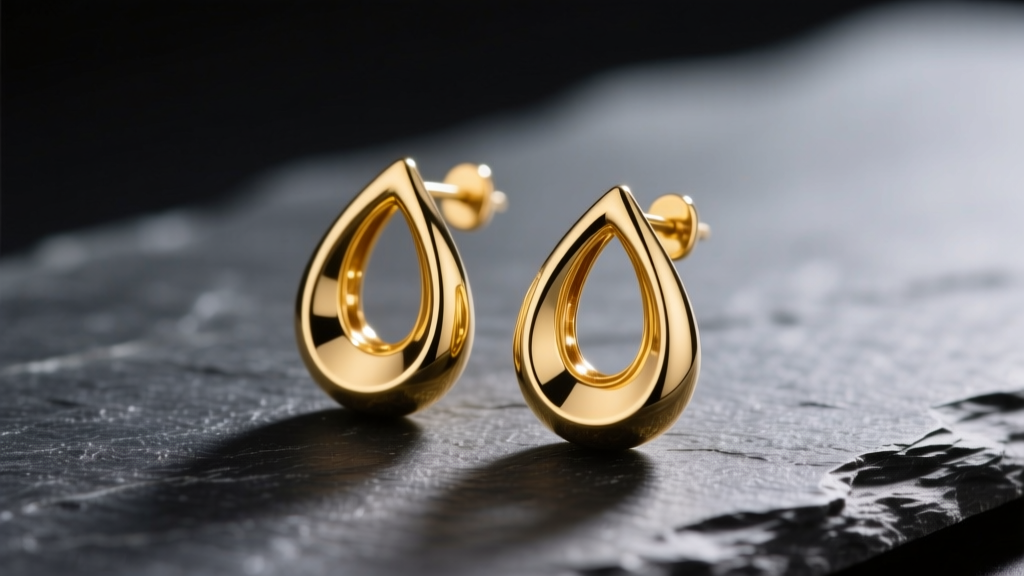
The Anatomy of a Teardrop: What Are You Paying For?
Tiny teardrop earrings have become a staple in minimalist jewelry collections, but their deceptively simple silhouette masks a complex structural reality. Unlike standard round studs that sit flush against the earlobe, teardrops are inherently bottom-heavy. This shifted center of gravity places continuous downward torque on the earring post and the piercing itself. When evaluating the budget versus fine jewelry market, you aren't just paying for the aesthetic; you are paying for the metallurgical integrity required to keep that teardrop hanging perfectly upright without bending, drooping, or irritating your piercing.
In 2026, the market is flooded with options ranging from $12 fast-fashion alloys to $250 solid gold pieces. To determine true value, we must look past the marketing gloss and examine the base metals, plating microns, and hardware gauges that dictate an earring's lifespan.
Material Breakdown: Budget vs. Fine Jewelry
The most significant cost driver in tiny teardrop earrings is the material composition. Brands often use ambiguous terms like "gold dipped" or "gold tone" to obscure the actual manufacturing process. Here is the objective breakdown of what you are actually buying.
Flash-Plated Brass and Copper (The Budget Tier)
Priced between $10 and $30, these earrings feature a base of brass or copper with a microscopic "flash" layer of gold, typically measuring less than 0.1 microns. Because teardrop earrings swing and rub against the neck and hair, this ultra-thin plating wears away rapidly, often exposing the reactive brass underneath within three to six months of regular wear. This leads to the dreaded green skin effect and potential contact dermatitis.
Gold Vermeil (The Demi-Fine Sweet Spot)
Gold vermeil offers a compelling middle ground, typically retailing between $45 and $85. According to the Federal Trade Commission Jewelry Guides, for a piece to be legally marketed as vermeil in the United States, it must have a sterling silver base and a gold plating of at least 2.5 microns thick. This thickness provides a durable barrier that can last two to four years with proper care. However, buyers must verify the micron count, as many international brands bypass FTC regulations and sell 1.0-micron silver plating under the vermeil guise.
Solid 10k, 14k, and 18k Gold (The Investment Tier)
Solid gold teardrop earrings start around $120 and can exceed $300 depending on weight and brand markup. As noted by the Gemological Institute of America (GIA), 14k gold (58.5% pure gold) is the optimal standard for everyday earlobe jewelry. It provides the rich, non-tarnishing color of pure gold while retaining the structural hardness necessary to prevent the teardrop wire from warping. Solid gold holds intrinsic scrap value and can be polished indefinitely, making it a true lifetime asset.
| Material Category | Base Metal | Gold Thickness | Avg. Price Range | Expected Lifespan |
|---|---|---|---|---|
| Fast Fashion | Brass / Nickel | < 0.1 microns | $10 - $30 | 1 - 6 Months |
| Gold Plated | Sterling Silver | 0.5 - 1.0 microns | $25 - $45 | 6 - 12 Months |
| Gold Vermeil | Sterling Silver | 2.5+ microns | $45 - $85 | 2 - 5 Years |
| Solid 14k Gold | Gold Alloy | Solid Throughout | $120 - $250 | Lifetime |
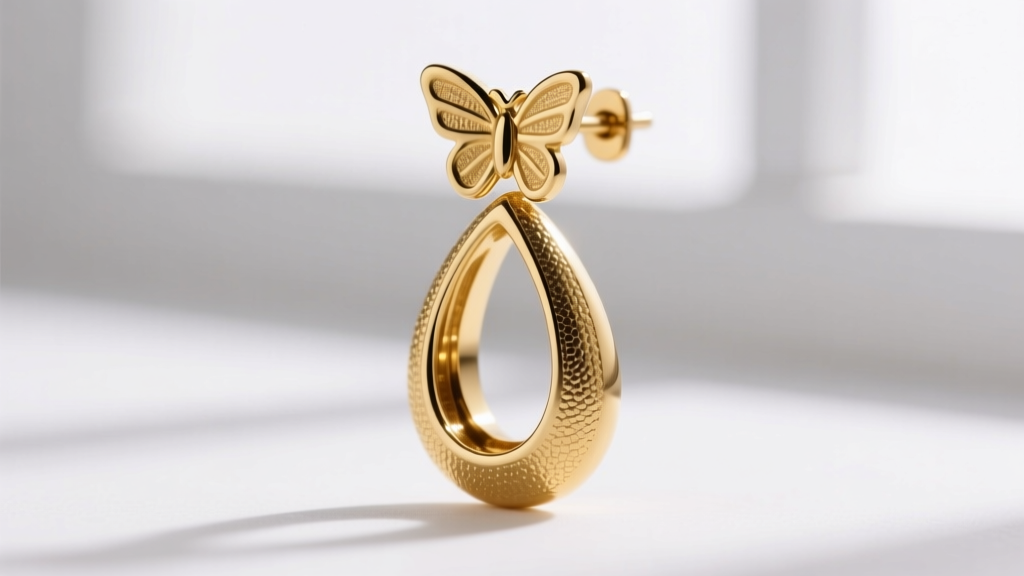
Hardware and Clasps: The Hidden Cost Cutters
When brands attempt to lower the price of solid gold or heavy vermeil tiny teardrop earrings, the first place they cut corners is the post gauge and the clutch mechanism. This is where structural integrity is compromised.
The Danger of 22-Gauge Posts
Standard earlobe piercings are typically done at 18-gauge (1.0mm) or 20-gauge (0.8mm). To save on precious metal weight, many budget and even some demi-fine brands manufacture teardrop earrings with ultra-thin 22-gauge (0.64mm) posts. Because the teardrop shape is bottom-heavy, a 22-gauge wire lacks the tensile strength to support the swing of the earring. Over time, the post bends. Worse, thin wires combined with the downward pull of the teardrop can cause the "cheese-cutter effect," where the wire slowly migrates through the earlobe tissue, causing irreversible stretching and tearing.
Friction Backs vs. Screw Backs
Budget earrings rely on cheap, stamped butterfly friction backs that lose their tension after a few months, leading to lost earrings. High-value fine jewelry brands utilize threaded screw-backs or high-tension silicone-lined metal clutches. When assessing value, always check the backing mechanism; a $150 pair of solid gold teardrops equipped with flimsy friction backs is a poor investment compared to a $130 pair with secure, precision-machined screw backs.
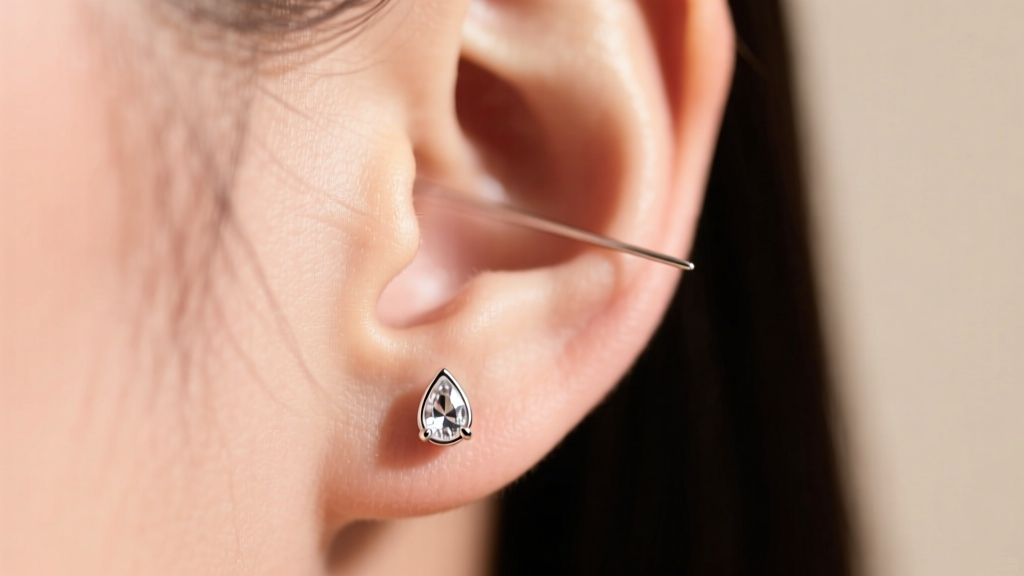
Gemstone Inlays: Prongs vs. Adhesives
If your tiny teardrop earrings feature an inlay—such as a mother-of-pearl slice, a turquoise cabochon, or a pavé diamond tip—the setting method drastically alters the value proposition.
- Adhesive Settings (Budget): Glue is highly susceptible to degradation from sweat, perfume, and humidity. Teardrop earrings frequently brush against the neck and hair, creating friction that pops glued stones out within a year.
- Bezel and Prong Settings (Fine): Wrapping the gemstone in a metal bezel or securing it with micro-prongs requires skilled bench jewelry labor, increasing the upfront cost by 20% to 40%. However, this ensures the stone remains secure for decades, making it the only acceptable standard for investment pieces.
The Value Assessment Checklist
Before purchasing tiny teardrop earrings, run the piece through this quick diagnostic checklist to ensure you are paying a fair price for the actual materials and craftsmanship provided:
- Verify the Base Metal: Is it explicitly listed as Sterling Silver (925) or Solid Gold? Avoid "gold tone" or unspecified "alloys."">
- Check the Post Gauge: Ensure the post is at least 20-gauge (0.8mm) to prevent bending and lobe migration.
- Confirm Plating Thickness: If buying vermeil, look for a stated minimum of 2.5 microns.
- Inspect the Stone Setting: Reject any teardrop earrings where gemstones or pearls are merely glued into place.
- Test the Center of Gravity: Hold the earring by the post. If the teardrop swings wildly or droops forward heavily, the post is likely too thin or the clutch is inadequate to support daily wear.
Expert Verdict: For everyday wearers, 14k solid gold offers the highest long-term value due to its structural rigidity and zero maintenance. However, for trend-driven styling, 2.5-micron gold vermeil over a 20-gauge sterling silver post remains the undisputed champion of the demi-fine budget tier.


