Decoding High Jewelry Earrings: Alloys, Gems, and Mechanics
Explore the technical anatomy of high jewelry earrings. We analyze precious metal alloys, D-flawless gemstone grading, and articulation mechanics.

Defining the Threshold: Haute Joaillerie vs. Fine Jewelry
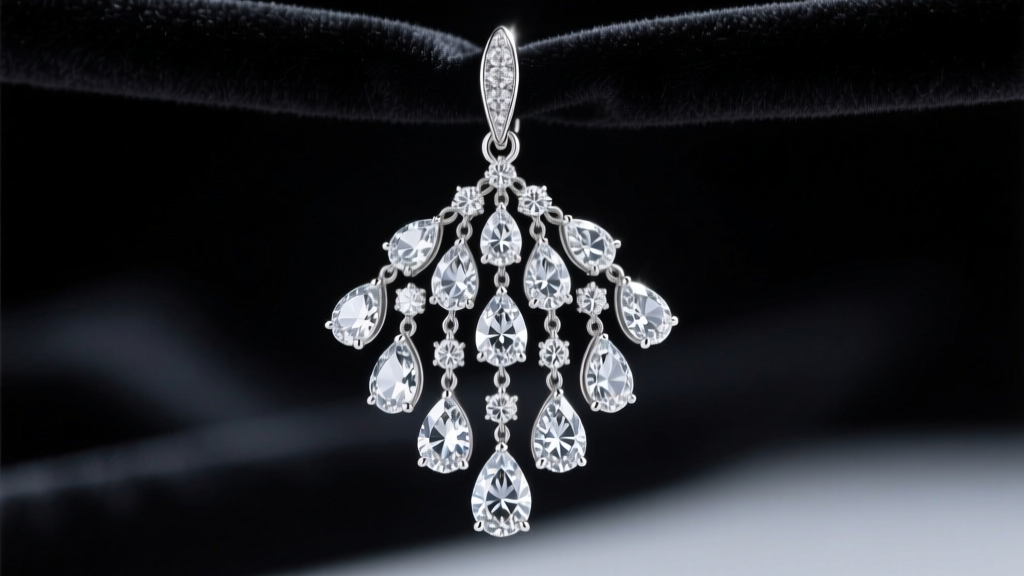
In the echelons of luxury adornment, the term "high jewelry" (or haute joaillerie) is frequently misapplied to any piece carrying a premium price tag. However, from a technical and gemological standpoint, high jewelry earrings occupy a distinct category defined by hand-fabrication, exceptional material scarcity, and complex structural engineering. Unlike commercial fine jewelry, which relies heavily on CAD/CAM casting, standardized calibrated melee, and mass-produced findings, high jewelry pieces are singular or limited-edition creations. As we navigate the 2026 haute joaillerie market, the distinction has become even more critical for collectors and investors, driven by a surge in demand for traceable, unheated gemstones and master-level bench fabrication.
The creation of a high jewelry earring requires a synthesis of metallurgical science, lapidary precision, and mechanical engineering. A master jeweler must account for the kinetic movement of the piece, the tensile strength of the alloys used, and the optical performance of the gemstones when viewed in constant motion. This guide provides an expert deep dive into the technical specifications that separate true high jewelry earrings from their commercial counterparts.
Metallurgical Specifications: Beyond Standard Karats
The foundation of any high jewelry earring lies in its metallurgy. While 18-karat gold and platinum are standard across the luxury sector, the specific alloy compositions and finishing techniques in haute joaillerie are meticulously controlled to prevent structural failure and aesthetic degradation.
Platinum 950: Ruthenium vs. Cobalt Alloys
Platinum 950 (95% pure platinum) is the premier metal for high jewelry chandelier and drop earrings due to its density and durability. However, the 5% alloying metal drastically alters the metal's working properties. Commercial manufacturers often use Cobalt as the alloying agent because it lowers the melting point and improves castability. In contrast, high jewelry houses predominantly utilize Ruthenium. A Pt950/Ru alloy boasts a Vickers hardness of approximately 135 HV, compared to the 110 HV of Pt950/Co. This increased hardness allows master jewelers to mill micro-pavé prongs down to an astonishing 0.15mm thickness without risking stone loss, maximizing the visible diamond surface area while maintaining structural integrity.
18k White Gold and the Rhodium Imperative
When 18k white gold is employed, high jewelry manufacturers avoid standard nickel-based alloys due to allergen risks and yellowing over time. Instead, they utilize high-palladium mixes (e.g., 75% Au, 15% Pd, 10% Cu/Ag), which possess a naturally whiter hue. Furthermore, while commercial white gold receives a "flash" rhodium plating of roughly 0.1 microns, high jewelry earrings are plated to a thickness of 1.0 to 1.5 microns. This ensures the mirror-like finish withstands years of wear before requiring re-plating, a critical factor for heavy drop earrings that experience high friction against the neck and hair.
Gemstone Calibration and the Twinning Premium
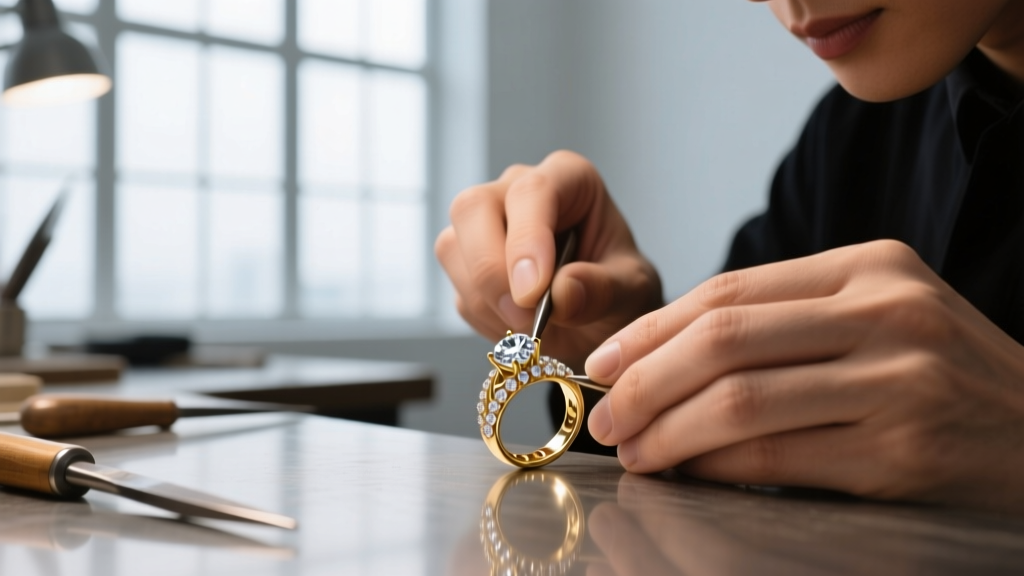
The most defining characteristic of high jewelry earrings is the caliber of the gemstones. Sourcing a single exceptional stone is difficult; sourcing a perfectly matched pair is an exercise in extreme scarcity. This phenomenon is known in the trade as the "Twinning Premium."
The Economics and Optics of Matched Pairs
When a maison sources two 3-carat D-Flawless diamonds for a pair of stud or drop earrings, the price per carat does not merely double. The Twining Premium can add 30% to 50% to the total cost, as the stones must match not only in the 4Cs but in physical millimeter dimensions, fluorescence, and optical symmetry. According to gemological research published by the Gemological Institute of America (GIA), even a 2% variance in table size between two stones can create a noticeable discrepancy in brilliance when worn.
For colored gemstones, the technical requirements are even more stringent. In the current market, high jewelry earrings featuring rubies, sapphires, or emeralds must be accompanied by reports from elite laboratories like the Swiss Gemmological Institute (SSEF) or Gübelin. These reports must confirm the stones are unheated (or feature only minor, traditional oiling in the case of emeralds) and originate from premier locales, such as the Mogok Valley for rubies or the Muzo mine for emeralds.
| Gemstone Parameter | Commercial Fine Jewelry Standard | High Jewelry (Haute Joaillerie) Standard |
|---|---|---|
| Diamond Clarity | VS1 - SI1 | IF (Internally Flawless) to VVS1 |
| Colored Stone Treatment | Heated / Moderate Oil | Unheated / No Oil to Minor Oil |
| Pavilion Depth (Drop Styles) | 41% - 45% (Variable) | 43.0% - 44.0% (Optimized for lateral light) |
| Matching Tolerance | +/- 0.15mm | +/- 0.05mm |
Articulation and Tensile Mechanics in Chandelier Styles
A high jewelry chandelier earring can easily weigh between 15 and 30 grams per ear. This mass, combined with the kinetic energy generated by the wearer's movement, places immense torque on the earring's internal joints. Structural failure in a commercial earring usually results in a bent post; in a high jewelry piece, it could mean the catastrophic loss of a six-figure gemstone.
Jump Ring Gauges and Laser Welding
Articulation in drop earrings is achieved through a series of jump rings connecting the diamond-set segments. Standard fine jewelry utilizes 0.5mm to 0.6mm wire for these rings, which are simply soldered. High jewelry mechanics demand a minimum wire gauge of 0.9mm to 1.0mm, forged from the same Pt950/Ru alloy as the body. More importantly, these rings are not traditional-soldered; they are laser-welded shut and flush-filed. Laser welding provides a tensile strength that matches the parent metal, ensuring the joint will never pull apart under lateral stress.
Post Thickness and Friction Backs
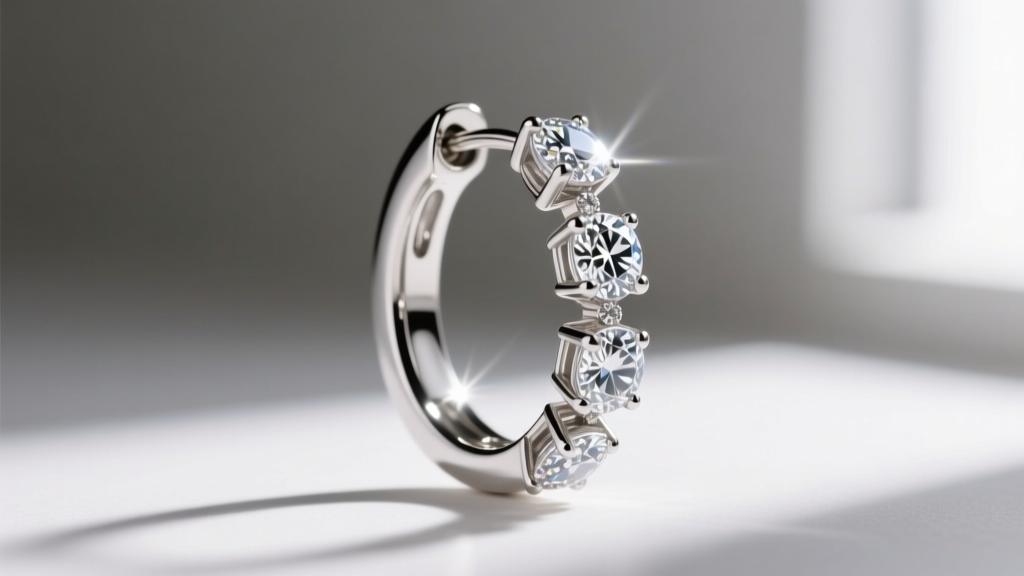
To support heavy articulated drops, the earring post itself must be reinforced. While a standard 18k gold post measures 0.8mm in diameter, high jewelry posts are engineered to 1.1mm or 1.2mm. Furthermore, standard butterfly backs are entirely insufficient for a 20-gram earring. High jewelry employs specialized "Alpha" or "Omega" backs featuring dual internal friction grooves and a widened base that distributes the weight across a larger surface area of the earlobe, preventing the earring from drooping or tearing the piercing over time.
Appraisal, Provenance, and Insurance Frameworks
Insuring high jewelry earrings requires moving beyond standard retail replacement appraisals. Because these pieces often feature unheated, origin-specific gemstones and proprietary maison craftsmanship, a generic appraisal will result in severe underinsurance.
"A true haute joaillerie appraisal must document not just the carat weight and metal purity, but the specific articulation mechanics, the exact micron thickness of any plating, and the archival provenance of the piece. Without this, insurance adjusters will default to commercial casting replacements."
When securing coverage, collectors must insist on a "Statement of Replacement Value" prepared by a certified gemologist appraiser (such as those accredited by the ASA or AAA). This document must include:
- Full Gemological Plotting: Detailed inclusion maps for both stones to prove they are a matched pair and not synthetic simulants.
- Spectral Analysis Data: For colored stones, documentation of the exact trace elements (e.g., chromium and vanadium levels in emeralds) that dictate their origin and value.
- Archival Provenance: If the earrings are purchased from a heritage house like Boucheron, Chaumet, or Cartier, the appraisal must reference the specific archive number and collection year, as the brand premium accounts for up to 40% of the replacement cost.
- High-Resolution Macro Photography: Images capturing the laser-welded joints and micro-pavé prong structures to serve as a benchmark in the event of a damage claim.
Understanding the profound technical depth behind high jewelry earrings transforms the way collectors view these masterpieces. They are not merely decorative accessories, but triumphs of material science and mechanical engineering, designed to withstand the rigors of wear while showcasing the rarest treasures the earth has to offer.


