Troubleshooting the Right Earring Meaning: Myths vs. Modern Style
Confused by the right earring meaning? We debunk historical myths, solve modern styling dilemmas, and troubleshoot right-ear piercing irritation.

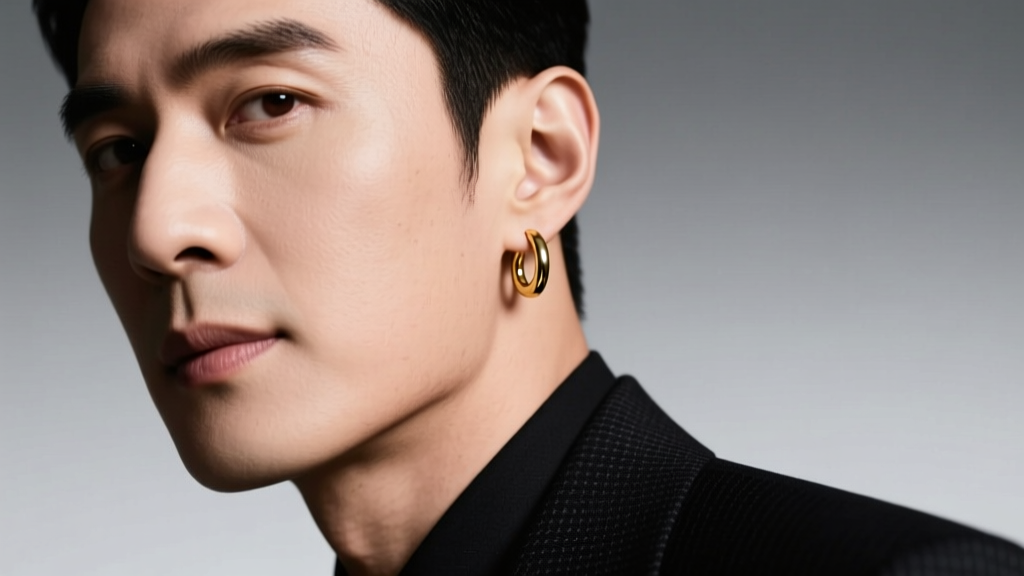
The Historical Baggage: Where Did the Right Ear Myth Come From?
When clients and readers search for the "right earring meaning," they are almost always chasing a ghost from the late 20th century. In the 1970s and 1980s, a covert signaling system emerged in Western pop culture, often summarized by the derogatory schoolyard rhyme: "Left is right, and right is wrong." During this era, a single earring on the right ear was widely used as a subtle identifier for gay men, while the left ear signaled heterosexuality.
However, from a modern 2026 perspective, this cultural code is entirely obsolete. The fashion industry, sociologists, and Gen Z consumers view ear piercings as side-agnostic and gender-neutral. Yet, the anxiety surrounding the right earring meaning persists in conservative professional circles and among older generations. Troubleshooting this dilemma requires a strategic approach to styling, material selection, and understanding the physical realities of how we interact with our right ear daily.
Troubleshooting Social and Professional Styling Dilemmas
If you are hesitant to pierce or wear jewelry on your right ear due to outdated social stigmas, the solution lies in intentional, context-aware styling. The goal is to shift the narrative from "covert signaling" to "deliberate high-fashion asymmetry."
The Corporate Environment
In conservative fields such as corporate law, wealth management, or traditional finance, a single right-ear earring might still raise an eyebrow among senior partners. To troubleshoot this, avoid high-visibility pieces. Ditch the 15mm dangles or thick 12-gauge hoops. Instead, opt for a 2mm to 3mm bezel-set diamond, a flush-fit sapphire, or a plain 14k white gold ball stud. These pieces catch the light subtly and read as sophisticated grooming rather than rebellious signaling.
Asymmetrical Styling Framework
For creative professionals or casual settings, lean into the asymmetry. If you wear a single right earring, balance it with a strong sartorial element on the left side of your face or neck, such as a structured collar, a side-parted hairstyle, or a subtle lapel pin. This creates a visual equilibrium that signals deliberate styling rather than an accidental adherence to an 80s trope.
Cultural and Spiritual Meanings (Ayurveda & Acupressure)
Beyond Western pop culture, the right earring meaning often intersects with Eastern medicine and spiritual practices. In traditional Ayurvedic medicine, ear piercing (Karnavedha) is believed to stimulate specific meridians that connect to the brain and reproductive organs.
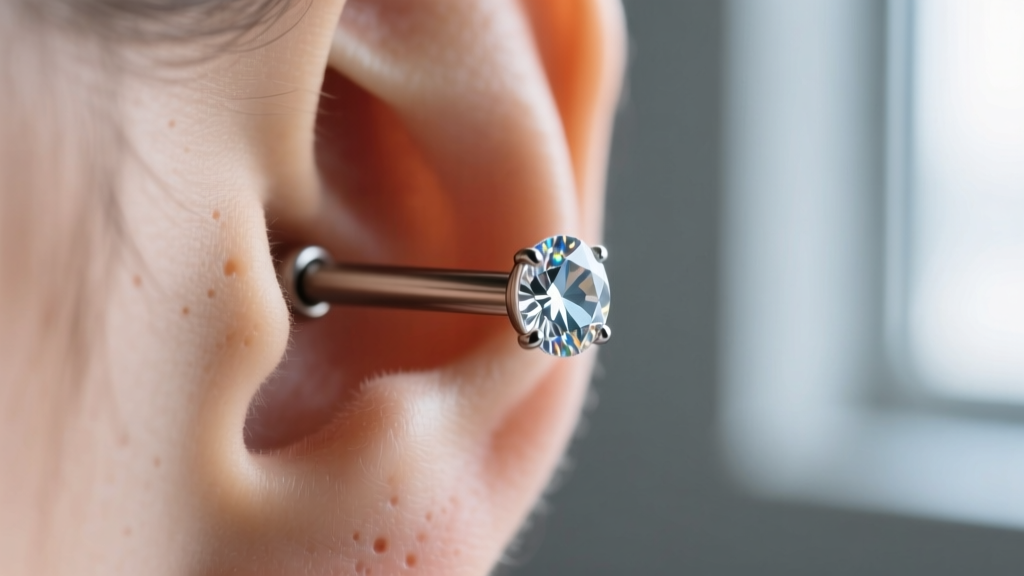
Similarly, in auriculotherapy (ear acupuncture), the ear is viewed as a microsystem of the entire body. The World Health Organization (WHO) recognizes auricular points for pain management, though the side-specific spiritual claims remain in the realm of alternative belief rather than clinical science. Below is a breakdown of how different systems interpret the right ear versus the left.
| Belief System | Left Ear Association | Right Ear Association | Modern Scientific Consensus |
|---|---|---|---|
| Ayurvedic Medicine | Female reproductive health, cooling energy | Male vitality, heating energy, right brain hemisphere | No peer-reviewed evidence supporting localized systemic benefits |
| Auriculotherapy | Corresponds to left-side bodily organs | Corresponds to right-side bodily organs | Recognized for localized pain management, not side-specific destiny |
| 1980s Pop Culture | Heterosexual signaling | Homosexual signaling (The "Code") | Entirely obsolete; universally recognized as a dead cultural artifact |
"The modern wearer should view the right ear not as a billboard for outdated codes, but as a prime canvas for asymmetrical curation. The meaning of your jewelry is defined by its craftsmanship and your personal confidence, not a 40-year-old myth."
Physical Troubleshooting: Why Your Right Ear Specifically Hurts
One of the most common issues we see in our troubleshooting clinic is right-ear irritation. Many clients report that their right lobe or right helix piercing is constantly inflamed, while the left ear heals perfectly. This is rarely a coincidence; it is a biomechanical and environmental issue.
The Smartphone Cartilage Bump
Over 85% of the global population is right-hand dominant and holds their smartphone to their right ear. Modern smartphones generate significant heat from the battery and processor during long calls. When this warm glass and metal presses against a healing or even fully healed right helix or tragus piercing, it creates a micro-trauma environment. The heat increases localized blood flow and swelling, while the friction from adjusting the phone's angle leads to hypertrophic scarring (commonly known as a piercing bump). Furthermore, phone screens harbor massive amounts of bacteria, introducing pathogens directly to the piercing fistula.
Troubleshooting Protocol:
- Switch to speakerphone or use wireless earbuds (like AirPods) during the first 6 months of a right-ear cartilage piercing.
- Wipe your phone screen daily with 70% isopropyl alcohol.
- Apply a sterile, wound-wash saline spray (0.9% sodium chloride, no additives) to the right ear after long phone sessions.
- For persistent contact dermatitis caused by phone friction, consult a board-certified dermatologist, as noted by guidelines from the American Academy of Dermatology.
Sleeping on Your Right Side
If you are a right-side sleeper, the pressure of a standard cotton pillowcase against a right-ear huggie or stud can cause the jewelry to be driven into the cartilage, leading to pressure necrosis or migration. Cotton is highly absorbent and creates high friction. Upgrading to a 22-momme mulberry silk pillowcase reduces friction coefficients by up to 40%, allowing the ear to glide rather than snag.

Material Upgrades to Prevent Right-Ear Irritation
If your right ear is chronically irritated due to phone use and sleeping habits, the material of your jewelry is your first line of defense. Most commercial jewelry is made from 316L "surgical" stainless steel. Despite the name, 316L steel contains 8% to 10% nickel, a known allergen that causes severe contact dermatitis when combined with the sweat and heat generated by a smartphone.
The Expert Upgrade Path:
- Implant-Grade Titanium (ASTM F136): This is the gold standard for right-ear cartilage. It is entirely nickel-free, highly polished, and biocompatible. Brands like NeoMetal and Intrinsic Body offer threadless ends that eliminate the microscopic gaps where phone-borne bacteria hide.
- Niobium: An excellent alternative for hoops and huggies. Niobium is a reactive metal that can be anodized to any color without using surface paints or dyes that might chip off against a phone screen.
- Solid 14k or 18k Gold (Nickel-Free Alloy): Ensure the gold is alloyed with silver or palladium, not nickel. Avoid gold-plated or gold-vermeil pieces for the right ear, as the friction from daily phone use will strip the plating within weeks, exposing the reactive base metal underneath.
Final Verdict: Wear What You Want
The historical "right earring meaning" is a relic of a bygone era, carrying zero weight in contemporary fashion or social dynamics. If you are experiencing anxiety about wearing a right-ear piece in a professional setting, utilize the subtle styling frameworks outlined above. More importantly, if you are battling right-ear irritation, recognize that your smartphone and sleeping habits are the true culprits, not your anatomy. By upgrading to ASTM F136 titanium, practicing rigorous device hygiene, and embracing asymmetrical styling, you can confidently curate your right ear without compromise.


