The Collector's Guide to Vintage Screw Back Rhinestone Earrings
Master the authentication, metallurgy, and restoration of vintage screw back rhinestone earrings with our expert technical deep dive and pricing guide.

The Historical Mechanics of Screw Back Clasps
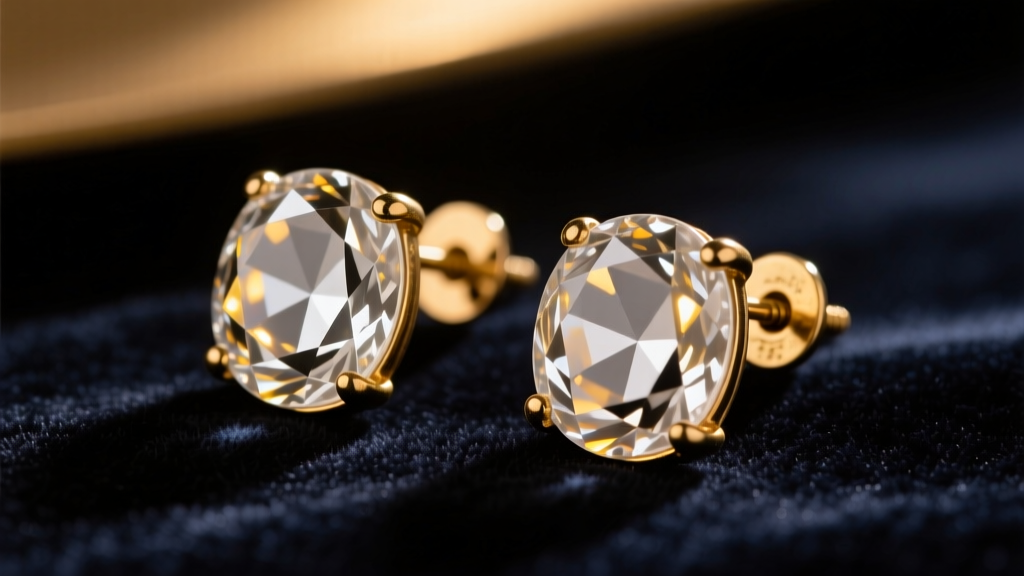
For serious jewelry archivists and vintage collectors, vintage screw back rhinestone earrings represent a fascinating intersection of social history and precision micro-engineering. Before the mainstream resurgence of ear piercing in the late 1950s and 1960s, wearing pierced earrings was largely considered taboo for 'respectable' women in Western society. To accommodate the desire for ear adornment without the permanence of a piercing, the screw back clasp was perfected in the early 20th century.
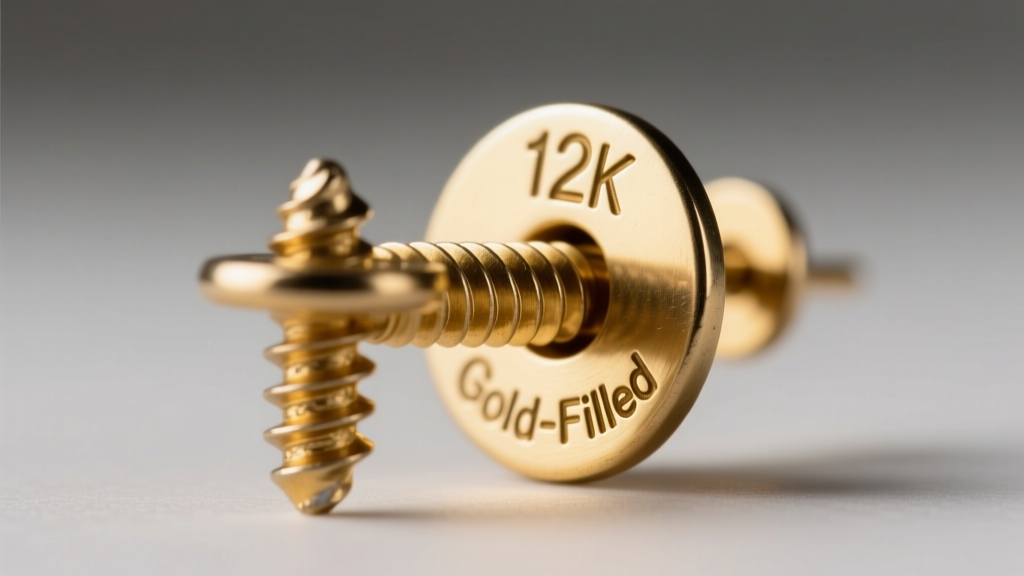
Unlike modern friction backs or butterfly clutches that rely on tension, a true vintage screw back operates on a threaded post and a matching tension nut. The metallurgy of these posts is highly specific. Most authentic pieces from the 1920s through the 1940s feature a post diameter ranging from 1.0mm to 1.2mm (roughly 18-gauge to 16-gauge), which is notably thicker than the standard 20-gauge to 22-gauge posts used in contemporary jewelry. The thread pitch is typically fine, around 0.25mm, requiring the wearer to carefully align the nut to avoid cross-threading. According to the Victoria and Albert Museum Jewelry Archives, the screw back dominated the market until the invention of the clip-on earring in 1934, which eventually usurped its popularity due to ease of use, though screw backs remained the standard for high-end, heavy rhinestone pieces well into the 1950s because of their superior weight-bearing security.
Rhinestone Metallurgy: Foil Degradation and Glass Composition
The term 'rhinestone' originally referred to rock crystals gathered from the river Rhine, but by the time screw back earrings reached their zenith, the industry relied on precision-cut lead glass. The brilliance of vintage rhinestones does not come from the glass itself, but from the reflective foil applied to the pavilion (the bottom facets) of the stone.
The Chemistry of Foil Backing
In authentic vintage pieces, this foil was often made from silver leaf, gold leaf, or early vacuum-metalized aluminum. The glass is set into a pot metal or sterling silver bezel with the foil exposed at the back. This creates a critical vulnerability: moisture ingress. When the seal between the glass table and the metal prongs degrades, ambient humidity reaches the foil. Silver leaf oxidizes and turns black, while aluminum-based foils develop a cloudy, white oxidation. This phenomenon, known in the trade as 'blackening' or 'dead stones,' is a primary diagnostic marker of age. A piece with perfectly pristine, mirror-like foil backing in a purported 1930s setting should immediately raise red flags for modern reproduction.
Glass Cuts and Refractive Indices
Collectors must also evaluate the cut of the glass. Art Deco pieces (1920s-1930s) heavily favored baguette, emerald, and square step-cuts to mimic the geometric architecture of the era. By the Retro period (1940s), large, round brilliant chaton cuts and marquise shapes became prevalent, designed to maximize light return in dimly lit wartime ballrooms. High-end vintage pieces often utilized Czechoslovakian or Austrian lead glass, which possessed a higher refractive index than the mass-produced Japanese acrylic and glass imports that flooded the market post-1955.
Authentication Framework: True Vintage vs. Modern Reproductions
Distinguishing genuine vintage screw back rhinestone earrings from modern 'vintage-style' reproductions requires a systematic evaluation of the clasp, the setting, and the materials. Modern reproductions often use metric threading that feels slightly 'off' when paired with original vintage nuts, and they frequently utilize modern acrylic resins instead of lead glass.
| Diagnostic Marker | True Vintage (1920s-1950s) | Modern Reproduction (1980s-Present) |
|---|---|---|
| Post Thickness | 1.0mm - 1.2mm (18g - 16g) | 0.8mm - 0.9mm (20g - 22g) |
| Thread Pitch | Fine, non-standardized historical pitch | Standard modern metric (e.g., M1.0 x 0.25) |
| Base Metal | Pot metal, brass, or sterling; often gold-filled | Zinc alloy, stainless steel, or brass with flash plating |
| Stone Material | Lead glass or early crystal; heavy and cold to touch | Acrylic, resin, or modern lead-free crystal; lighter |
| Foil Condition | Frequent minor oxidation, silvering wear, or patina | Flawless, mirror-like, or uniformly painted backing |
| Prong Setting | Hand-set, slightly irregular prong folds | Machine-stamped, perfectly uniform prongs |
For comprehensive hallmark identification and historical context, the Lang Antiques University remains an indispensable resource for cross-referencing maker's marks on the backing plates of vintage earrings.
Expert Restoration and Cleaning Protocols
Cleaning vintage screw back rhinestone earrings is a high-risk endeavor. The most common catastrophic failure mode during amateur restoration is the destruction of the foil backing. Because the foil is water-soluble and highly reactive to chemicals, standard jewelry cleaning methods are strictly prohibited.
Safe Cleaning Methodology
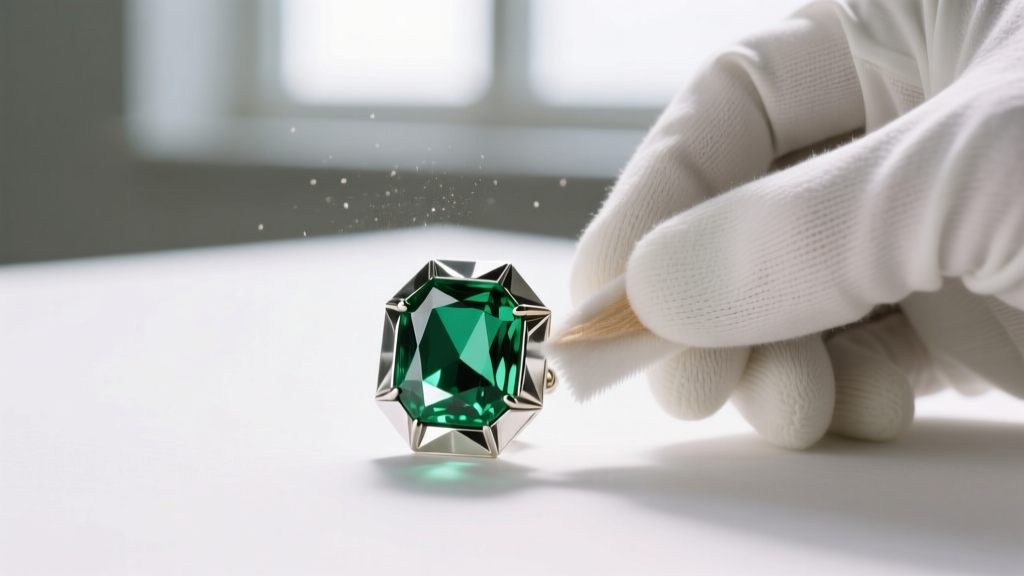
To safely remove decades of sebum, cosmetic residue, and environmental grime from the table facet (the top of the stone), use a dry, lint-free microfiber swab. For stubborn debris trapped in the prong crevices, a soft-bristled, untreated makeup brush can be used to gently agitate the dirt. If liquid is absolutely necessary, a barely dampened cotton swab with distilled water can be applied to the top of the glass, ensuring zero moisture travels down the sides of the bezel.
What to Avoid
Never use ultrasonic cleaners, ammonia-based glass cleaners, silver dip, or toothpaste on foil-backed rhinestones. Ultrasonic vibrations will shatter the delicate glass or dislodge the fragile prongs, while ammonia and abrasives will instantly strip the oxidized silver or aluminum foil from the pavilion, rendering the stone permanently 'dead' and destroying the piece's collector value.
Mechanical Repairs
If the screw back nut is stripped or missing, do not attempt to force a modern metric nut onto the vintage post. This will destroy the historical threading. Instead, source New Old Stock (NOS) replacement nuts from specialized vintage jewelry supply houses, or carefully re-tap the post using a vintage-compatible die if you possess micro-machining expertise. If the tension on the earring is too loose, a tiny drop of clear, reversible conservation wax on the threads can provide temporary grip without permanently altering the metal.
Market Valuation and Pricing Tiers
The valuation of vintage screw back rhinestone earrings is heavily dictated by era, maker, and condition. Pieces by highly sought-after mid-century designers like Trifari, Coro, or Miriam Haskell command significant premiums, particularly when the original signed backing plates and matching tension nuts are intact.
- Tier 1: Unsigned / Mass Market ($25 - $75): Typical 1940s-1950s unsigned pot metal earrings with minor foil degradation or missing replacement nuts. Valued primarily for their aesthetic and wearable charm.
- Tier 2: Signed Mid-Century Designers ($100 - $350): Verified pieces from notable fashion houses (e.g., Weiss, Kramer, B. David) in excellent condition with original screw backs and vibrant, unoxidized stones.
- Tier 3: Art Deco Masterpieces & High-End Couture ($400 - $1,500+): Rare 1920s-1930s pieces featuring complex geometric pave settings, high-karat gold-filled hardware, and pristine Czechoslovakian glass. Pieces with provenance or exceptional Art Deco architectural motifs fall into this investment-grade category.
Ultimately, mastering the nuances of vintage screw back rhinestone earrings requires a tactile understanding of historical manufacturing limitations. By respecting the delicate chemistry of the foil backing and the precise mechanics of the threaded post, collectors can preserve these wearable artifacts for future generations.


