Why Is My Earring Hole Black? Causes & Step-by-Step Fixes
Discover why your earring hole is black and learn expert, step-by-step cleaning methods to safely remove buildup and prevent metal oxidation.

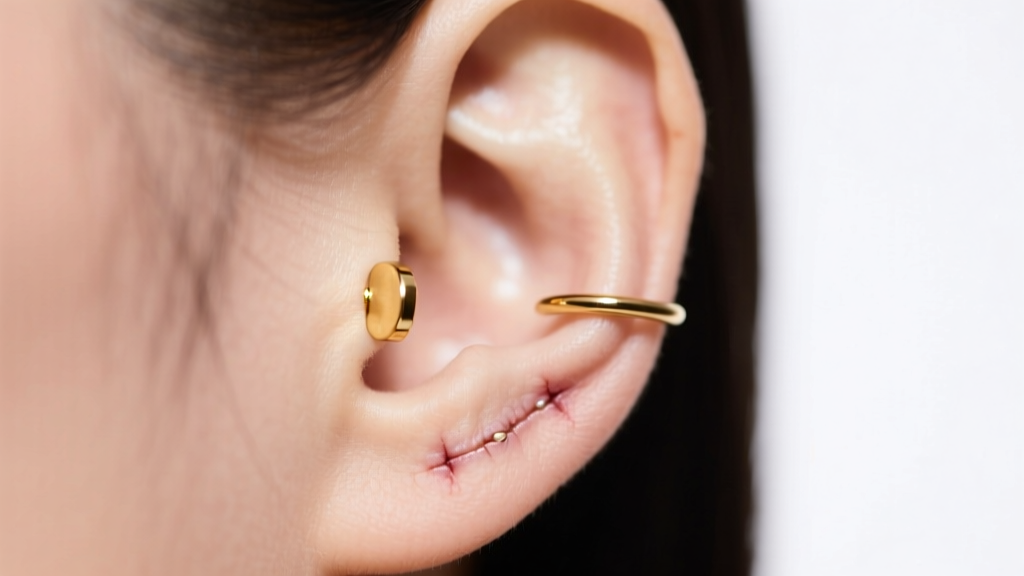
Noticing a dark ring or grayish-black buildup around your piercing can be alarming. If you have been searching for answers to the question, why is my earring hole black, you are not alone. This common issue affects both new and decades-old piercings, occurring in earlobes and cartilage alike. While it rarely indicates a severe medical emergency, it is a clear signal that your current aftercare routine or jewelry material needs an immediate adjustment.
As a general rule, a black or gray hue around a piercing is caused by one of three factors: oxidized metal particles, a combination of dead skin cells and sebum (often colloquially called "ear cheese"), or post-inflammatory hyperpigmentation. Below, we break down the exact science behind this phenomenon and provide a dermatologist-approved, step-by-step protocol to safely restore your piercing to a healthy, vibrant state.
The Science Behind the "Black Hole" Phenomenon
To effectively treat the issue, you must first identify the root cause. The skin inside a piercing fistula (the tissue tube that forms around the jewelry) is highly active, constantly shedding cells and producing oils. When these natural processes interact with certain metals or improper hygiene, the result is a dark, sometimes odorous residue.
1. Sebum, Keratin, and Dead Skin Buildup
Your sebaceous glands continuously produce sebum to lubricate the skin. Inside a piercing channel, sebum mixes with dead keratinocytes (skin cells), sweat, and residual soap or shampoo. Over time, this mixture oxidizes when exposed to air, turning from a pale yellow or white to a dark gray or black paste. This is entirely natural but requires mechanical removal to prevent the fistula from stretching or developing an odor.
2. Metal Oxidation and Tarnish Transfer
If you wear sterling silver, copper, or low-quality alloy earrings, the black color is likely metal tarnish transferring directly onto your skin. Sterling silver is an alloy containing 92.5% silver and 7.5% copper. When copper reacts with sulfur compounds in the air and your body's natural moisture, it forms silver sulfide, a black compound that stains the skin and the inside of the piercing hole. According to the Association of Professional Piercers (APP), reactive metals should never be worn in healing or sensitive piercings due to this exact chemical reaction.
3. Post-Inflammatory Hyperpigmentation (PIH)
If the skin itself has darkened (rather than having a black residue sitting on top), you may be experiencing Post-Inflammatory Hyperpigmentation. This occurs when the skin produces excess melanin in response to trauma, chronic friction, or an allergic reaction to nickel. The American Academy of Dermatology (AAD) notes that PIH is more common in individuals with darker skin tones and requires gentle, non-irritating care to fade over time.
Step-by-Step Guide to Safely Cleaning a Darkened Piercing
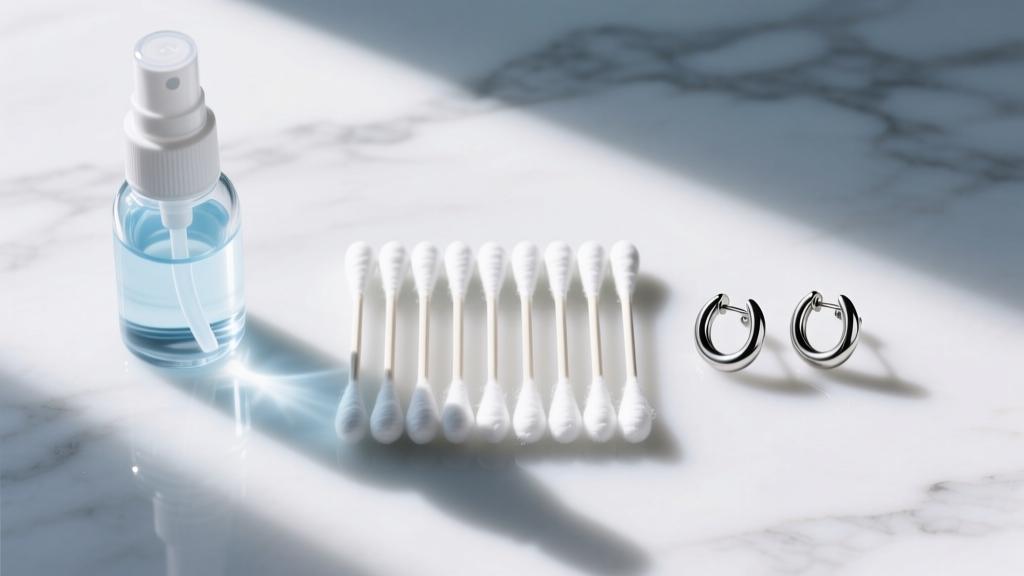
Do not attempt to scrub the area with harsh chemicals. Rubbing alcohol and hydrogen peroxide destroy fibroblasts—the cells responsible for maintaining healthy tissue—and will only worsen inflammation and hyperpigmentation. Follow this gentle, effective cleaning protocol instead.
- Prep and Remove: Wash your hands thoroughly with antibacterial soap. If your piercing is fully healed (over 6-12 months old), carefully remove the earring. If it is still healing, leave the jewelry in place to avoid closing the fistula.
- The Saline Soak: Spray a sterile 0.9% sodium chloride wound wash (ensure there are no additives like aloe or benzalkonium chloride) onto a piece of sterile, lint-free gauze. Avoid cotton balls, as they leave microscopic fibers trapped in the piercing.
- Gentle Softening: Press the saturated gauze against the earring hole for 3 to 5 minutes. This softens the hardened sebum and oxidized metal particles without requiring aggressive scrubbing.
- Clear the Fistula: Gently slide the jewelry back and forth through the hole, or use a clean, sterile saline-soaked cotton swab to lightly wipe the outer edges of the piercing. Never force debris out, as micro-tears will trigger more melanin production.
- Dry and Reinsert: Pat the area completely dry with a fresh piece of non-woven gauze. Moisture trapped in the earlobe breeds bacteria. Reinsert a piece of high-quality, implant-grade jewelry immediately.
Material Matters: Identifying the Culprit in Your Jewelry Box
If your earring hole turns black every time you wear a specific pair of earrings, the metal is the problem. Upgrading your jewelry is the most permanent fix for metal-induced staining and allergic contact dermatitis. Use the chart below to evaluate your current collection.
| Metal Type | Composition & Traits | Oxidation / Staining Risk | Expert Verdict |
|---|---|---|---|
| Implant-Grade Titanium (ASTM F-136) | Nickel-free, highly biocompatible, lightweight, non-reactive. | Zero | The absolute gold standard for all piercings, especially sensitive or healing ears. |
| 14k or 18k Solid Gold | Alloyed with stable metals like palladium or silver. Must be nickel-free. | Very Low | Excellent for healed piercings. Avoid gold-plated or gold-filled options, as the base metal will eventually react. |
| Surgical Stainless Steel (316L) | Contains iron, chromium, and 8-10% nickel. Polished surface traps nickel inside. | Low to Moderate | Acceptable for healed lobes, but can cause PIH and black staining in those with nickel sensitivities. |
| Sterling Silver (925) | 92.5% silver, 7.5% copper. Highly reactive to sulfur and moisture. | Very High | Avoid wearing in the piercing hole. The copper content will oxidize and permanently stain the fistula black. |
When to See a Professional: Infection vs. Oxidation
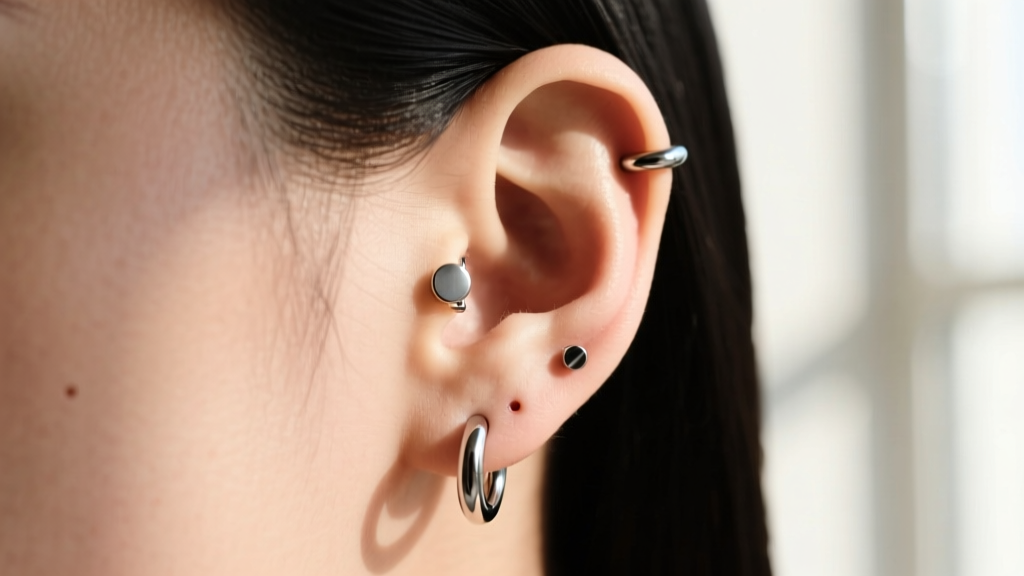
While a black earring hole is usually a cosmetic or hygiene issue, it can occasionally mask a developing medical problem. It is vital to differentiate between harmless oxidation and a localized infection or embedded jewelry.
Signs You Need Medical or Professional Piercer Intervention
- Heat and Swelling: If the earlobe feels hot to the touch, is visibly swollen, or throbs, the dark color may be necrotic tissue or a severe bacterial infection requiring oral antibiotics.
- Purulent Discharge: Thick, yellow, or green fluid mixed with the black residue indicates an active infection, not just sebum buildup.
- Jewelry Embedding: If the earring back or front is sinking into the skin, the surrounding tissue may turn dark purple or black due to restricted blood flow (ischemia). This requires immediate removal by a professional.
- Persistent Hyperpigmentation: If the hole is clean but the skin remains dark brown or black after switching to titanium, consult a dermatologist. They may recommend a topical tyrosinase inhibitor (like azelaic acid or tranexamic acid) to safely fade the melanin clusters without damaging the delicate fistula.
Long-Term Prevention Protocol for Healthy Piercings
Once you have cleared the black buildup, maintaining a clean, healthy piercing requires a low-effort but consistent routine. Implement these habits to ensure your earring holes stay clear and your skin remains bright.
- Weekly Maintenance: Once a week, use sterile saline and a lint-free swab to gently clean the inside of the fistula, even if you cannot see any buildup.
- Shower Rinsing: Allow warm water to run over your earlobes at the end of every shower to wash away shampoo and conditioner residue, which are major contributors to sebum plugs.
- Rotate Your Metals: If you must wear sterling silver or fashion jewelry for an event, limit the wear time to a few hours. Swap back to implant-grade titanium flat-back studs immediately afterward to let the tissue breathe and recover.
- Avoid Sleeping in Hoops: Friction from tossing and turning causes micro-trauma to the fistula, triggering inflammation and subsequent hyperpigmentation. Stick to snug studs or huggies for sleeping.
Expert Takeaway: A black earring hole is your body's check-engine light. It is either telling you to upgrade your jewelry to ASTM F-136 titanium, or it is reminding you that your daily hygiene routine needs to include the inside of the piercing, not just the surface of the skin. Treat the fistula with the same care you would a minor wound, and the dark staining will resolve within a matter of days.


