Avocado Earrings Troubleshooting: Fixing Enamel Chips and Ear Irritation
Learn how to repair chipped enamel, reattach loose pits, and prevent nickel irritation in your favorite avocado earrings with expert jewelry care tips.

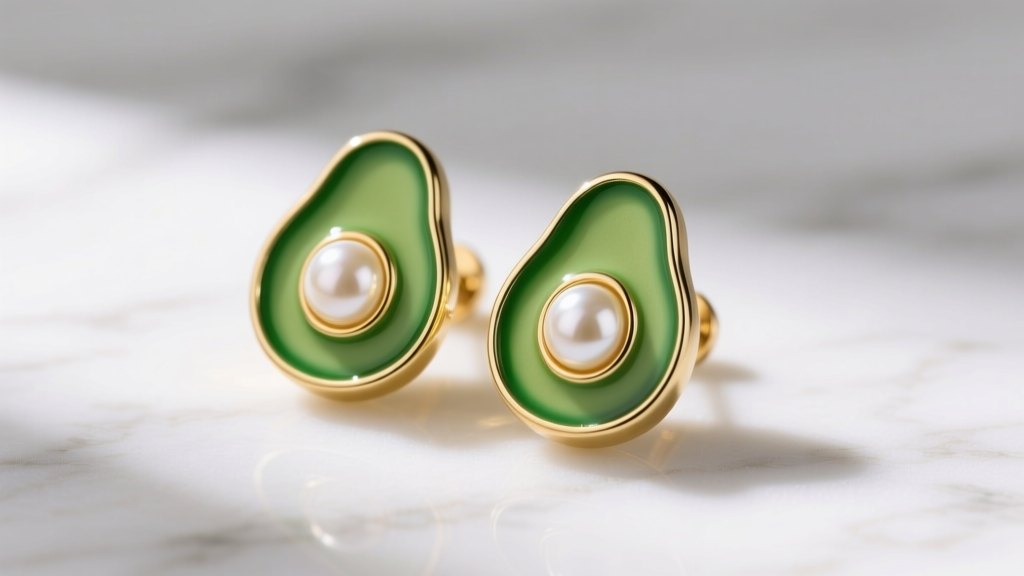
Avocado earrings have cemented their place as a beloved staple in novelty and fashion jewelry. Their playful aesthetic, combined with versatile color palettes, makes them a go-to accessory for casual wear. However, beneath their charming exterior lies a complex mix of materials—often combining base metals, cold epoxy enamels, and glued-in bead "pits"—that makes them uniquely susceptible to specific types of damage. If you have ever experienced a chipped green enamel finish, a missing pearl pit, or an itchy, green-stained earlobe, you are not alone.
As a jewelry repair specialist, I see these exact issues cross my workbench weekly. This comprehensive troubleshooting guide will help you diagnose the structural failures of your favorite avocado earrings, execute precise at-home repairs, and upgrade your hardware to prevent contact dermatitis.
The Unique Anatomy of Avocado Earrings
To effectively troubleshoot, you must first understand how these earrings are manufactured. The vast majority of commercial avocado earrings are produced using a die-struck or cast brass base. The "flesh" of the avocado is typically filled using cold enamel (a two-part epoxy resin tinted with green and yellow pigments), while the "pit" is usually a half-drilled freshwater pearl, a wooden bead, or a dome of UV resin.
The post is generally a 20-gauge (0.81mm) or 22-gauge (0.64mm) brass wire, soldered to the backplate using lead-free silver solder. Because the aesthetic relies heavily on the contrast between the bright enamel and the metallic rim, any disruption to the surface tension or adhesion points becomes immediately obvious. Furthermore, the mixed-material construction means that cleaning methods safe for the metal rim might completely degrade the enamel fill.
Troubleshooting Common Avocado Earring Disasters
Problem 1: Chipped or Cracked Enamel on the "Flesh"
Cold epoxy enamel ranks roughly 2 to 3 on the Mohs hardness scale, making it highly vulnerable to impact and micro-abrasions. Dropping your earrings on a tile floor or tossing them loosely into a handbag frequently results in localized chipping near the metallic bezel rim. Unlike vitreous (kiln-fired) enamel, which fuses to the metal at 1,400°F, cold enamel merely sits in the recessed channel. Temperature fluctuations cause the brass base and the epoxy to expand and contract at different rates, eventually breaking the mechanical bond and causing the enamel to pop out in shards.
Problem 2: The "Pit" Falling Out (Adhesion Failure)
Manufacturers typically secure the avocado pit using cyanoacrylate (commonly known as Super Glue) due to its fast curing time and low cost. However, cyanoacrylate is highly sensitive to moisture and mild acids. Human sebum (skin oil) has a naturally acidic pH ranging from 4.5 to 6.0. When you wear your earrings, sebum transfers to the back of the earring and creeps around the bezel holding the pit. Over 30 to 60 days of continuous wear, this acidic exposure degrades the shear strength of the cyanoacrylate by up to 40%, resulting in the pit mysteriously vanishing.
Problem 3: Nickel Allergies and Green Earlobes
The most common complaint regarding novelty earrings is contact dermatitis. Many mass-produced brass posts contain nickel to increase hardness and brightness. According to the American Academy of Dermatology, nickel allergy is the most common cause of allergic contact dermatitis, affecting roughly 18% of adults. Furthermore, the "green skin" effect is not an allergic reaction, but a chemical one: the copper in the brass reacts with the salts and acids in your sweat, creating copper chloride, which stains the skin.
Material Comparison: Which Avocado Earrings Last Longest?
Not all avocado earrings are created equal. When shopping for replacements or assessing your current pair, use this matrix to understand the longevity of the materials involved.
| Material Type | Durability & Hardness | Vulnerabilities | Repairability |
|---|---|---|---|
| Cold Epoxy Enamel | Low (Mohs 2-3). Flexible but soft. | Impact chipping, UV yellowing over time. | High. Can be filled with UV resin. |
| Vitreous Enamel | High (Mohs 5-6). Glass-like finish. | Shatters under severe blunt force. | Low. Requires kiln-firing by a professional. |
| UV Cast Resin | Medium (Mohs 3-4). Lightweight. | Scratches easily, pigments fade in sunlight. | Medium. Can be sanded and polished. |
| Polymer Clay | Low. Very fragile, matte finish. | Snaps at the post joint, absorbs skin oils. | Low. Cannot be seamlessly re-bonded. |
Step-by-Step Enamel and Resin Repair Guide
If your favorite pair has suffered cosmetic damage, do not discard them. With the right jewelry-specific adhesives, you can restore them to near-mint condition. The experts at Rio Grande recommend specific formulations for mixed-media jewelry repair.
- Prepping the Surface: Use a cotton swab dipped in 90% isopropyl alcohol to thoroughly clean the chipped area or the empty pit socket. This removes all sebum and cosmetic residue. Let it dry completely.
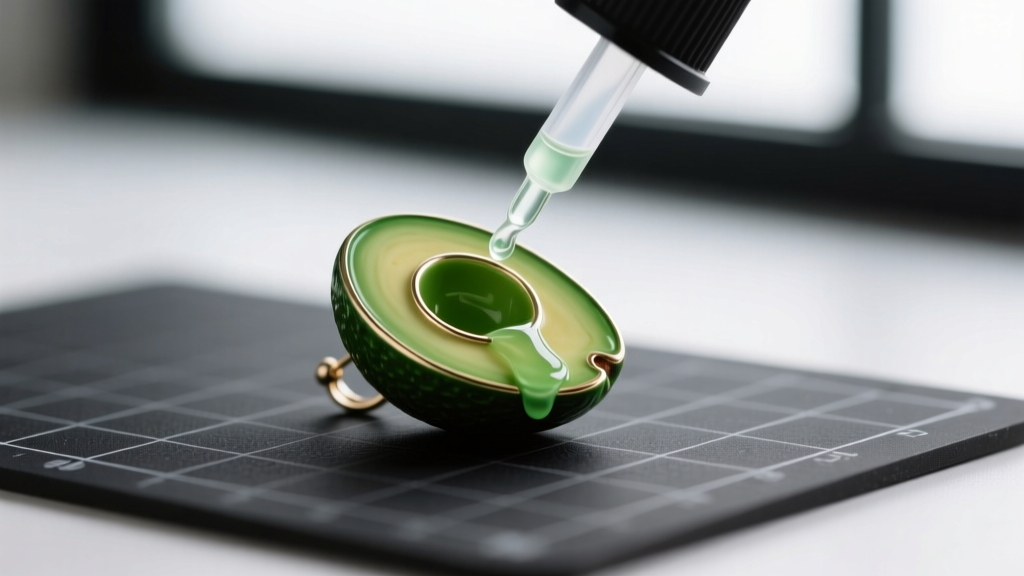
- Fixing Enamel Chips: Do not use standard super glue, as it will dry cloudy and brittle. Instead, use a clear, jewelry-grade UV-curing resin. Apply a micro-drop into the chip using a toothpick, ensuring it is level with the metal bezel. Cure it under a 36W UV lamp for 60 seconds. Once hardened, gently buff the surface with a microfiber cloth.
- Reattaching the Pit: If your pearl or wooden bead has fallen out, discard the old glue crust with a brass bristle brush. Apply a pinpoint dot of E6000 Jewelry Adhesive to the socket. E6000 remains slightly flexible after curing, allowing it to absorb the shock of daily wear without cracking. Press the pit into place, wipe away any squeeze-out with alcohol, and let it cure undisturbed for 24 hours.
Pro Tip: Never use acetone or nail polish remover to clean your avocado earrings. Acetone will instantly dissolve the epoxy enamel and cloud any resin pits, permanently ruining the color contrast.
Solving the Irritation: Upgrading the Earring Post
The internet is full of "hacks" suggesting you paint the back of your earring posts with clear nail polish to prevent nickel allergies. This is a temporary and flawed solution. Nail polish degrades rapidly when exposed to the friction of insertion and the acidity of the ear canal, often flaking off inside the piercing tract and causing severe inflammation.
For a permanent solution, you have two options:
- The DIY Sleeving Method: Purchase 20-gauge PTFE (Teflon) tubing, commonly sold for body jewelry. Cut a 2mm sleeve and slide it over the brass post before inserting it into your ear. This creates an inert, biocompatible barrier between the nickel and your skin.
- The Professional Laser Weld: Take your favorite avocado earrings to a local bench jeweler. For a minimal fee, they can use a laser welder to shear off the brass post and weld a Grade 23 Titanium (Ti-6Al-4V) or 316L Surgical Steel post directly to the brass backplate. Titanium is entirely nickel-free and biologically inert, making it the gold standard for sensitive ears, as noted by the FDA's guidelines on biocompatible medical metals.
Preventative Care and Storage Hacks
Preventing damage is always easier than executing a repair. To maximize the lifespan of your avocado earrings, adopt the following maintenance protocols:
- The "Last On, First Off" Rule: Always put your earrings on after applying hairspray, perfume, and sunscreen. The aerosolized alcohol and chemical UV filters in sunscreen will cause cold enamel to yellow prematurely.
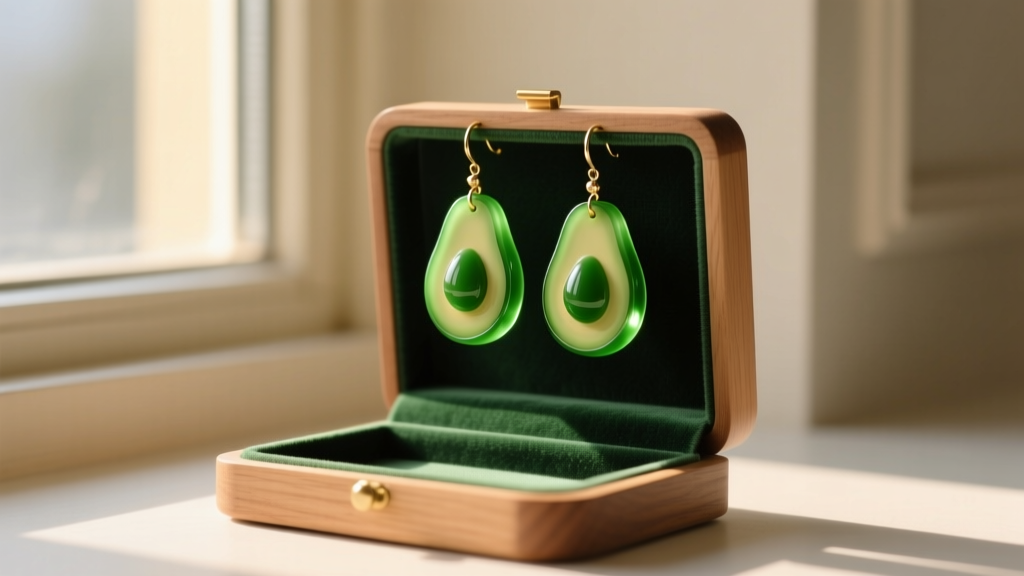
- Proper Storage: Never store novelty earrings in a communal jewelry box where heavier metal pieces can scratch the soft epoxy. Store them in individual anti-tarnish ziplock bags or hang them on a dedicated velvet-lined organizer to prevent the posts from bending and putting stress on the solder joint.
- Cleaning: Wash your earrings weekly using warm water, a drop of mild dish soap, and a baby-soft toothbrush. Avoid ultrasonic cleaners entirely; the high-frequency vibrations will shatter the bond between the brass base and the enamel fill.
When to Retire Your Avocado Earrings
While enamel chips and loose pits are easily fixable, structural failures at the solder joint are often terminal for inexpensive novelty jewelry. If the earring post wiggles at the base, or if you notice a dark, oily crack where the post meets the backplate, the silver solder has fatigued. Because the heat required to re-solder the post will melt and scorch the epoxy enamel, traditional torch soldering is impossible. Unless the piece is sentimental enough to warrant the cost of laser welding a new post, it is time to retire the earring and invest in a higher-quality, vitreous enamel or solid resin replacement.


