Troubleshooting Claire's Hoop Earrings: Allergies, Breakage & Upgrades
Experiencing irritation or breakage with Claire's hoop earrings? Learn how to troubleshoot metal allergies, fix bent wires, and upgrade to safe materials.

The Reality of Mall-Kiosk Jewelry: Why Issues Occur
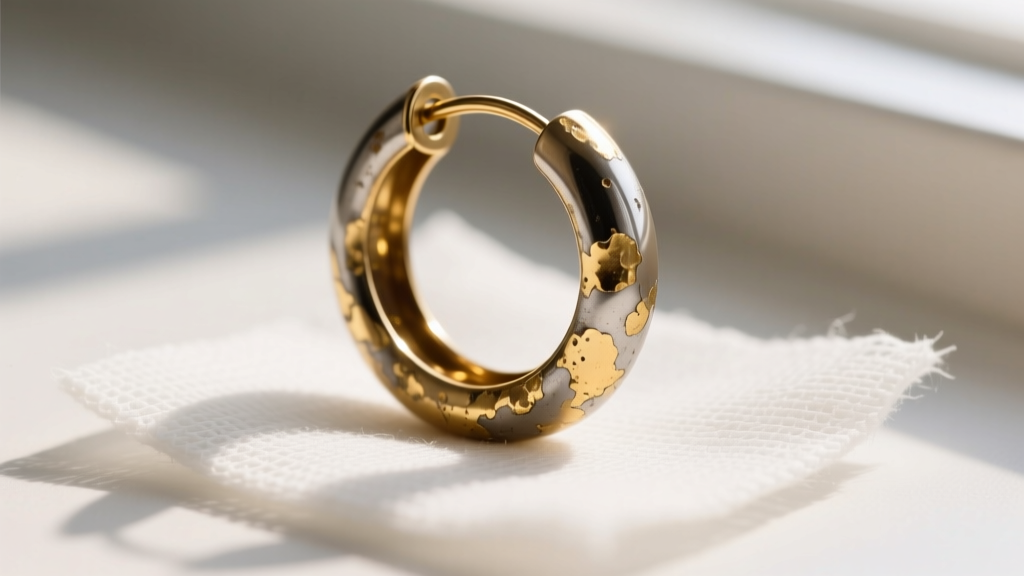
For many, purchasing their first pair of Claire's hoop earrings is a nostalgic rite of passage. However, as adult consumers and jewelry enthusiasts quickly discover, mass-produced fashion jewelry often presents a unique set of metallurgical and mechanical challenges. While these accessories are highly accessible and budget-friendly, they are rarely designed for long-term wear, especially in fresh or sensitive piercings. The most common complaints surrounding these hoops range from severe contact dermatitis and 'green skin' syndrome to structural failures like bent wires and snapping clasps. In this comprehensive troubleshooting guide, we will dissect the exact reasons why these earrings fail, how to safely manage allergic reactions, and the precise steps you need to take to upgrade your jewelry wardrobe to body-safe standards.
Troubleshooting Allergic Reactions and Contact Dermatitis
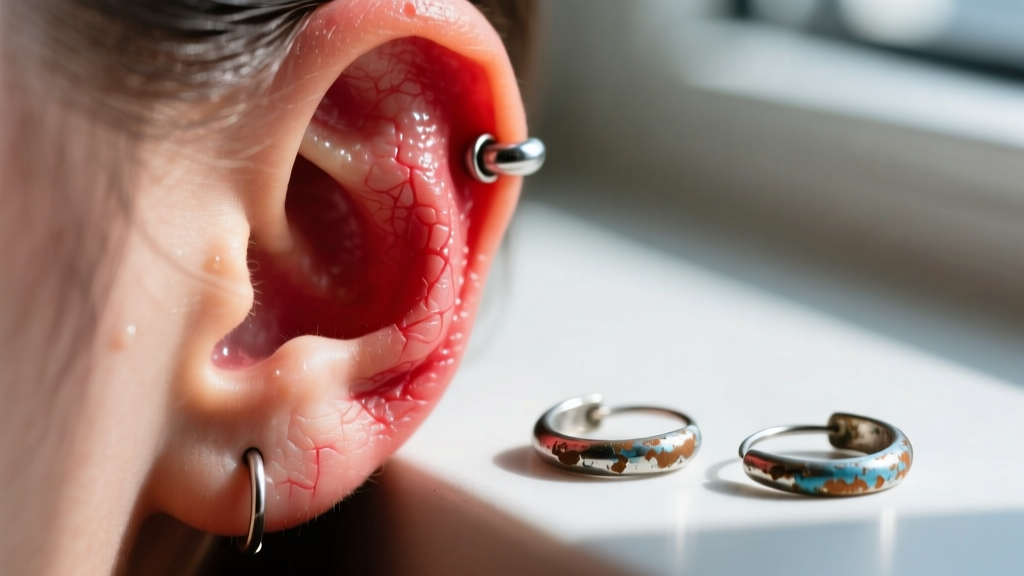
The most frequent issue reported by wearers is an adverse skin reaction. This is rarely an 'infection' in the bacterial sense, but rather allergic contact dermatitis. Many fashion hoops are manufactured from base metals like brass or zinc alloy, which are then electroplated with a microscopic layer of gold or silver. Once this plating wears away from friction and skin acids, the underlying metals are exposed to the fistula (the piercing channel).
Identifying Nickel and Brass Allergies
Even hoops labeled as 'surgical steel' at mall kiosks are typically made from 316L stainless steel. While 316L is excellent for surgical instruments, it contains between 8% and 10.5% nickel. When worn in a piercing, body heat and moisture cause nickel ions to leach into the skin, triggering an immune response. According to the Mayo Clinic, nickel allergy is one of the most common causes of allergic contact dermatitis, resulting in redness, severe itching, flaking, and weeping clear fluid.
Actionable Troubleshooting Steps:
- Immediate Removal: Take the hoops out immediately at the first sign of itching or heat. Leaving them in will only compound the immune response.
- Sterile Saline Cleansing: Spray the affected area with a sterile 0.9% sodium chloride wound wash twice daily. Avoid alcohol or hydrogen peroxide, which destroy healing tissue.
- Topical Treatments: Apply a thin layer of over-the-counter 1% hydrocortisone cream to the exterior of the earlobe to reduce inflammation. Do not pack ointments inside the piercing hole, as this traps bacteria.
Mechanical Failures: Fixing Bent Wires and Broken Clasps
Because fashion hoops are manufactured to hit a low price point, the wire used is often incredibly soft and lacks the tensile strength of professional body jewelry. This leads to frequent mechanical failures, particularly at the clasp mechanism.
| Clasp Type | How It Works | Common Failure Mode | Troubleshooting Fix |
|---|---|---|---|
| Latch-Back | A hinged wire snaps into a V-shaped catch on the opposite end. | The catch widens over time, causing the wire to slip out and the earring to fall off. | Use nylon-jaw pliers to gently squeeze the V-catch back together. Never use bare metal pliers, which will strip the plating. |
| Continuous / Endless | A thin wire loops through the ear and tucks into a hollow tubing end. | The thin wire snaps off at the base due to metal fatigue from repeated bending. | Unfixable. The structural integrity is compromised; discard and replace with a seamless ring. |
| Hinged Segment | A solid segment swings open on a micro-hinge and clicks shut. | The micro-hinge pin bends or breaks if forced open at the wrong angle. | Always open by pulling the segment laterally, not by twisting it. If bent, the hinge is permanently ruined. |
Pro-Tip for Reshaping: If your hoop has become oval or warped, do not use your fingers to bend it back, as this creates weak stress points. Instead, wrap the jaws of a pair of needle-nose pliers in masking tape (or invest in a pair of nylon-jaw jewelry pliers) and gently roll the wire around a cylindrical mandrel or a thick marker to restore a perfect circle without scratching the finish.
The Gauge Dilemma: Sizing Claire's Hoops vs. Professional Body Jewelry
Another major point of confusion arises when consumers attempt to transition from mall-kiosk jewelry to professional body jewelry. Understanding wire thickness—measured in 'gauge'—is critical to avoiding tissue damage.
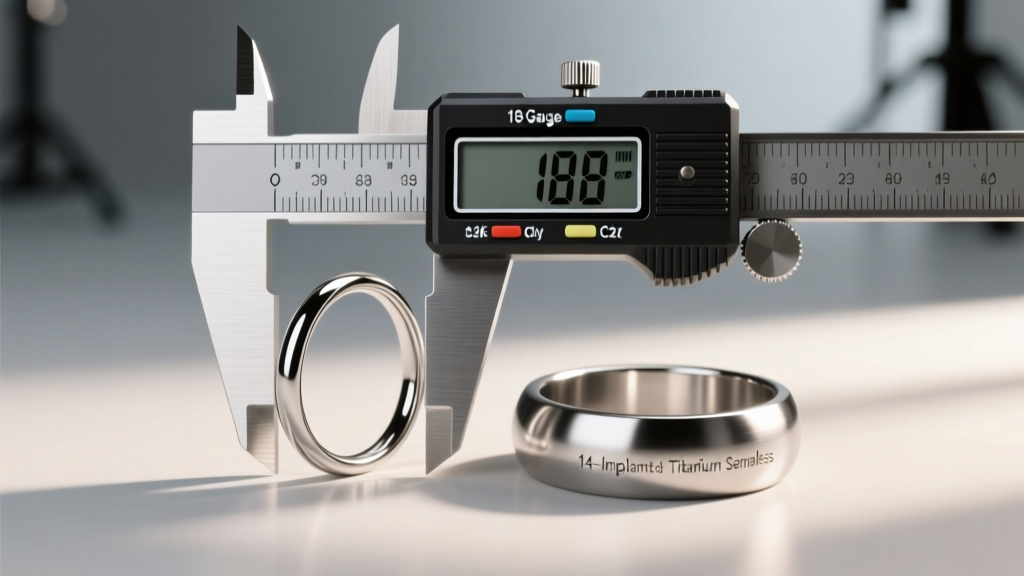
Most standard fashion hoops sold at the mall are manufactured at 20-gauge (0.81mm) or 18-gauge (1.02mm). However, professional piercers typically pierce standard earlobes at 16-gauge (1.29mm) or 14-gauge (1.63mm), and cartilage almost exclusively at 16-gauge.
The Troubleshooting Hazard: If you were pierced with a standard 20g piercing gun stud and later try to insert a high-quality 16g seamless hoop, you will experience severe resistance. Forcing a thicker wire through a narrow fistula causes micro-tearing, bleeding, and the formation of hypertrophic scarring or 'piercing bumps.' Always measure your current jewelry with a digital caliper before purchasing upgrade rings, or visit a professional piercer who can safely taper your piercing to a healthier, thicker gauge.
The Upgrade Path: Transitioning to Safe Materials
If you are tired of dealing with tarnished metal, green earlobes, and snapping wires, it is time to retire the base-metal hoops. The Association of Professional Piercers (APP) strictly recommends specific, biocompatible materials for long-term wear in healed and healing piercings alike.
What to Buy Instead
- ASTM F-136 Implant-Grade Titanium: This is the gold standard for sensitive ears. It contains zero nickel, is highly polished to a mirror finish (preventing bacterial harboring), and is lightweight. Brands like BVLA and Anatometal offer stunning, durable titanium hoops.
- Niobium (99.9% Pure): An excellent, hypoallergenic alternative to titanium that can be safely anodized to any color without the use of toxic dyes or plating. It is slightly softer than titanium, making it easy for piercers to adjust the fit of a seamless ring.
- Solid 14k or 18k Gold (Nickel-Free): Ensure the gold is alloyed specifically for body jewelry (often using palladium or silver instead of nickel). Avoid 'gold-filled' or 'gold-plated' hoops, as the underlying brass will eventually be exposed to your piercing.
When to See a Professional Piercer
While minor mechanical fixes can be done at home, you should never attempt to troubleshoot a stuck hoop in a fresh, swollen, or infected piercing. If a clasp is jammed in an inflamed earlobe, the pressure of trying to pry it open with household tools can cause severe tissue lacerations. Visit an APP-certified professional piercer. They possess specialized insertion and removal tapers, sterile environments, and the metallurgical expertise to safely remove damaged jewelry and immediately replace it with an appropriately sized, implant-grade titanium ring to facilitate proper healing.


