Fixing & Cleaning Turquoise Ball Earrings: Expert Guide
Learn how to safely clean, repair, and restore your turquoise ball earrings. Expert tips on preventing discoloration, fixing loose bezels, and avoiding fakes.

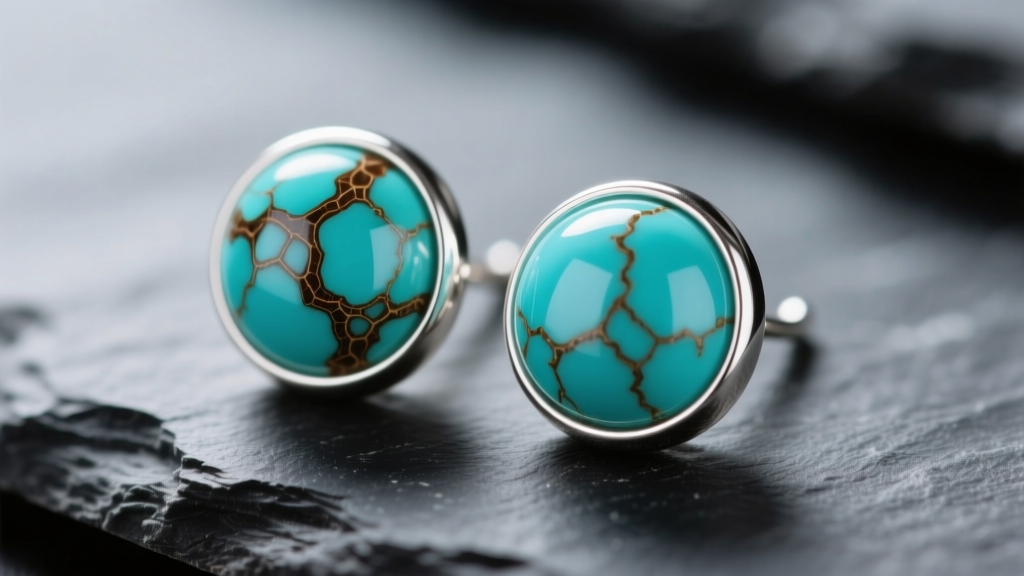
The Gemological Vulnerabilities of Turquoise Ball Earrings
Turquoise ball earrings are a timeless staple in jewelry boxes worldwide, prized for their vibrant sky-blue to deep green hues and organic matrix webbing. However, from a gemological and repair perspective, turquoise presents a unique set of challenges. Unlike diamonds or sapphires, turquoise is a relatively soft, porous gemstone. According to the Mindat.org mineral database, turquoise ranks between 5 and 6 on the Mohs hardness scale, making it highly susceptible to scratching, chipping, and chemical alteration.
When fashioned into a spherical "ball" shape for earrings, the stone's surface area is maximized, increasing its exposure to skin oils, cosmetics, and environmental pollutants. While modern stabilization techniques in 2026 have improved the durability of lower-grade stones using advanced epoxy resins, natural, untreated turquoise remains highly vulnerable. This guide provides expert-level troubleshooting for the most common issues plaguing turquoise ball earrings, from irreversible discoloration to structural setting failures.
Troubleshooting Discoloration and Darkening
The most frequent complaint from collectors and casual wearers alike is turquoise turning a dull, muddy green or dark brown over time. This is not a defect; it is a chemical reaction. Turquoise is a hydrous phosphate of copper and aluminum. When the porous surface absorbs sebum (skin oils), sweat, or lotions, the copper content oxidizes and alters the stone's light-refracting properties, resulting in a darker, greener appearance.
The Safe Cleaning Protocol
If your turquoise ball earrings have accumulated surface dirt, you must avoid standard jewelry cleaning methods at all costs. Never use ultrasonic cleaners, steam cleaners, or commercial silver dips. The high-frequency vibrations in ultrasonic tanks can shatter the internal crystalline structure of the stone, while harsh chemicals will permanently stain the porous matrix.
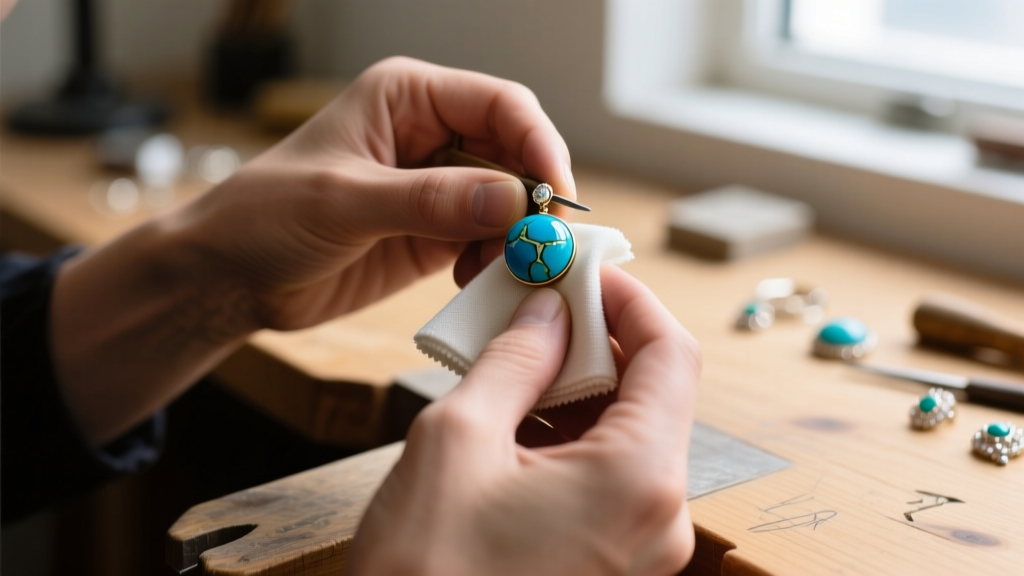
- Step 1: Use a completely dry, lint-free microfiber cloth to gently buff the surface of the turquoise ball. Do not apply heavy pressure, as the sphere's curvature makes it prone to localized scratching.
- Step 2: For stubborn grime, slightly dampen a corner of the cloth with distilled water (never tap water, as chlorine and fluoride can react with the stone). Wipe the stone quickly and immediately dry it.
- Step 3: To clean the silver or gold setting without touching the stone, use a dry, fine-bristled jeweler's brush to sweep out debris from the bezel wall.
Note: If your natural turquoise has already absorbed oils and turned green, the process is largely irreversible without professional lapidary re-polishing, which removes a layer of the stone and alters the earring's dimensions.
Repairing Loose Settings and Rattling Stones
A turquoise ball earring that rattles or spins freely within its setting is a structural failure waiting to happen. Because turquoise is brittle, a loose stone will eventually chip against the metal setting or fall out entirely and shatter on a hard floor. The spherical shape of ball earrings requires a precise "cup" or "bezel" setting, which is notoriously difficult to execute perfectly compared to flat-backed cabochons.
Bezel vs. Prong: Why Your Setting Matters
According to the Gemological Institute of America (GIA), bezel settings are the safest choice for turquoise due to the stone's fragility. However, the thickness of the bezel wire dictates repairability. If your earring uses a 24-gauge fine silver bezel, it can be easily pushed back into place. If it uses a thick, cast-metal cup setting, tightening requires specialized burnishing tools.
| Setting Type | Common Failure Mode | Repair Complexity | Recommended Action |
|---|---|---|---|
| Thin Bezel (22-24g) | Wall pulls back from stone curvature | Low | Use a nylon or brass bezel pusher to gently roll the metal back over the stone's equator. |
| Cast Cup Setting | Stone shrinks slightly or cup warps | High | Do not use glue. A jeweler must insert a custom-cut silver shim behind the stone before tightening. |
| Prong Setting | Prongs catch on hair and bend outward | Medium | Snug prongs with chain-nose pliers; file and polish prong tips to prevent snagging. |
Crucial Warning: Never use cyanoacrylate (Super Glue) or E6000 to secure a loose turquoise ball. These adhesives will seep into the stone's pores, causing permanent dark spotting and making future professional repairs impossible, as the solvent required to remove the glue will destroy the turquoise.
Solving Earlobe Stretching from Heavy Stone Balls
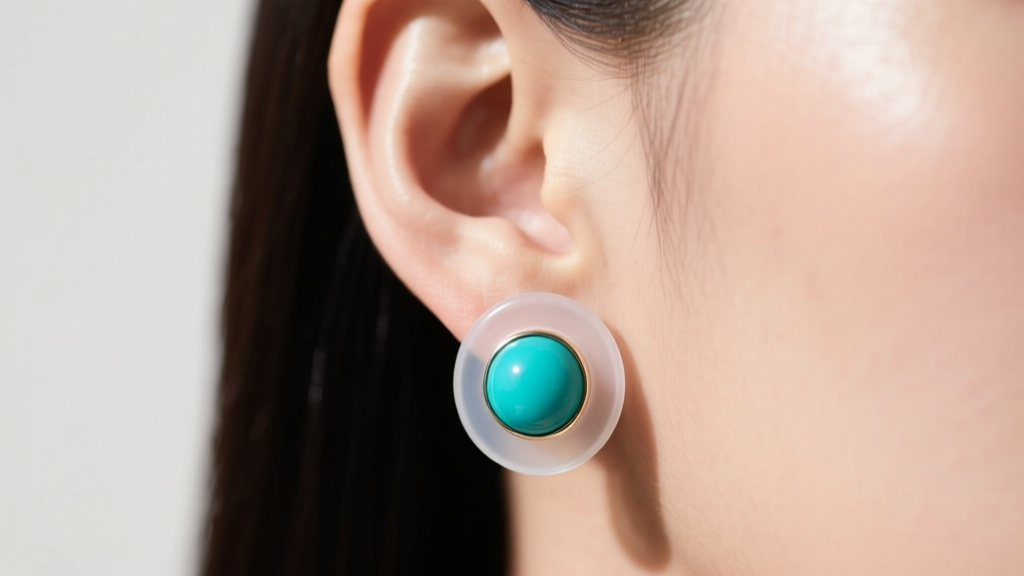
Turquoise is a dense mineral. A standard 8mm turquoise ball weighs approximately 3 grams, which is perfectly fine for daily wear. However, statement-sized 12mm to 16mm turquoise ball earrings can weigh between 9 and 18 grams per ear. The human earlobe begins to experience micro-tearing and permanent stretching when subjected to continuous loads exceeding 7 to 10 grams, especially when combined with the kinetic energy of walking and head movement.
Weight Distribution Hacks
If you refuse to sacrifice the bold look of large turquoise balls, you must alter the physics of how the earring rests on your ear.
- Upgrade the Post Gauge: Standard earring posts are 20-gauge (0.81mm) or 18-gauge (1.02mm). For heavy turquoise balls, have a jeweler solder a thicker 16-gauge (1.29mm) or 14-gauge (1.63mm) post. This wider surface area distributes the weight across more tissue, reducing the "cheese-cutter" effect.
- Use Silicone Support Pads: Products like Bling Guards or specialized silicone earring lifters act as a shock absorber and widen the backing surface area against the rear of the lobe.
- Switch to French Wire with a Chain: If the heavy ball is set on a post, consider having a jeweler convert it to a French hook with a supporting chain that wraps around the back of the ear, transferring the weight from the delicate lobe to the sturdy cartilage of the upper ear.
Identifying Fakes: Dyed Howlite and Reconstituted Dust
The market is flooded with counterfeit turquoise ball earrings. The two most common imposters are dyed howlite (a white, porous mineral that mimics turquoise's matrix when dyed) and reconstituted turquoise (turquoise dust mixed with epoxy and dyed, then pressed into a mold). Because ball earrings are often perfectly spherical, they are frequently made from reconstituted blocks, as carving perfect spheres from natural, heavily veined rough results in massive material waste.
The Magnification Test: Use a 10x jeweler's loupe to inspect the surface of the ball. Natural turquoise will show organic, random matrix patterns that penetrate the stone. Dyed howlite will reveal dye concentration in the natural cracks of the howlite, looking like dark, spider-web veins that do not match the surrounding color. Reconstituted turquoise will often show tiny, uniform speckles or a "glitter" effect from the binding epoxy when viewed under direct, bright light.
Preventative Maintenance Checklist
To ensure your turquoise ball earrings remain vibrant and structurally sound for decades, adopt this strict maintenance routine:
- The "Last On, First Off" Rule: Always put your turquoise earrings on after applying makeup, hairspray, and perfume. Remove them immediately upon returning home, before washing your face or showering.
- Storage Isolation: Store turquoise balls in a soft, anti-tarnish pouch separate from harder gemstones. A diamond or sapphire ring tossed into the same jewelry box will easily gouge the surface of a turquoise sphere.
- Annual Bezel Check: Once a year, gently tap the earring against your fingernail. If you hear a microscopic "click" or rattle, the setting has loosened and requires immediate professional tightening before the stone falls out.
By understanding the specific mineralogical traits of turquoise and respecting its physical limitations, you can successfully troubleshoot common issues and preserve the striking beauty of your turquoise ball earrings for a lifetime.


