How to Fix Allergic Reactions to Disney Stitch Earrings
Experiencing itchy ears from your favorite character jewelry? Learn how to troubleshoot and fix allergic reactions to Disney Stitch earrings safely.

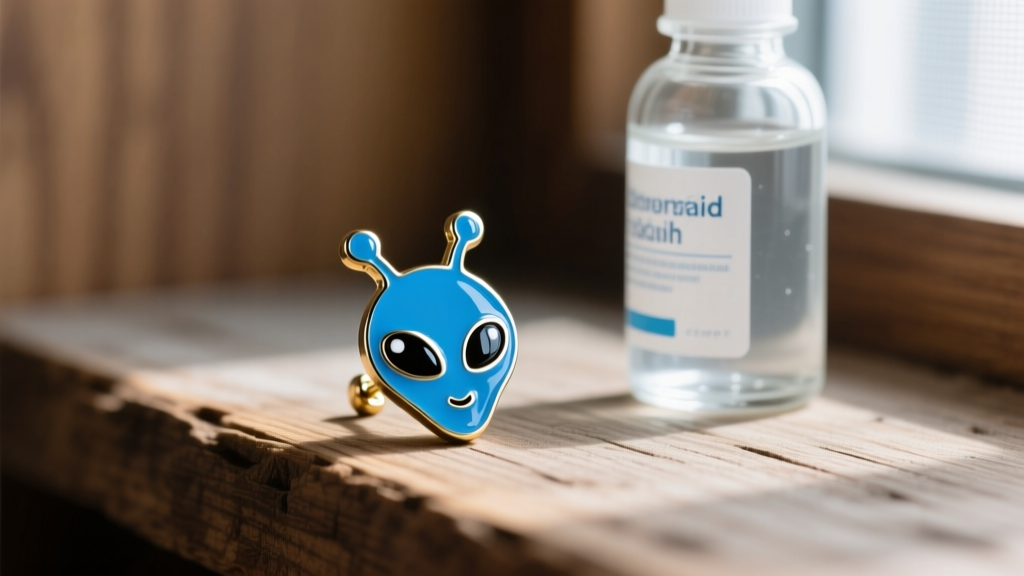
The Hidden Metal Problem in Licensed Character Jewelry
Fans of the iconic blue alien often rush to buy officially licensed merchandise, but wearing Disney Stitch earrings can quickly turn into a dermatological nightmare. The core issue rarely lies in the front-facing charm; instead, the culprit is almost always the earring post and the solder used to attach it. When major entertainment conglomerates license character designs to mass-market manufacturers, the production priority is keeping retail prices under $20 while maximizing profit margins. This results in the use of brass, zinc alloys, and low-grade stainless steel that frequently contain nickel or lead.
Even when the front of the earring is stamped '925 Sterling Silver,' the post itself may be made of a cheaper, harder alloy to prevent bending during shipping. Furthermore, the solder used to weld the post to the Stitch charm often contains nickel to lower the melting point. As of 2026, while the EU Nickel Directive strictly limits nickel release to 0.5 µg/cm²/week, many imported character studs sold in global online marketplaces bypass these rigorous testing standards, leaving consumers vulnerable to severe contact dermatitis.
Diagnosing Your Ear's Reaction: Allergy vs. Infection
Before attempting to salvage your favorite earrings, you must accurately diagnose the failure mode of your piercing. Confusing an allergic reaction with a bacterial infection can lead to improper treatment and permanent scarring of the fistula (the piercing channel).
- Allergic Contact Dermatitis (ACD): Characterized by intense itching, localized redness, flaky or dry skin, and sometimes a clear, weeping fluid. The reaction typically spreads slightly beyond the immediate piercing site and appears within 12 to 48 hours of wearing the Disney Stitch earrings.
- Bacterial Infection: Presents with throbbing pain, significant swelling, heat radiating from the earlobe, and thick yellow or green pus. This is usually caused by micro-tears in the fistula from a rough, poorly polished earring post rather than the metal composition itself.
According to the Mayo Clinic, nickel allergy is one of the most common causes of allergic contact dermatitis, affecting nearly 36% of women and 17% of men. Once sensitized, your immune system will react to even trace amounts of nickel in future wearings.
Material Breakdown: What Are Your Disney Stitch Earrings Actually Made Of?
Understanding the metallurgy of your specific pair is the first step in troubleshooting. Below is a breakdown of the most common retail sources for Stitch-themed jewelry and their inherent risks.
| Brand / Retailer | Primary Charm Material | Post Material | Nickel Risk | Price Range |
|---|---|---|---|---|
| Pandora (Licensed) | 925 Sterling Silver & Enamel | 925 Silver (Copper alloy) | Low-Medium | $45 - $75 |
| Hot Topic / BoxLunch | Zinc Alloy / Base Metal | Surgical Steel / Brass | High | $10 - $18 |
| Disney Store / Parks | Base Metal / Gold Plated | Stainless Steel (Unspecified) | Medium | $15 - $25 |
| Custom Etsy Makers | ASTM F136 Titanium | Implant-Grade Titanium | None | $35 - $80 |
Note that 'Surgical Steel' is a largely unregulated marketing term in the jewelry industry. Unless the packaging explicitly states 'ASTM F136 Implant-Grade Titanium' or 'Niobium,' assume the post contains trace nickel.
Immediate Troubleshooting: Soothing Irritated Earlobes
If your ears are currently reacting to your Disney Stitch earrings, immediate intervention is required to prevent the fistula from rejecting the jewelry or developing a keloid.
Step 1: Remove and Cleanse
Remove the offending earrings immediately. Do not use rubbing alcohol or hydrogen peroxide to clean the piercing; these are cytotoxic and will destroy the newly forming epithelial cells inside the piercing channel. Instead, use a sterile 0.9% sodium chloride wound wash (saline) sprayed directly onto the lobe twice daily.
Step 2: Topical Treatment
For allergic dermatitis, the American Academy of Dermatology recommends applying an over-the-counter 1% hydrocortisone cream to the exterior of the earlobe to reduce inflammation and itching. If the piercing is infected (hot, pus-filled), skip the steroid cream and consult a physician for a topical or oral antibiotic, as steroids can suppress the local immune response and worsen bacterial infections.
Step 3: Downsize and Rest
Leave the piercing empty for 24 to 48 hours if it is fully healed. If it is a new piercing, you must insert a sterile, implant-grade titanium flat-back labret (usually 18g or 16g) to prevent the hole from closing while the tissue heals.
Long-Term Solutions: Coating, Modding, and Upgrading
If you have a pair of rare or sentimental Disney Stitch earrings that cause reactions, you have a few mechanical and chemical workarounds to make them wearable.
The Clear Polish Hack (And Why It Fails)
The most common internet advice is to paint the earring post with clear polyurethane nail polish. While this creates a temporary physical barrier between the nickel and your skin, it is a flawed long-term solution. Nail polish degrades in the presence of sebum (skin oils) and the friction of insertion. It typically chips within 48 hours, leaving microscopic flakes of plastic trapped inside the fistula, which can cause granulomas.
Professional Nano-Ceramic Coatings
A superior alternative is a nano-ceramic jewelry coating (such as Jewelry Shield). These formulas use silica-based sol-gel technology to bond to the metal at a molecular level, providing a hypoallergenic barrier that lasts for months rather than days. Apply two thin coats to the post and the clutch, allowing 24 hours of curing time before wearing.
Commissioning Custom Hypoallergenic Alternatives
The ultimate fix is bypassing mass-market merchandise entirely. In 2026, the custom jewelry market is saturated with independent metalsmiths who license or create fan-art designs using ASTM F136 implant-grade titanium. Titanium is completely nickel-free, highly corrosion-resistant, and can be anodized using electricity to create the vibrant blues and purples required for a Stitch design without using toxic epoxies or soft enamels.
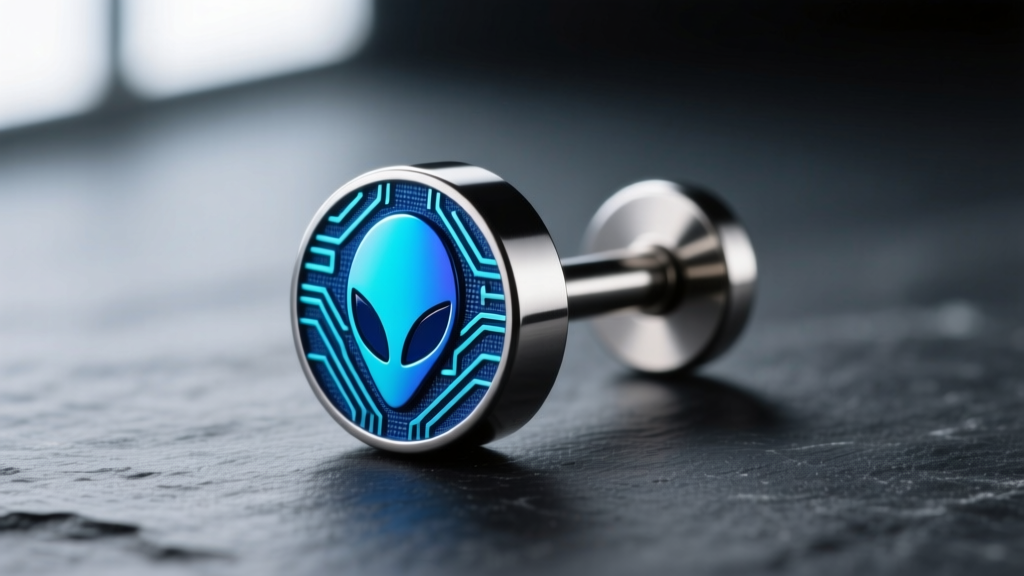
Cartilage Complications: Troubleshooting Stitch Ear Cuffs and Huggies
The troubleshooting parameters change entirely when moving from the soft tissue of the earlobe to the rigid cartilage of the helix or scapha. Disney Stitch ear cuffs (non-pierced) and huggies are notoriously problematic for cartilage anatomy.
Pressure Necrosis from Cuffs: Ear cuffs rely on tension to stay attached to the helix. If the cuff is not properly adjusted by a jeweler using nylon-jaw pliers, excessive clamping force can restrict blood flow to the cartilage edge. This leads to pressure necrosis, where the skin turns pale, numb, and eventually breaks down. Always ensure you can slide a piece of paper between the cuff and your ear.
Huggie Inner Diameter Mismatches: Cartilage is less forgiving than lobes. A standard 10mm inner diameter huggie designed for a lobe will choke a helix piercing, causing swelling and migration. For Stitch-themed huggies meant for the upper ear, you must measure your cartilage thickness and select a hoop with an 8mm or 9mm inner diameter, typically in a 16-gauge (1.2mm) thickness to prevent the 'cheese-cutter effect' where thin wire slices through the tissue.
Proper Aftercare for Enamel and Plated Character Studs
Beyond skin reactions, the aesthetic failure of Disney Stitch earrings usually involves chipped enamel or tarnished plating. The blue and black details on Stitch's face are typically achieved using soft enamel or epoxy resin, which is highly susceptible to UV degradation and chemical erosion.
To prevent the blue enamel from yellowing or chipping, never wear character studs in chlorinated pools or hot tubs. Chlorine aggressively attacks the copper alloys present in sterling silver and brass bases, causing the metal to oxidize and push the enamel out of its recessed channels. If a chip does occur, do not use superglue (cyanoacrylate), which dries brittle and cloudy. Instead, use a two-part clear jewelry epoxy or a UV-curing resin, applying it with a fine-tipped needle to fill the void, then curing it under a UV lamp for 60 seconds.
By understanding the metallurgy, anatomy, and material science behind your jewelry, you can safely enjoy your favorite character accessories without sacrificing the health of your piercings.


